

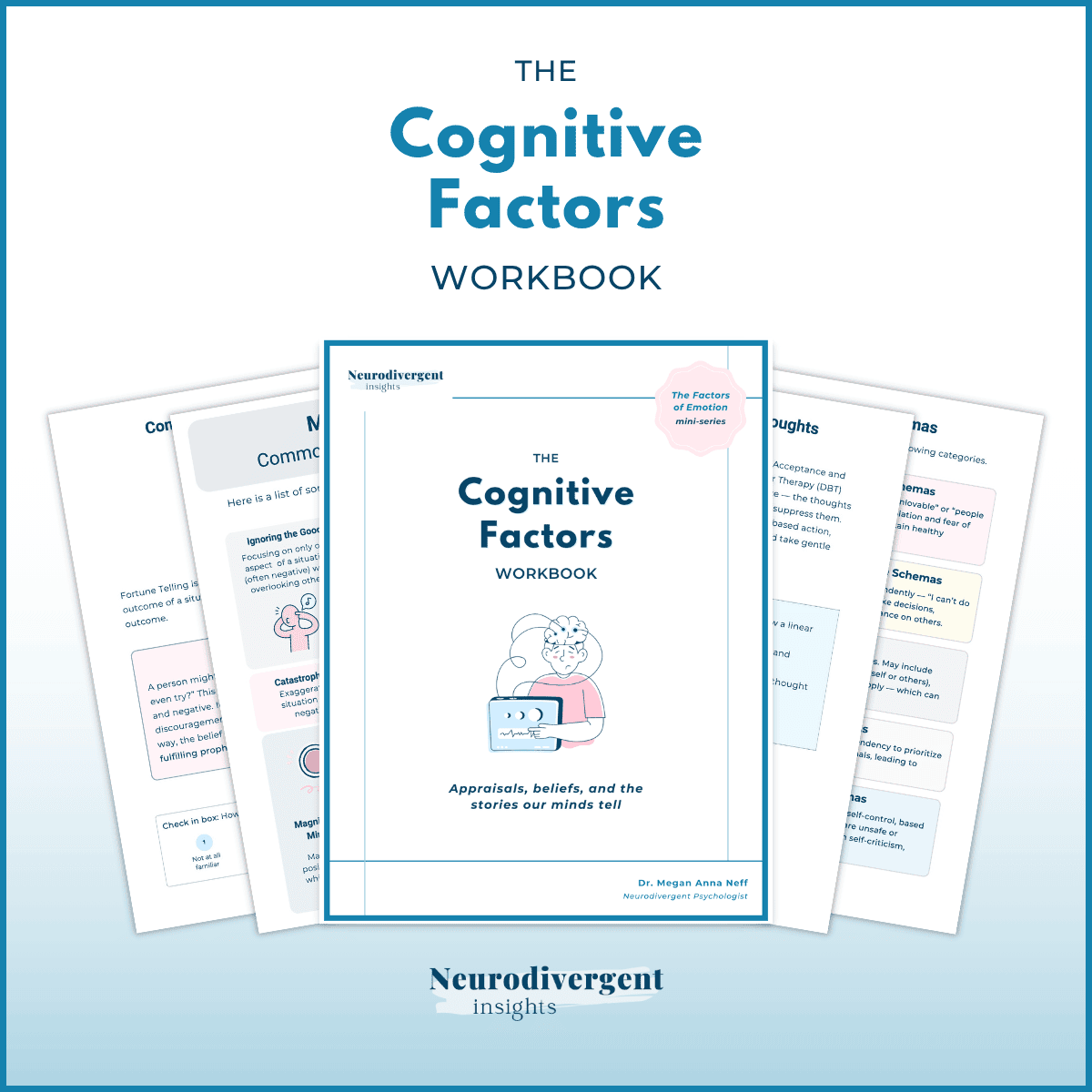
The Cognitive Factors Workbook
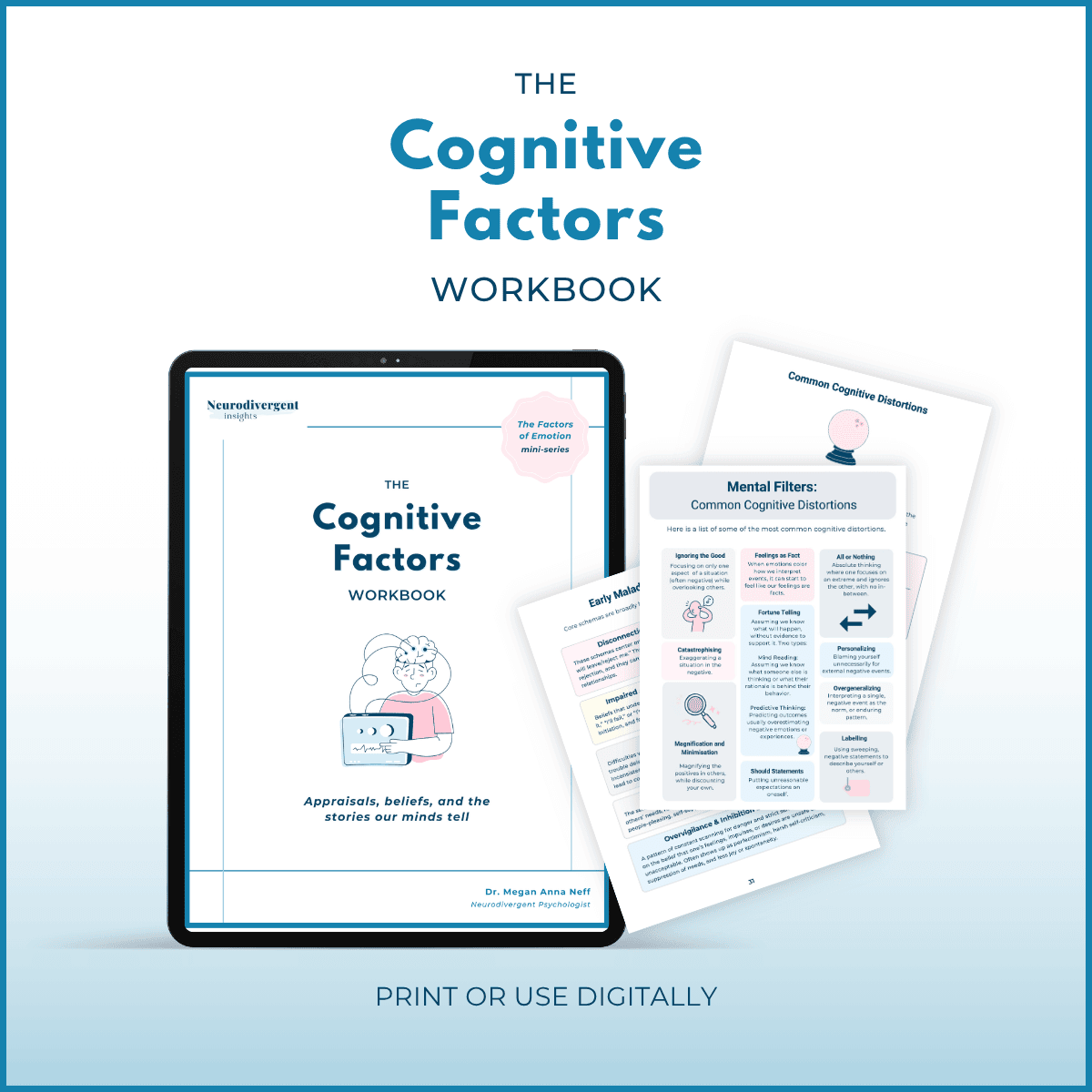
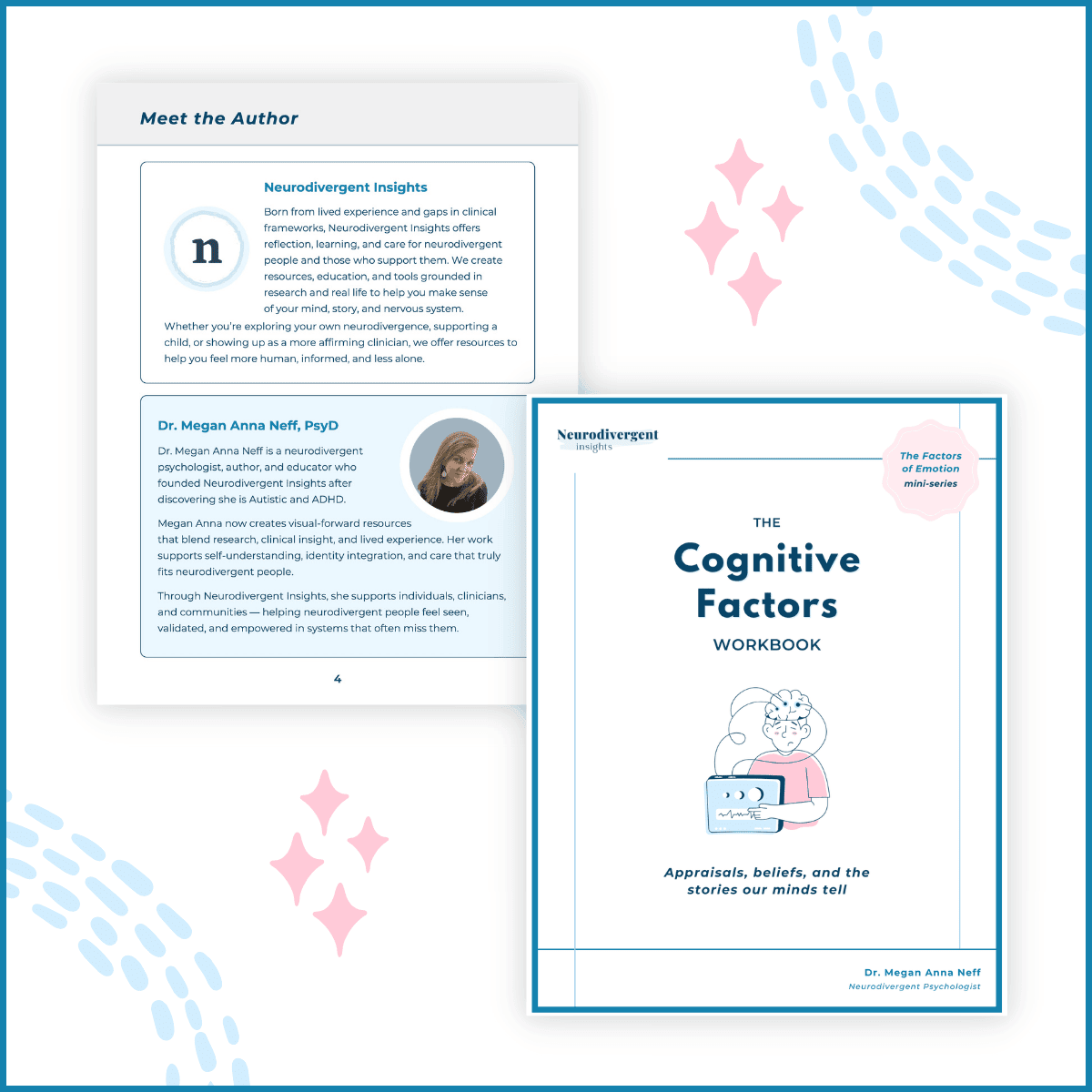
The Cognitive Factors Workbook offers a neurodivergent-informed approach to understanding how your thinking patterns shape emotional experience.
Part of our Emotional Regulation and Neurodivergence series, this workbook explores the powerful connection between thoughts, beliefs, and emotions — and how awareness can foster greater emotional balance and resilience.
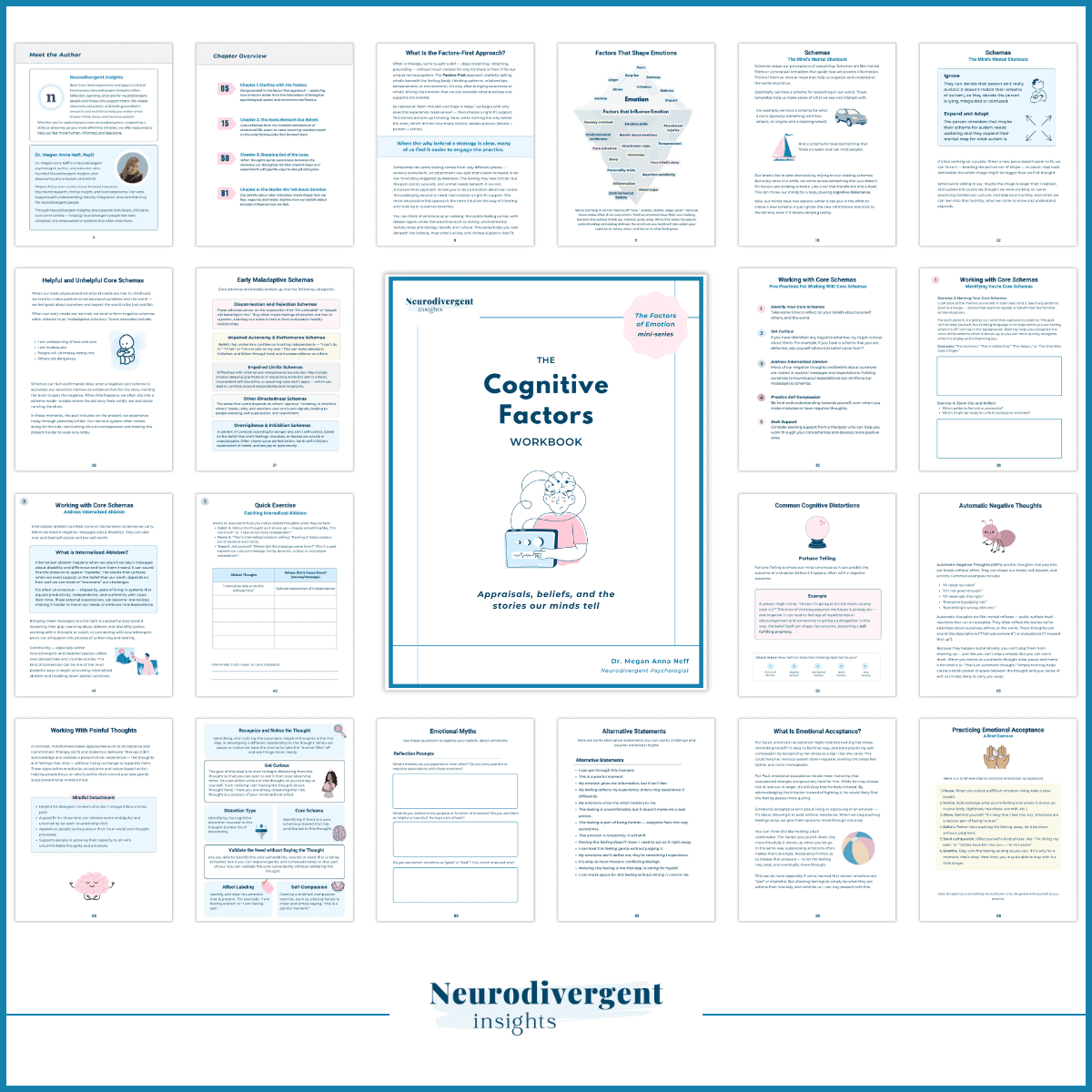
Inside the Workbook
Explore Core Schemas
Identify the deep-rooted beliefs that influence how you see yourself and the world. Learn gentle ways to work with them to create more emotional flexibility and self-compassion.
Recognize and Rework Thinking Patterns
Notice patterns like overgeneralizing, catastrophizing, or self-blame — and practice strategies to unhook from negative thought loops and ground in the present moment.
Understand Beliefs About Emotions
Reflect on your beliefs about emotions — and how shifting those beliefs can open space for healthier emotional expression and regulation.
🗂️ Logistical Details
⚠️ Please note that this is for personal use only. If you’d like to share this resource with clients you can purchase the Clinical and Coaching Version, which enables you to use this workbook with clients.
⚠️ Mental Health Disclaimer: This neurodivergent workbook is intended for educational purposes only. It is not a substitute for professional medical or mental health advice, diagnosis, or treatment. If you have concerns about your health or well-being, please consult a qualified healthcare or mental health professional.
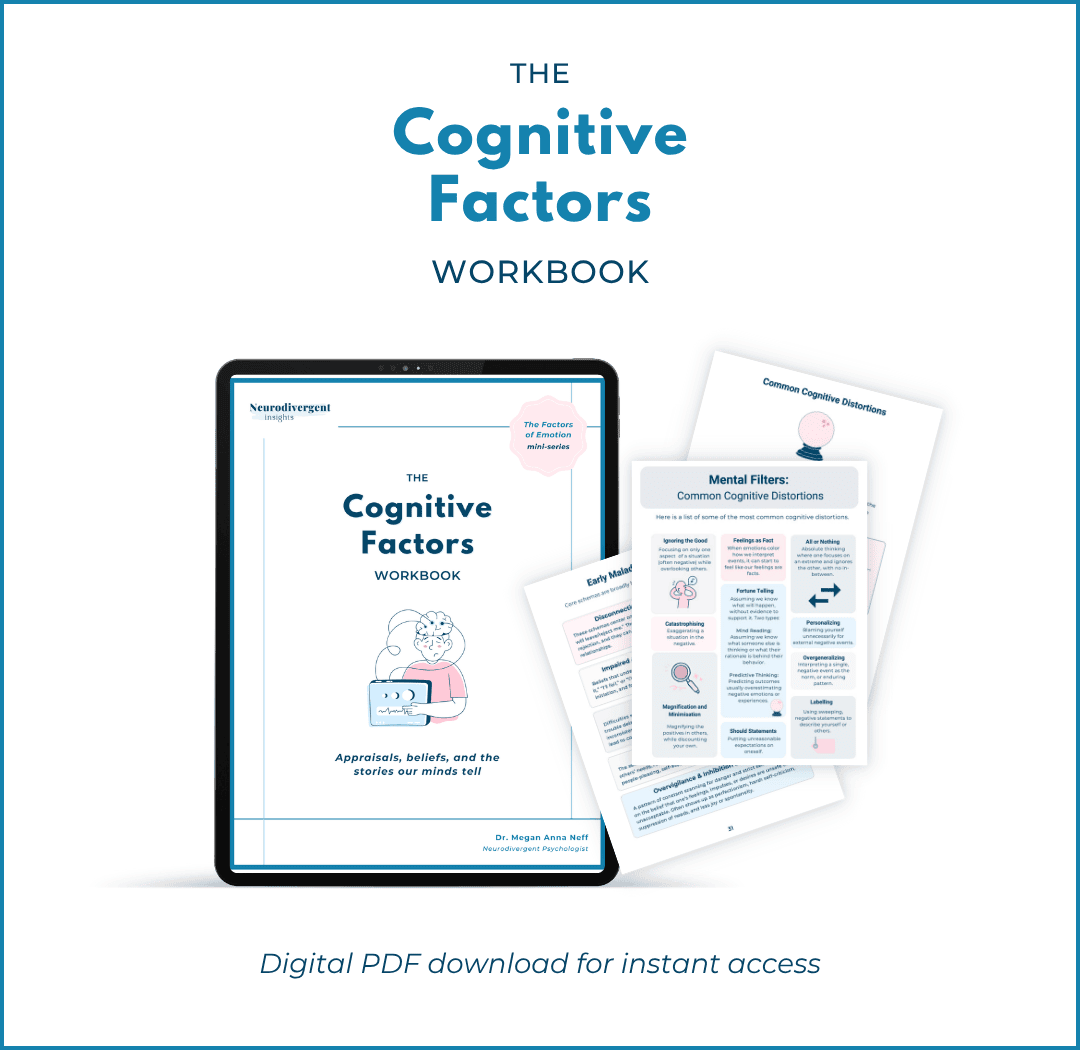
📥 Digital Download 📥
Please note this is a digital download only and no products will be shipped or mailed to you. We recommend creating an account when you checkout to ensure you can easily access this workbook at any time and any future updates to this workbook.
✍️ Using Your Workbook Digitally
- On an iPad or Tablet. You can open the PDF in an app like GoodNotes, Notability or Noteshelf → write directly on the pages with a stylus or keyboard. These apps allow typing, highlighting, and handwriting with an Apple Pencil. You just import your PDF workbook, and it becomes “fillable” by writing or typing.
- On a Computer. If you’re on a computer, you can type your reflections right onto the workbook pages by opening the PDF in Adobe Reader (free) or another PDF viewer. Some people also like to keep a separate digital journal or Word/Google Doc open alongside the workbook, copying over prompts and writing more freely there.


Reviews
There are no reviews yet.