
Social Model of Disability
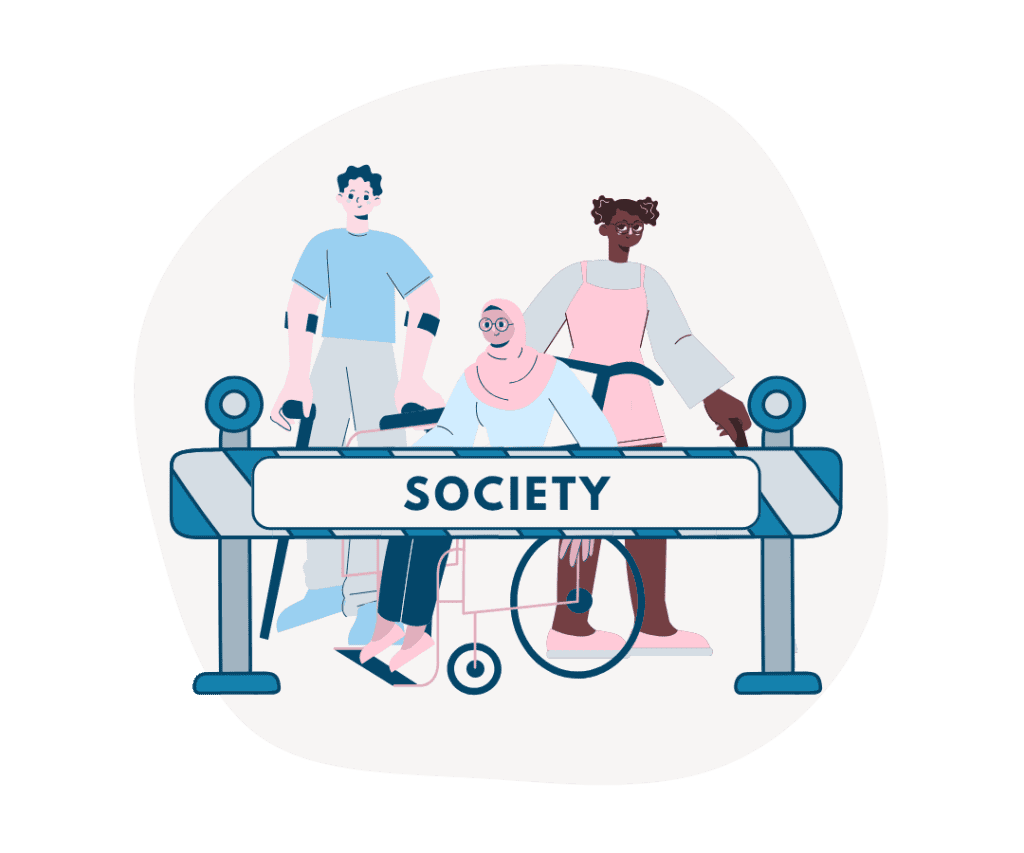
The social model of disability proposes that people are disabled not by their bodies or minds alone, but by a society that fails to include them. The model draws a key distinction: impairment is a person’s physical, sensory, or cognitive difference, while disability is what happens when society responds to that difference with exclusion.
At its best, the model holds both: disability arises from the interaction between impairment and a world not built for that impairment. Neither the person nor the environment tells the whole story on its own.
This shifts the conversation from “what’s wrong with this person?” to “what’s wrong with this environment?” It moves responsibility from the individual to the structures around them, and it has shaped disability rights, accessibility law, and neurodivergent advocacy.
In practice, the social model is sometimes applied in ways that overemphasize environmental barriers while understating the lived reality of impairment. Some people critique it for understating the real impact of impairment or chronic illness on daily life. For many neurodivergent and disabled people, some challenges persist regardless of how accommodating the environment is. Holding both things is important: society does disable, and impairment can also be hard. A more complete picture includes the social model as a foundation while still honoring the full, sometimes painful, reality of living in a body and mind that works differently.