

The Neurodivergent Adapted Safety Plan
A free, autonomy-centered safety planning tool for neurodivergent individuals and the clinicians who support them
Suicidal thoughts can feel isolating, frightening, or heavy to hold alone. Neurodivergent people often experience these moments differently ~ through sensory overwhelm, shutdown, RSD storms, impulsivity spikes, or a nervous system that floods before words arrive. Traditional safety plans rarely account for this.
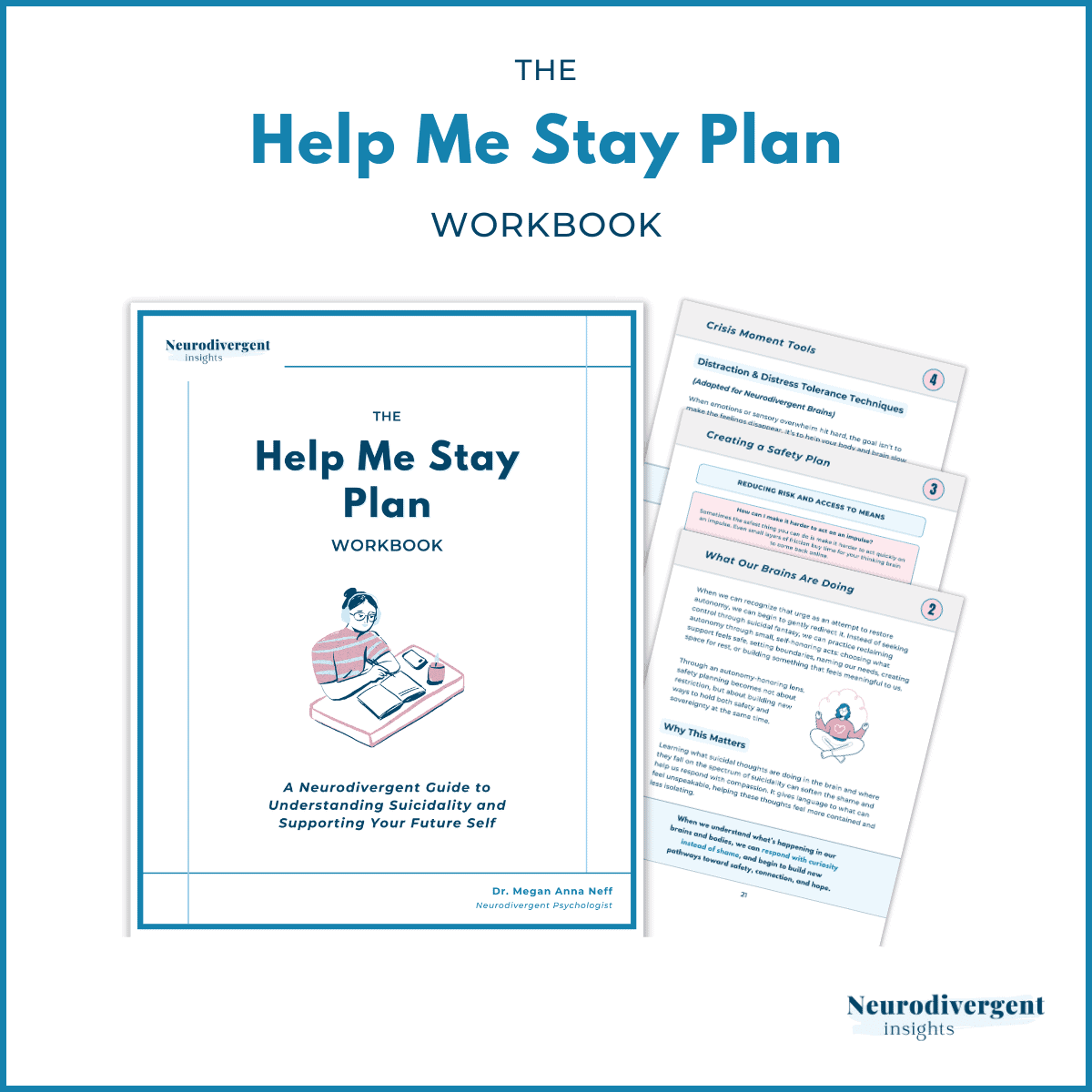
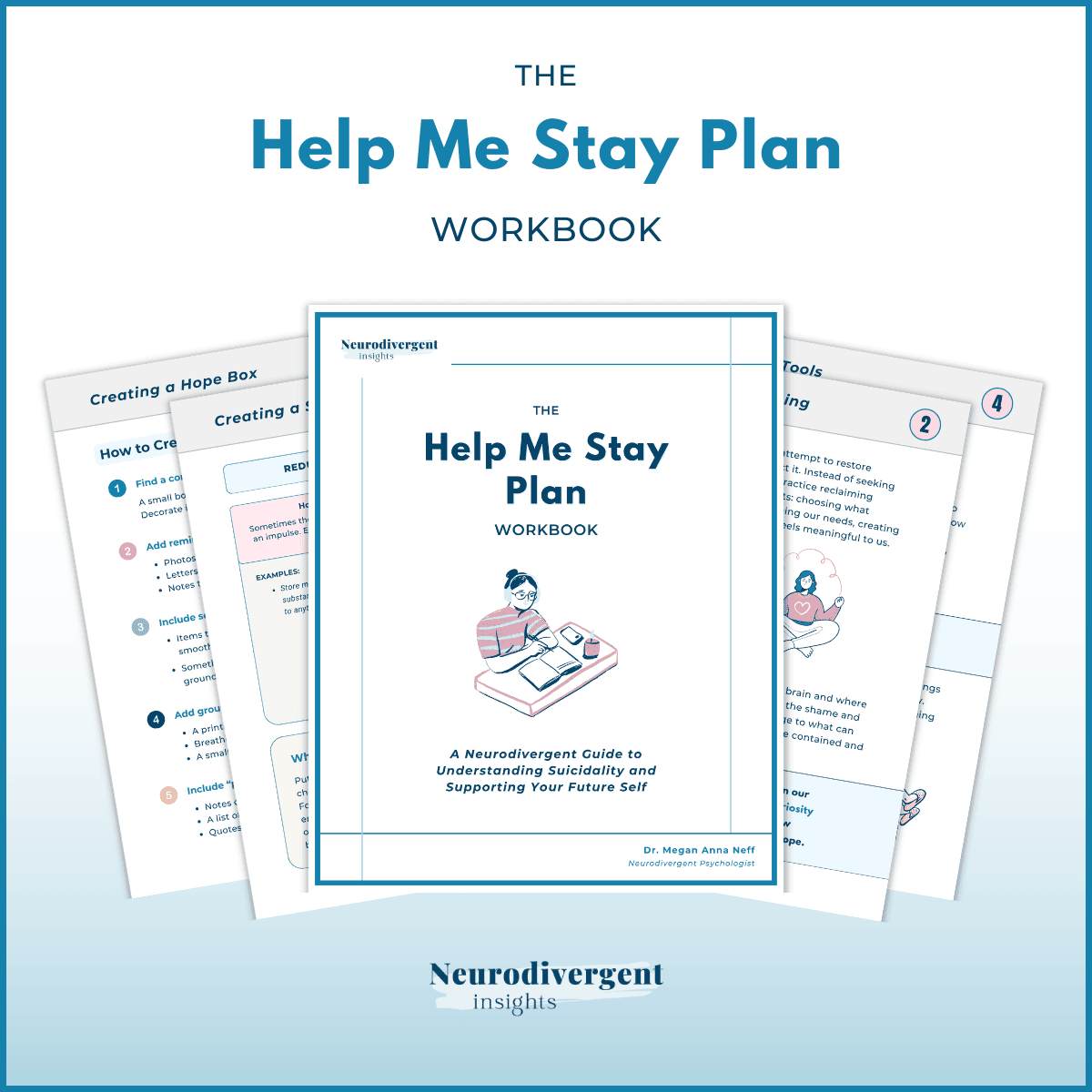
The Neurodivergent Adapted Safety Plan was created to bridge that gap.
Built from research, lived experience, and conversations with neurodivergent adults, this free resource offers a structured, compassionate way to support your future self. It centers autonomy, clarity, sensory needs, and the unique ways overwhelm shows up in neurodivergent nervous systems. It can be used personally or within a clinical, peer, or community setting.
This plan does not replace clinical care ~ but it can be a resource that provides language, grounding tools, and understanding.
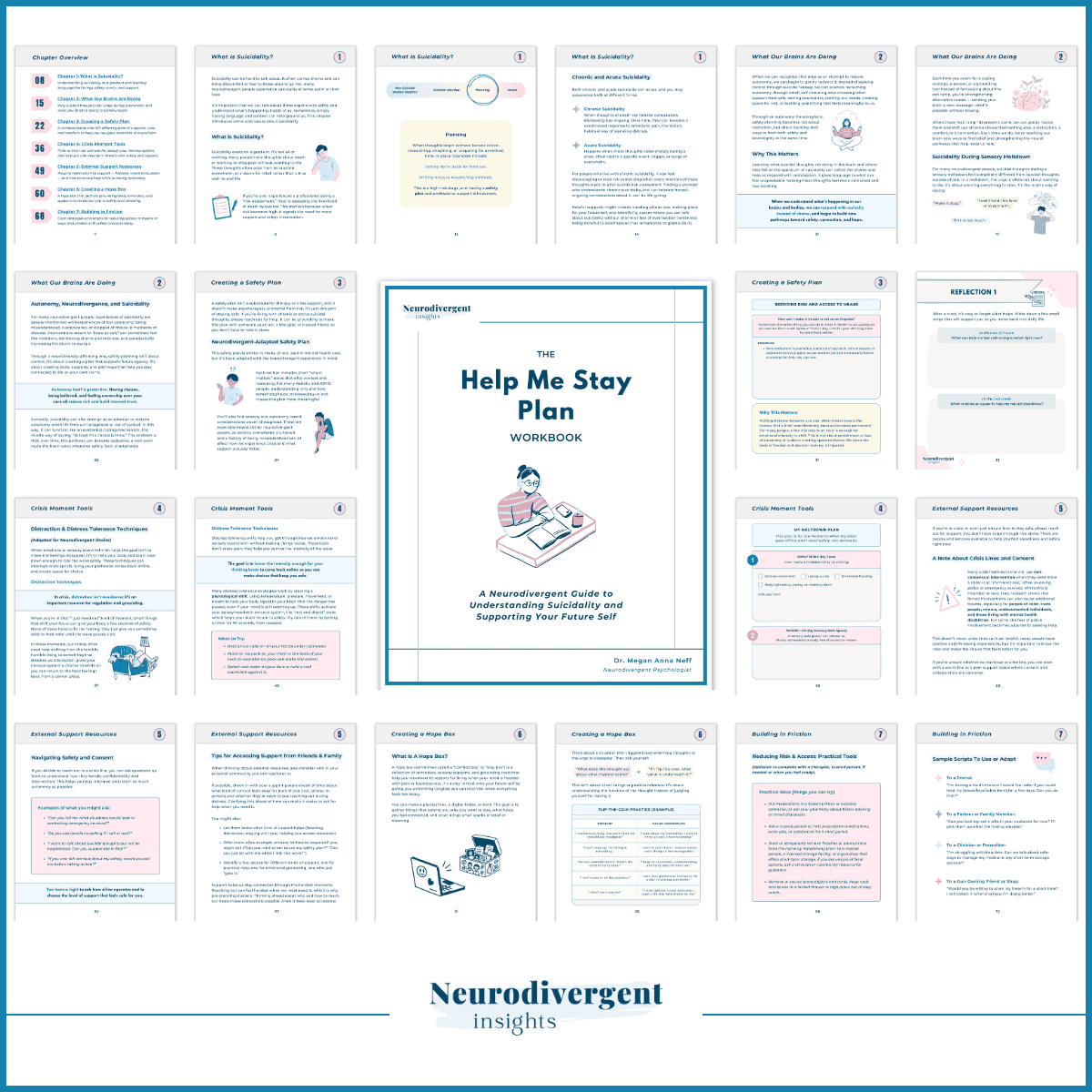
What This Free Resource Includes
A neurodivergent-informed breakdown of suicidality: Understanding the gradient of suicidality (morbid ideation, intrusive images, planning, intent) in language that brings clarity and reduces shame.
Neuroscience insights tailored to autistic and ADHD nervous systems: Why suicidal spikes happen during sensory overload, shutdown, RSD storms, transitions, or sudden demands ~ and how to interpret what your brain is trying to communicate.
A safety-plan template written for neurodivergent minds: Including early signs, internal and external coping supports, sensory-friendly crisis tools, reasons to stay, and autonomy-honoring strategies for reducing access to means.
Crisis moment tools that work with your sensory system: Grounding strategies, distraction techniques, distress tolerance, sensory soothers, meltdown plans, and scripts for communicating needs when words are hard.
Peer, warm-line, and crisis resources with consent-centered guidance: Including information about which lines may use non-consensual intervention and which honor caller autonomy.
A Hope Box guide: grounding tools, values-based reframes, and future-self supports: Both physical and digital versions, plus the “flip-the-coin” practice that helps identify the values underneath emotional pain.
Practical, thoughtful guidance for building in friction without losing autonomy: Tools, scripts, and checklists that help increase safety without triggering shame or control-dynamics.
Who This Resource Is For
-
Autistic, ADHD, AuDHD, and otherwise neurodivergent adults navigating chronic or acute suicidal thoughts
-
Anyone who experiences overwhelm, shutdowns, or rapid-onset spikes that feel hard to talk about
-
Clinicians wanting a more neurodivergent-affirming approach to safety planning
-
Peer supporters, friends, and partners seeking grounded language and clear support pathways
Why We Created This
Many neurodivergent people have been misunderstood in clinical settings. Meltdown-based suicidal thoughts are often misinterpreted as intent. Chronic suicidal ideation can lead to retraumatizing interventions. And many plans ignore sensory overwhelm entirely.
It’s designed to help you feel more resourced, more understood, and more equipped to support the version of yourself who struggles most.
You deserve support that helps you feel more safe, not less.
Accessibility & Use
This resource is free to download and free to use personally or within clinical practice as long as it is shared unchanged and not resold.


Reviews
There are no reviews yet.