
Stimming
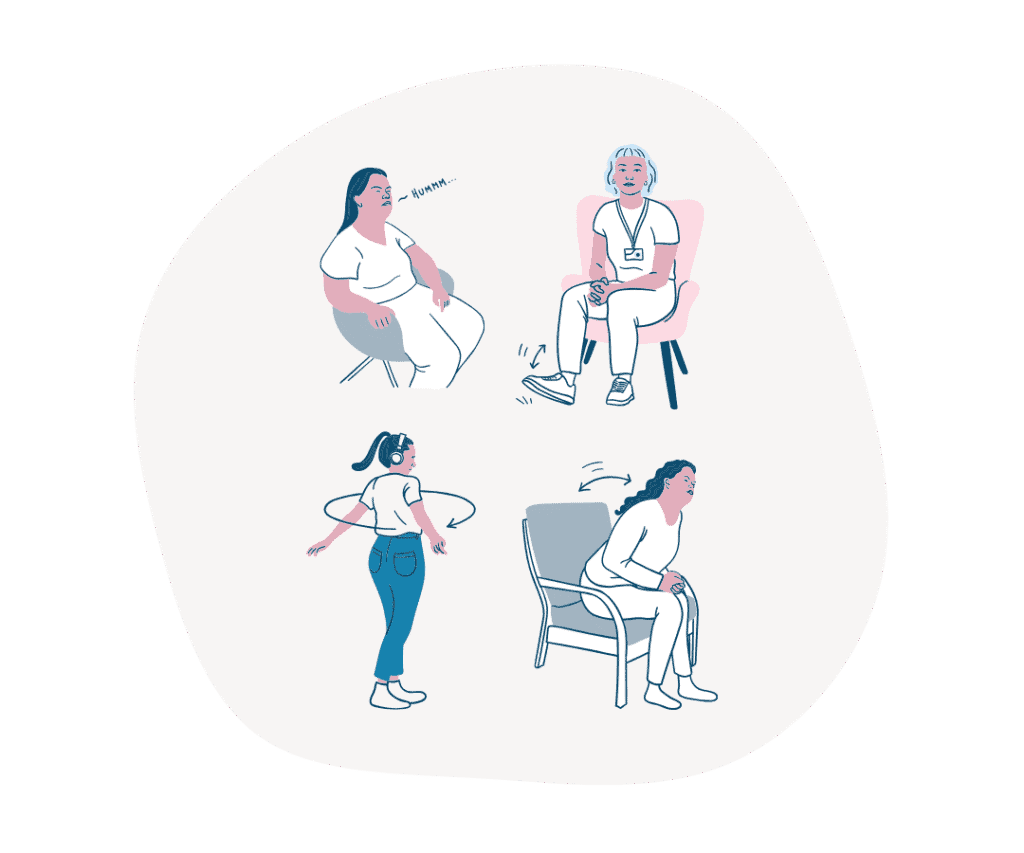
Stimming (short for self-stimulatory behavior) refers to repetitive movements, sounds, or sensory inputs that help regulate the nervous system. Rocking, hand-flapping, humming, skin-picking, chewing, tapping, repeating words or phrases. These are all forms of stimming, and most people do some version of it.
For many neurodivergent people, stimming serves essential functions: it can help process overwhelming sensory input, release built-up tension, support concentration, express emotion (including positive emotion), or simply feel good. It is communication, regulation, and sometimes joy.
Stimming has historically been treated as something to suppress, particularly in autism interventions like ABA. Many Autistic adults describe being trained out of visible stims in childhood, only to lose access to a primary regulation tool. The cost of suppressing stims often shows up later as burnout, dissociation, or a deep disconnection from the body’s signals.
Not all stimming is comfortable or safe. Some stims can cause physical harm or may signal increased sensory load and distress rather than regulation. When harmful stims are present, harm-reduction approaches can help: increasing sensory safety, swapping for alternative stims, adjusting the environment, adding protection, and building supports that reduce the underlying distress. Stimming is a powerful form of communication. The goal should never be to arbitrarily stop stimming, but rather to understand what it communicates and support access to stims that feel good and sustain wellbeing.