
Synesthesia
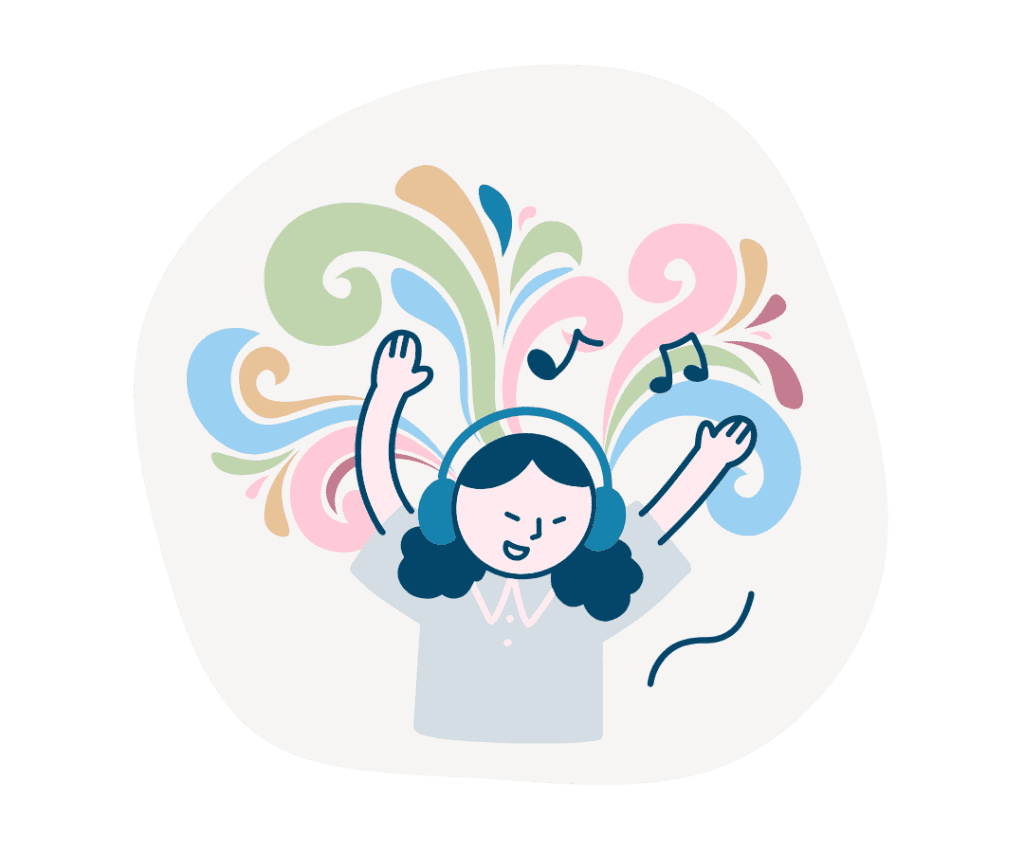
Synesthesia is a perceptual trait in which one sensory or cognitive pathway automatically activates another. A person might see letters as having distinct colors, hear music as shapes, taste words, or feel physical sensations when watching someone else be touched. These experiences are involuntary, consistent over time, and unique to each person.
Synesthesia is not a disorder, and not something medical providers diagnose. It is a difference in how the brain connects and processes sensory information, likely related to increased neural connectivity between regions that are typically more separate.
Synesthesia co-occurs with autism at notably higher rates: around 19% of Autistic people experience it, compared to roughly 4% of the general population. It also shows up more frequently among musicians and visual artists. Research published in 2025 found musicians were about four times more likely to be synesthetes, across multiple types of synesthesia, not just sound-color.
For some, synesthesia is a source of richness, creativity, or grounding. For others, it can contribute to sensory overwhelm, especially in already demanding environments. And for many, a complex mix of both. Like many aspects of neurodivergent perception, whether it feels like a gift or a challenge often depends on context, capacity, and how much control a person has over their sensory environment.