
Unmasking
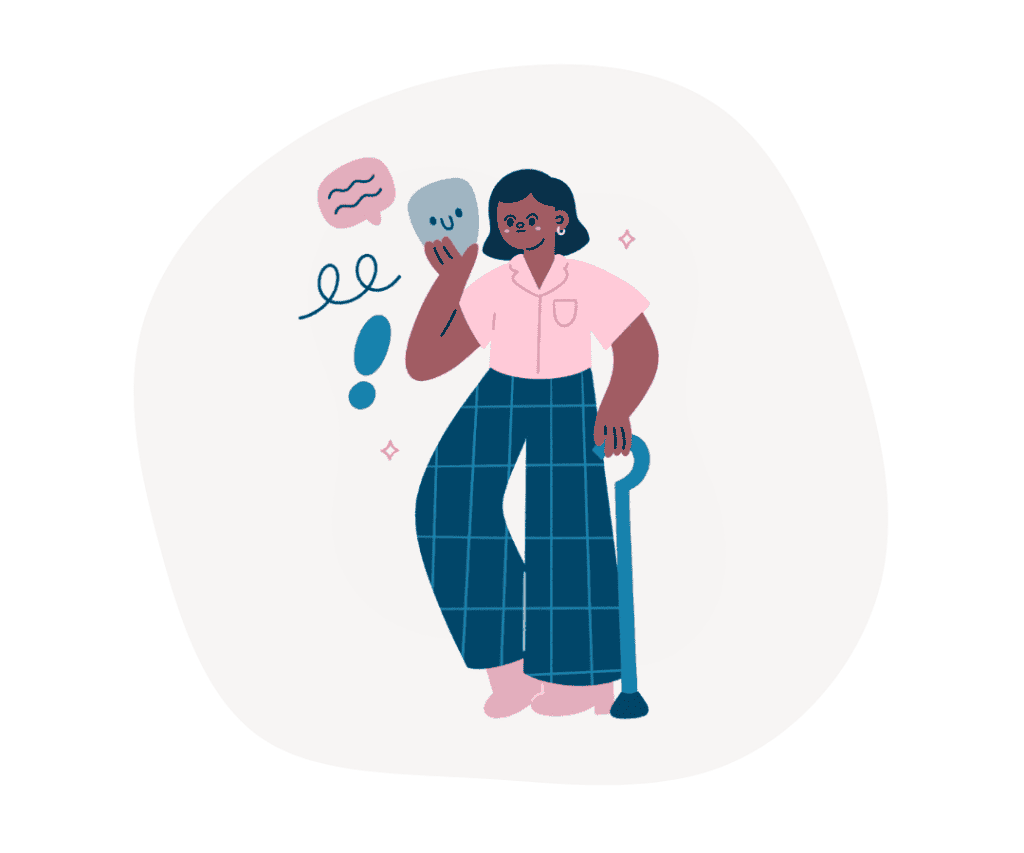
Unmasking refers to the process of reducing or letting go of learned behaviors used to hide neurodivergent traits. Masking often develops as a survival strategy in environments that reward conformity and penalize difference.
For many, unmasking is most sustainable when it is gradual and gentle. Letting go of masking can bring relief, self-understanding, and a deeper sense of authenticity, while also increasing vulnerability. As people navigate shifting social expectations and self-acceptance, unmasking may surface grief, fear of judgment, or uncertainty about what feels safe to share.
Unmasking is shaped by intersectionality. Factors such as race, gender, class, disability, culture, and past trauma all influence how safe it is to unmask and what the risks may be. Because of this, unmasking is not a moral obligation or a goal to rush toward. Safety, choice, and context matter.
For many people, unmasking is less about removing a mask entirely and more about learning when, where, and with whom it feels possible to be more fully oneself.