Zebra
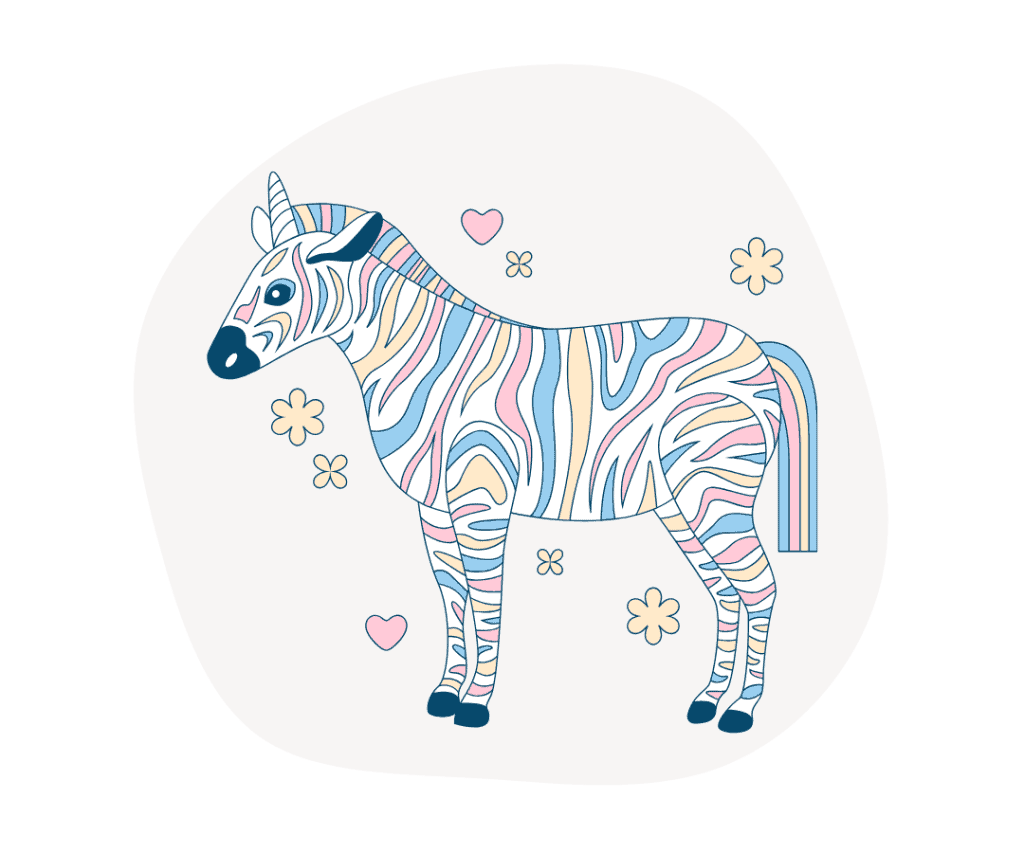
Within neurodivergent and disability communities, “zebra” is used in two related but distinct ways.
In medical and chronic illness contexts, zebra refers to people with rare, complex, or often-missed conditions. The term comes from the saying, “When you hear hoofbeats, think horses, not zebras,” which encourages clinicians to look for common explanations first. For many patients, especially those with conditions like Ehlers-Danlos syndrome, autoimmune illnesses, or other systemic or connective tissue conditions that are more common among neurodivergent people, this mindset can lead to years of missed diagnoses or dismissal. Over time, this often contributes to medical invalidation and medical trauma. Many people reclaim zebra as a way of naming their lived reality and finding community after not being believed.
Within neurodivergent communities, zebra is also used as an analogy. In this framing, neurodivergent people are not “broken horses” (neurotypical), but zebras, different by nature, not deficient. Seeing yourself as a zebra can help explain why trying to function like a horse has always felt so hard, and why finding your “herd” matters.
This metaphor is especially meaningful for late-identified Autistic and ADHD people. It offers a way to move from self-blame to self-understanding, and from trying to survive in horse-centered systems to building lives and communities where zebras can connect and flourish.