



|
Supporting Clinicians for Mental Health Month - free resources plus 30% off our Complete Library and Trainings Bundles
|

April is Autism Acceptance Month, a time to recognize the strengths of Autistic culture while acknowledging the challenges many of us experience in navigating a non-Autistic world. This month, I am breaking down what Autism Acceptance means into actionable steps with my series, “Autism Acceptance in Action.” Today we’re looking at autism in society and what autism acceptance looks like in society at large.
Autism acceptance is an essential aspect of promoting diversity and inclusion in all areas of society. Autistic individuals have a long history of being excluded and marginalized from society, facing societal barriers and stigma due to a lack of understanding and acceptance of our neurological differences.
Embracing autism acceptance in society means challenging these stereotypes and promoting a culture of inclusion and understanding. By advocating for policies and initiatives that promote Autistic individuals’ rights and needs, promoting representation of Autistic voices in media and public spaces, and simply educating others about the diversity and benefits of living in a neurodiverse world, we can create a society that is truly inclusive and accepting of neurodiversity.
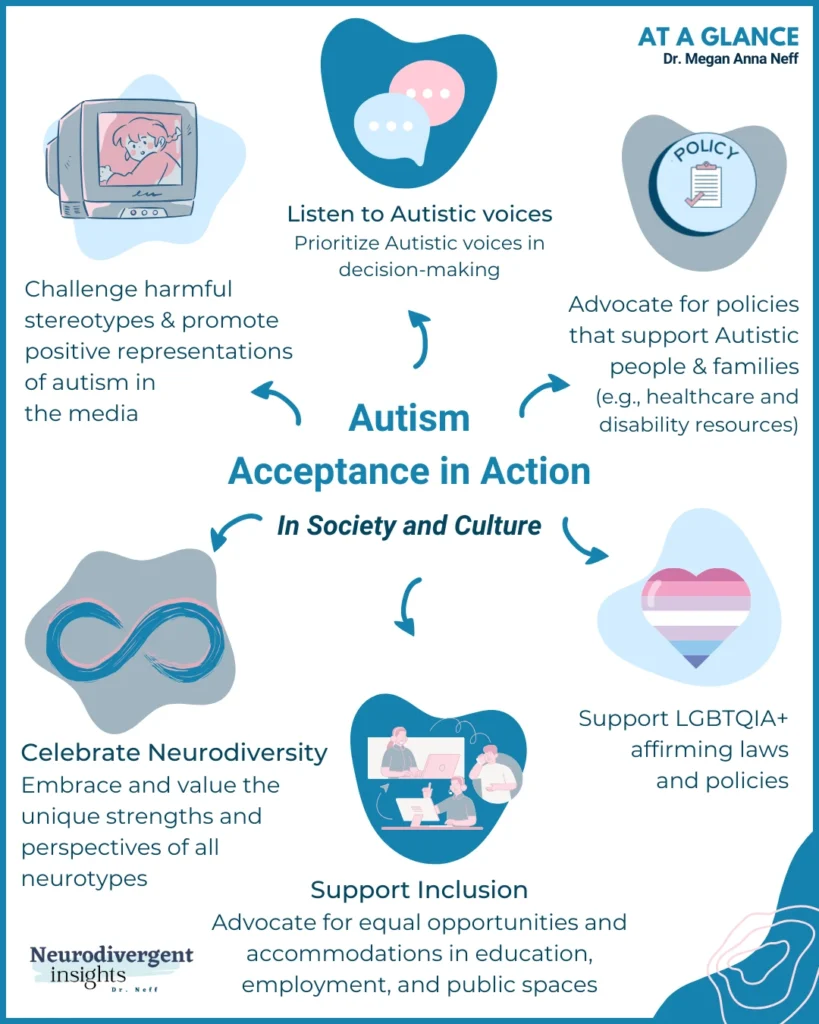
While by no means an exhaustive list, here are several practices that can bring greater acceptance of autism in society.
Supporting LGBTQIA+ affirming laws and policies is essential to promoting autism acceptance in society. Autistic people identify as queer at much higher rates. Autistic individuals who identify as LGBTQIA+ face multiple barriers and discrimination, and it’s crucial to support and uplift their voices to promote acceptance and inclusion. One study found that as many as 70% of Autistic people identify as LGBTQIA+ (George and Stokes, 2018). Therefore, supporting policies and practices that protect the safety and rights of LGBTQIA+ people is an active step that protects the majority of Autistic people.
Celebrating neurodiversity means embracing and valuing the unique strengths and perspectives of all neurotypes. By recognizing and celebrating the contributions of Autistic individuals in various fields, including the arts, sciences, and technology. Embracing neurodiversity as a valid and beneficial part of humanity helps create a more inclusive society and reduces stigma.
It’s vital to challenge harmful stereotypes. Many harmful stereotypes about autism still persist, such as the idea that Autistic people lack empathy or are unable to form meaningful relationships. Promoting positive representations of autism in the media is particularly important. The media has historically perpetuated negative and harmful stereotypes about autism, which can lead to further marginalization and exclusion. Promoting positive and accurate representations of Autistic individuals can help to create a culture of acceptance and understanding.
Prioritizing Autistic voices in decision-making, especially on issues that affect the Autistic community. By centering Autistic voices, we can create policies and initiatives that are truly inclusive and reflective of the diverse needs and experiences of Autistic individuals.
Advocating for equal opportunities and accommodations in education, employment, and public spaces is crucial to promoting autism acceptance in society. It’s essential to promote inclusion and accessibility for Autistic individuals to ensure they have equal access to resources and opportunities.
It’s crucial to advocate for policies that support Autistic people and families, such as healthcare and disability resources. Policies that prioritize Autistic individuals’ needs and experiences can help promote a more inclusive and supportive society.
Resource: The Autistic Self Advocacy Network ( ASAN) is an excellent resource for getting involved in Autistic self-advocacy and advocacy initiatives.
In conclusion, autism acceptance in society means challenging harmful stereotypes, promoting inclusion and accessibility, and centering Autistic voices in decision-making. Celebrating neurodiversity, supporting LGBTQIA+ affirming policies, and advocating for Autistic-affirming policies can help to create a more inclusive and accepting society. By embracing diverse neurotypes and recognizing the contributions and strengths of Autistic individuals, we can build a more equitable and just society for all.
For ongoing insights and updates, subscribe to the Neurodivergent Insights Newsletter. Each Sunday, I send out fresh thoughts and a roundup of the newest resources on topics related to neurodivergence, mental health, and wellness. My most personal writing is reserved for my newsletter, and subscribers also get access to the newsletter vault (12+ PDFs) when they join.
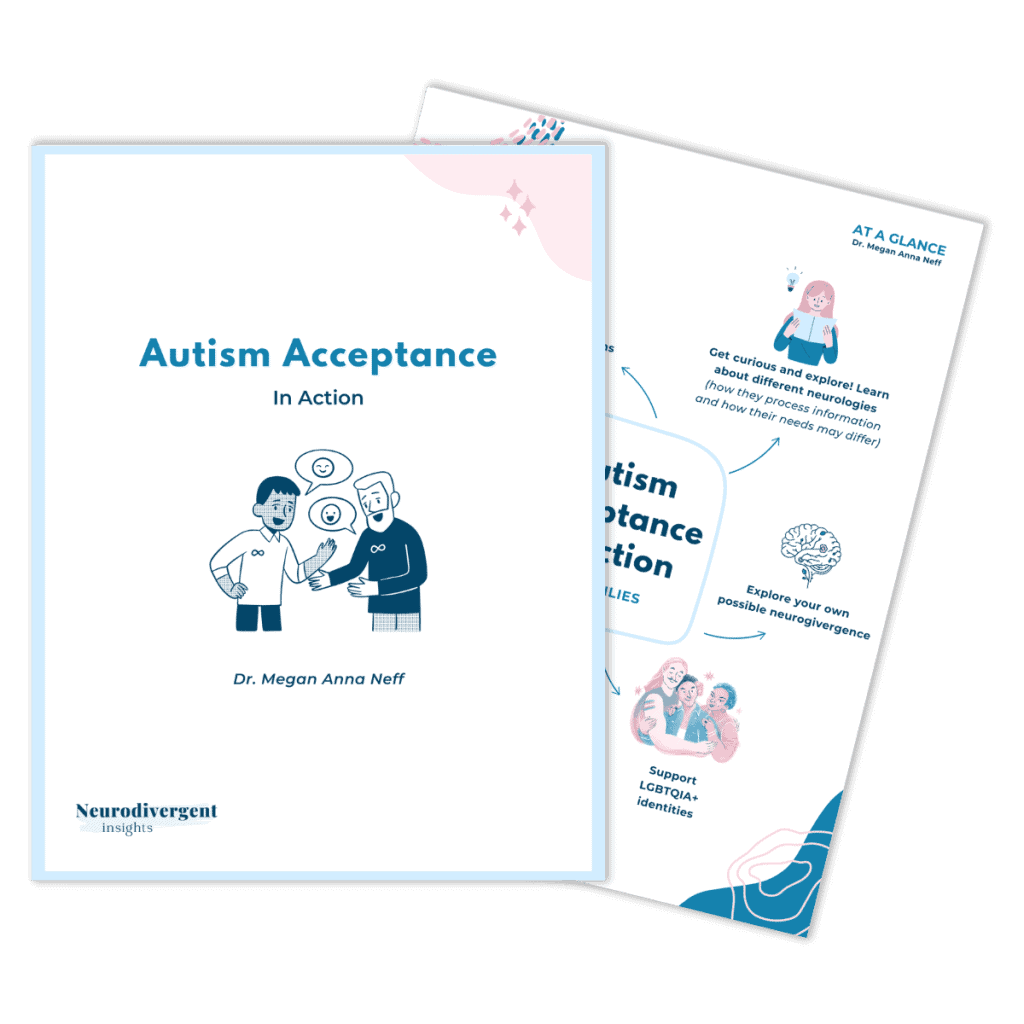
Interested in using these infographics? The full Autism Acceptance Infographics series is available to download.

Exploring mental health and wellness through a neurodivergent lens, blending lived experience with clinical insight.

Link copied to clipboard!