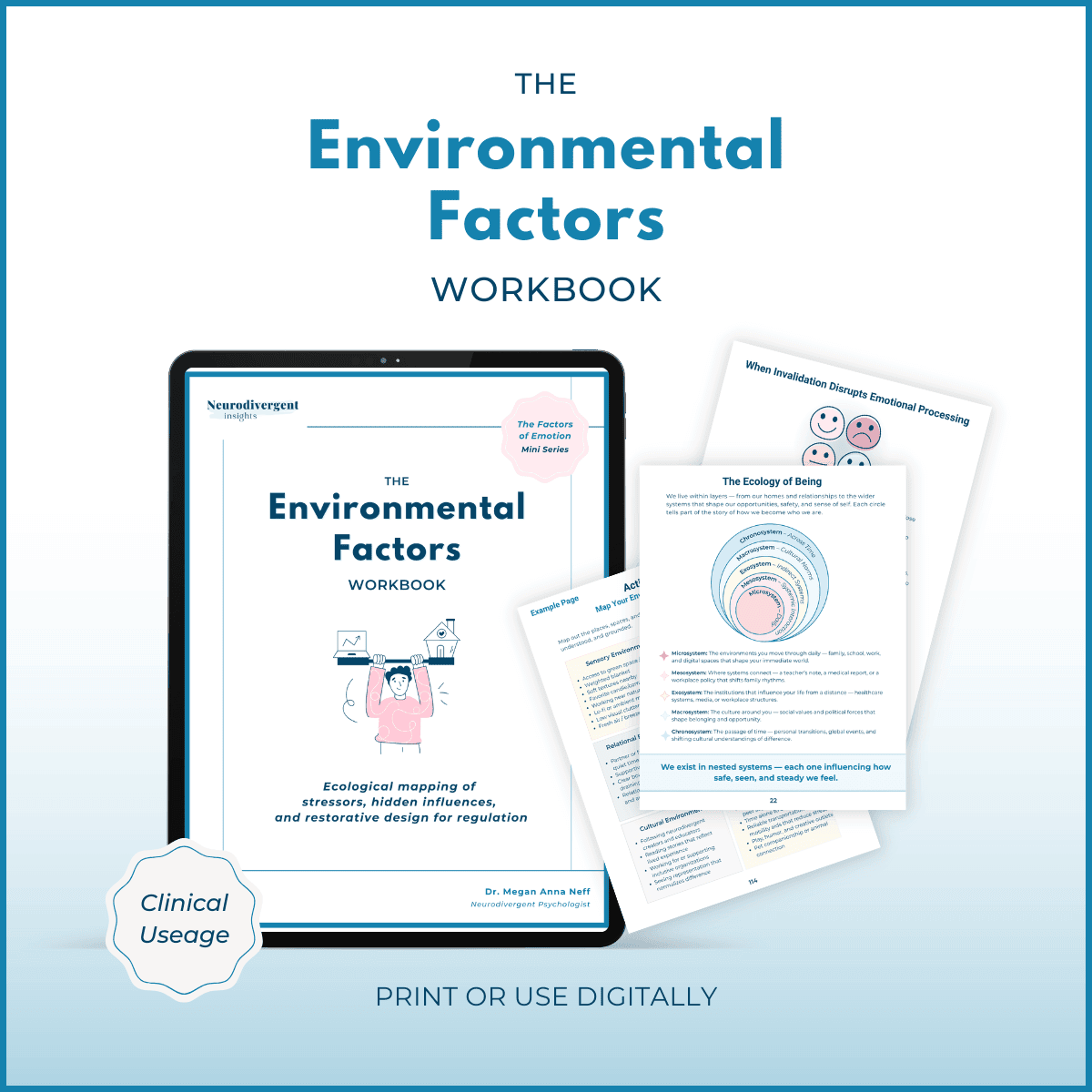



The Environmental Factors Workbook — Clinical License
Integrating the Ecological Model into Neurodivergent-Affirming Practice
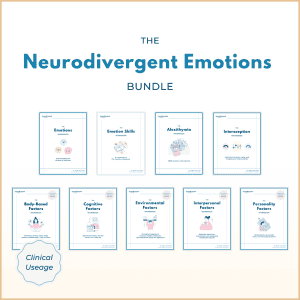
This digital workbook is designed for clinicians and coaches who want to help clients explore how context shapes emotion. As the fifth and final volume in the Neurodivergent Emotions series, it introduces the ecological model as a framework for understanding regulation not only within the self, but within systems, spaces, and relationships.
Rather than framing emotion as an internal problem to be fixed, this workbook invites practitioners to widen the lens — to see how the sensory, social, and structural environments surrounding a person shape their nervous system, energy, and access to regulation.
Use it as a psychoeducational tool, reflection aid, or collaborative worksheet within therapy and coaching sessions to help clients identify patterns of stress, safety, and belonging across multiple layers of their environment.
Clinical Applications & Chapter Overview
Mapping Our Stressors: Understanding Environmental Factors
Use the ecological model to help clients contextualize emotions within the environments they inhabit — home, work, community, and culture. This chapter provides mapping exercises to trace how daily stressors and supports interact with the nervous system, illuminating environmental triggers that may otherwise appear as “symptom” or “resistance.”
Environmental Reinforcers
Guide clients in identifying how certain settings or relational dynamics reinforce emotional or behavioral patterns. This section includes reflection prompts and practical tools to help clients make small, realistic environmental shifts that support regulation and engagement.
Minority Stress, Traumatic Invalidation, and Intersectionality
Support clients in exploring the cumulative impact of minority stress and chronic invalidation. This chapter offers language and frameworks for discussing how systemic inequities, trauma, and intersecting identities influence emotional well-being and self-perception — a foundation for trauma-informed, identity-affirming care.
Designing for Regulation: Environmental Design and Emotional Well-being
Translate insights into action. Learn how environmental design principles — light, sound, color, layout, sensory cues — can be applied in therapy offices, coaching spaces, or clients’ homes to create environments that foster focus, calm, and belonging.
🗂️ Logistical Details
✷ ✷ Purchasing the coaching/clinical version gives you full rights to share this workbook with your clients. If you are a group practice or school or are running an online course, please contact us for group pricing (Email Support@neurodivergentinsights.com). If you’re using it for your own personal learning only, you can choose the personal-use version instead. Both contain the same content — the difference is simply in the licensing.
⚠️ Mental Health Disclaimer: This neurodivergent workbook is intended for educational purposes only. It is not a substitute for professional medical or mental health advice, diagnosis, or treatment. If you have concerns about your health or well-being, please consult a qualified healthcare or mental health professional.
📥 Digital Download 📥
Please note this is a digital download only and no products will be shipped or mailed to you. We recommend creating an account when you checkout to ensure you can easily access this workbook at any time and any future updates to this workbook.
✍️ Using Your Workbook Digitally
- On an iPad or Tablet. You can open the PDF in an app like GoodNotes, Notability or Noteshelf → write directly on the pages with a stylus or keyboard. These apps allow typing, highlighting, and handwriting with an Apple Pencil. You just import your PDF workbook, and it becomes “fillable” by writing or typing.
- On a Computer. If you’re on a computer, you can type your reflections right onto the workbook pages by opening the PDF in Adobe Reader (free) or another PDF viewer. Some people also like to keep a separate digital journal or Word/Google Doc open alongside the workbook, copying over prompts and writing more freely there.

Reviews
There are no reviews yet.