
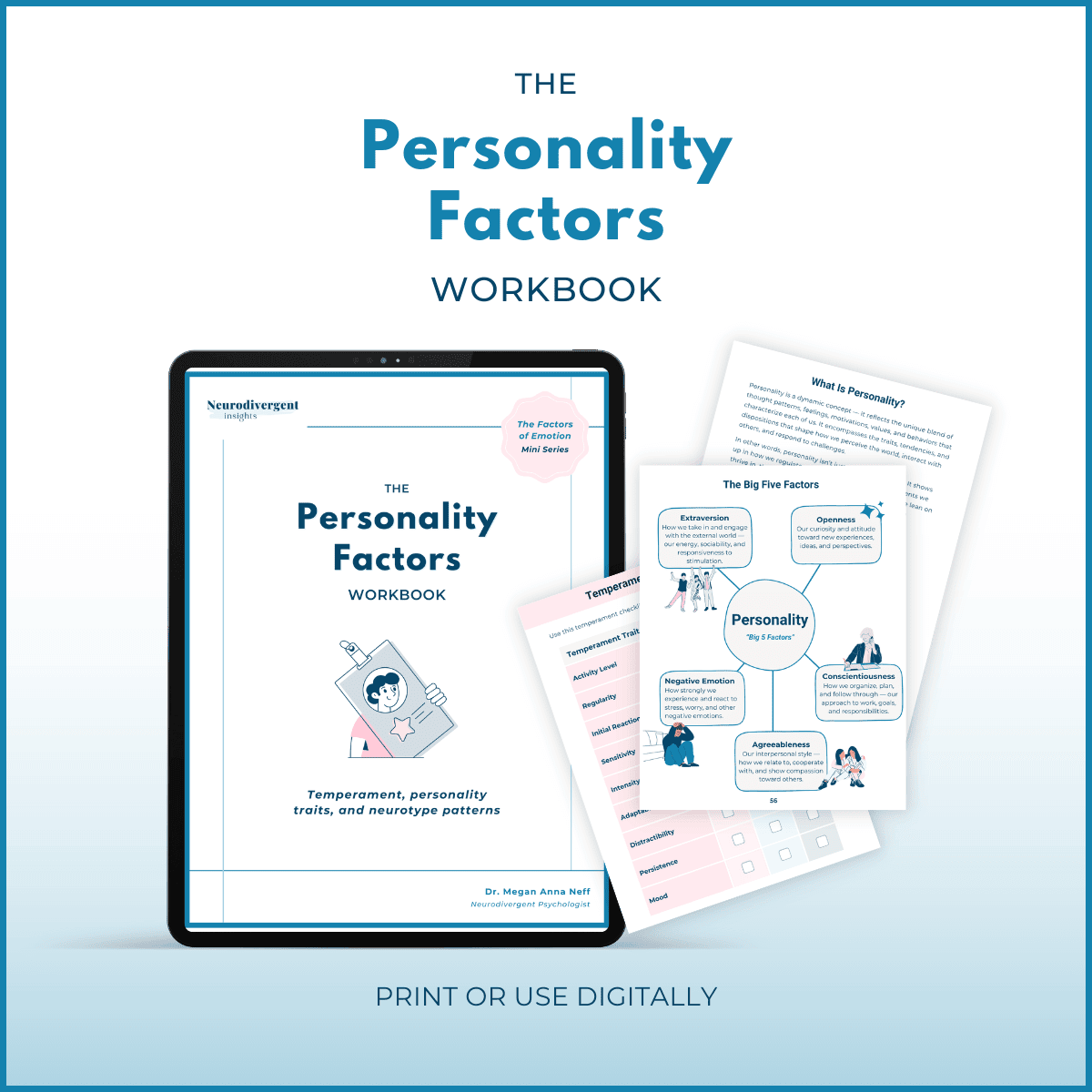

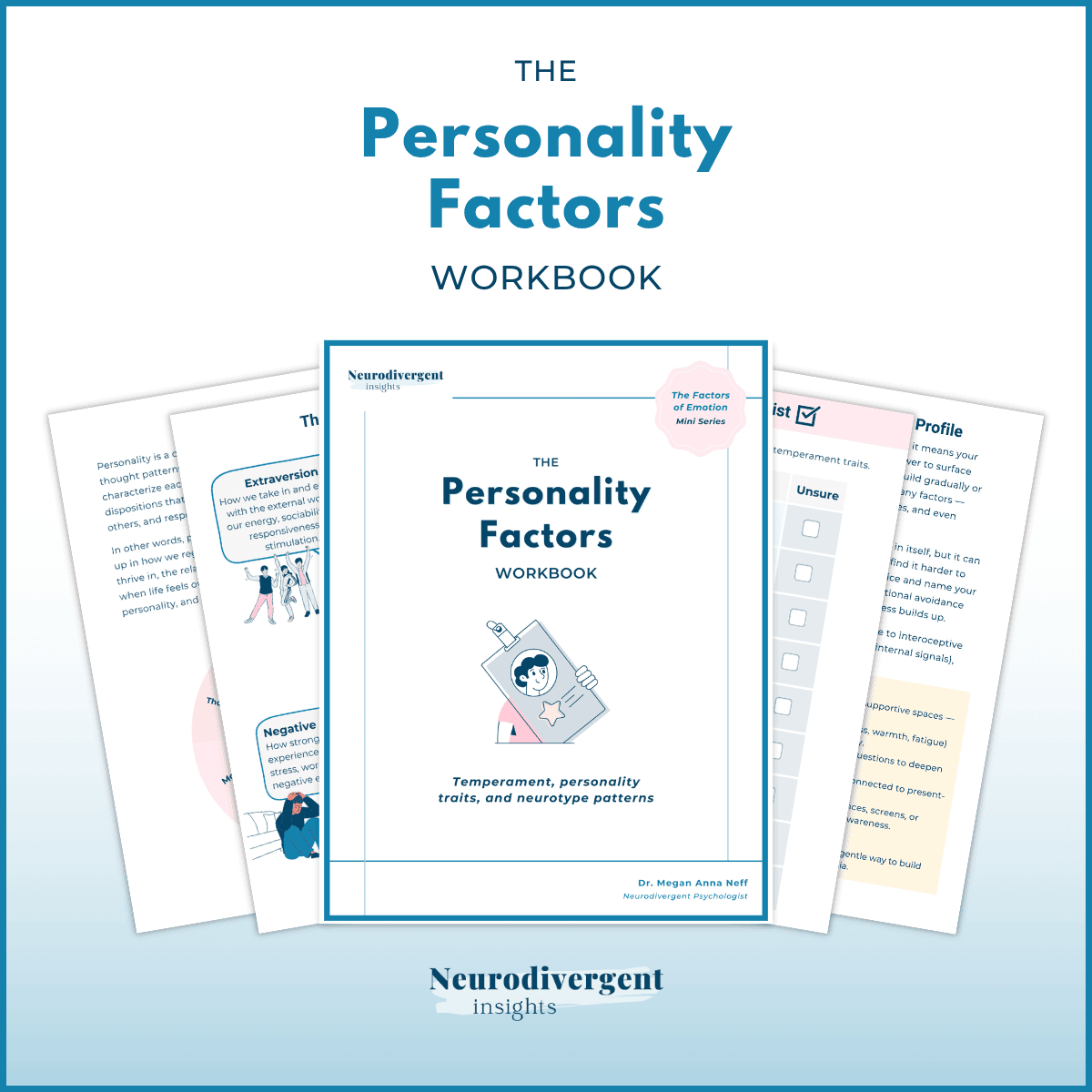
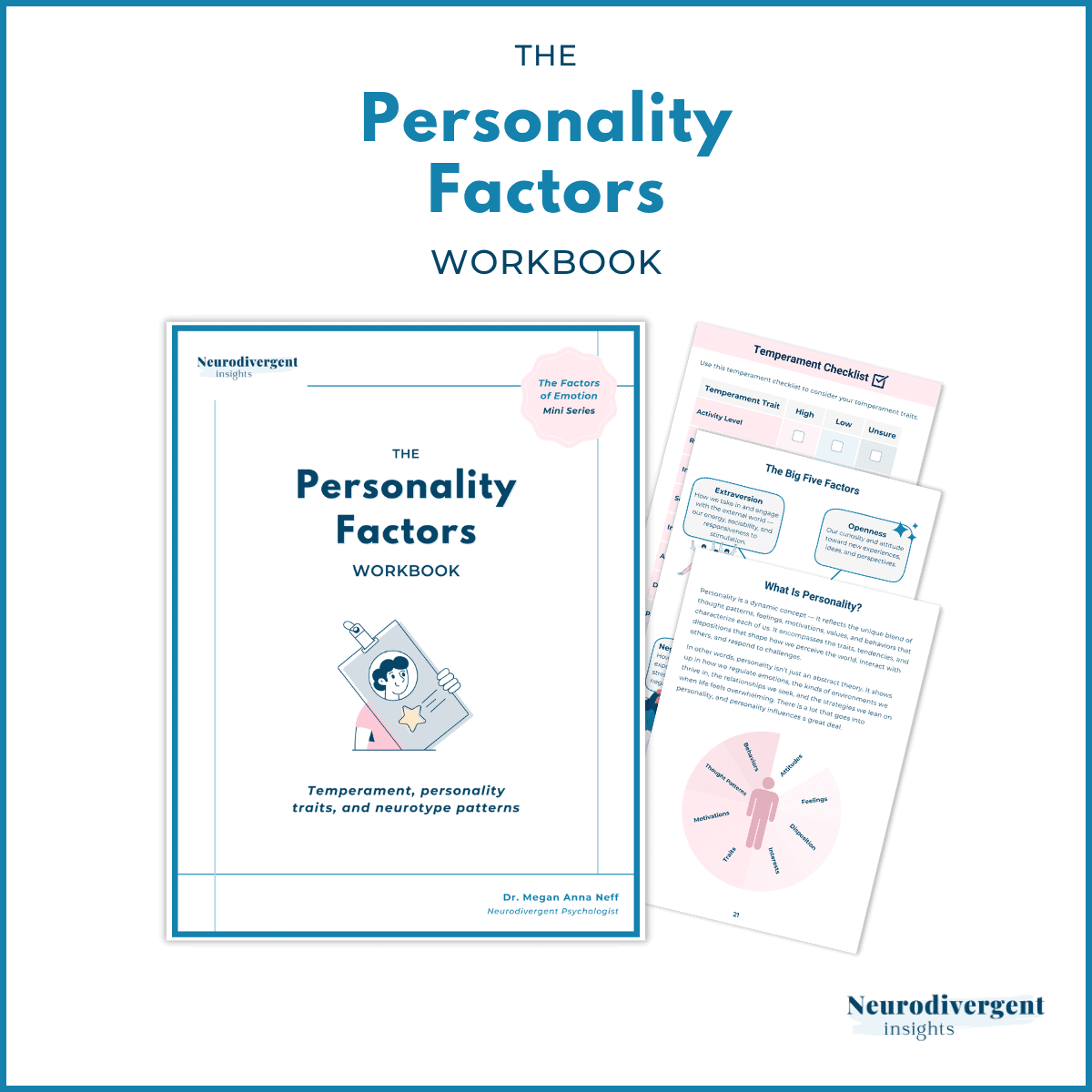

The Personality Factors Workbook
Exploring temperament, traits, and the patterns that shape how we move through the world
The Personality Factors Workbook offers a neurodivergent-informed approach to understanding how personality shapes the way we think, feel, and relate to others.
Blending psychology, self-reflection, and visual frameworks, this workbook helps you explore the patterns that make you you, and how those patterns interact with your environment, relationships, and daily life.
Inside the Workbook
Understanding Personality & Change
Explore what personality is, how it develops, and what research says about the potential for growth and change over time.
Temperament & Goodness of Fit
Discover how your natural temperament influences comfort, stress, and energy levels — and how to find environments and routines that support your nervous system.
The Big Five Traits
Learn about the five major dimensions of personality (Openness, Conscientiousness, Extraversion, Agreeableness, and Neuroticism) and reflect on how they show up in your life.
Whether you’re exploring your own patterns or using this as a companion to therapy or coaching, The Personality Factors Workbook invites curiosity, compassion, and clarity about who you are and how you relate to the world around you.
🗂️ Logistical Details
⚠️ Please note that this is for personal use only. If you’d like to share this resource with clients you can purchase the Clinical and Coaching Version, which enables you to use this workbook with clients.
⚠️ Mental Health Disclaimer: This neurodivergent workbook is intended for educational purposes only. It is not a substitute for professional medical or mental health advice, diagnosis, or treatment. If you have concerns about your health or well-being, please consult a qualified healthcare or mental health professional.
📥 Digital Download 📥
Please note this is a digital download only and no products will be shipped or mailed to you. We recommend creating an account when you checkout to ensure you can easily access this workbook at any time and any future updates to this workbook.
✍️ Using Your Workbook Digitally
- On an iPad or Tablet. You can open the PDF in an app like GoodNotes, Notability or Noteshelf → write directly on the pages with a stylus or keyboard. These apps allow typing, highlighting, and handwriting with an Apple Pencil. You just import your PDF workbook, and it becomes “fillable” by writing or typing.
- On a Computer. If you’re on a computer, you can type your reflections right onto the workbook pages by opening the PDF in Adobe Reader (free) or another PDF viewer. Some people also like to keep a separate digital journal or Word/Google Doc open alongside the workbook, copying over prompts and writing more freely there.


Julia Bernardo –
Wonderful resource for parents, teachers or neurodivergent individuals. The information provided is very factual, it provides a lot of information and insight into Autism and emotional dysregulation. I am a teacher who has been recently diagnosed with ADHD myself and I have a child who is ASD/ADHD. As a teacher I know how much time goes into making resources, and these resources are very extensive. Definitely recommended.