
Pacing systems are widely used by people navigating chronic pain, chronic fatigue, and other disability- or health-related challenges. At their core, pacing systems are about learning to distribute energy more evenly — finding ways to prevent the push-crash cycle that so often comes with limited energy. Rather than pushing until exhaustion and then needing extended recovery, pacing offers a framework for noticing limits, planning ahead, and building in rest before a crash hits.
Table of Contents
The Boom and Bust Cycle
A pacing system is essentially any system that helps you monitor and manage energy more sustainably. Pacing Systems are helpful because many fall into the Boom-or-Bust cycle when managing a chronic illness or disability (you can read more about the “Boom -and- Bust Cycle here). The boom-and-bust cycle is characterized by: overextending ourselves on “good” days, which is then inevitably followed by a crash. Each time we go through the cycle, it takes us longer to get back to our baseline, which is how we end up in positions of chronic pain, fatigue, and burnout.
Pacing systems are a helpful way to even out our energy expenditure so that we don’t get stuck in the boom-and-bust cycle. Pacing systems helps create a lifestyle that balances energy expenditure. Various pacing systems are available (Spoon therapy, Energy accounting, Traffic Light System).
Pacing Systems Overview
Pacing systems are one way to intervene in the boom-and-bust cycle by creating more balance in how energy is used throughout the day or week. One helpful principle is aiming to do about two-thirds of what you think you can. This gentle margin helps prevent pushing right up to the point of collapse and allows space for recovery.
There are different pacing systems, and you’ll likely find yourself drawn to one more than the others. Below I’ll introduce you to three of my favorites.
Energy Accounting System
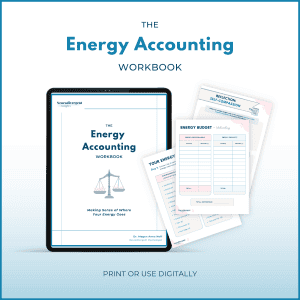
Energy Accounting System: Energy accounting was developed by an Autistic advocate Maja Toudal when she was a teenager. She initially developed it to communicate with her parents what it was like to be autistic (and to have limited resources). Energy accounting is similar to balancing a checkbook. You decide the amount of energy (deposit and input) each activity costs and then “balance your checkbook.” You can see an example and further directions for the energy accounting system in the course materials.

Green Light-Yellow Light-Red Light System
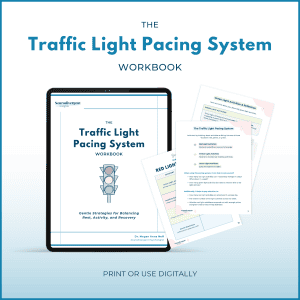
The Traffic Light System: If you are prone to getting over-fixated on numbers, you may do better with a color pacing system. You may consider giving the Green Light-Yellow Light-Red Light system a try.
Red Light Activities: High energy expenditure activities
Yellow Light: Medium to neutral
Green Light: Activities that restore and recharge you
With the light system, you first identify your red light activities, and you are mindful to:
A) space out your red light activities
B) plan yellow and green light activities between, and
C) are mindful of how many red light activities you have in a given day or week.

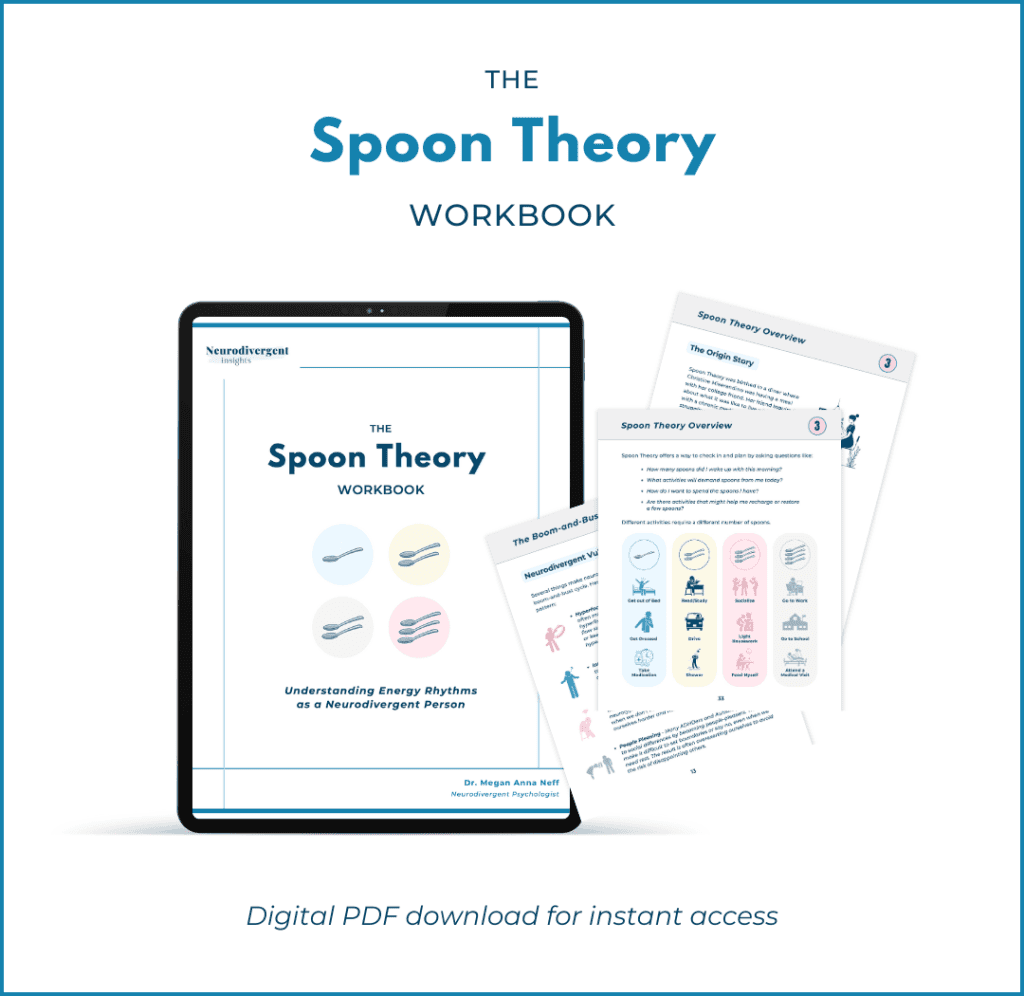
Spoon Theory
The third pacing system is spoon theory, which was developed by Christine Miserandino when she was explaining to a friend her experience of how lupus impacted her energy units and ability to perform daily tasks (you can read her original post here). The analogy includes that when you have a chronic disease (or invisible disability), you have a limited number of spoons you wake up within a given day, and activities tend to take more energy units. Given these limitations, a person needs to consider “how many spoons” they have that day and how they will choose to use them.
Top 3 Reasons Pacing Systems are Useful for ADHDers and Autistic People
1) They turn something abstract like “energy” into something concrete and visual. Many pacing systems rely on visual metaphors, which work well for the neurodivergent mind. Talking about “spoons” or “energy units” provides a concrete concept to anchor the conversation.
2) It provides language to talk with other people about our needs. Saying, “I am tired,” is vague. Creating language around energy accounting or energy units helps us to communicate to others about our needs which is a foundational step in self-advocacy.
3) It increases self-compassion: A pacing system encourages mindful check-ins. Having a pacing system in our life encourages us to check in with ourselves gently (“how am I doing right now? How much energy do I have? How much energy is this activity going to take? What do I need at this moment right now”). This sort of gentle, compassionate check fosters self-compassion.
How to Use a Pacing System
Paying attention to your energy use can be a powerful way to manage chronic fatigue, chronic pain, and the ups and downs of neurodivergent life. Systems like Spoon Theory, Energy Accounting, or the Traffic Light System aren’t about tracking every detail perfectly — they’re about helping you see the bigger picture.
The first step is getting to know your baseline: noticing what a typical day of energy in and energy out looks like for you. From there, a helpful guideline is the “two-thirds” principle — aiming to do about two-thirds of what you think you can. It may feel counterintuitive at first, but pulling back before you reach your limit helps prevent the crash that comes when you push too far.
For many autistic and ADHD people, even so-called “mundane” tasks — answering emails, making phone calls, doing errands — can take extra energy. That’s why pacing matters. It’s less about squeezing in more and more, and more about creating a rhythm that feels sustainable. The goal is to live with greater agency over your time and activities, rather than feeling at the mercy of your body or nervous system.
There are different pacing systems out there, and the best one is the one that intuitively clicks with your brain. If you’re more of a numbers person, you may find Energy Accounting a good fit. If you prefer something simple and visual, the Traffic Light System might resonate more. And if you’re already familiar with Spoon Theory, you may appreciate the version adapted specifically for neurodivergent people. I’ve created fillable workbooks for all three pacing systems, which are available if you’d like extra guidance and structure.

Stay in the Neurodivergent Loop
For ongoing insights and updates, subscribe to the Neurodivergent Insights Newsletter. Each Sunday, I send out fresh thoughts and a roundup of the newest resources on topics related to neurodivergence, mental health, and wellness. My most personal writing is reserved for my newsletter, and subscribers also get access to the newsletter vault (12+ PDFs) when they join.