
Revised December 7, 2025
Autism and the Holidays
I sit here on Thanksgiving morning. It’s a pleasant moment, the family in the living room, my children playing Animal Crossing together (and not fighting!), the puppy sleeping, my husband and I clicking away on our computers, the fireplace roaring. Internally, I am also preparing myself for Thanksgiving dinner, which will involve extended family. I love my family, but I’ve never enjoyed Thanksgiving gatherings. They are often overstimulating for me. Swirling smells fill the house (the smell of Turkey makes me nauseous), running children who make loud, squealing sounds, multiple conversations occurring and overlapping, small-talk that feels hard to enter. Requests for hugs that I feel uncomfortable declining. These days are not celebratory or connecting for me; they are days to be endured. It’s 2021 and this is the first year I have the language to describe my discomfort with Thanksgiving (and the general holiday season). Here’s my reflection on Autism and the holidays.
Table of Contents
Autism Holiday Narratives
My pre-autism discovery narrative: What is wrong with me that I flinch when my family reaches to hug me? Why am I not a better aunt who intuitively knows how to engage with my nephews and nieces in conversation and play? Why am I so cranky-what’s wrong with me? Why do I get so foggy and stressed during the meal-what’s wrong with me? What is wrong with me? What’s wrong with me? What’s wrong with me?
My post autism discovery narrative: My Autistic body doesn’t find physical touch comforting; while others might experience this as a way of greeting or communicating care, it’s okay that this isn’t how I want to receive affection. For me, a simple “It’s good to see you” or “It’s good to be with you” communicates love and care. I can choose to decline a hug; nothing is wrong with me.
It’s okay to occasionally experience irritation and annoyance during the day; this is simply my body responding to sensory overload. It’s also okay to:
- choose to participate in festivities because they create meaningful memories for my family, my children, and sometimes even myself
- not enjoy them
- attend holiday family gatherings in alignment with my values, without enjoyment being required
There are a lot of cultural messages around holidays. A lot of expectations to be jolly, festive, and happy. So to all of my fellow sensory-sensitive humans out there. Please hear this-it’s okay to not be happy, jolly, and festive. In fact, it’s okay to be miserable. It’s okay if you’re body gets overloaded and overwhelmed, and you’re a grouch. It’s okay not to emote positive emotion everywhere you go. It’s okay if the holidays are hard. It’s okay not to be okay. It’s okay not to like them and embrace them with cheer and enthusiasm. You can love your family and still find it hard to be with your family. You may love your friends and decline their invitation.

It’s Ok to Not be Ok
It’s okay not to emote positive emotions. Positive emotions (especially if they don’t come from a true, authentic place) feel artificial AF for many Autistics. There is a lot of positive emotion being tossed around. The bypasser smiling, as they shout “happy holidays”. To me, this feels like a person saying, “Think fast,” while launching a speeding ball at me to catch. It’s a sensory demand being injected into me. I feel the pressure to respond and “match” their energy. I eagerly await January where people calm down and go back to regular social exchanges. Positive emotion can feel like a social demand-it feels like a thing to respond to. It can also create the sense of “what is wrong with me?” when we do not naturally match the cheer of others.
As I write this, I find myself thinking about Ebenezer Scrooge. What if “A Christmas Carol” is really the story of neurotypicals trying to convince a neurodivergent person to behave more like neurotypicals? What if it is the story of how uncomfortable neurotypicals get when others don’t match their energy and expectations? Now that is a Christmas story I’d enjoy reading. Maybe there was a good reason Scrooge didn’t like the holidays. What if the story had a different ending? Maybe it’s okay if some of us find this season difficult to navigate.
To whoever needs to hear it this holiday season: it’s okay not to be okay. I hope you will practice gentleness with yourself. Gentleness can mean being okay, not being okay; it can look like practicing boundaries (walking away when overstimulated, committing to less, attending for shorter periods). For me, my favorite holiday festivities involve quiet early mornings sitting by my fireplace, enjoying the fresh smell of the fir tree, drinking hot beverages while wrapped in soft blankets, and staring off into space while the gentle twinkling of the Christmas tree lights keep me company. The religious services, large gatherings, multiple-family meals, and high alcohol consumption- these are not my holiday celebrations, and that is okay.

Neurodivergent Families
My family and I don’t celebrate holidays the same way other families do. I used to feel a great deal of guilt for this, for not taking my kids to more exciting things. The reality is when we have done “exciting things”, this often results in sensory meltdowns, big emotions, and then my own emotions of resentment, having spent all my energy “spoons” to host a thing my kids were begging for only to have it become a complete cluster. So no, I don’t take my kids to “Zoolights” or big holiday events.
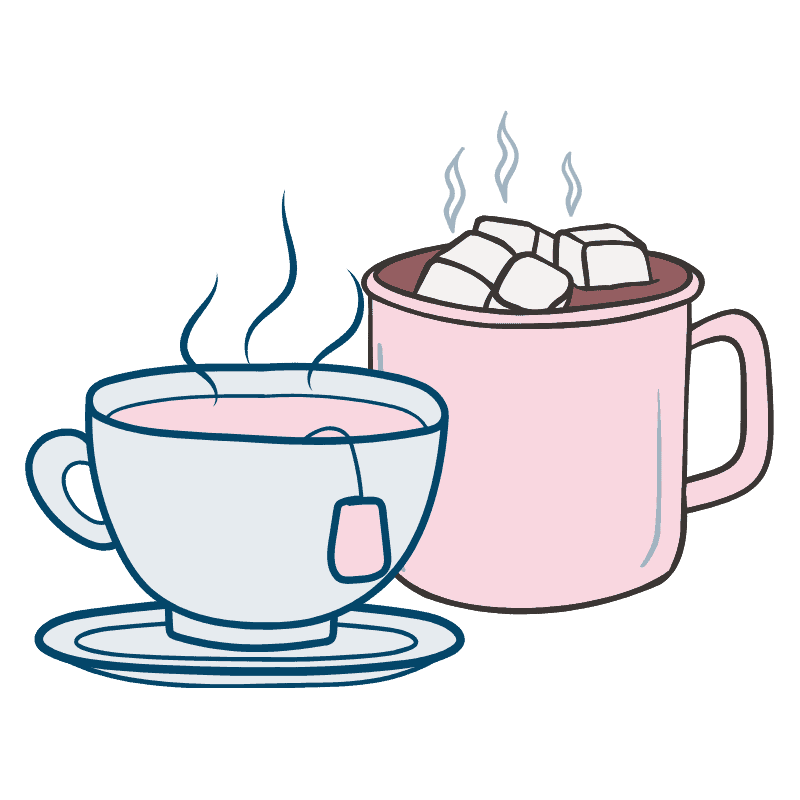
Instead, I set up “Christmas picnics” where we put down a blanket by the fire/Christmas tree, drink hot cocoa, and eat Christmas cookies. We bake the same Christmas cookies every year, watch the same holiday movies each year and enjoy mellow, quiet, sensory-soothing activities. We embrace hygge during the holiday season. My kids, husband, and I create a new Stardew farm together and spend a few days binge-building our farm every year. Yes, it’s a lot of screens. And also, yes, we’re connecting and creating a shared experience. We find mellow, sensory-friendly ways of being together and connecting during the Holidays. It looks different than how typical families may celebrate, and that’s okay.
Have a Tolerable Holiday!
Follow-Up Resources
Youtube Video
You can now catch the Neurodivergent Insights interview Dr. Neff and Brett recorded about this article!
NDI Visual Guide

Prefer to engage or share this information visually? Our Free NDI visual Guides are abbreviated, visual-forward highlights of our longer articles.
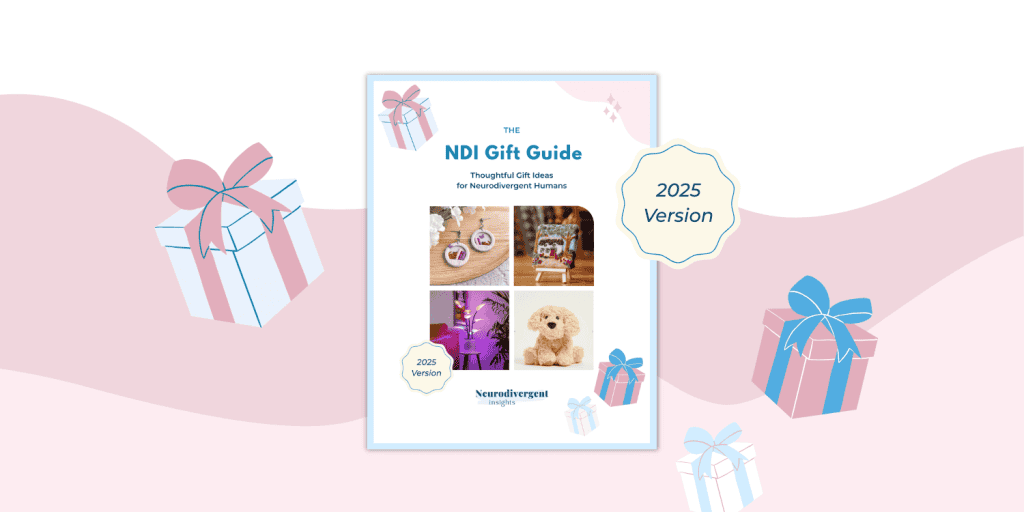
Free Neurodivergent Insights 2025 Gift Guide
If you’re still looking for Holiday gifts for neurodivergent loved ones, we’ve recently updated our Neurodivergent Gift Guide. This highlights several ND owned small shops as well as a roundup of our favorite sensory/creative/literary gifts for neurodivergent humans. It includes some affiliate links which helps support the creation of this guide as well as our ongoing work.
🗞️ Stay in the Neurodivergent Loop
For ongoing insights and updates, subscribe to the Neurodivergent Insights Newsletter. Each Sunday, I send out fresh thoughts and a roundup of the newest resources on topics related to neurodivergence, mental health, and wellness. My most personal writing is reserved for my newsletter, and subscribers also get access to the newsletter vault (12+ PDFs) when they join.