The NDI Glossary

Allistic

Refers to a non-autistic person, which gives a name to the majority experience instead of leaving it as the invisible default

Allistic means non-autistic. The term was introduced in 2003 by Autistic software engineer Andrew Main in a satirical paper that pathologized non-autistic behavior, mirroring how autism is typically described. The word comes from the Greek “allos,” meaning “other,” paralleling “autistic” (from “autos,” meaning “self”). It was parody, but the term filled a gap and was adopted widely in Autistic spaces.

Having a word for non-autistic people is part of affirming language. It names the majority experience instead of leaving it as the invisible default. Without a term like allistic, “Autistic” becomes the only marked category, and everything else is just “normal.”

Allistic is not the same as neurotypical. A person can be allistic and still be neurodivergent in other ways, such as having ADHD, dyslexia, or a mental health condition. Neurotypical means someone whose neurocognitive functioning aligns with dominant societal norms overall. Allistic simply means not autistic.

Join over 250,000 followers for weekly insights on autistic, ADHD & AuDHD life.
NDI social graphic with the heading Toward and Away Moves, showing an illustrated person holding a notepad with opposing arrows labelled Away and Toward.
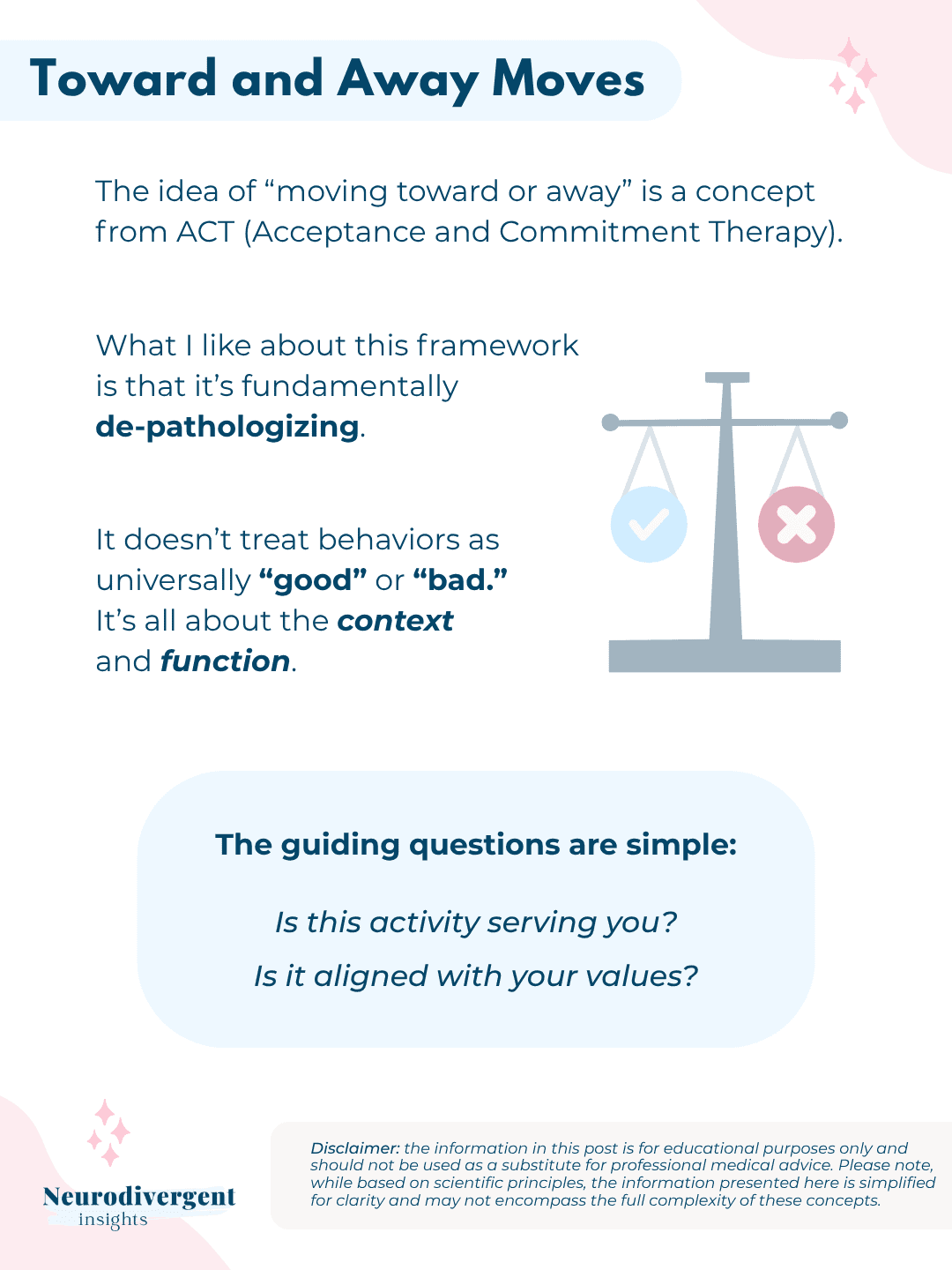
NDI infographic on Toward and Away Moves explaining the ACT concept as de-pathologizing, with a balance scale and guiding questions about values alignment.
Illustrated hand holding a pink smartphone displaying a social media post with a heart, with blue sparkles, representing NDI social media content.
NDI social graphic with the heading Completing the Stress Cycle, showing an illustrated person overwhelmed with steam coming from their head inside a circular cycle diagram.
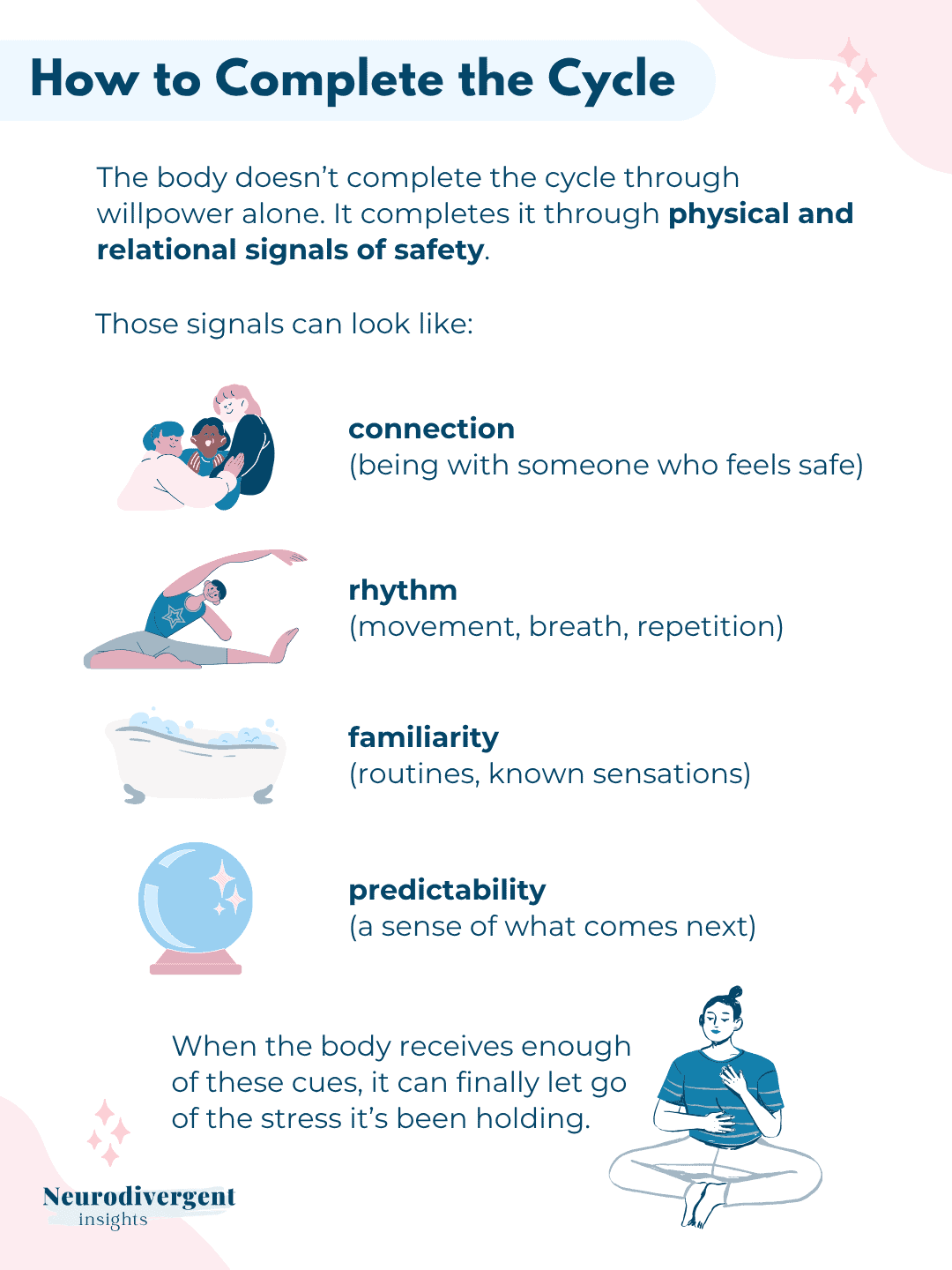
NDI infographic titled How to Complete the Cycle, listing connection, rhythm, familiarity, and predictability as physical and relational signals of safety for stress cycle completion.
0
0
Your Cart
Empty CartYour cart is empty

     
Scroll to Top

Allistic

Refers to a non-autistic person, which gives a name to the majority experience instead of leaving it as the invisible default

Allistic means non-autistic. The term was introduced in 2003 by Autistic software engineer Andrew Main in a satirical paper that pathologized non-autistic behavior, mirroring how autism is typically described. The word comes from the Greek “allos,” meaning “other,” paralleling “autistic” (from “autos,” meaning “self”). It was parody, but the term filled a gap and was adopted widely in Autistic spaces.

Having a word for non-autistic people is part of affirming language. It names the majority experience instead of leaving it as the invisible default. Without a term like allistic, “Autistic” becomes the only marked category, and everything else is just “normal.”

Allistic is not the same as neurotypical. A person can be allistic and still be neurodivergent in other ways, such as having ADHD, dyslexia, or a mental health condition. Neurotypical means someone whose neurocognitive functioning aligns with dominant societal norms overall. Allistic simply means not autistic.