


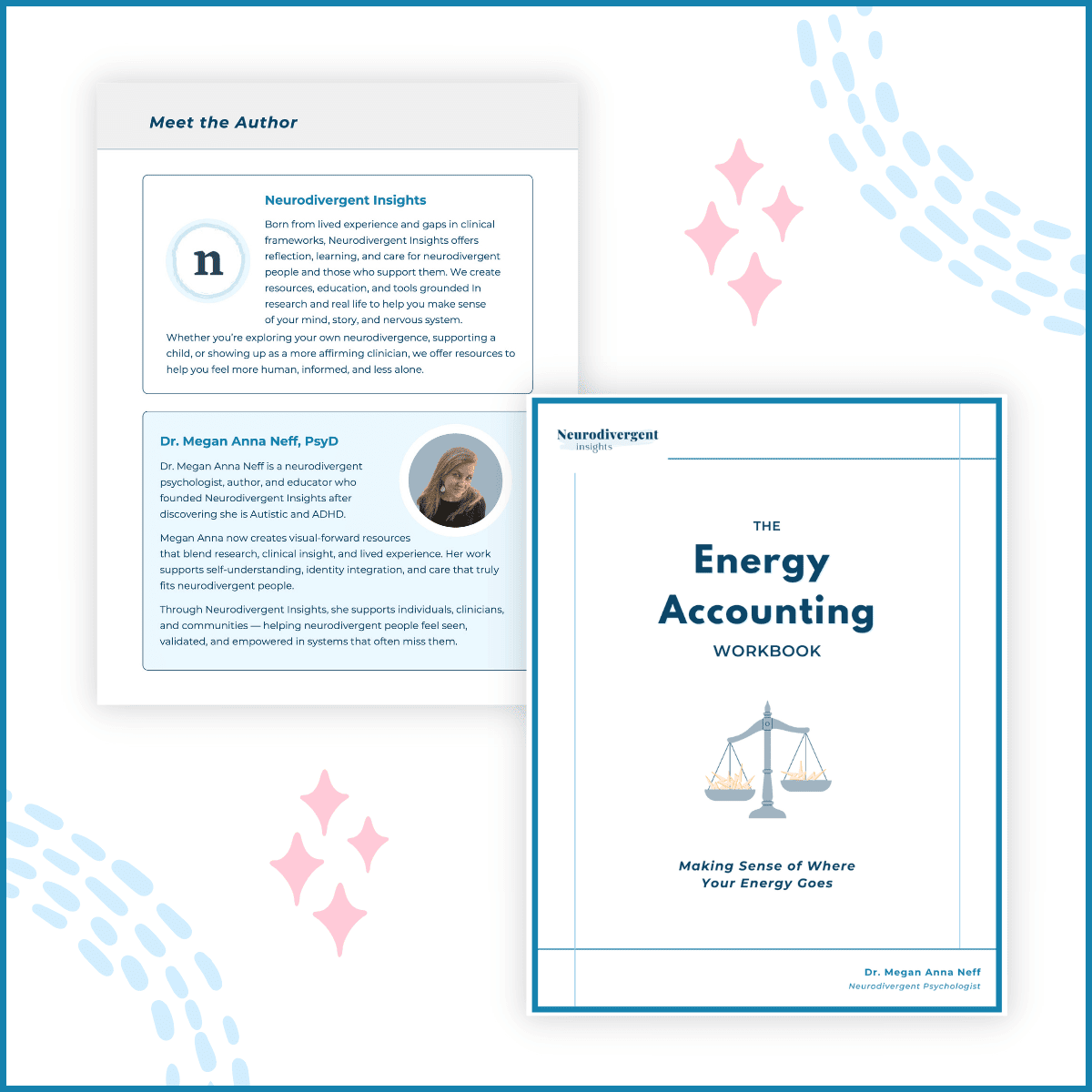

The Energy Accounting Workbook
A Practical Tool for Tracking and Aligning Your Energy
Energy accounting is a framework originally developed by an Autistic teen to make sense of daily energy use. It has since become a helpful tool for many neurodivergent people and those navigating disability, chronic fatigue, autism, or ADHD. By treating energy like a budget, energy accounting helps you notice where your energy goes and how to align it with what matters most.
At 23 pages, this workbook is a shorter, focused resource. Inside you’ll find clear explanations of energy accounting, step-by-step examples to help you get started, and reusable worksheets you can print or use digitally.
What’s Inside
-
An introduction to the concept of energy accounting and why it can be helpful
-
Guided examples to show how to track and reflect on energy use
-
Reusable weekly worksheets to help you notice patterns and plan with more awareness
🗂️ Logistical Details
⚠️ Please note that this is for personal use only. If you’d like to share this resource with clients you can purchase the Clinical and Coaching Version, which enables you to use this workbook with clients.
⚠️ Mental Health Disclaimer: This neurodivergent workbook is intended for educational purposes only. It is not a substitute for professional medical or mental health advice, diagnosis, or treatment. If you have concerns about your health or well-being, please consult a qualified healthcare or mental health professional.
📥 Digital Download 📥
Please note this is a digital download only and no products will be shipped or mailed to you. We recommend creating an account when you checkout to ensure you can easily access this workbook at any time and any future updates to this workbook.
✍️ Using Your Workbook Digitally
- On an iPad or Tablet. You can open the PDF in an app like GoodNotes, Notability or Noteshelf → write directly on the pages with a stylus or keyboard. These apps allow typing, highlighting, and handwriting with an Apple Pencil. You just import your PDF workbook, and it becomes “fillable” by writing or typing.
- On a Computer. If you’re on a computer, you can type your reflections right onto the workbook pages by opening the PDF in Adobe Reader (free) or another PDF viewer. Some people also like to keep a separate digital journal or Word/Google Doc open alongside the workbook, copying over prompts and writing more freely there.


Reviews
There are no reviews yet.