2022 ADHD Infographics Round-Up: 7 Visuals That Informed and Inspired

Like many late-in-life diagnosed neurodivergent people, the topic of neurodiversity became a passionate interest. As a Psychologist, I was struck by how little my training had prepared me to understand the complexity of ADHD. I became really interested in learning more about the different ways that ADHD presents itself, including the different subtypes, complex ADHD, and how it can present in different groups of people (women, BIPOC, and genderqueer people). I began to do research and create these ADHD infographics as a way to help me sort through all the ADHD data!

My brain is highly visual, and I do best when I can visualize information and data into a cohesive image, so naturally, creating infographics was an intuitive way for me to capture a pattern of data. Visualized data tells a story. And there are many untold stories when it comes to ADHD. I am so pleased that people have continued to find these infographics a helpful resource.

Whenever I create infographics, you can find a mini literature review that goes with them where you’ll find links to the original research studies. All research studies are imperfect, and thus, all infographics are imperfect. However, I still find them to be helpful tools for capturing the underlying story. You can find my full library of ADHD infographics here. I’ve polished up some of my most popular Autism Infographics from 2022 and compiled them in one place for you all. Enjoy!

Table of Contents

This ADHD infographic provides an overview of the overlap between ADHD and autism. It’s been a big year for exploring the connection between ADHD and autism, and for good reason. A lot of people with ADHD also have autism or exhibit autistic traits and vice versa. It’s also common for families to be made up of both ADHDers and Autistic people.

You may be thinking, “Why are we just now figuring this out?” Well, up until 2013, you couldn’t be diagnosed with both ADHD and autism at the same time. People used to think you were either ADHD or autistic, not both.

But now, we’re making up for the lost time. If you’d like to read the research that goes with this infographic, you can find it here. You can also find my ADHD vs. Autism Venn diagram here, which covers similar topics.

Infographic showing facts about the overlap between ADHD and autism. Includes statistics and visuals like a DNA strand, brain, and children reading and playing.
Research shows a strong overlap between ADHD and autism — up to 72% shared genetic factors and frequent co-occurrence within families. This overlap highlights why many individuals identify with traits from both neurotypes.
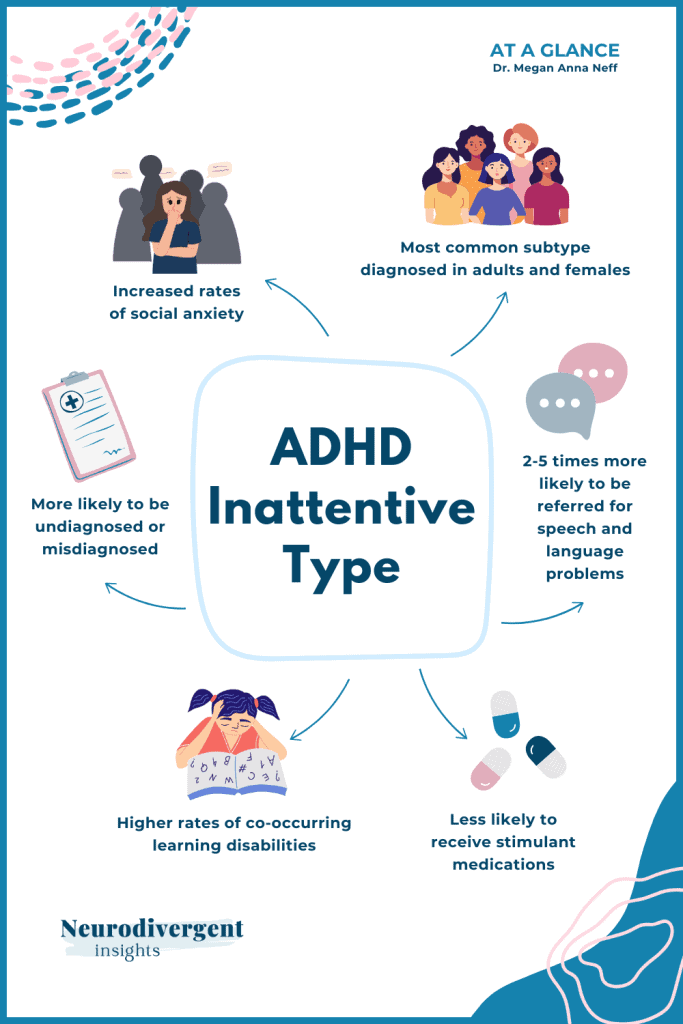
Vertical infographic titled “ADHD Inattentive Type” by Neurodivergent Insights. It highlights key traits of the inattentive subtype, including higher social anxiety, increased misdiagnosis, learning difficulties, and lower rates of stimulant prescriptions.
ADHD-Inattentive Type is often misunderstood because it’s less outwardly visible — but its impact is just as real. Recognising the subtle signs helps more people access the support they’ve always needed.

Inattentive ADHD is one of the toughest presentations to spot. And many people with this subtype go undiagnosed at high rates (particularly women). This ADHD infographic dives into some of the experiences of people with ADHD-inattentive type.

People with ADHD-inattentive type are often thought of as just being “scatterbrained, uninterested, or even anxious or depressed”. But the truth is, they’re often underdiagnosed and undermedicated compared to other types of ADHD.

A study by Willcutt, in 2012 found that even though Inattentive ADHD is the most common subtype, it’s often overlooked and those with this type may need to advocate for themselves to get the support they need. You can find a rundown of the numbers and mini literature review in the original blog post here.

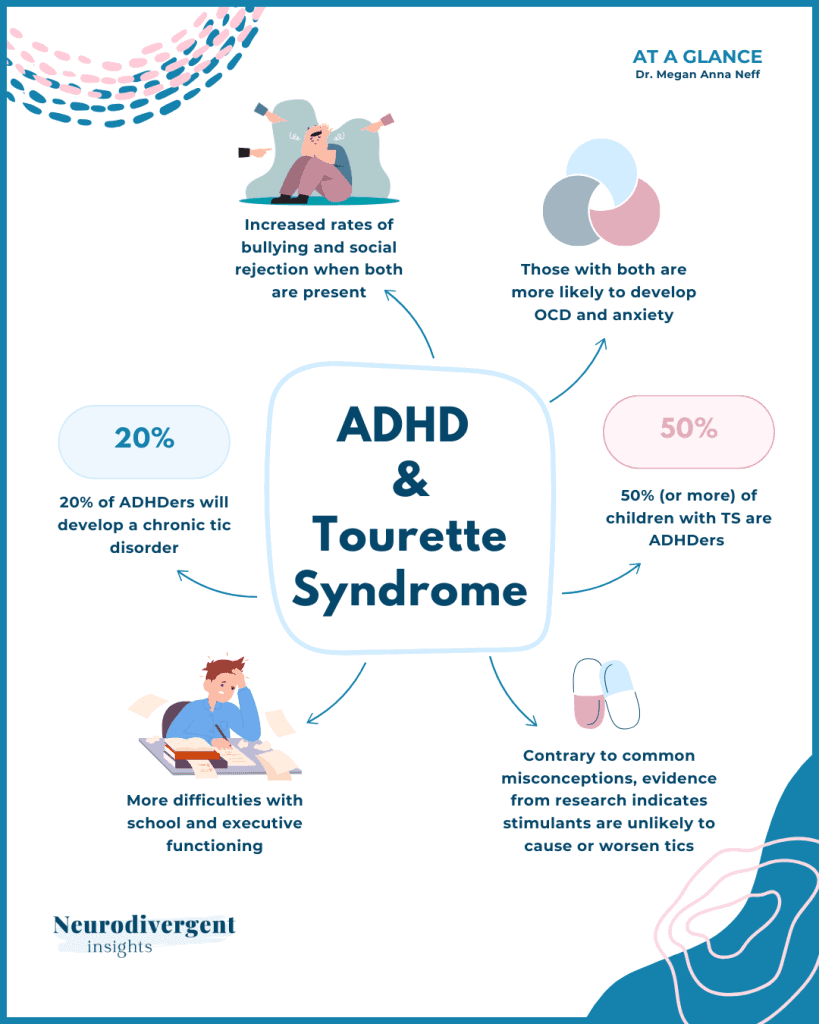
Vertical infographic titled “ADHD & Tourette Syndrome” by Dr. Megan Anna Neff. It highlights key facts about the relationship between ADHD and Tourette Syndrome, including co-occurrence rates, school challenges, anxiety links, and common misconceptions about stimulants.
ADHD and Tourette Syndrome often coexist — and when they do, daily life can become more challenging. Clear information helps families, educators, and clinicians offer better support and reduce misunderstanding.

Tourette Syndrome (TS) and Attention-Deficit/Hyperactivity Disorder (ADHD) frequently co-occur and have similar neurological features. When both conditions are present, they tend to amplify the symptoms of each other, thereby requiring additional support and treatment.

Studies show that ADHD symptoms are reported in 35-90% of children with TS (Oluwabusi et al., 2016). In addition, ADHD is the most commonly co-occurring condition with TS (Oluwabusi et al., 2016). It is estimated that 1 in 5, or 20% of ADHD children will develop a chronic tic disorder (Bloch, 2009), and over half of children with TS are also diagnosed with ADHD (Freeman, 2007). To read more and for links to the original research see the original infographic and blog post here.

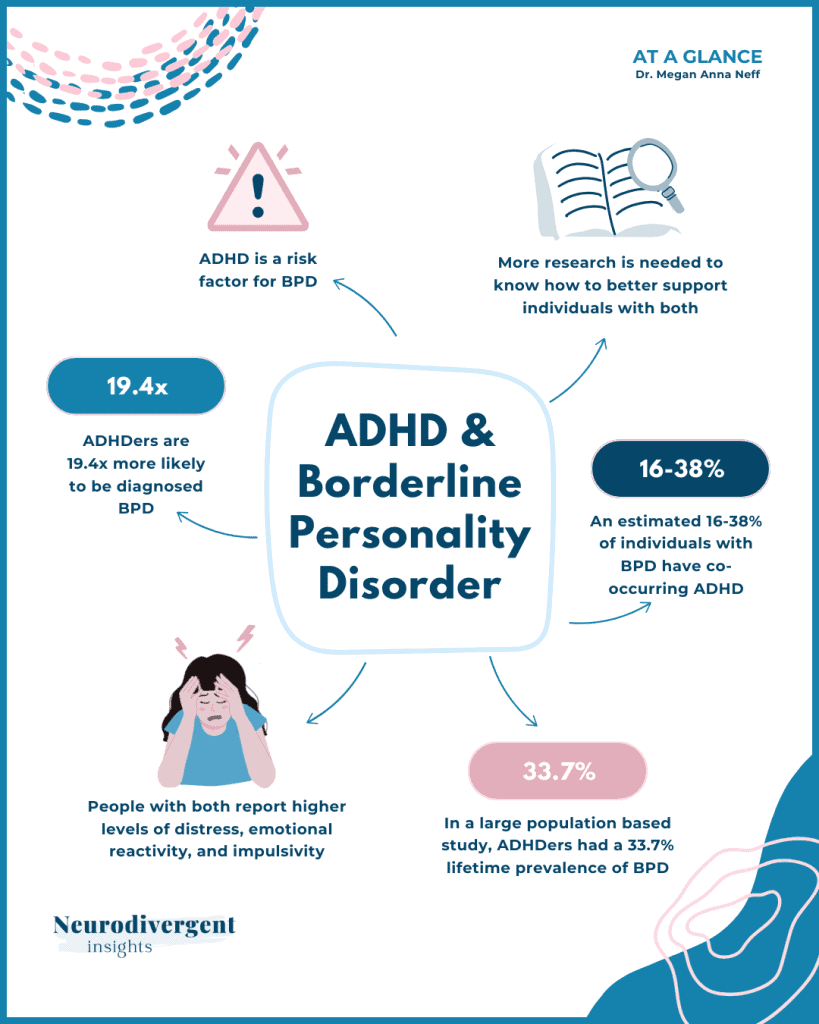
Vertical infographic sharing key facts about ADHD and Borderline Personality Disorder, including risk factors, co-occurrence rates, research needs, and emotional impacts.
A quick snapshot of the connection between ADHD and Borderline Personality Disorder, highlighting how often the two conditions appear together, the emotional challenges people commonly report, and why more research is needed to support individuals with both.

ADHD and Borderline Personality Disorder (BPD) have a high co-occurrence rate, with one diagnosis often masking the other. Studies have shown that individuals with ADHD have a significantly higher likelihood of also having BPD compared to the general population. In a population sample, 33.7% of ADHDers were found to have a lifetime prevalence of BPD, and in a large-scale population study in Sweden, ADHDers had 19.4 times higher odds of BPD diagnosis.

Longitudinal studies have also shown that children diagnosed with ADHD in childhood have a higher likelihood of being diagnosed with BPD in adulthood. Women with ADHD, particularly those with combined type, are more likely to have BPD than men with ADHD, who are more likely to be diagnosed with an antisocial personality disorder. To read more and for links to the original research see the original infographic and blog post here.

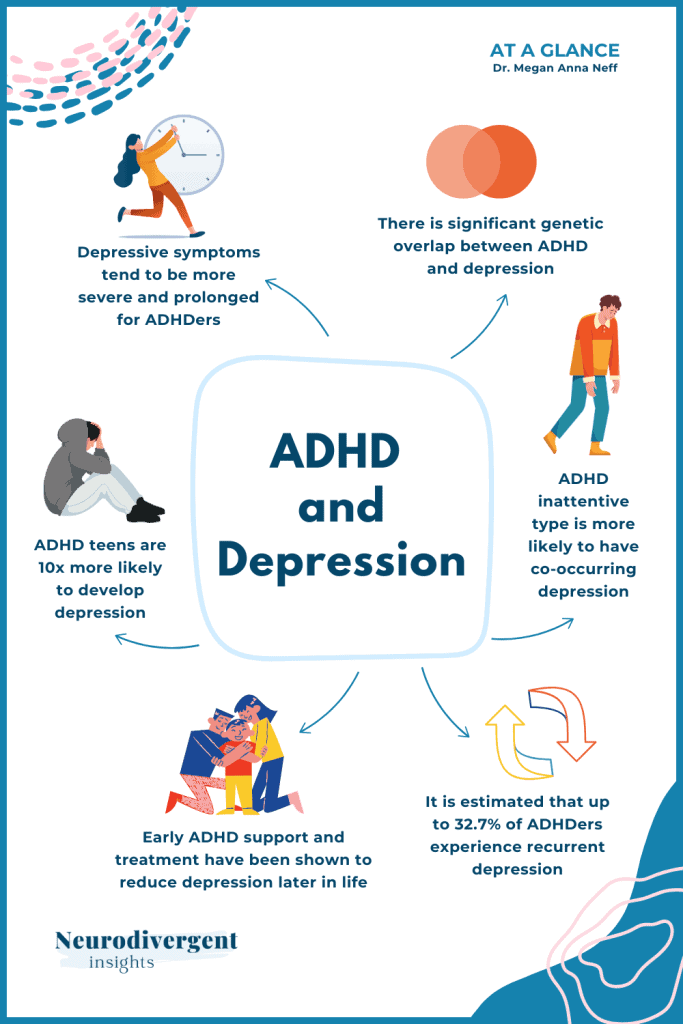
Infographic titled “ADHD and Depression” showing key facts about the relationship between ADHD and depression.
This infographic summarises research on the link between ADHD and depression. It highlights higher rates of depression in ADHDers, including increased risk for teens, more severe and recurrent depressive symptoms, genetic overlap between ADHD and depression, and evidence that early ADHD support can reduce depression later in life.

If you’re familiar with ADHD and depression, you know that these two conditions often go hand in hand. Studies have shown that a lot of people with ADHD also struggle with depression and vice versa.

And, if you have ADHD and haven’t received treatment or have been diagnosed late in life, your risk of developing depression only increases.

This can be due to a combination of genetic and environmental factors, such as facing rejection, difficulties in school and at work, and more.

To learn more about these statistics and for links to the original research studies, see the original blog post here.

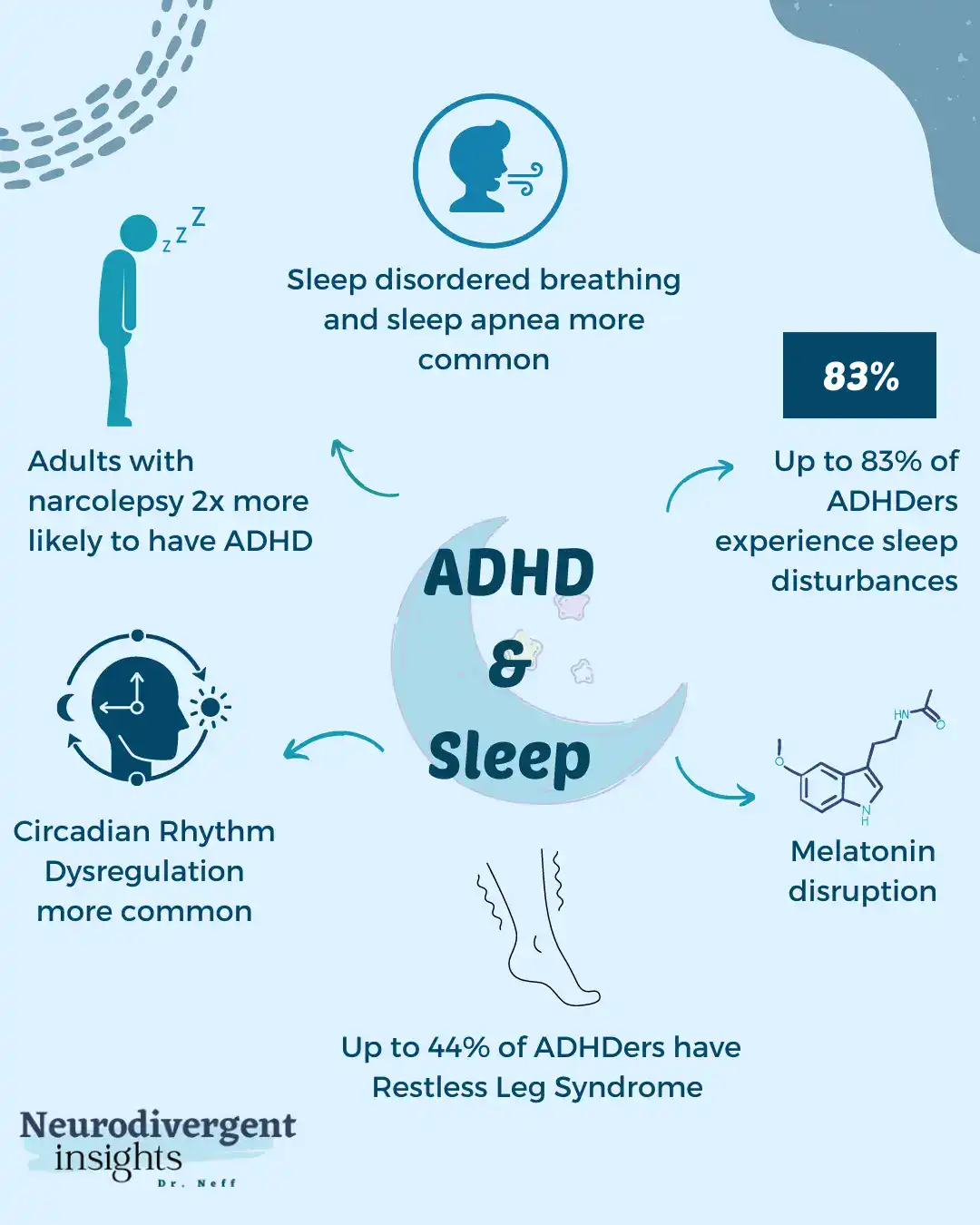
Infographic showing key facts about ADHD and sleep, with icons for narcolepsy, circadian rhythm, restless leg syndrome, melatonin disruption, sleep apnea, and sleep disturbances.
The common sleep challenges linked with ADHD includes circadian rhythm issues, restless legs, melatonin disruption and higher rates of sleep disordered breathing.

It’s no secret that sleep is ROUGH when you are an ADHDer. This ADHD infographic walks through some of the common sleep conditions that co-occur with ADHD. ADHD is associated with several sleep conditions including:

  • restless leg syndrome
  • parasomnias
  • insomnia
  • narcolepsy
  • delayed melatonin disruption
  • circadian rhythm dysregulation.

Complicating matters, sleep issues can further make executive functioning, inattention, and hyperactivity worse!

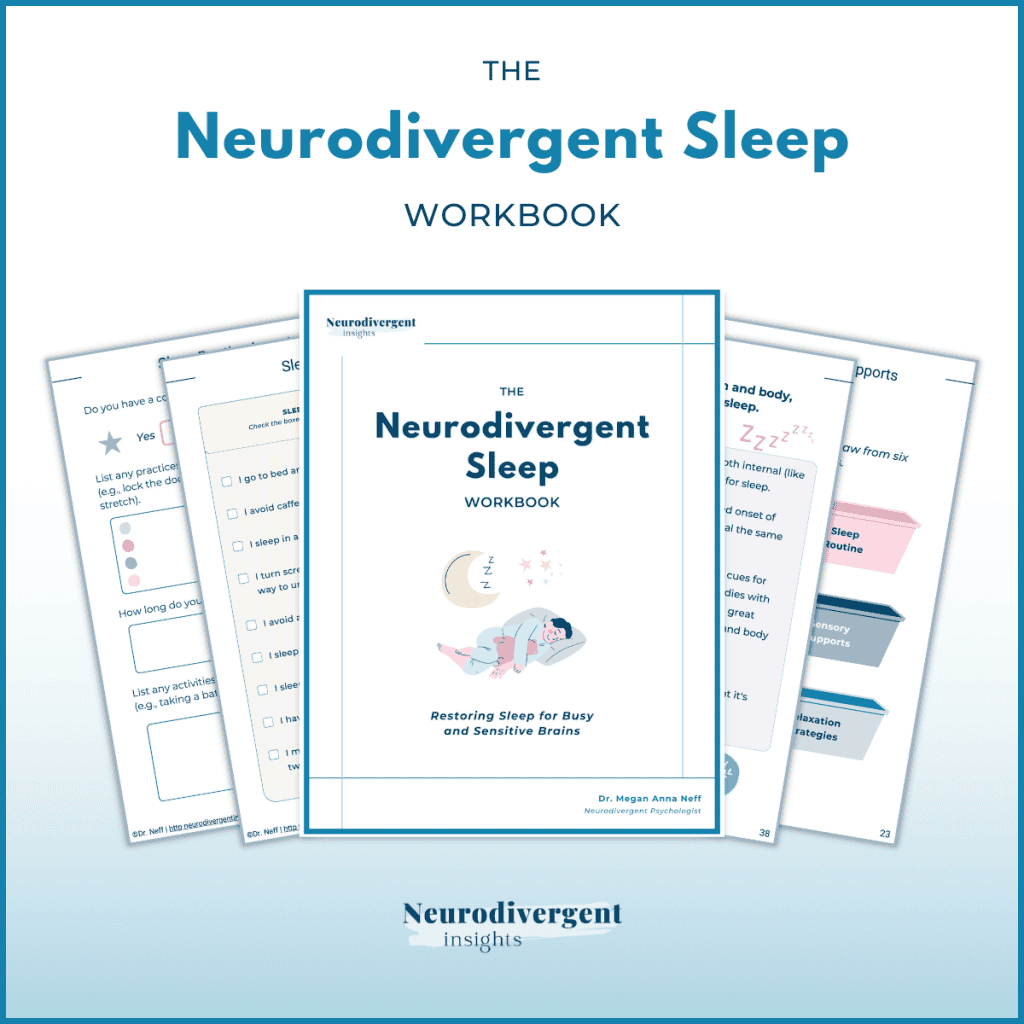
You can see the original ADHD and Sleep infographic and research review here. Sleep is a mini special interest of mine, so I did a whole series on sleep. This is my deep-dive blog post into all things neurodivergent sleep, and I also made a workbook this year for neurodivergent people struggling with sleep.

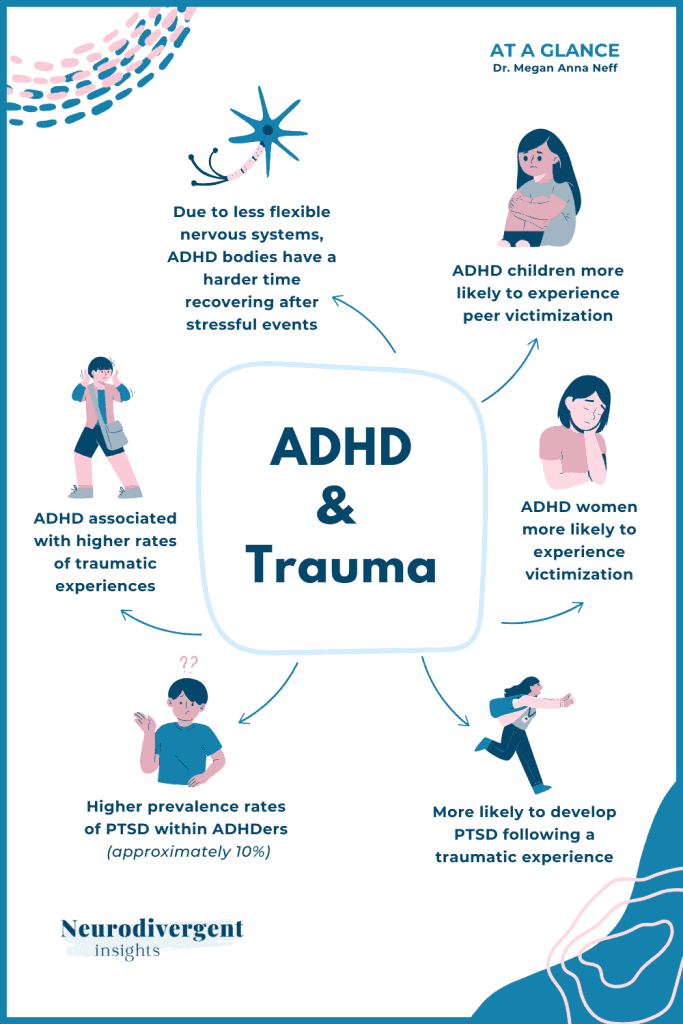
Similar to Autism and Trauma, there is a significant overlap between ADHD and trauma. This can also lead to misdiagnosis (of both!), complicating matters. I once heard it said that ADHD is both under and over-diagnosed, which feels accurate to me. Sometimes trauma and complex PTSD is misdiagnosed as ADHD. Other times ADHD is dismissed, and the person is diagnosed with PTSD. It’s messy, to say the least!

When a person has both, it exacerbates PTSD symptoms of makes ADHD more difficult to cope with. Newer research is looking into how to support ADHDers with PTSD. However, we need a lot more research in this area!

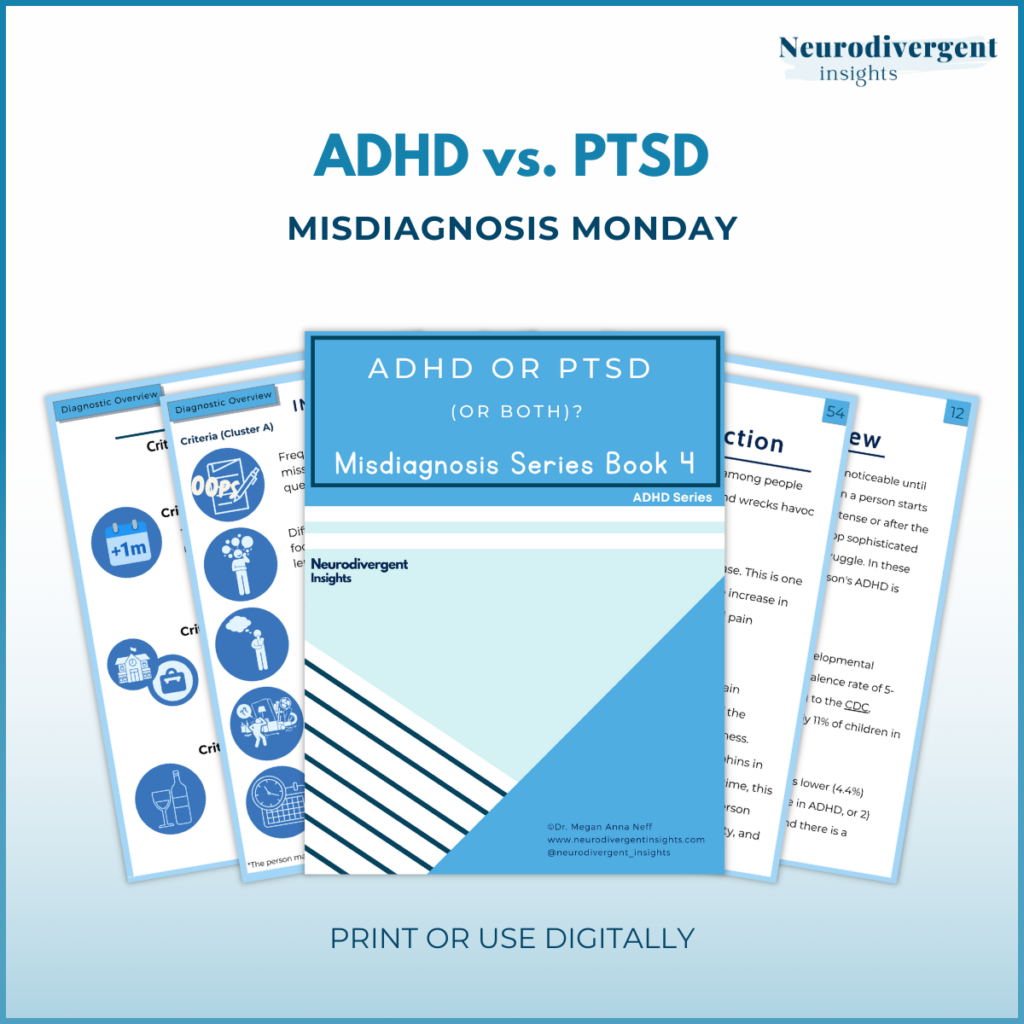
You can find the original infographic here, along with the literature review. You can also find my ADHD vs. PTSD Venn diagram here and the misdiagnosis Monday e-book on the topic here.

Infographic titled “ADHD & Trauma – At a Glance,” highlighting the relationship between ADHD and traumatic experiences, including higher PTSD rates and greater vulnerability to victimisation.
ADHD and trauma often intertwine — not because ADHD causes trauma, but because ADHD nervous systems are more sensitive and environments are often less supportive. Understanding this overlap helps make sense of lifelong patterns.

And That’s a Wrap on 2022 ADHD Infographics!

Thanks for checking out my ADHD infographics from 2022.

Follow-Up Resources

Stay in the Neurodivergent Loop

For ongoing insights and updates, subscribe to the Neurodivergent Insights Newsletter. Each Sunday, I send out fresh thoughts and a roundup of the newest resources on topics related to neurodivergence, mental health, and wellness. My most personal writing is reserved for my newsletter, and subscribers also get access to the newsletter vault (12+ PDFs) when they join.

More Like This...

Previous Graphics

Picture of Dr. Megan Anna Neff
Dr. Megan Anna Neff
Dr. Megan Anna Neff is an AuDHD clinical psychologist. Author of Self-Care for Autistic People and The Autistic Burnout Workbook, and the forthcoming AuDHD Unlocked (Spring 2027). Founder of Neurodivergent Insights. Grounded in the blend of clinical insight, research, and lived AuDHD experience, NDI translates complex neurodivergent experiences into accessible, compassionate, and affirming resources for adults, clinicians and helping professionals worldwide.

Exploring mental health and wellness through a neurodivergent lens, blending lived experience with clinical insight. 

Scroll to Top