



|
Supporting Clinicians for Mental Health Month - free resources plus 30% off our Complete Library and Trainings Bundles
|

Following is a roundup of commonly used Autism screeners for adults. When an adult begins to suspect they may be Autistic, there is a natural unfolding. The more I have observed this, I see a common pattern emerge. The pattern looks something like this:
Listening to Autistic stories, reading about autism, and taking screeners are all important data points to consider when exploring Autism. My personal journey of Autistic self-discovery involved many online screeners. And I took most of them several times (each time trying to answer them more conservatively just to be sure I wasn’t exaggerating my experiences).
For many people, doing online autism screeners is one of the significant data points in their journey. Some may continue the journey through a formal assessment, while others will self-identify as Autistic. Whether seeking a formal diagnosis or self-discovery, online autism screeners can be a powerful step in the journey.
Disclaimer: One note about screeners. Screeners are intended as just one data point. For context, when I am making a formal diagnosis, I consider multiple data points across multiple contexts. Any screener or instrument should be seen as ONE data point and doesn’t quantify as a medical evaluation. This post is for educational purposes only and does not substitute for medical advice.
Following is a review of my top 6 favorite screeners for Autism. In addition to finding these personally useful, I also include these in formal assessments I complete.
A standard screener for Autism includes 50 questions and measures how many Autistic traits a person has.
Pros: It has been widely used in many populations and studies. It’s one of the few screeners specifically created for Autistic adults without co-occurring intellectual disabilities.
Cons: It may miss high-maskers, extroverted Autistic people, or imaginative Autistic people.
Link: The Autism Quotient
The CAT-Q measures the level of Autistic camouflaging (masking, social compensation, and assimilation).
Pros: It helps identify Autistic people who do not currently meet diagnostic criteria due to their ability to mask their autistic traits.
Cons: There are reasons other than autism that a person may have a high masking score. CAT-Q may have a higher rate of false positives.
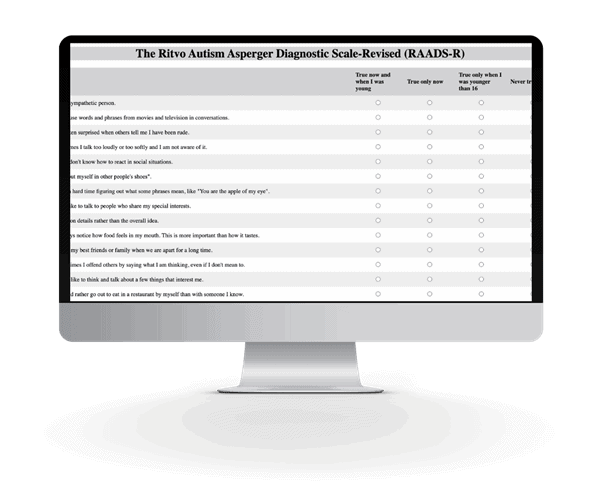
Designed to identify adults who may have previously been diagnostically missed.
Pros: Focuses more on internal experiences than outward behaviors. Has a high sensitivity, which is good for distinguishing Autism from other conditions (Bipolar, PTSD, Social Anxiety).
Cons: Long administration with a complex answer structure. Many dislike how questions are phrased.
Link: The Ritvo Autism Asperger’s Diagnostic Scale: RAADS (You will need to first go to Aspie.org website and then click on RAADS link).
The Aspie Quiz measures Autistic and neurotypical traits in five domains: talent, perception, communication, relationship, and social.
Pros: Avoids pathologizing language! Respectful and clearly worded questions. Detailed and visual feedback that is very Autistic friendly and easy to understand.
Cons: Has not been independently validated in a clinical setting and is not widely recognized within the medical establishment.
Link: The Aspie Quiz (you will need to register and provide demographics to see results).
The RBQ-2 measures the degree of repetitive behavior and restricted interest (criteria B).
Pros: Language is respectful and clearly worded. While most screeners focus on criteria A, this measurement captures Criteria B of Autism, which helps distinguish Autism from social anxiety, PTSD, and more.
Cons: No cons to note. One consideration is that ADHD may impact scores. Autistic-ADHDers may have lower scores here.
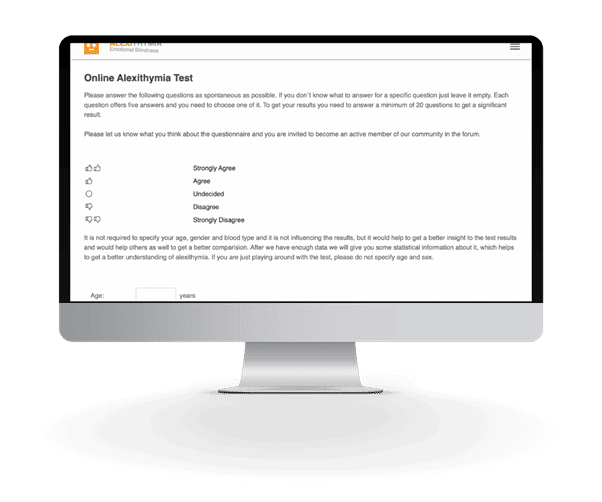
The Online Alexithymia test measures the degree of alexithymia traits in 7 different categories. The questionnaire is not specifically an autism screener. However, many Autistic people have Alexithymia (difficulty identifying emotions), so this can be a helpful screener.
Pros: Breaks up alexithymia scores into several different subcategories. Helpful for building insight into your emotional experience.
Cons: Not a screener for Autism. It can be difficult to understand the meaning of the subcategories provided on the results page.
Link: Online Alexithymia Test
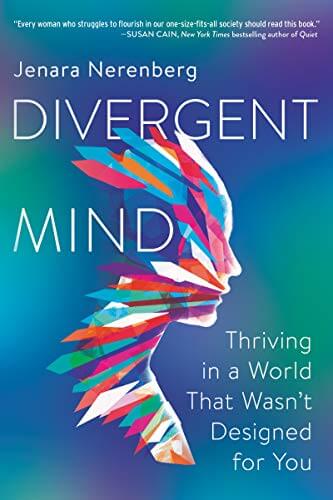
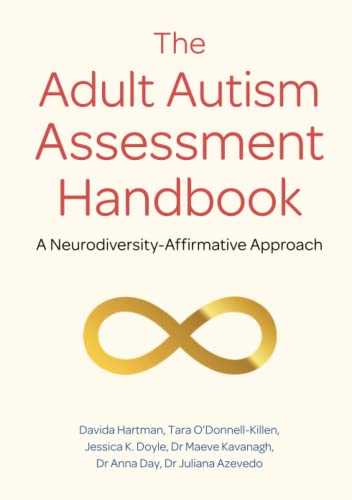
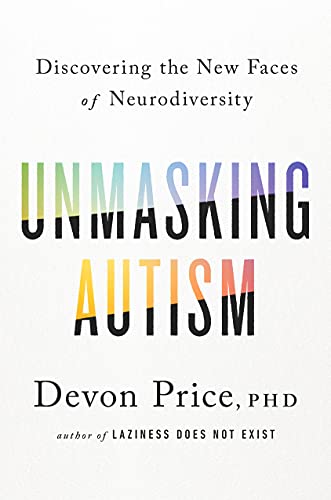
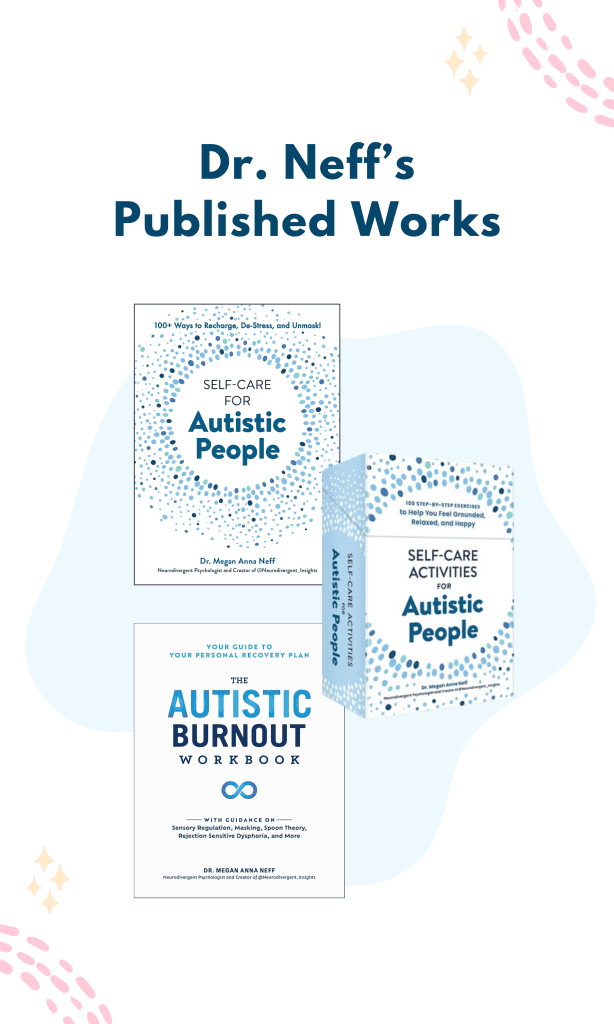
Here were some of my favorite books early in my Autism discovery process (Disclaimer: affiliate links):
For ongoing insights and updates, subscribe to the Neurodivergent Insights Newsletter. Each Sunday, I send out fresh thoughts and a roundup of the newest resources on topics related to neurodivergence, mental health, and wellness. My most personal writing is reserved for my newsletter, and subscribers also get access to the newsletter vault (12+ PDFs) when they join.
Exploring mental health and wellness through a neurodivergent lens, blending lived experience with clinical insight.

Link copied to clipboard!