Updated April 3rd, 2026

ADHD and Burnout
In the fall of 2024, my world started to turn grayscale. I began losing access to interest and curiosity, and without those, color drains out of my life pretty quickly. I was both struggling with sleep and chronically tired. Words were hard to access and I was forgetting basic things, moving through the day like I was wading through wet cement.
I finally did the “responsible” thing: I made an appointment with my doctor to talk about the exhaustion and waited five weeks for the visit. On the day of the appointment, I was just sitting doing work when a sharp, spiky feeling ran through my body. Something is wrong. I checked my calendar and my stomach dropped. The appointment I’d been waiting for had started 15 minutes earlier. I had missed the very thing I was counting on to help me feel human again.
This, to me, is one of the cruelest parts of ADHD burnout. Our executive functioning comes off the wheels right when we most need support. Remembering appointments, answering messages, refilling medications, filling out forms, these are some of the lifelines that start slipping through our fingers during burnout.
ADHD burnout involves a kind of neurological exhaustion, where the systems that manage focus, planning, and follow-through are already working overtime and then finally collapse. That collapse also means that some of the most common advice for burnout can sometimes make things worse.
That is what this article is about.
Table of Contents
What is ADHD Burnout?
In this article, when I talk about ADHD burnout, I mean a state of chronic exhaustion where ADHDers lose access to their usual coping and motivation. Common features include:
- Chronic fatigue or low energy
- Decreased motivation
- Increased ADHD inertia or task paralysis
- Emotional dysregulation (quicker to tears, anger, or shutdown)
- A sense that executive functioning has gone “offline.”
- More difficulty regulating attention, energy, and emotions
ADHD burnout doesn’t yet have its own official clinical definition. The research is still catching up to what many ADHDers have been describing. But a 2025 qualitative study of ADHD burnout in UAE schools described it as arising from a chronic “hyper” symptom‑management state — the sustained effort of trying to keep up, compensate, and fit in takes a toll that builds over months and years until the system breaks down.
That framing resonates with what I see and what I notice in my own AuDHD experience. Burnout is what happens when the coping runs out.
For ADHDers, the specific drivers tend to look something like this: mounting executive function demands that exceed our capacity; sensory overload accumulating without enough relief; the ongoing energy cost of masking; sleep that never quite restores us; and an emotional system that is working harder than most people’s to regulate daily life. All of that, running simultaneously, for months or years.
Why ADHDers Burn Out: The Mechanisms Underneath
There are many threads that weave into ADHD burnout: executive functioning, effort, sensory load, masking, sleep, and more.
They don’t operate in isolation, which is part of what makes ADHD burnout feel so complex and hard to untangle.
In recovery work, I find it helpful to look not only at what may have triggered burnout, but at what, exactly, has been depleted, because that points us toward where we most need to resource ourselves.
Executive Functioning Depletion
A 2024 study of employees with ADHD found that executive function strain explained much of the link between ADHD and job burnout. People who struggled most with time management and self‑organization/problem‑solving were at the highest risk. Time‑management difficulties were especially tied to physical fatigue, while self‑organization and problem‑solving challenges were tied to emotional exhaustion and feeling mentally worn out.
This makes intuitive sense. When time management is hard, many of us end up pulling late nights, rushing against deadlines, and living in a steady drip of cortisol from constant time pressure. When organization and problem‑solving are hard, it can create ongoing stress in relationships and work, and our working memory has to hold more loose ends and unclear steps, which is exhausting.
In ADHD, the executive function system often has to do more effortful, deliberate work just to get through everyday tasks. Over time, that extra effort adds up, and the cost tends to show up as burnout.
ADHD and Triple Effort
ADHD effort pulls more resources from us. A 2024 review on the experience of effort in ADHD proposes that effort has three parts.
How much a task naturally “pulls” our engagement (task‑elicited effort, which we can think of as interest or automatic activation).
How much we have to consciously push ourselves to do it (volitionally exerted effort, the “how hard I’m trying” piece).
How aversive or uncomfortable that effort feels in our body and emotions (the affective or emotional side of effort).
For ADHDers, who have an interest-based nervous system, many everyday tasks don’t automatically pull our brain into gear, and when we do push ourselves to engage, it feels unusually taxing.
Which means we are often expending more energy to do less, and the doing feels harder, and then we are also regulating the hard emotions that come with it (bordom, frustration, etc.). Over a long enough stretch, that level of effort compounds into exhaustion, and we can fall into a collapse of motivation/effort.
The Hyperfocus- Fueled Burnout Cycle
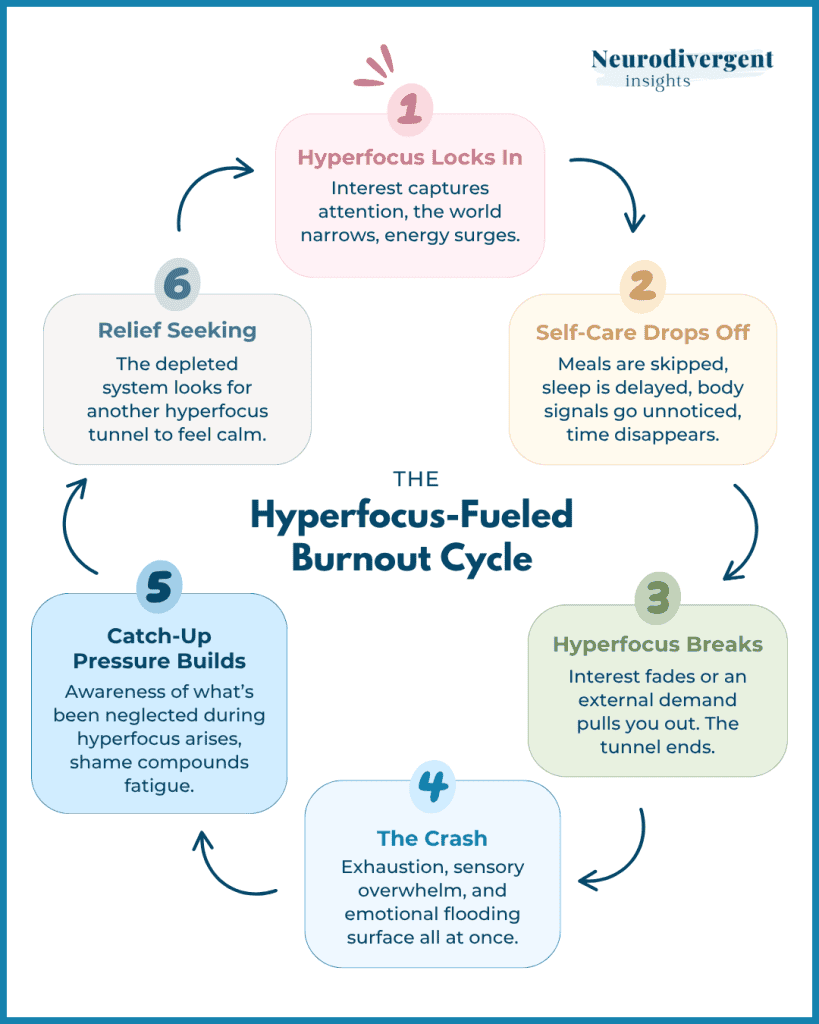
Hyperfocus is often described as one of the “gifts” of ADHD. And it can feel that way in the moment: the world narrows, noise falls away, and you are fully absorbed. But hyperfocus can also be one of the drivers of ADHD burnout, precisely because it does not feel like a problem while it is happening.
During hyperfocus, the signals that usually prompt self-care (hunger, fatigue, the need to move or rest) go unregistered. Hours pass. Sleep gets pushed. Meals get skipped. The body is sustaining something intense, but the feedback loop that would normally say “stop” is muted. When I am in that state, it feels so good that I will happily stay up late following the thread, and my sleep cycle drifts further and further off until I eventually burn myself out in the passion of it all.
When hyperfocus breaks, whether because interest fades or life demands pull you out, everything that was suppressed tends to surface at once: physical exhaustion, sensory overload, and the weight of whatever was neglected while you were under. That crash is essentially the nervous system catching up with a deficit that was building in the background.
For many ADHDers, this becomes a cycle. The crash feels overwhelming, so the system looks for relief, and relief often comes in the form of the next hyperfocus tunnel. Each pass through the cycle depletes the system a little more. Over time, the crashes get longer and the recovery gets harder. Part of what makes this so tricky is that we often do not know when motivation, interest, or energy will return, which makes it hard to put bumper rails around our focus and can end up fueling the hyperfocus–burnout loop. I often talk about this as difficulty trusting my ADHD mind: if I do not know when my next wave of motivation is going to come, it feels scary to hop off the hyperfocus wave when I am gifted one.
I have written elsewhere about what I call defensive monotropic mode: when deep focus becomes less about joy or curiosity and more about escaping the overwhelm of scattered thoughts and unfinished demands. That pattern sits right at the center of this cycle, which I suspect is particularly amplified for AuDHDers.
Hidden Sensory Load
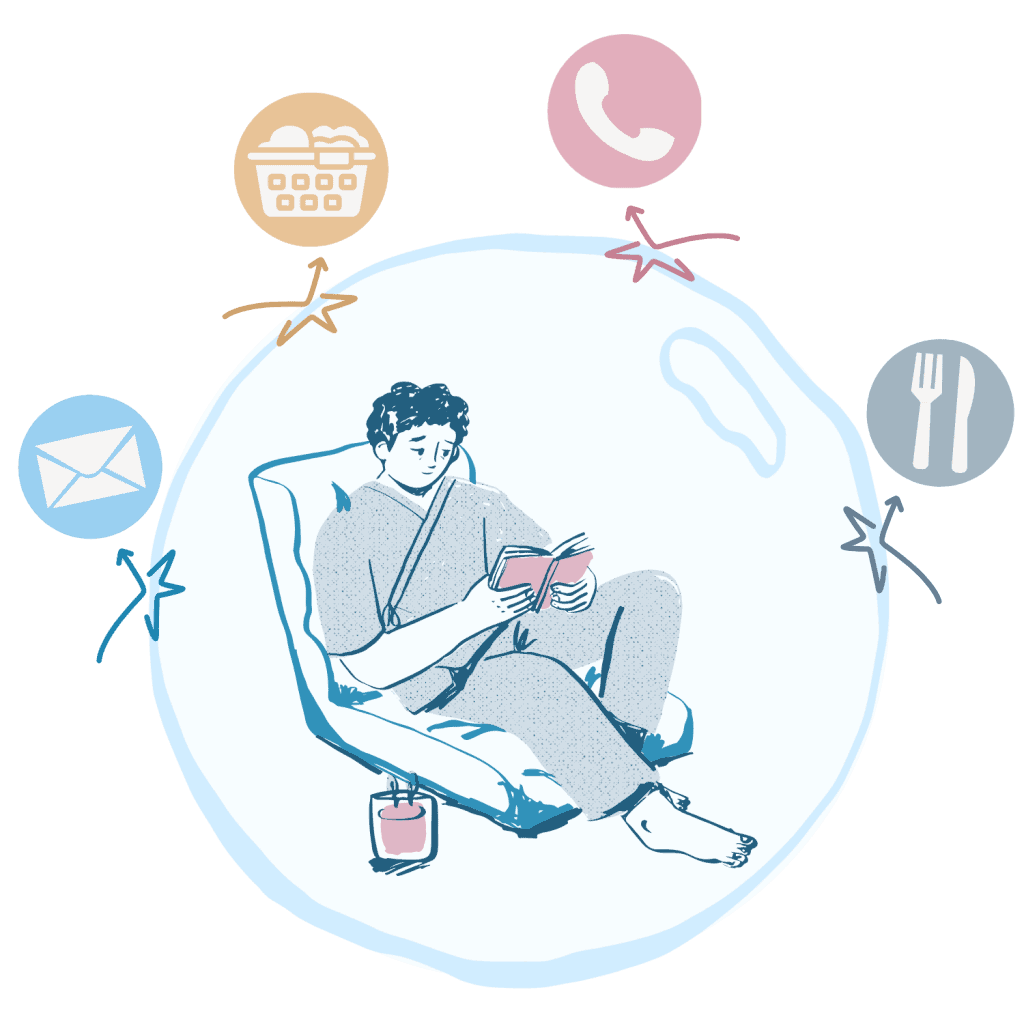
Sensory load is another major piece of ADHD burnout, and it is often underestimated. A recent systematic review and meta‑analysis that pooled data from around 30 studies (over 5,000 participants) found that people with ADHD show significantly more atypical sensory processing across multiple domains: sensory sensitivity, sensory avoidance, sensory seeking, and low sensory registration, compared to control groups. These differences show up across sensory systems (sound, light, touch, movement) and in both children and adults.
In the meantime, many ADHDers are moving through a highly sensory‑demanding world: bright lights, constant notifications, noise, crowds, without those needs being recognized or accommodated. All of that input can act like an ongoing, drain on the nervous system.
Masking and Camouflaging
Masking adds another layer. Masking (also called camouflaging or impression management) refers to the ways ADHDers change or hide their behavior to appear more “neurotypical” and avoid negative judgments.
This can look like sitting very still in meetings even when your body wants to move, holding back from interrupting even when you’re afraid you’ll forget what you were going to say, arriving very early to everything to overcompensate for time‑perception challenges, or copying how others act in social situations.
Many people with ADHD also describe building elaborate systems or compensation strategies, such aswriting everything down, double‑ and triple‑checking tasks, over‑organizing, to avoid seeming forgetful or disorganized.
A 2024 study comparing autistic adults, adults with ADHD, and neurotypical adults found that people with ADHD reported significantly higher camouflaging than the neurotypical group, especially on day‑to‑day masking behaviors. Over time, this kind of constant self‑monitoring is linked with higher exhaustion, more anxiety, and a sense of being disconnected from one’s own preferences and needs.
Sleep and a Tired Nervous System
And then there is sleep. A Swedish nationwide study of over six million people found that people with ADHD were about eight times more likely to have a diagnosed sleep disorder than those without ADHD, and far more likely to be prescribed sleep medications.
That means many ADHDers are trying to recover from burnout on a chronically sleep‑deprived nervous system. It is a bit like trying to fill a bucket that has a hole in the bottom.
Emotional Exhaustion as a Core Mechanism
A lot of the research and conversation about ADHD burnout focuses on executive functioning and cognitive overload, and those are real drivers. But another core reality, which often gets less attention, is the level of emotional exhaustion many ADHDers live with day to day.
A 2023 systematic review found that emotional dysregulation is present in roughly 34–70% of adults with ADHD and suggested it may function as a fourth core symptom alongside inattention, hyperactivity, and impulsivity. The review also noted that adults with ADHD tend to rely more on suppression, which can also function as a low-grade constant drain on the nervous system.
For many ADHDers, this translates into the emotional labor of daily life being genuinely more depleting than it is for most people: managing frustration, regulating disappointment, holding it together through a loud meeting or a last‑minute schedule change or yet another task that refuses to start.
And then there is the shame load. In me work with ADHD and AuDHD adults, I’ve noticed that many of us carry a chronic shame about how hard things are, which compounds the exhaustion further.
A Note on AuDHD Burnout
If you are AuDHD (Autistic and ADHD), the burnout picture often gets more complex. A large study followed young people into adulthood and found that those with co‑occurring ADHD and autism carried the heaviest burden of health and psychosocial difficulties, with worse outcomes than either ADHD‑only or autism‑only groups.
The authors described ADHD–autism co‑occurrence as a “heavy burden for health” with multiple vulnerabilities across sleep, physical health, socioeconomic status, and social support.
This fits what many AuDHD people describe. The Autistic burnout drivers (sensory overwhelm, social and communication demands, the cost of masking autistic traits) and the ADHD burnout drivers (executive functioning depletion, effort‑related exhaustion, emotional dysregulation) are running at the same time.
A single context can hit both systems at once. For example, open‑plan office, can overwhelm an Autistic sensory system with noise and visual clutter at the same time that it hammers an ADHD attention system with constant interruption and distraction. The result is not “double burnout,” exactly, but a kind of compounded drain that builds much faster.
Recovery usually requires attending to both sets of needs:
- the ADHD side (time, tasks, productivity)
- the Autistic side (sensory, social, masking)
ADHD Burnout Recovery: What Genuinely Helps (And Why)
The research on ADHD burnout recovery is still thin. There are no clinical trials yet testing a specific “ADHD burnout protocol.” Most of what we know is stitched together from studies on executive function, emotion regulation, sleep, and sensory processing, plus clinical observation and lived experience.
So with that in mind, here are some things that can help support ADHDers in burnout.

Reducing Demand (Not Pushing Through)
One of the least helpful things in ADHD burnout is trying to “push through” with more doing. Traditional behavioral activation for depression works by adding activity to lift mood. But if burnout is being driven by depletion, simply increasing demands can deepen that depletion. If executive function is already overdrawn, adding more executive‑heavy tasks does not rebuild that capacity.
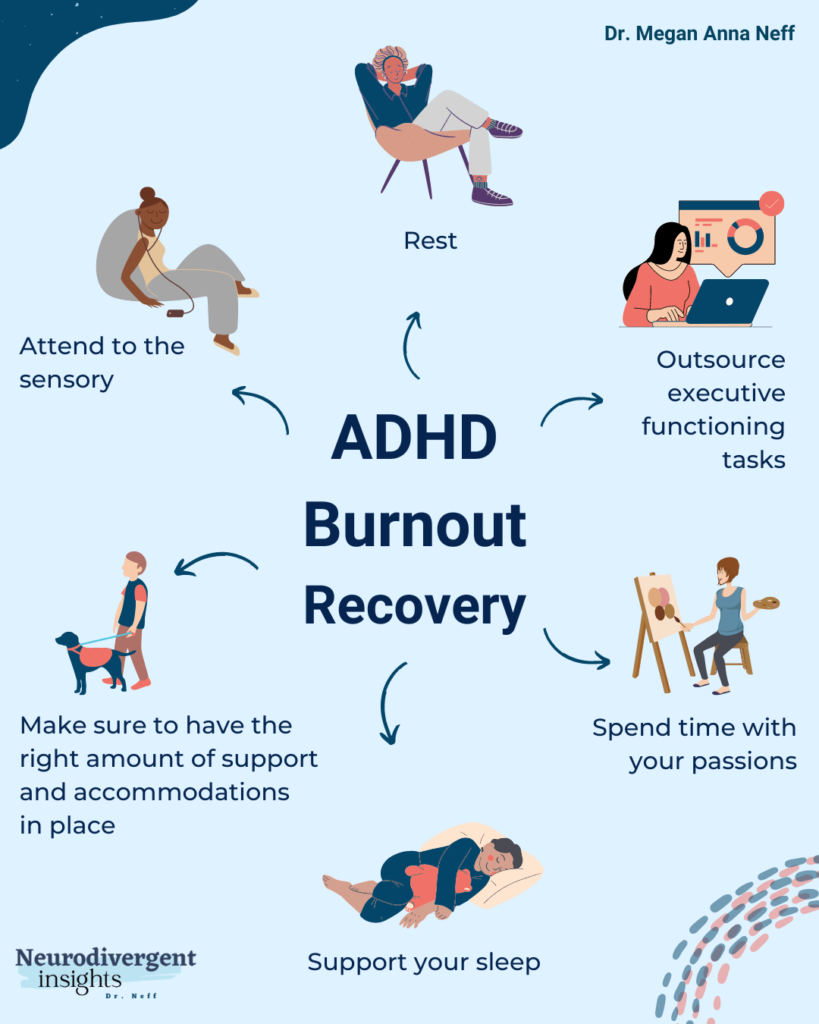
What tends to help is reducing demand where you can: delegating, simplifying, postponing, and saying no so that your nervous system has less to manage.
For ADHD brains, this includes the hidden demand of “open loops”—unfinished tasks, unanswered messages, decisions waiting in the background. Each open loop pulls on working memory and executive function. During burnout, it is often more regulating to intentionally close a few small loops (replying to one email, paying one bill, cancelling one commitment) and deliberately let others go, than to keep carrying a long, unspoken list of open loops you cannot act on.
Treating Sensory Needs as Real Needs
Until recently, sensory processing differences in ADHD were often overlooked. Newer research is starting to change that picture, but sensory issues still are not formally included in diagnostic criteria.
Supporting sensory needs is not indulgent; it is neurologically informed. Sensory overload pushes the nervous system into a higher baseline arousal state, which makes everything else (focus, emotions, sleep) harder. Reducing sensory load by creating more predictable spaces, fewer notifications, softer clothing, less visual clutter, more time outside, gives your system a chance to come out of chronic “on‑edge” mode.
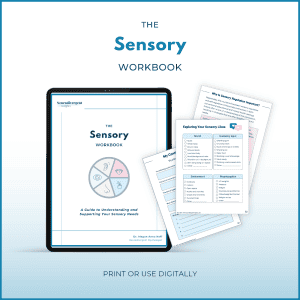
If you want something practical to work with, you can check out our Sensory Workbook or our Sensory articles to learn more about sensory health.
Time Unmasked
Given what we know about masking and camouflaging, spending time unmasked can be a core part of recovery. Masking includes things like suppressing fidgeting, over preparing to hide executive functioning challenges, and constantly monitoring your reactions. All of this costs energy and is linked with higher exhaustion and anxiety over time.
Spending time with people (or alone) where you do not have to perform neurotypicality gives your nervous system a chance to be off guard. Even small pockets, like an evening with a friend who “gets it,” or an hour alone with a passion project, an info‑dump, or roaming free time following your curiosity, can all be deeply restorative.
Chase Your Curiosity
ADHD has been linked with what some researchers are calling hypercuriosity, which fits well with the idea of an interest‑based nervous system. An interest‑based nervous system means that genuine interest, passion, and play are part of what helps the brain come back online. When we’re burned out, those are often the first things to disappear and the last things we feel “entitled” to. Many of us feel most alive when we get to follow our curiosity and interest.
Having guard‑free time, where you can wander down divergent paths and follow what interests you, can be deeply restorative. I think of these as my “tree branch projects”: times when I know I’m going to start with one idea and give myself permission to follow the side quests and tangents that light up my brain. Having a few “tree branch days” between my “have‑to days” has been one of the most reliable ways I’ve found to restore my energy over the last 18 months.
Engage in What Feels Enlivening
When curiosity feels far away, it can help to start even smaller and ask what feels a tiny bit more alive in your body, not just in your mind.
Gentle, enlivening activities can help restore some energy: a walk in nature, low‑pressure movement, art or music, time with animals, or a hobby you’re allowed to do badly because it’s just for you. The goal here is to give your nervous system small pockets of joy and engagement that spark energy and interest.
Taking Sleep Seriously
Given the data, sleep probably deserves to be first on this list, not tucked at the end. Adults with ADHD are much more likely to have clinically significant sleep problems and to be on sleep medication than the general population. That means many ADHDers are trying to recover from burnout on a nervous system that is already sleep‑deprived.
For a lot of people, “sleep hygiene” tips are not enough. Circadian rhythm differences, delayed sleep phase, and insomnia often need tailored support. If sleep has been treated as secondary in your care, it is worth revisiting it as a primary target with a clinician who understands ADHD and sleep issues.
Supporting Emotional Regulation
Emotional dysregulation is common in adults with ADHD, and it is a huge drain on the nervous system. Many ADHDers rely on strategies like suppression or other avoidance based coping habits that take effort and offer limited relief. Finding ways to proactively support emotion regulation is one important way we can resource the nervous system.
Support can look different for different people: emotion‑focused therapy or skills‑based work, groups where you can be with other ADHDers, learning more about your nervous system and attachment patterns and where your raw spots are, or creative and sensory outlets that let emotion move without a lot of cognitive demand.
Accommodations
Finally, there is a difference between finding clever ways to keep pushing (workarounds and compensaiton strategies) and actually changing the conditions that led to burnout. Workarounds often keep the same level of demand in place; accommodations adjust the demand.
Accommodations at work might include things like:
- flexible deadlines
- written follow‑ups
- quieter environments
In relationships it might look like:
- body doubling
- explicit agreements about communication
- embracing parallel play
In how you structure your days it might look like:
- longer transition times
- fewer context‑shifts
- addressing the structures that kept over‑drawing your system in the first place.
ADHD Burnout vs. Depression
Burnout and depression can look similar from the outside, but how they behave over time is different. ADHD burnout tends to be more context‑specific and more directly tied to demand load: when we reduce the load, people usually improve; if we push behavioral activation too hard, things can temporarily get worse. Depression, by contrast, often shows up as more pervasive loss of pleasure, more entrenched negative thinking, and often responds better to carefully increasing activity.
The distinction is not always clean, burnout can slide into depression, and many ADHDers experience both. If you are not sure which you are dealing with, it is worth sorting this out with a neurodivergent‑affirming clinician. I unpack this overlap more in our piece on ADHD and Depression.
How Long Does ADHD Burnout Last?
Honestly, it varies a lot. And it depends heavily on whether anything about the conditions that created the burnout changes. In my experience, milder ADHD burnout that gets addressed relatively early, with real demand reduction, sensory support, and rest, can start to shift more quickly. Burnout that has been building for years, especially without diagnosis or accommodation, can linger for much longer.
Research on Autistic burnout suggests something that seems true here as well: recovery is not just a matter of resting more. If the underlying structural conditions stay the same: an environment that does not meet sensory needs, a workload that requires constant executive function effort, chronic sleep deprivation, then rest can give temporary relief but not deep recovery. The next burnout cycle then tends to arrive more quickly.
A Closing Thought
The fact that ADHD burnout does not yet have a clean clinical definition does not make it less real. The research on mechanisms: executive function depletion, emotional dysregulation, sensory overload, sleep disruption, masking costs, gives us enough to see what is being depleted and to work backward from there.
Recovery tends to not be linear. What I can say, from clinical work and from my own life, is that the path out usually involves understanding what, specifically, is costing you the most, and finding ways to genuinely reduce that cost.
ADHD burnout also does not happen in a vacuum. Many of us are trying to live and work in systems that were not built with our neurology in mind — workplaces, schools, and social expectations that prize on demand attention, constant availability, rapid task‑switching, and quiet bodies.
That mismatch is part of the load. Recovery often involves both tending to our own bodies and emotions and, where we can, reshaping the environments and expectations we are asked to live inside. Some of us have more access to privilege, safety, or resources to make those changes than others. Burnout is, in many ways, collectively created, but recovery is too often left to the individual person to sort out.
References
Hossain, M. and Bain, J. (2025), Beyond Behavior: Understanding ADHD Burnout and the Need for Belonging in UAE Schools. Psychology in the Schools, 62: 4265-4275. https://doi.org/10.1002/pits.70000
Turjeman-Levi, Y., Itzchakov, G., & Engel-Yeger, B. (2024). Executive function deficits mediate the relationship between employees’ ADHD and job burnout. AIMS public health, 11(1), 294–314. https://doi.org/10.3934/publichealth.2024015
Stay in the Neurodivergent Loop
For ongoing insights and updates, subscribe to the Neurodivergent Insights Newsletter. Each Sunday, I send out fresh thoughts and a roundup of the newest resources on topics related to neurodivergence, mental health, and wellness. My most personal writing is reserved for my newsletter, and subscribers also get access to the newsletter vault (12+ PDFs) when they join.
More Like This...
Previous Graphics