This is part of an ongoing wellness series, you can find the full collection of articles here.
How are Alexithymia and Burnout Connected?
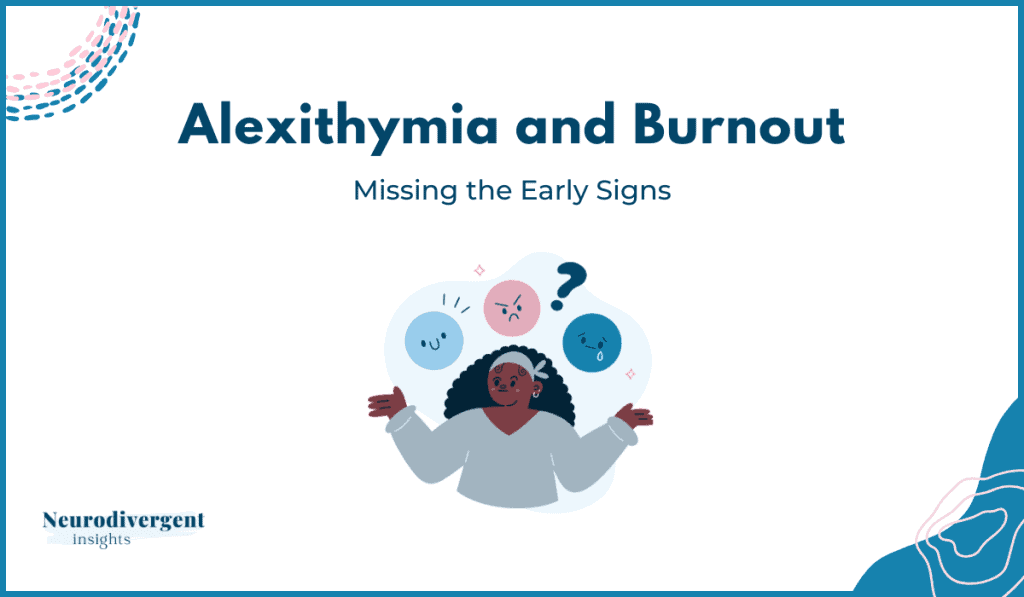
Alexithymia and burnout often show up together, and I don’t think that’s accidental. Research has identified alexithymia as a vulnerability factor for burnout.
That makes sense to me. Alexithymia is commonly described as difficulty identifying and describing emotions. In the context of chronic stress, this can mean stress builds quietly until the body forces a stop. I’ll share some strategies on how to identify stress with alexithymia, but first I want to walk through how it builds up.
Table of Contents
Why burnout can feel like it comes out of nowhere
Emotions are largely internal experiences that rely on interoceptive awareness (bodily awareness). One implication of alexithymia, then, is the difficulty of noticing early signals of stress. Stress may not come with a clear internal message like “I’m overwhelmed” or “I need to slow down.”
When we have alexithymia, it’s common to have a more all-or-nothing experience with emotions — including stress. You might feel nothing, nothing, nothing… and then suddenly we’re in full stress or emotional meltdown.
When that’s the pattern, it’s much harder to intervene early in the stress and burnout cycle with proactive self-care. And it’s far harder to bring the body back from the edge than to intervene when it’s just starting to get worn down or overheated.
Because nothing feels urgent yet, we assume we’re fine, yet stress keeps building. By the time the body gets our attention, often we’ve already tipped: exhaustion, shutdown, illness, loss of functioning, or burnout.
This is one reason burnout can feel like it comes out of nowhere. Looking back, there were signs. They perhaps just didn’t register as stress at the time, or in a way we could recognize.
How Alexithymia Makes Self-Care Harder
This also makes self-care harder. Many self-care messages assume you can feel when stress is rising and respond in the moment. But if the awareness signals don’t register, those strategies don’t work for us, and we need a different approach.
This can also make it harder to meet our body’s most basic needs too; making self care harder and adding to more risk of burnout.
For example, we may not register hunger or thirst in the same way. We might not realize we’re hungry until we’re having a blood sugar crash and feel shaky and irritable (and even then, we may mistake it for anxiety). Or we may not realize we’re thirsty until we have a pounding headache.
When internal signals come in more slowly or more muted, it’s harder to give the body what it needs — and harder to catch early signs of stress and overwhelm. Over time, that’s not a great equation for burnout prevention.
Working With Alexithymia And Burnout
How do we build more resilience?
One way is by working to increase bodily and emotional awareness and by learning how to accommodate differences in how we notice stress and emotions.
Alexithymia and interoceptive awareness are closely linked, so when we build one, the other is often supported. There are many ways to work on this — practices that increase interoceptive awareness or expand emotional language, such as body scans, visual supports like emotion matrices, or tools that help name internal states. I’ve written more about increasing emotional awareness here, and about improving interoceptive awareness here.
For this article, though, I want to focus more on accommodating alexithymia, especially in relation to stress and burnout.
While we’re building awareness, we can also work around limited access to internal signals by noticing stress in other ways. One of the most helpful is learning our own non-emotional stress signals.
How to Identify Stress with Alexithymia
For many people with alexithymia, stress shows up first as:
- changes in functioning rather than feelings
- things take more effort
- recovery takes longer
- sensory sensitivities increase
- sleep shifts
- health issues flare
- executive functioning drops
These are often the body’s earlier signals, even if they don’t feel like emotions.
Learning to identify stress with alexithymia often means tracking patterns instead of feelings — noticing what changes before things fall apart. That might be behavior, energy, health, or thinking patterns. For many neurodivergent people, burnout prevention starts there: learning to notice our earlier signals and permission to take them seriously.
Which raises an obvious question: how can I be more aware of stress if I have alexithymia?
A lot of neurodivergent wellness starts with becoming curious observers of our own experience. For many of us, that means becoming detectives of our own bodies, because our signals don’t look like what modern culture says stress should look like. We have to learn our own tells — the specific ways our bodies signal overload.
With alexithymia, that often doesn’t sound like “I’m overwhelmed” or “I feel stressed.” Instead, the information shows up elsewhere. It might be in behavior. It might be in thought patterns. It might be in biometrics or health changes.
One of the ways I’ve worked with this is by widening the lens and paying attention to non-emotional stress signals. Here are some ways to check in with yourself beyond emotions.
Non-Emotional Ways Stress Can Show Up
Behaviors
(actions you can observe that might be telling you something)
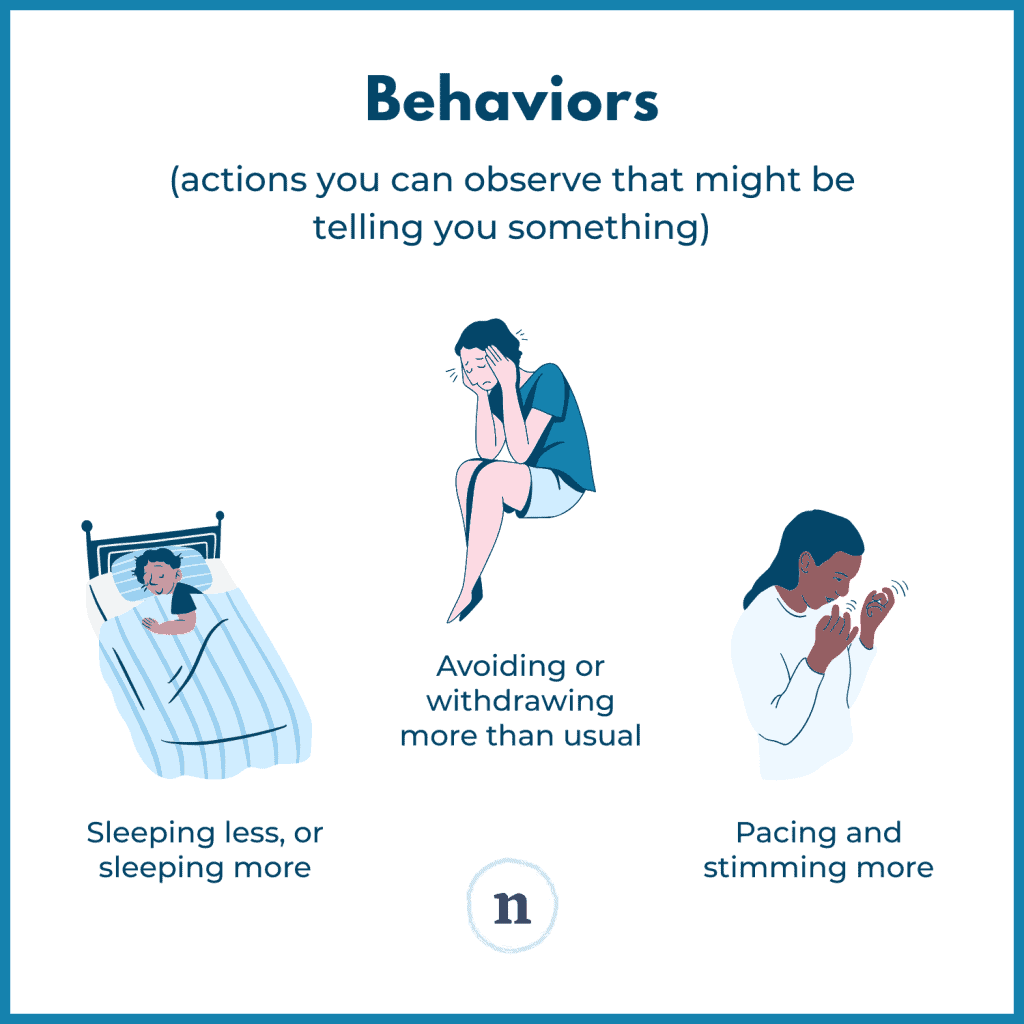
Sometimes stress shows up first in what we’re doing — or not doing. Perhaps you’ll notice:
- Sleeping less, or sleeping more
- Pacing and stimming more
- Avoiding things or withdrawing more than usual
These kinds of shifts don’t necessarily always feel dramatic, but they’re often early signs that the body is under strain.
Somatic Signals
(signals your body sends that may be signaling distress)
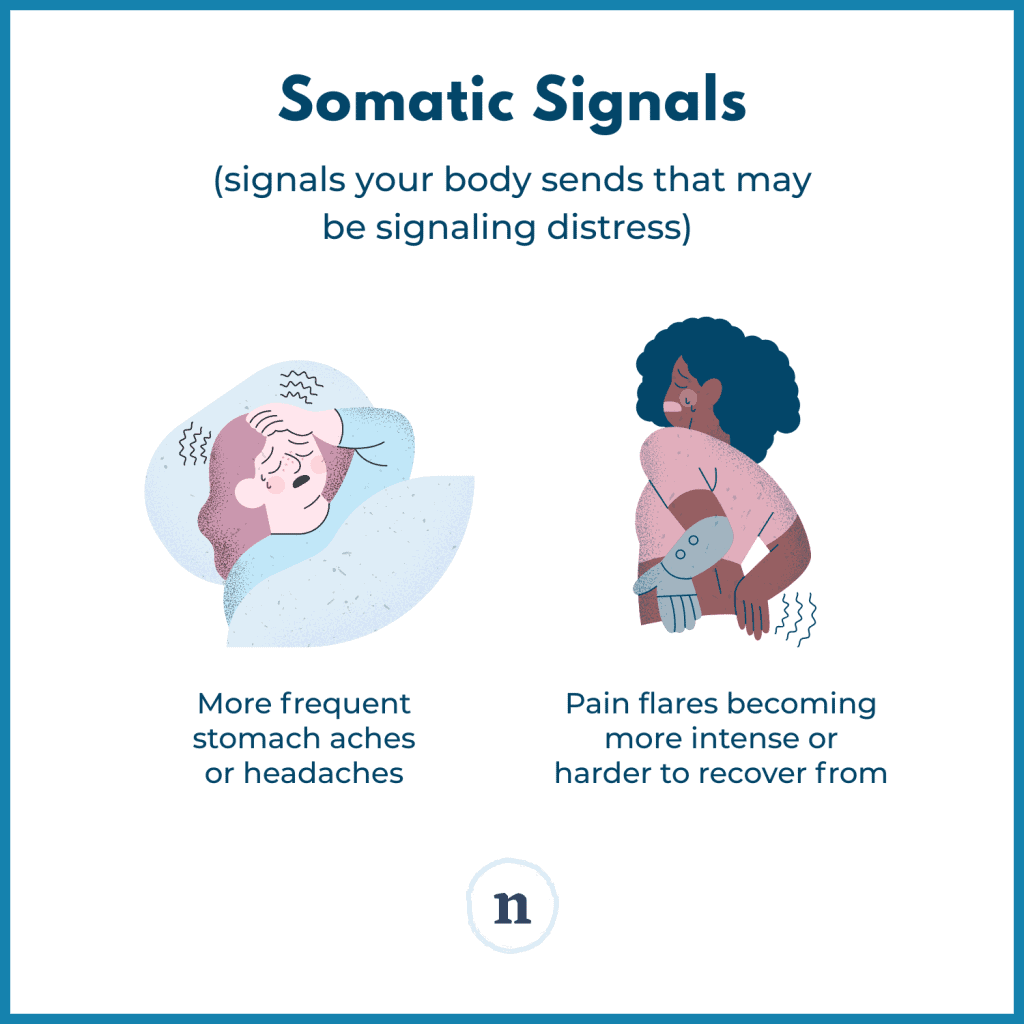
Alexithymia is also associated with higher rates of somatic complaints and chronic pain — headaches, stomach aches, body pain. When emotions don’t register clearly, the body often gets louder through other channels.
You might notice things like:
- More frequent stomach aches or headaches
- Pain flares becoming more intense or harder to recover from
Physical experiences are often part of how stress shows up when emotional awareness is muted, which can cause bodily pain and discomfort to flare.
Thoughts
(ways your mind might shift when you’re stressed)
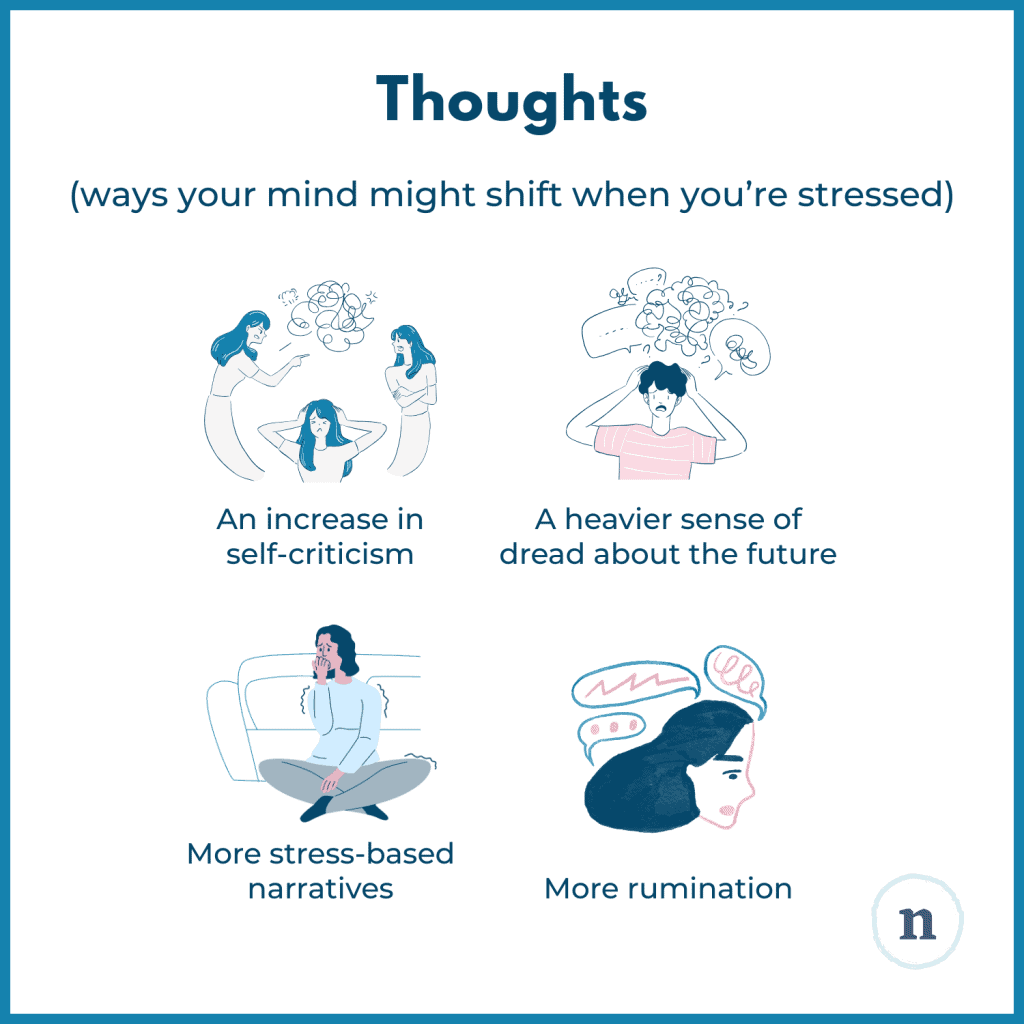
For me, changes in thinking are often one of the first things that help me identify my emotions and general state, you may notice things like:
- An increase in self-criticism
- A heavier sense of dread about the future
- More rumination
- More worry and stress-based narratives
You may not “feel” stressed, but if you’re looping on stressful narratives that is a pretty good signal your body is likely carrying more stress than you realize.
When I notice these shifts in my thinking, I try to meet them with curiosity rather than correction. This is where mindfulness-on-the-go becomes useful — not as a way to make the thoughts stop, but as a way to notice that they’re here.
Sometimes simply naming, “I’m looping,” or “This feels like stress thinking,” gives me information without asking me to change anything yet.
Biometrics
(physiological signals reflected back to you)
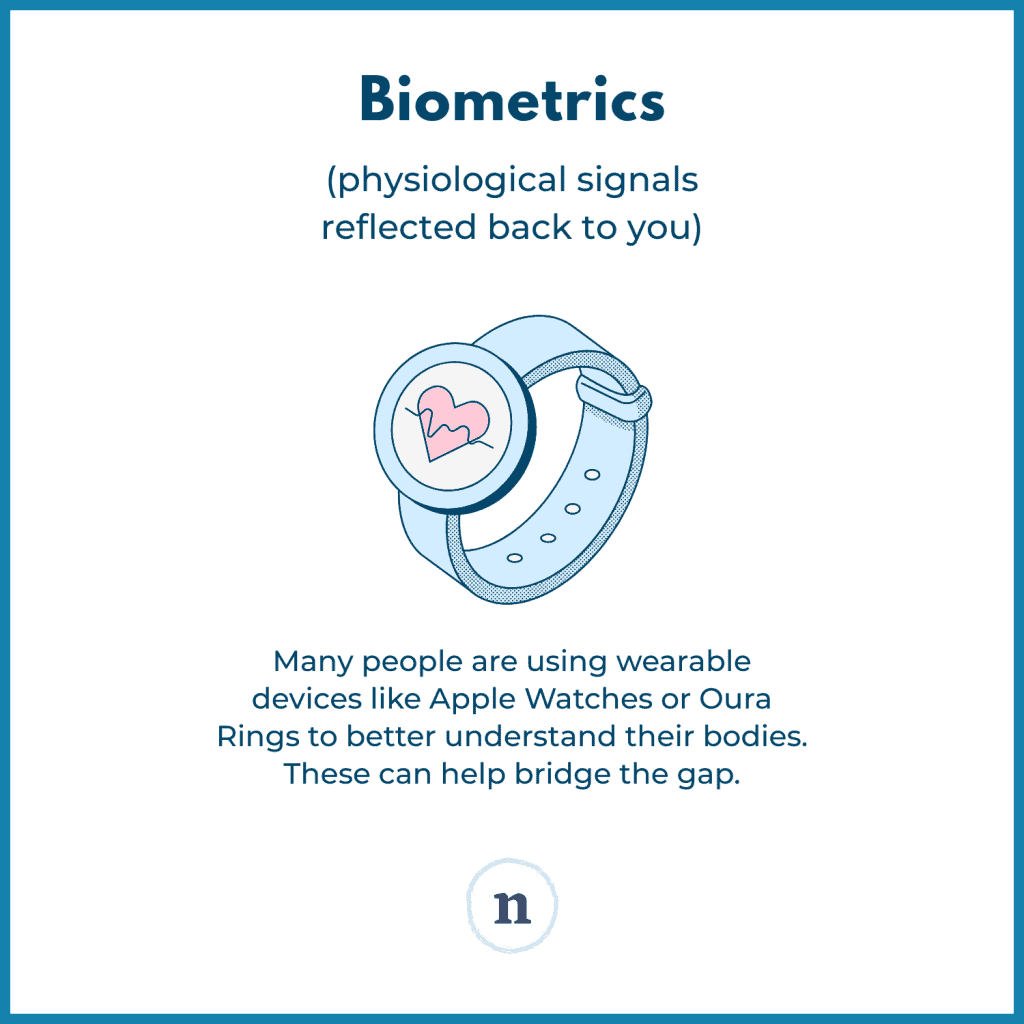
These days, many people are also using wearable devices, like Apple Watches or Oura Rings, to better understand their bodies. I’ve long been a proponent of biofeedback and neurofeedback for neurodivergent people, especially because alexithymia can make internal signals harder to access, and biological feedback can help bridge that gap.
I’ve been using an Oura Ring recently, which tracks things like stress levels, sleep, heart rate variability, and body temperature. Sometimes that data lines up with my subjective experience. Sometimes it doesn’t. Either way, it gives me information I might otherwise miss.
When my readiness score drops or stress markers spike, it’s often a cue that I’m at capacity — even if I don’t feel stressed yet. In that sense, biometric signals can function as an accommodation, helping offset the fact that body signals don’t always register clearly.
Weaving It Together
If you’re alexithymic and struggling with stress, burnout, or energy management, it can help to become more attentive to these non-emotional signals.
You might ask yourself:
- What behavioral changes show up when I’m overloaded?
- What somatic signals tend to appear when stress is building?
- What thinking patterns shift when I’m worn down?
- Are there other tells I’ve noticed over time?
Over time, these patterns become easier to recognize. And when we can notice stress earlier, we have more options. One of those options is learning how to help the body release stress through completing the stress cycle — something I explore more here. And if you’re already past prevention and into burnout itself, I’ve written about why rest alone isn’t enough and how to pair it with gentle pleasure for recovery.
References
Examining subjective understandings of autistic burnout using Q methodology: A study protocol, by Mantzalas, J., Richdale, A. L., & Dissanayake, C. (2023).
Alexithymia and Somatosensory Amplification Link Perceived Psychosocial Stress and Somatic Symptoms in Outpatients with Psychosomatic Illness, Nakao and Takeuchi, 2018.
Alexithymia and Somatization in Chronic Pain Patients: A Sequential Mediation Model, Lanzara et al, 2020
What is Autistic Burnout? A thematic Analysis of Posts on Two Online Platforms by Jane Mantzalas, et al. (2022).
Follow-Up Resources
NDI Visual Guide
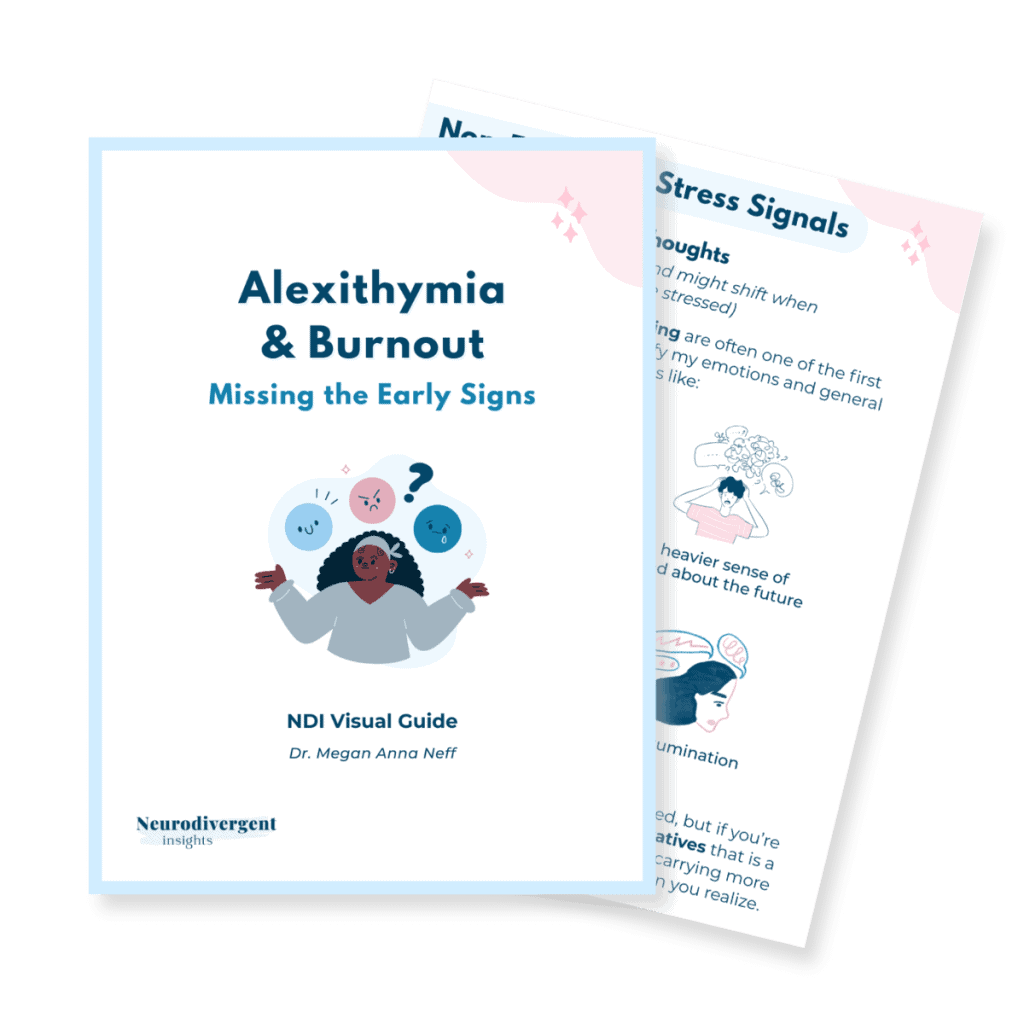
Prefer to engage or share this information visually? Our Free NDI visual Guides are abbreviated, visual-forward highlights of our longer articles.
🗞️ Stay in the Neurodivergent Loop
For ongoing insights and updates, subscribe to the Neurodivergent Insights Newsletter. Each Sunday, I send out fresh thoughts and a roundup of the newest resources on topics related to neurodivergence, mental health, and wellness. My most personal writing is reserved for my newsletter, and subscribers also get access to the newsletter vault (12+ PDFs) when they join.