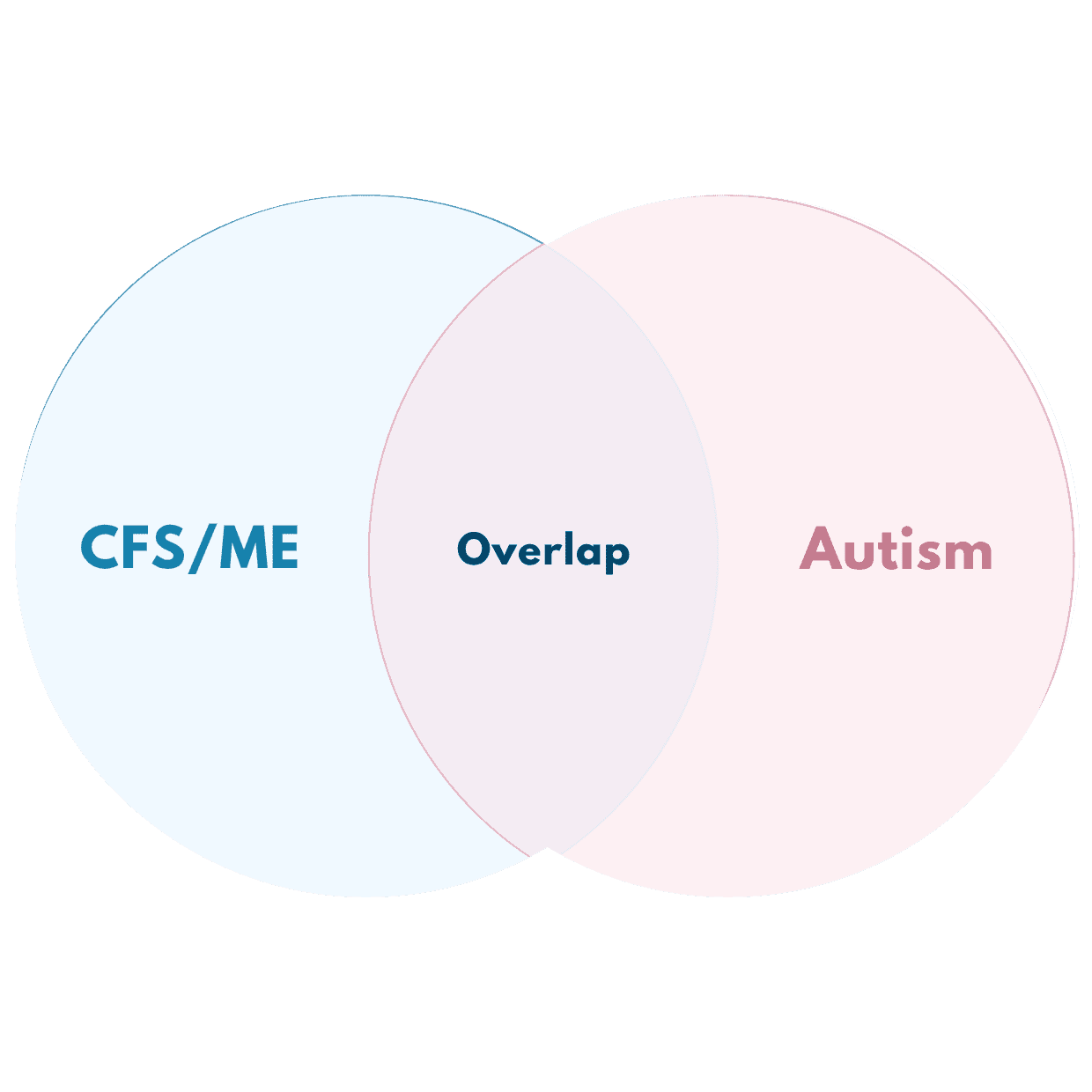
Persistent fatigue, mysterious GI issues, hormonal sensitivities, and sensory sensitivities show up together for a lot of Autistic people, and it can be hard to tell whether they are linked to autism, to a chronic fatigue condition, or to something else. Many in the Autistic community, including Autistic physician Dr. Mel Houser, refer to the many health complexities that can come with being Autistic as “all the things.”
A question that comes up often in the Autistic and ADHD communities is whether long-lasting exhaustion is Autistic burnout, myalgic encephalomyelitis/chronic fatigue syndrome (ME/CFS), or both. In this article I look at what makes autism distinct, what ME/CFS is, where the two overlap, and how burnout and ME/CFS differ. It’s a lot of information, so feel free to skim ahead to the relevant sections.
This article began as a Misdiagnosis Monday collaboration with Claire-Eliza Sehinson and was revised in 2026.
Table of Contents
What Large Studies Show About Autism and Physical Health
“All the things” is community language, and several large studies point in the same direction.
A large Kaiser Permanente study compared the health records of 1,507 Autistic adults with those of 15,070 other adults. Immune conditions, among other medical conditions, were more common in the Autistic group.¹
A Cambridge survey asked 1,129 Autistic and 1,176 non-autistic adolescents and adults about their health across nine organ systems. Autistic participants reported higher rates of chronic physical health conditions in all nine. These included ME/CFS, fibromyalgia, and irritable bowel syndrome (IBS), and Ehlers-Danlos syndrome (EDS) was more common in Autistic women than in non-autistic women. The survey relied on self-report, and the authors describe their findings as preliminary.²
A Netherlands Autism Register study looked at central sensitivity syndromes. This is a group of conditions, including fibromyalgia, ME/CFS, and IBS, in which the nervous system is thought to amplify signals such as pain and fatigue. Of 973 Autistic adults, 21% reported a diagnosis of at least one of these conditions, and 60% scored above the cut-off on a symptom questionnaire.³
None of these studies explains why the overlap exists. They do show that fatigue, pain, and gut trouble showing up together is a common pattern for Autistic people.
This article focuses on fatigue and the overlap with ME/CFS. For the broader picture of physical health, see Autism and Health Risks.
What Makes Autism Distinct
Autism is a distinct neurotype, characterized by a sensitive nervous system. This can sometimes lead to confusion with conditions that affect the nervous system, like ME/CFS, complex trauma, and dysautonomia (difficulty with automatic body regulation, covered below).
Autistic people have a specific way of perceiving and interacting with the world. This includes direct communication, a highly sensitive nervous system, a tendency for monotropic attention (attention that goes deep into a few things at a time), self-soothing through repetition and routine, and literal language use. Research on communication between Autistic people has found that we often build rapport more easily with each other than with non-autistic people, which is one reason many of us think of Autistic communication as a difference in style.
Autism is present from early development and is strongly heritable. One large study estimated heritability at about 83%.⁴ ME/CFS typically begins at some point after early development, often after a specific event such as an infection, and that timing is often what tells the two apart.
Executive functioning is a group of cognitive skills used for planning, organizing, starting tasks, and managing time. Many Autistic people experience differences in these areas, and they can be particularly challenging when navigating health contexts, managing medications, and keeping track of appointments. People with ME/CFS may also face executive functioning challenges, but these are typically due to the illness itself. For Autistic people they are part of our baseline, and they may intensify during periods of Autistic burnout or when dealing with co-occurring conditions.
Experiences That Often Come With Being Autistic
The following experiences and conditions often come with being Autistic. Several of them affect how fatigue and illness feel, and how easy they are to describe to a doctor.
Sensory Processing and Interoception
Sensory processing differences are a defining characteristic of autism. Many Autistic people experience either heightened or diminished sensitivity to sensory input such as light, sound, touch, or taste. Differences in interoception, the internal perception of body sensations like hunger, thirst, pain, and tiredness, are also common. Some of us have reduced awareness of internal signals, and some of us experience them as amplified.
These differences affect how Autistic people experience health and illness. Sensitivities can extend to gastrointestinal discomfort and influence eating. The sensory qualities of liquids can make staying hydrated harder for some people. When internal signals are muted or very loud, it is also harder to notice the early signs of illness or exhaustion and to describe them to someone else.
Sensory sensitivities can develop in anyone going through chronic illness. For Autistic people they usually go back to childhood, and they can get stronger in burnout or when another health condition is in the picture. There is more on this in Sensory Issues in Adults.
The Sensory Clinical Toolkit
The Sensory Clinical Toolkit
Sensory regulation bundle for clinicians. Two on-demand courses. NBCC CE hours, a regulation workbook, and practical tools. CPD accredited. Dr. Megan Anna Neff.
Neurodivergent Insights has been approved by NBCC as an Approved Continuing Education Provider, ACEP No. 8139. Programs that do not qualify for NBCC credit are clearly identified. Neurodivergent Insights is solely responsible for all aspects of the programs.
Alexithymia
Alexithymia, a difficulty recognizing and describing emotions, is more common in the Autistic community. A meta-analysis found that about half of Autistic people experience alexithymia, compared with about 5% of non-autistic people.⁵
Alexithymia has been associated with chronic pain, and when emotions are hard to identify, it can be hard to sort emotional exhaustion from physical illness.⁶ Autism and Alexithymia goes further into this.
ARFID and Eating
ARFID, or avoidant/restrictive food intake disorder, involves a limited range of foods stemming from:
- Avoidance of specific sensory characteristics in food, such as textures or smells.
- Aversions to certain foods or the feeding environment, often following experiences like choking, force-feeding, or pain.
- Restrictions due to low appetite, disinterest, or a lack of enjoyment in food.
Many Autistic people of all ages experience ARFID or have a history of eating challenges. These challenges are often mistaken for other eating disorders, like anorexia nervosa, or dismissed as “picky eating.” For some undiagnosed Autistic people, eating difficulties are their first point of contact with the medical system.
A 2025 meta-analysis estimated that about 16% of people with ARFID are Autistic. Estimates of ARFID among Autistic people are less certain because few studies exist.⁷ ARFID has only been formally recognized since the DSM-5 was published in 2013, and it is still often thought of as a pediatric condition, though it affects people of all ages. Anorexia and ARFID covers this in more depth.
PMDD and Hormonal Sensitivity
Premenstrual dysphoric disorder (PMDD) is a severe form of premenstrual syndrome with marked mood changes and physical symptoms. Many Autistic people describe strong sensitivity to hormonal shifts across the menstrual cycle and through perimenopause.
Research on PMDD in Autistic people is small and mixed. One study of 70 women did not find a higher rate in Autistic women, though it did find more menopausal complaints.⁸
Autistic Burnout
Autistic burnout is characterized by exhaustion from masking Autistic traits and coping with daily demands. The study that first defined it described long-lasting exhaustion, loss of function, and reduced tolerance to stimulus.⁹
Autistic burnout can affect mental health, and it can look a lot like the fatigue of ME/CFS, which I come back to below.
What Is ME/CFS?
Myalgic encephalomyelitis/chronic fatigue syndrome (ME/CFS) is a complex, chronic medical condition that affects many body systems.
Core Features
Two sets of criteria are widely used. The UK’s NICE guideline from 2021 requires all four of these:
Debilitating fatigue that is made worse by activity and is not relieved by rest.
Post-exertional malaise, a worsening of symptoms after physical or mental exertion.
Unrefreshing sleep or sleep disturbance.
Cognitive difficulties, often called “brain fog,” including challenges with memory, concentration, and processing.
NICE suggests suspecting ME/CFS when these have lasted 6 weeks in adults (4 weeks in children) and diagnosing at 3 months.
The US Institute of Medicine criteria from 2015 ask for a substantial reduction in activity with fatigue, post-exertional malaise, and unrefreshing sleep, plus either cognitive impairment or orthostatic intolerance (symptoms that get worse when upright), lasting at least 6 months.¹⁰
ME/CFS varies from person to person, both in the set of symptoms and in the course it follows.
Other Common Symptoms
NICE also lists symptoms that are often associated with ME/CFS:
 Orthostatic intolerance, including POTS (postural orthostatic tachycardia syndrome)Temperature hypersensitivityNeuromuscular symptoms, such as twitching and myoclonic jerksFlu-like symptomsIntolerance to alcohol or to certain foods and chemicalsHeightened sensory sensitivitiesPain
Several items on this list, sensory sensitivity in particular, are also part of everyday Autistic experience, which is part of why the two can be hard to separate.
How It Is Diagnosed and Why It Is Missed
ME/CFS varies in severity and fluctuates from day to day, and it can disrupt social life, work, and relationships. One study of women with ME/CFS found the illness intruded on more areas of life than is typical for other chronic illnesses.¹¹
ME/CFS is also underdiagnosed. The Institute of Medicine report estimated that 84 to 91% of people with ME/CFS have not been diagnosed. Contributing to this is the variability in clinical definitions and criteria. There is no single test for ME/CFS, so diagnosis depends on a clinician recognizing the pattern and ruling out other explanations.
What Can Trigger It
Unlike autism, ME/CFS has an onset. It can begin in childhood, adolescence, or adulthood, and it is often set off by a specific event. Infection is the best documented.
A prospective study followed 253 people after Epstein-Barr virus, Q fever, or Ross River virus. At six months, 11% met criteria for chronic fatigue syndrome. The severity of the initial illness predicted who went on to develop it, and psychological factors did not.¹² Many people with ME/CFS have been told their fatigue is psychological, and this study did not support that.
Conditions That Often Co-Occur
People with ME/CFS often live with other health conditions as well, which may include:
POTSAnxiety and depressionIBSFibromyalgiaHashimoto’s thyroiditisOther autoimmune conditionsEstimates of how often each of these co-occurs vary widely between studies.
Current Understanding and Treatment Approaches
To date, there is no consensus on the underlying disease mechanism of ME/CFS, nor is there a cure. Treatment focuses primarily on managing symptoms. Researchers are looking at possible contributing factors, including immune and autonomic nervous system dysfunction, neuro-endocrine disorders, gut microbiome imbalances, genetic predispositions, and metabolic abnormalities, such as mitochondrial dysfunction.
Autistic Burnout or ME/CFS?
Autistic burnout and ME/CFS can be hard to tell apart, for clinicians and for the person living with them. Both involve long-lasting exhaustion, more sensory sensitivity, and a drop in what a person is able to do.
They differ in where they come from and in what happens after activity.
Autistic burnout
Where it comes from
Autistic burnout was defined in 2020 as the result of chronic life stress and a mismatch between expectations and abilities without adequate supports. It builds over time and is tied to masking and load.
What tends to help
Rest, fewer demands, and time away from masking usually help, even when recovery is slow.
ME/CFS
Where it comes from
ME/CFS is a medical illness that often begins after an infection or another identifiable event.
The pattern to watch for
A delayed crash after activity that felt manageable in the moment. NICE advises people not to push through their symptoms.
The feature to watch for is post-exertional malaise, or PEM. In PEM, symptoms get worse after physical or mental exertion. NICE describes the worsening as often delayed by hours or days, out of proportion to the activity, and slow to recover from. Someone might manage a shower, an appointment, or a long conversation and then feel much sicker the next day, sometimes for many days.
An Autistic person can be in burnout and also have ME/CFS, and in the Cambridge survey above, Autistic participants reported ME/CFS about three times as often as non-autistic participants. When both are in the picture, one can hide the other. A clinician may put everything down to autism or to burnout and miss the illness.
If the delayed-crash pattern sounds familiar, it can help to raise post-exertional malaise by name with a clinician. Some people find that a simple record of activity and how they feel over the following days makes that conversation easier.
Pacing (NICE calls it energy management), which means staying within the energy you have so that you don’t set off a crash, is the approach most often suggested for PEM, and many Autistic people find it useful in burnout too. How to Use Pacing Systems explains how it works, and there is more on burnout in Autism and Burnout.
Where Autism and ME/CFS Overlap
There are many overlaps between autism and ME/CFS. This often leads to diagnostic overshadowing, where one diagnosis gets the credit for everything a person is experiencing.
Brain Fog
Brain fog is a widely used term for a range of cognitive and executive functioning difficulties, commonly seen in ME/CFS and other chronic illnesses. Typically, it includes:
 ConfusionMental fatigueLack of clarityDisorganizationConcentration difficultiesSlowed information processingNewly apparent memory issues
For Autistic people, many of these experiences surface during periods of sensory overload, stress, shutdowns, and meltdowns. Hormonal fluctuations, such as those that occur across the menstrual cycle or during perimenopause and menopause, can also intensify them. Brain fog is a recognized feature of anxiety and depression as well.
Brain fog is also common in other health conditions, including long COVID. Brain fog should not be an experience people are expected to “just live with.” Appropriate accommodations and health care support can help.
Post-Viral Illness and Long COVID
The link between ME/CFS and infectious disease has a long history. Cluster outbreaks were recorded at the Royal Free Hospital in London in 1955 and in Incline Village, Nevada, in 1985.
The prospective study described above found that several different infections can lead to a chronic fatigue profile that lasts long after the acute phase, in about 11% of people at six months. A large UK study found that 7.5% of people who had symptomatic COVID-19 reported symptoms lasting 12 weeks or more, and about 5% still had symptoms beyond a year.¹³
Long COVID and post-viral ME/CFS share many clinical characteristics. Whether Autistic people are at higher risk of long COVID specifically has not been well studied.
Sleep
Sleep difficulties are common in both groups. Unrefreshing sleep is one of the core features of ME/CFS. In one sleep-lab study, nearly a third of people diagnosed with CFS had a primary sleep disorder, and most of the rest showed at least one measurable sleep problem.¹⁴
For Autistic people, sleep differences often begin in childhood. A study of 522 Autistic children aged 2 to 5 found sleep problems were more than twice as likely as in other children. A small sleep-lab study found that Autistic children spent about 15% of their sleep in REM, the stage linked to learning and memory, compared with about 23% for typically developing children.¹⁵
In adults, a meta-analysis found that Autistic and ADHD adults took longer to fall asleep, had lower sleep efficiency, and woke more during the night. Differences in melatonin and circadian rhythm have also been reported in some Autistic people.
Poor sleep adds to fatigue, pain, and brain fog whatever the cause, so it is worth bringing to a clinician. There is more in Autism and Sleep.
Gut and Digestion
IBS is frequently seen alongside ME/CFS. It is often a diagnosis of exclusion, meaning the diagnosis is used when a range of gut and digestive symptoms cannot be explained by objective medical tests.
In autism, most of the research is with children. A meta-analysis found that Autistic children were more than four times as likely to have general GI complaints, more than three times as likely to have constipation or diarrhea, and about twice as likely to have abdominal pain.¹⁶
The gut and the brain are in constant two-way communication, largely through the vagus nerve, which helps explain how emotions can affect gut function and the reverse. Interoception differences, which are common for Autistic people, can influence gut experience in several ways:
- Increased sensitivity to digestive pain.
- Stronger reactions to foods that are unrelated to the immune system (non-allergic food sensitivities).
- Difficulty reading appetite, fullness, toileting needs, or thirst.
- Stress or overload showing up as hunger, fullness, stomach aches, or bloating.
Many Autistic people describe sensitivities to certain foods, smells, and chemicals. Some of these are interoceptive sensitivities. They involve sensitization to the characteristics of food or chemicals, such as texture, taste, odor, temperature, the eating environment, or associations with specific memories (such as choking, vomiting, or food poisoning).
This type of sensitivity can look like IBS, with stomach upsets being a common sign of stress and overload. The enteric nervous system, the network of nerves that runs the length of the digestive tract, plays a large role here. Interoceptive sensitivities vary widely and relate to individual sensory preferences and aversions. Supporting them, especially alongside ARFID, calls for an understanding of interoception and a safe, neurodivergent-affirming environment around food.
Inflammatory bowel disease (IBD), which includes Crohn’s disease and ulcerative colitis, appears somewhat more common in Autistic people, according to a 2021 meta-analysis. Most gut symptoms in Autistic people are not IBD.¹⁷
Studies have also found differences in the gut microbiome of Autistic people. One study of 247 children suggests that restricted eating patterns and dietary preferences may explain some of those differences. Restricted eating can also narrow nutrient intake, so support around eating is part of physical health care.
Hypermobility and Ehlers-Danlos Syndrome
Joint hypermobility (often referred to as being “double-jointed”) means that joints have a larger than usual range of movement because of laxity in the ligaments and structures of the joint capsule. This extra movement can lead to instability. People can be hypermobile in just one joint or in many joints around the body.
Hypermobility is often a genetic predisposition, but it can also follow an injury (such as a dislocated shoulder) or occur alongside a connective tissue or autoimmune condition such as lupus.
Ehlers-Danlos syndrome (EDS) is a group of inherited connective tissue conditions with 13 recognized types. Most involve some degree of joint hypermobility, and hypermobile EDS (hEDS) is the most common. Several types involve genes that affect collagen, the most abundant protein in the body, which gives strength and support to joints, skin, blood vessels, and the gut. The genetic basis of hEDS is not yet known. Because connective tissue is found throughout the body, people with EDS can experience a wide array of symptoms.
The link between hypermobility and neurodivergence is among the better-supported overlaps. A Swedish register study of 1,771 people with EDS found they were about seven times more likely to be Autistic and more than five times more likely to have ADHD. A UK study found generalized joint hypermobility in 51% of 109 neurodivergent adults, compared with about 20% in the general population, along with more pain and more symptoms on standing.¹⁸
Hypermobility is also common in ME/CFS and fibromyalgia. In one clinic study of 63 people with fibromyalgia or ME/CFS, 81% met an older set of hypermobility criteria and 18% met the stricter current criteria for hEDS.¹⁹
Dysautonomia and POTS
Dysautonomia means the autonomic nervous system has difficulty regulating itself. This is the system that runs involuntary functions such as blood pressure, heart rate, body temperature, and breathing. With dysautonomia, the communication between the autonomic nervous system and the rest of the body is out of sync. It becomes harder to adapt when the room temperature changes, when moving from sitting to standing, or when a few hours have passed without eating. The effects can range from mild to severe.
Dysautonomia can be hereditary, which is rare, or it can develop alongside other health conditions, including infections, autoimmune conditions, and Ehlers-Danlos syndrome.
POTS (postural orthostatic tachycardia syndrome) is one of the most common types of dysautonomia. It is often identified by a rapid increase in heart rate upon standing, accompanied by dizziness, a “head rush,” or fatigue.
In POTS, the autonomic nervous system does not adapt quickly enough when a person moves from sitting or lying down to standing. Normally, blood vessels contract swiftly to send blood and oxygen to the brain. In POTS, this response is delayed, so the heart works harder to pump blood upward. The result is tachycardia (a rapid heart rate), sometimes with faintness, dizziness, or fatigue.
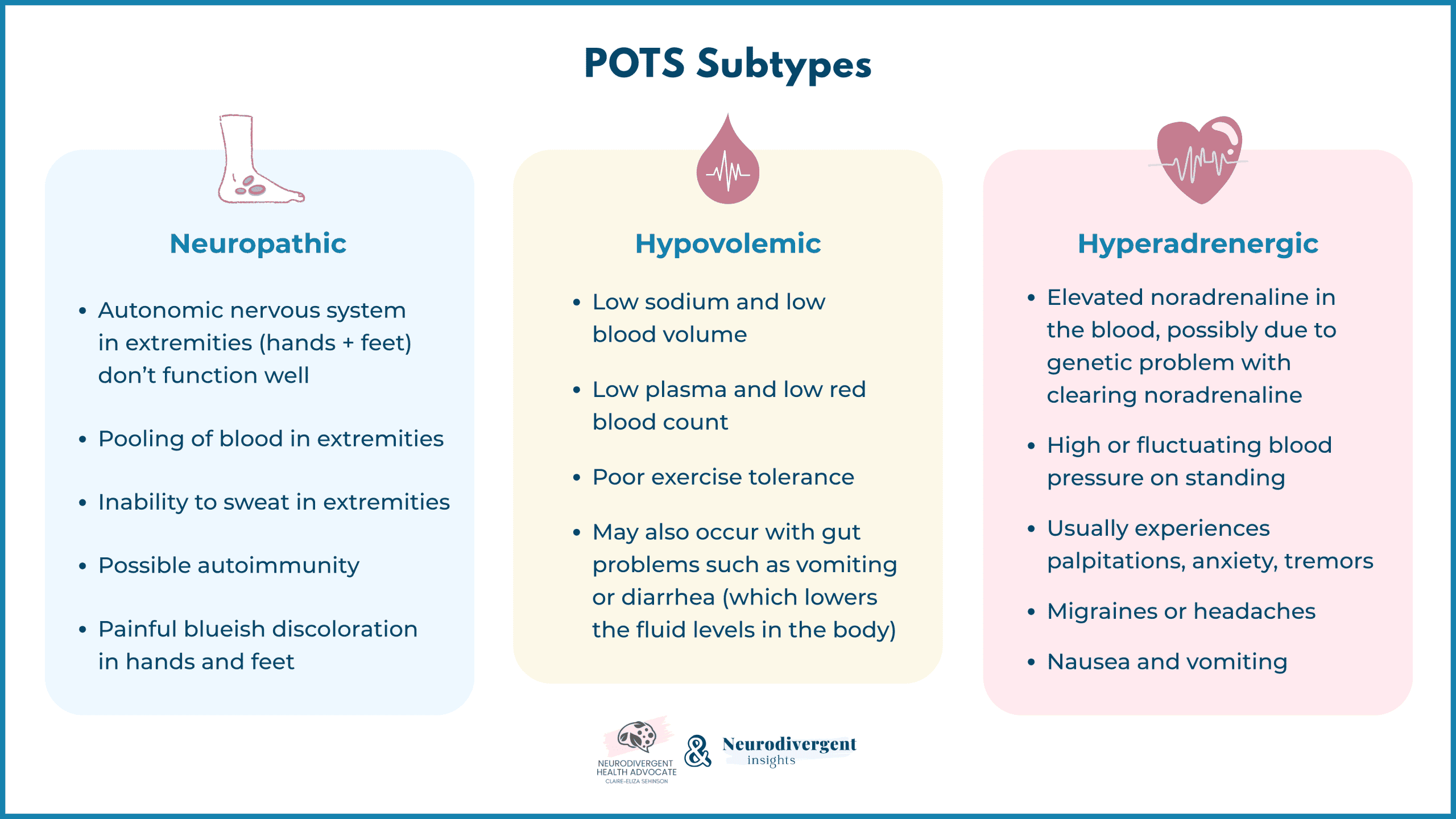
The subtypes in this graphic are descriptive, and they overlap. Many people with POTS fit more than one.
POTS is commonly seen in people with ME/CFS. For Autistic people, the evidence is thinner. Autonomic symptoms such as dizziness on standing are reported more often by neurodivergent adults, and a small clinic study has found POTS in Autistic adults referred for testing, many of whom also had hEDS. We do not yet know how common POTS is among Autistic people overall.²⁰
Increasing salt and fluid intake to boost blood volume is often suggested by clinicians. The right approach depends on the person, so this is something to work out with a clinician who knows your health history.
Pain and Fibromyalgia
Many Autistic people experience pain differently. One lab study of Autistic adults found no difference in pain thresholds, but Autistic participants rated stronger heat as more painful and reported more pain-related anxiety. A US national survey found chronic or repeated pain in about 16% of Autistic children, compared with about 8% of other children.²¹
Fibromyalgia is a chronic condition primarily characterized by widespread pain in connective tissues and muscles. People with fibromyalgia often experience a constellation of symptoms, including fatigue, anxiety, sleep disturbance, and cognitive challenges. While the precise cause remains unclear, it is understood as a difference in how the nervous system processes pain. A key feature is heightened sensitivity to stimuli, which leads to more intense pain experiences. Fibromyalgia and ME/CFS often occur together.
There is also overlap with neurodivergence. In a study of 123 adults with fibromyalgia, about 45% screened positive for possible ADHD on a self-report scale, though no diagnoses were confirmed. In the Netherlands study described earlier, about one in five Autistic adults reported a central sensitivity syndrome diagnosis.²²
Immune Conditions
The Kaiser Permanente study described earlier found immune conditions were more common in Autistic adults than in other adults. Autoimmune conditions are also among the conditions that often co-occur with ME/CFS. What connects these findings is not yet known.
What Researchers Are Still Working Out
What many Autistic people report
Some of the health patterns Autistic people talk about most are ones that research has only started to look at. Three come up often in community spaces:
- Histamine and mast-cell reactions. Mast cells are immune cells that release histamine, and many Autistic people describe allergy-like reactions to foods and environments.
- Hypermobility, POTS, and mast-cell reactions showing up together. Many people who have one of these describe having the others.
- Gut microbiome differences. The microbiome is the community of bacteria and other microbes that live in the gut.
Dr. Mel Houser and the All Brains Belong community have done a lot to name these patterns as part of “all the things.” You can hear Dr. Houser talk about this on our podcast, Divergent Conversations.
I take these accounts seriously, because when many people describe the same pattern it tells us something, and it is often how research questions get started.
The research is still early, with studies that are small or mixed, and with the microbiome it is still unclear what is cause and what is effect. For now, this research isn’t a basis for specific tests or treatments. If these patterns fit your experience, they are still worth describing to a clinician as part of your whole health picture.
Diagnostic Overshadowing
Diagnostic overshadowing happens when the presence of a well-known condition like autism or ME/CFS leads to symptoms of other co-occurring conditions being overlooked or attributed to the wrong thing.
An Autistic person’s fatigue may be put down to autism or anxiety, and the illness goes unassessed. It happens the other way too, when a person with ME/CFS is never asked about lifelong sensory and communication differences.
One thing that can help is describing what you experience in terms of timing and pattern: what has been there since childhood, what is new, what gets worse after exertion, and what changes with rest.
Some people find it helps to note which of these fit before an appointment:
Closing Thoughts
Autism is a lifelong neurotype, and ME/CFS is an illness that begins at some point, most often after an infection. They also share a lot, including fatigue, brain fog, sleep and gut difficulties, hypermobility, POTS, and pain. An Autistic person can be in burnout, can have ME/CFS, or can be living with both.
Research in this area is still developing, and much of it is small. My hope is that this article gives you some language for what you are experiencing and a few specific things to bring to a clinician.
Autism and ME/CFS FAQs
Is it Autistic burnout or chronic fatigue syndrome (ME/CFS)?
They can look alike. The feature to watch for is post-exertional malaise, a worsening of symptoms after exertion that is often delayed by hours or days and slow to recover from. In Autistic burnout, rest, fewer demands, and time away from masking usually help, even when recovery is slow.
Can you be Autistic and have ME/CFS?
Yes. In a Cambridge survey, Autistic participants reported ME/CFS about three times as often as non-autistic participants, and in a Netherlands study, about one in five Autistic adults reported a central sensitivity syndrome such as ME/CFS, fibromyalgia, or IBS.
What is post-exertional malaise (PEM)?
PEM is a worsening of symptoms after physical or mental exertion. NICE describes it as often delayed by hours or days, out of proportion to the activity, and slow to recover from. It is a core feature of ME/CFS.
Is hypermobility linked to autism?
The evidence points that way. A Swedish register study found people with Ehlers-Danlos syndrome were about seven times more likely to be Autistic, and a UK study found generalized joint hypermobility in 51% of neurodivergent adults (Autistic, ADHD, and Tourette’s), compared with about 20% in the general population.
Is POTS more common in Autistic people?
We do not yet know. A small clinic study has found POTS in Autistic adults referred for testing, and neurodivergent adults report more dizziness on standing, but there is no reliable figure for Autistic people overall.
Additional Resources

Autism and Burnout What Autistic burnout is and what helps

How to Use Pacing Systems Staying within the energy you have

Autism and Sleep Why sleep is harder for many Autistic adults
Autism and Interoception How we sense signals from inside the body
Autism and Alexithymia When emotions are hard to identify and describe
Anorexia and ARFID Eating differences in Autistic people
 Stay in the Neurodivergent Loop
For ongoing insights and updates, subscribe to the Neurodivergent Insights Newsletter. Each Sunday, I send out fresh thoughts and a roundup of the newest resources on topics related to neurodivergence, mental health, and wellness. My most personal writing is reserved for my newsletter, and subscribers also get access to the newsletter vault (12+ PDFs) when they join.
References
Endnotes
¹ Croen and colleagues (2015) compared 1,507 Autistic adults with 15,070 other adults in a Kaiser Permanente study. https://doi.org/10.1177/1362361315577517
² Ward, Weir, Allison & Baron-Cohen (2023) surveyed 1,129 Autistic and 1,176 non-autistic adolescents and adults. Rates were higher across all nine organ systems. The data are self-reported and the authors call the findings preliminary. https://doi.org/10.1186/s13229-023-00565-2
³ Grant and colleagues (2022), Netherlands Autism Register: of 973 Autistic adults, 21% reported a central sensitivity syndrome diagnosis and 60% scored above the symptom cut-off. https://doi.org/10.1186/s13229-022-00486-6
⁴ Crompton, Sharp, Axbey, Fletcher-Watson, Flynn & Ropar (2020). Neurotype-matching, but not being autistic, influences self and observer ratings of interpersonal rapport. Frontiers in Psychology, 11, 586171: Autistic pairs rated rapport higher than mixed pairs. https://doi.org/10.3389/fpsyg.2020.586171 . Heritability figure: Sandin and colleagues (2017) estimated 83% (95% confidence interval 79 to 87%). https://doi.org/10.1001/jama.2017.12141
⁵ Kinnaird, Stewart & Tchanturia (2019), systematic review and meta-analysis: alexithymia in 49.93% of Autistic participants and 4.89% of non-autistic participants. https://doi.org/10.1016/j.eurpsy.2018.09.004
⁶ Aaron and colleagues (2019), a meta-analysis of 77 studies in Pain: alexithymia was higher in people with chronic pain than in controls. https://doi.org/10.1097/j.pain.0000000000001487
⁷ Sader and colleagues (2025): autism in about 16% of people with ARFID across 18 studies. ARFID in about 11% of Autistic people, based on 3 studies with a very wide interval. https://doi.org/10.1002/eat.24369
⁸ Groenman and colleagues (2022): PMDD in 14.3% of 28 Autistic women and 9.5% of 42 non-autistic women, a difference that was not statistically significant. https://doi.org/10.1177/13623613211059721
⁹ Raymaker and colleagues (2020), Defining autistic burnout. https://doi.org/10.1089/aut.2019.0079
¹⁰ NICE guideline NG206 (2021), https://www.nice.org.uk/guidance/ng206 ; Institute of Medicine (2015), Beyond Myalgic Encephalomyelitis/Chronic Fatigue Syndrome: Redefining an Illness, https://www.ncbi.nlm.nih.gov/books/NBK284892/ . The estimate that 84 to 91% of people with ME/CFS are undiagnosed is from the Institute of Medicine report.
¹¹ Dancey & Friend (2008), a study of women with CFS/ME. https://doi.org/10.1080/08870440701619957
¹² Hickie and colleagues (2006), a prospective cohort of 253 people followed after Epstein-Barr virus, Q fever, or Ross River virus. https://www.bmj.com/content/333/7568/575
¹³ Royal Free outbreak: Acheson (1959). Long COVID: Atchison and colleagues (2023), 7.5% and 5.2% of people with symptomatic COVID-19. https://doi.org/10.1038/s41467-023-41879-2
¹⁴ Gotts and colleagues (2013) studied 343 people for one night. 30.3% had a primary sleep disorder, and 89.1% of the remaining 239 had at least one objective sleep problem. https://doi.org/10.1136/bmjopen-2013-002999
¹⁵ Reynolds and colleagues (2019), 522 Autistic children aged 2 to 5, https://doi.org/10.1542/peds.2018-0492 ; Buckley and colleagues (2010), children (60 Autistic children aged 2 to 13, 15 typically developing children aged 1 to 5, 13 with developmental delay), https://doi.org/10.1001/archpediatrics.2010.202 . The adult meta-analysis covered Autistic and ADHD adults together and was reported as a conference abstract by Ramos-Quiroga and colleagues (2021). https://doi.org/10.1192/j.eurpsy.2021.454
¹⁶ McElhanon and colleagues (2014), a meta-analysis of GI symptoms in Autistic children. https://doi.org/10.1542/peds.2013-3995
¹⁷ Kim and colleagues (2021) pooled six studies and found a modest association (odds ratio about 1.66). Lee and colleagues (2018) found Crohn’s disease and ulcerative colitis were more common in Autistic children in military health records, https://doi.org/10.1007/s10803-017-3409-5 . Microbiome and diet: Yap and colleagues (2021). Nutrient intake in ARFID: Schmidt and colleagues (2021), Nutrients, https://www.mdpi.com/2072-6643/13/2/400
¹⁸ Cederlof and colleagues (2016): risk ratio 7.4 for autism and 5.6 for ADHD among 1,771 people with EDS. Csecs and colleagues (2022): 109 neurodivergent adults. https://doi.org/10.3389/fpsyt.2021.786916
¹⁹ Eccles and colleagues (2021), Clinical Medicine, 21(1), 53-58: 81% met the older Brighton criteria and 18% met the 2017 hEDS criteria. https://doi.org/10.7861/clinmed.2020-0743
²⁰ Owens, Mathias & Iodice (2021) reviewed 28 Autistic adults referred to autonomic clinics: 20 had an autonomic condition, 14 had POTS, and 16 of the 20 had hEDS. Because these were referrals, the study cannot give a rate for Autistic people in general. https://doi.org/10.3389/fnint.2021.787037
²¹ Failla and colleagues (2020): 24 Autistic adults and 19 controls. Whitney & Shapiro (2019), national survey of children and adolescents, 15.6% vs 8.2%. https://doi.org/10.1001/jamapediatrics.2019.3826
²² van Rensburg and colleagues (2018): 44.72% of 123 adults with fibromyalgia screened positive on a self-report ADHD scale. https://doi.org/10.1093/pm/pnx275
Key Studies
Croen et al. (2015). The health status of adults on the autism spectrum. Link
Ward, Weir, Allison & Baron-Cohen (2023). Increased rates of chronic physical health conditions across all organ systems in autistic adolescents and adults. Link
Grant et al. (2022). Autism and chronic ill health: an observational study of symptoms and diagnoses of central sensitivity syndromes in autistic adults. Molecular Autism, 13, 7. Link
Raymaker et al. (2020). Defining autistic burnout. Link
NICE (2021). Guideline NG206 on ME/CFS. Link
Institute of Medicine (2015). Beyond Myalgic Encephalomyelitis/Chronic Fatigue Syndrome: Redefining an Illness. Link
Hickie et al. (2006). Post-infective and chronic fatigue syndromes precipitated by viral and non-viral pathogens: prospective cohort study. BMJ, 333, 575. Link
Cederlof et al. (2016). Nationwide population-based cohort study of psychiatric disorders in individuals with Ehlers-Danlos syndrome or hypermobility syndrome and their siblings. BMC Psychiatry, 16, 207. Link
Csecs et al. (2022). Joint hypermobility links neurodivergence to dysautonomia and pain. Link
Kinnaird, Stewart & Tchanturia (2019). Investigating alexithymia in autism: A systematic review and meta-analysis. Link