
Intimacy vs. Isolation: The “Will I Be Loved?” Stage
Revisiting Erikson Through a Neurodivergent Lens (Part Seven)
This is part seven in my series exploring neurodivergent identity across the lifespan through Erik Erikson’s developmental framework. Today’s essay focuses on Intimacy vs. Isolation ~ the “Will I Be Loved?” era. You can find the earlier essays in this series here.
If I were to attempt to have a birthday party (which I wouldn’t want to), I’d probably struggle to find enough people to invite. I sometimes joke that “I don’t have friends.” It’s only half a joke. In some ways it’s true, though it’s also beginning to shift as I’ve found myself more deeply embedded in neurodivergent spaces and communities.
But here’s the thing: I wouldn’t necessarily say that I’m lonely.
The New Zealand Māori word takiwātanga, used to describe autism, roughly translates to “in their own time and space.” I’ve always loved this way of capturing the Autistic experience. It resonates deeply with how I’ve experienced connection and solitude. At times, my takiwātanga feels expansive and life-giving, like I’m exactly where I need to be. At other times, it feels a bit more cumbersome; intimacy can be difficult when I’m constantly pulled back into my own bubble of time and space to replenish.
Recently, while recording a podcast episode with Patrick, I described myself as a social cactus. I don’t need much water (social interaction) to sustain me — but when I do, it needs to be dense and nourishing. I thrive on deep, authentic connections, but I don’t need them often.
I also write a lot about relationships, attunement, and the push-pull of closeness — like the porcupine’s dilemma, where we long for connection, get spiked by it, retreat for distance, and then reach out again. I suspect I write on these themes as often as I do because they mirror my own rhythms: craving intense connection, retreating into isolation to regroup, in and out, in and out. That flow doesn’t work for everyone, but it’s the dance that sustains me.
So yes, intimacy is complex for me. But I’d also say I feel nourished here, even if from the outside my social world looks small and quiet. Which is why, when we turn to Erikson’s stage of intimacy vs. isolation, I think it’s worth remembering that neurodivergent people may navigate this task differently, and that a successful outcome might not look the same for us as it does for others.
Table of Contents
Erikson’s Sixth Stage: Intimacy vs. Isolation Explained
Young adulthood brings with it a new developmental task: to risk closeness. After the turbulence of adolescence and the question “Who am I?”, Erikson suggested the next great question becomes: “Will I be loved?”
This stage typically spans the twenties and thirties, though like all of Erikson’s stages it is not locked into age. This stage holds the tug-of-war between intimacy and isolation. Intimacy, as Erikson described it, is not only about romance or sexuality. It’s about the ability to let another person in — to risk honesty, vulnerability, and closeness — whether with a partner, a friend, or chosen family.
When this stage goes well, we develop the capacity for enduring, nourishing relationships, relationships in which we can both hold onto ourselves and make space for another. The virtue that emerges here is love — the capacity to give and receive care in ways that honor both self and other.
When this stage is interrupted, the result can be isolation — a pull toward withdrawal, loneliness, or relationships that stay shallow and performative. Isolation isn’t always about what it looks like from the outside — it’s an inner experience. A person can be surrounded by others and still feel profoundly lonely, especially if those relationships are held together only by masking. Likewise, someone may spend long stretches alone and feel deeply nourished rather than deprived. Solitude, when chosen, can be restorative. But when withdrawal is driven by fear of rejection or the belief that true closeness isn’t possible, isolation becomes less about rest and more about disconnection.
A Neurodivergent Snapshot of Intimacy vs. Isolation
Neurodivergent Considerations: Masking, Trust, and Vulnerability
For many neurodivergent adults, intimacy is more layered than Erikson’s framework suggests. Masking often continues well into adulthood, making authentic closeness hard to build. When relationships depend on performance rather than honesty, they can feel fragile, more like work than nourishment. Cross-neurotype relationships add another layer. Autistic and non-autistic partners or friends may deeply care for one another yet still miss each other’s signals. This is sometimes called the double empathy problem. Misunderstandings are not always about a lack of effort but about moving through the world with different ways of perceiving, experiencing, and expressing.
Intimacy built on masking can look like closeness from the outside, but on the inside, it rarely feels save, connected, or nourishing.
- Dr. Megan Anna Neff
These relational complexities are often layered on top of earlier wounds. Bullying, rejection, and misattunement in childhood and adolescence can leave neurodivergent adults wary of being fully seen. When trust has been fractured again and again, vulnerability can feel risky.
Sensory and social differences add yet another layer. Eye contact, background noise, or the unpredictability of emotional exchanges can turn what looks like a simple social moment into something exhausting. Vulnerability and closeness, while deeply desired, can sometimes feel overwhelming. A person may crave intimacy but struggle to initiate or sustain relationships. Difficulty reading social context can also make it harder to integrate into work settings or form casual friendships, feeding an ongoing sense of isolation into adulthood.
Fear of rejection hovers close for many neurodivergent adults. Even when there is a longing for connection, self-isolation can feel safer than risking being misunderstood or rejected. Others may withdraw not from fear but from the need to conserve limited energy, a retreat from the muchness of the world.

Adaptive vs. Maladaptive Withdrawal

Withdrawal can protect us at times, and at other times it can tip us into loneliness. This is why community matters so much. Intimacy grows best in neurodivergent-affirming spaces, where we don’t have to mask or constantly explain ourselves. When we can show up as we are, shared values, passions, and communication rhythms become the soil where trust and connection take root. For many ND adults, these relationships, whether with a partner, a friend, or a community, are the oxygen connections that make life feel breathable.
Intimacy may take different shapes for neurodivergent adults, often slower, quieter, or built on unusual rhythms, but that does not make it less valuable. When relationships make room for difference and authenticity, they can bring a depth of connection as sustaining as anything Erikson described.
Navigating Intimacy and Its Ripples in Adulthood
When this stage is interrupted, it can ripple forward into adulthood as patterns of withdrawal, serial relationships that never quite settle, or over-functioning to hold onto connection. When it’s supported, however, intimacy doesn’t mean never retreating — it means finding relationships where authenticity is safe, where rhythms of closeness and solitude can coexist, and where love is mutual and sustaining.
Practices for Building Safe and Authentic Connection
- Start with building intimacy with yourself: Unmasking starts with getting to know ourselves. What brings us pleasure and delight? How do we like to play? What sparks our curiosity and interest. It’s hard to build authentic connections with others when we don’t have one with ourselves. So really … we have to circle back to the last stage … identity, which then folds into this stage in building deep connections with others.
- Find spaces where you can unmask. Unmasking in relationships can feel risky, but it’s also where nourishment is found. Vulnerability is nearly impossible when you are performing. Look for relationships or communities where you can bring your full self forward without fear of rejection.
- Differentiate solitude from isolation. Equally important is learning to discern the difference between solitude and isolation. Solitude can be deeply nourishing, a chance to recalibrate. Isolation, on the other hand, often grows out of fear: the pull to withdraw as a way of protecting ourselves from rejection or overwhelm. Learning when we are resting and when we are retreating can shift how sustainable our relationships feel.
- Widen your view of intimacy. It also helps to widen the frame of what intimacy is. Romantic partnership is not the only place intimacy lives. Intimacy can also be found in friendships, creative collaborations, chosen family, and community bonds.
- Notice patterns that ripple forward. When intimacy is interrupted, it may show up as withdrawal, relationships that never quite settle, or over-functioning to keep others close. When supported, intimacy doesn’t mean always being available — it means finding relationships where authenticity is safe, where rhythms of closeness and solitude are respected, and where love feels mutual.
- Get curious about your relationship patterns, attachment style, and the raw spots where old wounds still live. These raw spots often carry our defenses. Relationship wounds are complicated because when they’re bumped, we can react from less-refined defenses that end up pushing people away. The work is not to shame these defenses for existing but to increase awareness of them so they have less unconscious power over us. Naming and identifying them when they show up gives us the chance to pause, repair, and stay present rather than sprinting away in the face of intimacy.
Summary & What’s Next in Erikson’s Stages
Intimacy vs. Isolation centers on the question: Will I be loved? For neurodivergent adults, this task often circles back to identity — the deeper question becomes, Can I bring my unmasked self into relationship and still be accepted?
When intimacy is nurtured, it offers not just companionship but a sense of belonging that honors authenticity. When it falters, isolation can feel protective but also limiting.
Next week, we’ll turn to Generativity vs. Stagnation, where the focus shifts toward creating, contributing, and having expansive energy that leaves an imprint on the world — a stage where questions of purpose and meaning come to the forefront.
Here’s what’s new in the NDI ecosystem this week:
Further Resources
🎙️ Divergent Conversations Podcast
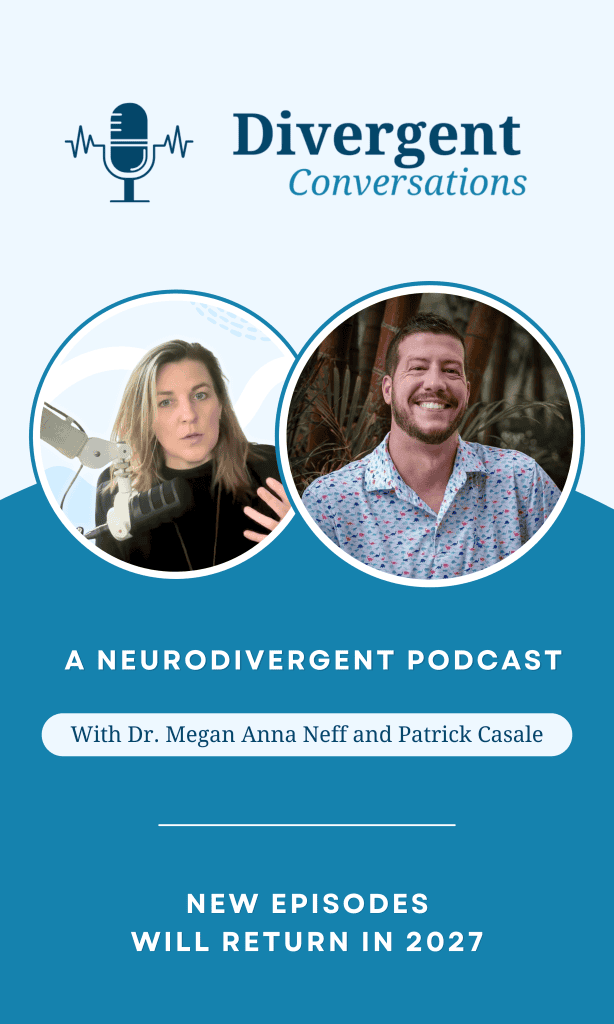
What happens when you spend two hours a day with your friend recording podcasts for two weeks straight? You get a brand-new season of DC!
Each season seems to take on its own flavor and energy — a mix of where we are personally when we record, the material we’re exploring, and the dynamic between us. This one, in particular, feels like it mirrors the collective energy many of us are sitting in right now. It carries a rawness and depth that, in some ways, makes it the most vulnerable season we’ve released to date. You can listen to the start of this season here.
🗞️ Stay in the Neurodivergent Loop
For ongoing insights and updates, subscribe to the Neurodivergent Insights Newsletter. Each Sunday, I send out fresh thoughts and a roundup of the newest resources on topics related to neurodivergence, mental health, and wellness. My most personal writing is reserved for my newsletter, and subscribers also get access to the newsletter vault (12+ PDFs) when they join.