
The NDI Glossary

Sensory Shutdown

A protective nervous-system response when sensory or emotional input becomes too overwhelming to process.

A sensory shutdown is the body’s protective response when sensory or emotional input becomes too much to process. Rather than mobilizing into fight-or-flight (as in a sensory meltdown), the nervous system downshifts into a state of hypoarousal — a defensive, low-energy response sometimes called shutdown or collapse, distinct from fight-or-flight.

During a shutdown, the world can feel distant or foggy. Energy drops, speech can become hard to access, and thinking slows. From the outside, a person may appear withdrawn, flat, or unresponsive, but internally the nervous system is working to preserve safety and reduce further demand.

Shutdowns are often misread as avoidance, disengagement, or lack of motivation. The driver, however, is sensory or emotional overload, not willful withdrawal. What helps most is quiet, predictable space and permission to slow down without pressure to respond or perform.

After a shutdown, it’s common to feel heavy, foggy, or disconnected. The nervous system is still recalibrating and releasing accumulated stress. Gentle grounding can support recovery — slow stretching, soft rhythmic stims, familiar music, or low-demand sensory comfort. The goal isn’t to snap out of it, but to allow the body to release what it’s absorbed and find its way back to groundedness, slowly and gently.

Join over 250,000 followers for weekly insights on autistic, ADHD & AuDHD life.
NDI social graphic with the heading Toward and Away Moves, showing an illustrated person holding a notepad with opposing arrows labelled Away and Toward.
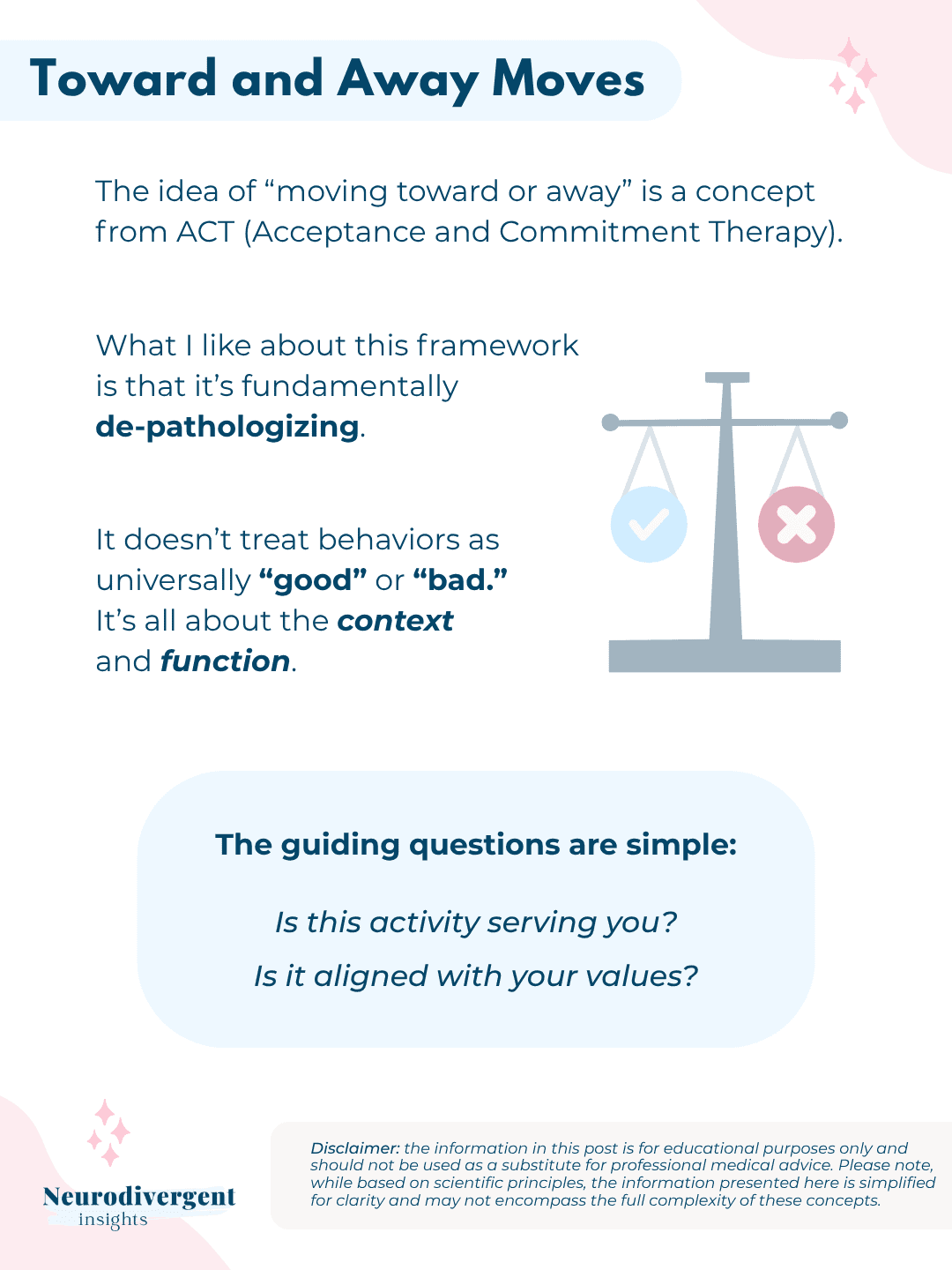
NDI infographic on Toward and Away Moves explaining the ACT concept as de-pathologizing, with a balance scale and guiding questions about values alignment.
Illustrated hand holding a pink smartphone displaying a social media post with a heart, with blue sparkles, representing NDI social media content.
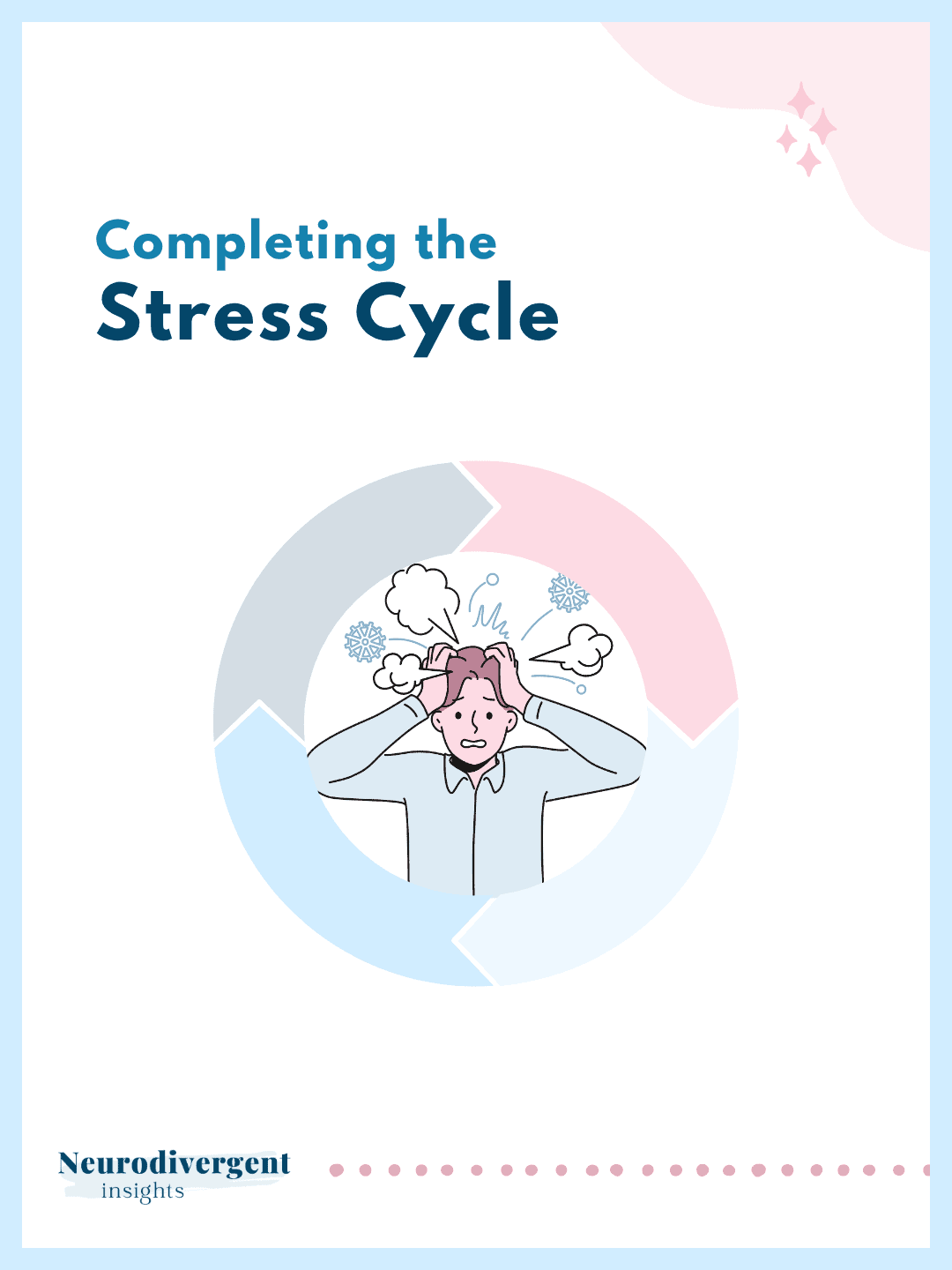
NDI social graphic with the heading Completing the Stress Cycle, showing an illustrated person overwhelmed with steam coming from their head inside a circular cycle diagram.
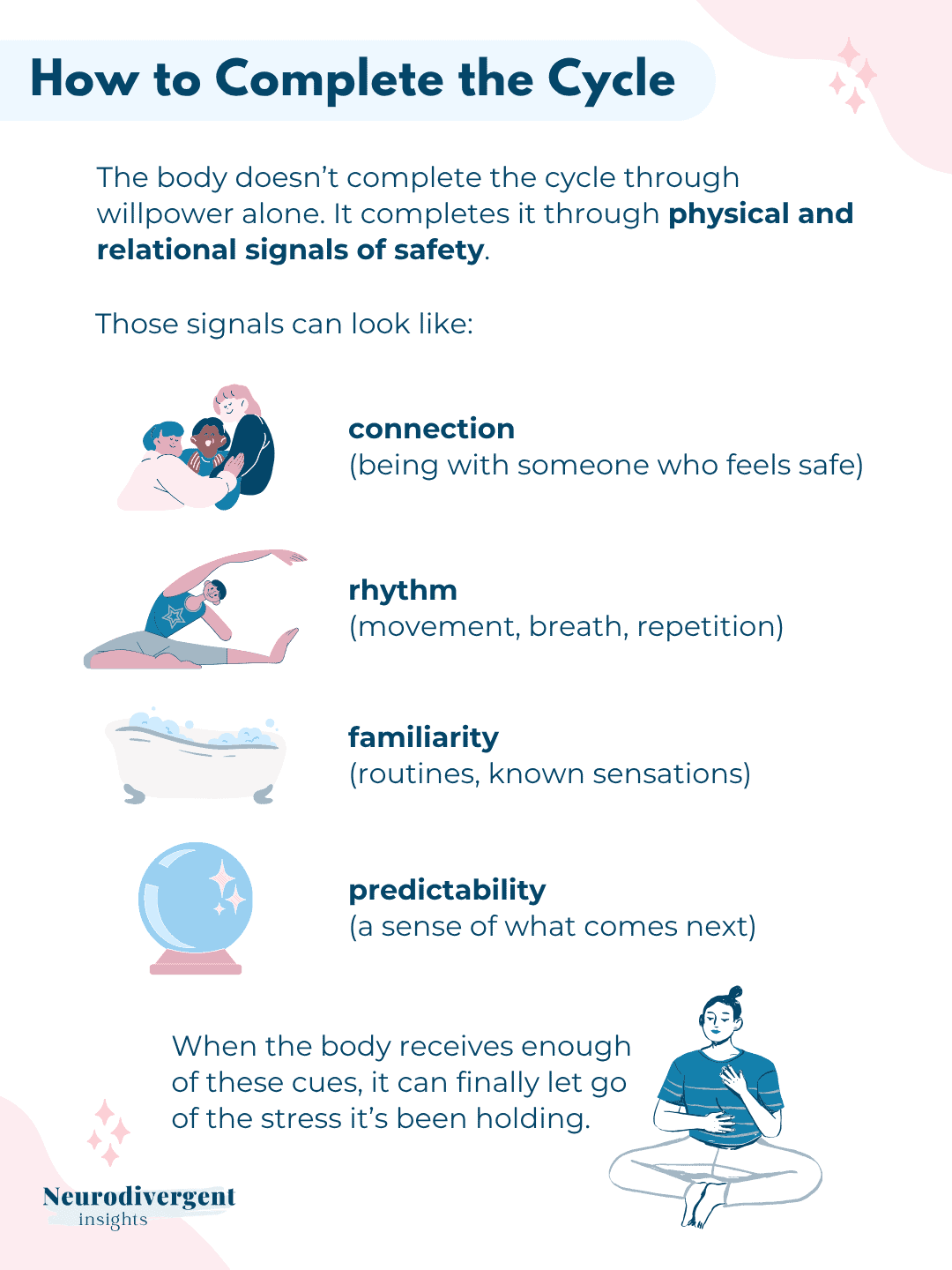
NDI infographic titled How to Complete the Cycle, listing connection, rhythm, familiarity, and predictability as physical and relational signals of safety for stress cycle completion.
0
0
Your Cart
Empty CartYour cart is empty

     
Scroll to Top

Sensory Shutdown

A protective nervous-system response when sensory or emotional input becomes too overwhelming to process.

A sensory shutdown is the body’s protective response when sensory or emotional input becomes too much to process. Rather than mobilizing into fight-or-flight (as in a sensory meltdown), the nervous system downshifts into a state of hypoarousal — a defensive, low-energy response sometimes called shutdown or collapse, distinct from fight-or-flight.

During a shutdown, the world can feel distant or foggy. Energy drops, speech can become hard to access, and thinking slows. From the outside, a person may appear withdrawn, flat, or unresponsive, but internally the nervous system is working to preserve safety and reduce further demand.

Shutdowns are often misread as avoidance, disengagement, or lack of motivation. The driver, however, is sensory or emotional overload, not willful withdrawal. What helps most is quiet, predictable space and permission to slow down without pressure to respond or perform.

After a shutdown, it’s common to feel heavy, foggy, or disconnected. The nervous system is still recalibrating and releasing accumulated stress. Gentle grounding can support recovery — slow stretching, soft rhythmic stims, familiar music, or low-demand sensory comfort. The goal isn’t to snap out of it, but to allow the body to release what it’s absorbed and find its way back to groundedness, slowly and gently.