Have you ever been stuck in an elevator with someone wearing strong cologne or perfume and developed a headache? Do you intentionally avoid the detergent aisle in the grocery store? Or the grocery store altogether? Do fluorescent lights make your head pound? If you notice yourself cringing as you read those descriptions, I imagine you’re someone who lives with sensory sensitivities.
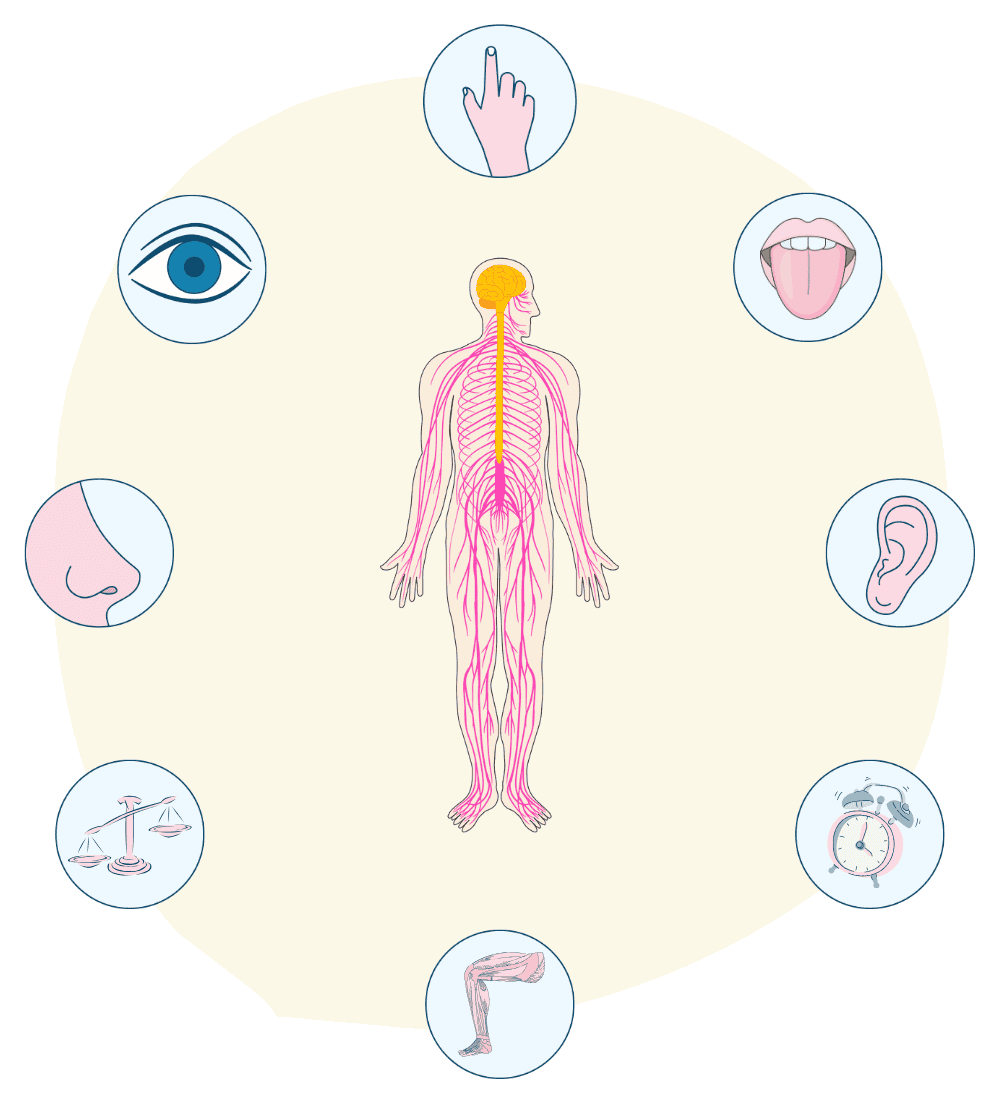
If you live with sensory disabilities, understanding your eight senses and learning how to work with them can make daily life a lot easier. The more we understand our sensory systems, the better we can support ourselves and communicate our needs.
Estimates suggest that somewhere between 5% and 16% of children have sensory differences that affect daily life, and these differences are more common among Autistic and ADHD people. As someone with sensory processing disabilities, I have firsthand experience of the disruption sensory processing differences can create. Once I was diagnosed Autistic-ADHD and began understanding my sensory profile, I could work with it for the first time. I created accommodations to support my auditory, visual, and tactile sensitivities and was able to better communicate with my family and friends about my sensory needs.
As a psychologist, I came to look at the people I worked with through a sensory lens too. It opened up a whole new way of understanding everyday experiences and struggles. Looking at everyday situations through a sensory lens can unlock many new supports.
Table of Contents
What Are the 8 Senses?
Our experiences of our bodies and environment are closely shaped by our sensory systems. How our minds and bodies integrate sensory information plays a big role in everyday tasks. It influences our ability to self-regulate, interact with others, and get through the basic tasks of daily living.
For a long time, it was believed we have five primary sensory systems (touch, smell, taste, sight, and hearing). Over the past several years, there has been growing awareness of the three “hidden” sensory systems: the vestibular, proprioception, and interoception systems.
When a person has sensory processing differences, they may be hyposensitive (under-responsive) or hypersensitive (over-responsive) to sensory input.
A person may be hyposensitive in one sensory system and hypersensitive in another.
For example, I am hypersensitive to touch, sound, and smell and hyposensitive to taste. For this reason, it can be helpful to “map your sensory profile” and get to know where your sensitivities are: identifying what your triggers are and what your sensory helpers are.
The 5 Classic Senses

The five classic senses are the outward-facing ones: the tactile system (touch), the auditory system (hearing), the visual system (sight), the gustatory system (taste), and the olfactory system (smell). They take in information about our external environment and help keep us safe.
Tactile
Tactile receptors exist all over our skin and send signals to our brains letting us know when we’ve touched something and what we’ve touched. They’re responsible for our experience of touch, pressure, pain, vibration, temperature, and texture. A person may be under-responsive (hyposensitive and sensory seeking) or over-responsive (hypersensitive and sensory avoidant).

Tactile Under-Responders (Hyposensitive)
A tactile under-responder has a dulled response to touch. They may bump into things or touch things without noticing. They may also create extra input, fidgeting and touching things often, or seek deep pressure.
Tactile under-responders may:
- Not notice when touched
- Not have a good sense of pressure (may apply too much)
- Enjoy roughhousing and play that involves deep pressure (wrestling, etc.)
- Accidentally hurt others (unaware of pressure applied)
- Seek pressure
- Not notice when skin is dirty (may eat messily and be unaware food is on their face)
- Not be aware when their nose is running
- Enjoy fidgeting and touching things around them, including toys and peers
- Like intense temperatures: a hot bath, hot food, chewing on ice
This post contains affiliate links. If you buy through them, we may earn a small commission at no extra cost to you. We only link to things we use or trust. As an Amazon Associate, I earn from qualifying purchases.
Strategies for tactile under-responders:
- Carry fidgets (like Teenie NeeDoh) for quick tactile input.
- Pressure: Consider compression clothing (if you like pressure), a weighted vest, or a weighted lap pad.
- Explore textures: Explore different textures and notice their differences. For children, encourage exploring textures and talk about how they feel (nature is a great place to do this).
- Sensory play: For children, offer messy play: water, sensory bins, sand, kinetic sand, leaf piles, water tables, chalk on the sidewalk.
Tactile Over-Responders (Hypersensitive)
Tactile over-responders are extra sensitive to touch. They may be labelled “overly sensitive” or “overly reactive.”
Tactile over-responders may:
- Have strong aversions to touch, clothing tags, certain fabrics, or button closures
- Avoid clothing with seams that touch the skin, or foods with certain textures
- Not tolerate stickiness, mess, or dirt on their hands
- Find it hard to touch specific textures
- Appear to “over-react” when lightly touched or bumped
- Be sensitive to temperature changes (heat and cold)
- Find grooming hard (hair care, nail cutting, washing)
- Feel uncomfortable with food, face paint, or makeup on the face
Strategies for tactile over-responders:
- Wear sensory-friendly clothing (find your ideal fabric and stick with it), remove tags, and find seamless socks.
- Consider bathing instead of showering, and dry shampoo to give yourself a break from hair washing.
- Communicate with others about body boundaries. Have a few pre-scripted lines you can comfortably say, such as “No thank you, I’m not a hugger” or “Please don’t touch me, I have sensory sensitivities.”
Auditory
Auditory receptors in the inner ear pick up loud, soft, high, near, and far sounds. They help us process the volume, tone, pitch, and rhythm of sound.

Auditory Under-Responders (Hyposensitive)
Auditory under-responders receive less input from their auditory system and seek out extra sound.
Auditory under-responders may:
- Not notice sounds
- Struggle with spoken directions
- Seem not to be listening (when they haven’t registered the sound)
- Seek out intense auditory experiences
Strategies for auditory under-responders:
- For children, use visual supports to get their attention. You may need to come into their space and get their attention visually before giving spoken instructions (but be aware of their tactile profile, as touch may startle them).
- Use (or ask for) visual supports when taking in instructions: take notes, draw diagrams, or request these as a school or work accommodation.
- Watch television and movies with subtitles.
- Ask to audio record medical visits with lots of spoken information, or ask your provider to write the key details in your After Visit Summary.
- People may think you’re ignoring them. You can self-advocate by explaining your auditory processing differences. For children, if they seem not to be listening, it may be their auditory differences rather than disrespect.
Auditory Over-Responders (Hypersensitive)
Auditory over-responders are sensitive to sound and may be “super hearers” who pick up sounds others can’t. They often react strongly to too many sounds or to certain frequencies.
Auditory over-responders may:
- Have negative reactions to a range of sounds
- Be easily distracted by sounds
- Have strong responses to specific types of sounds
Strategies for auditory over-responders:
- Use noise-cancelling headphones, earplugs, or other sound reducers
- Reduce unnecessary noise in the environment
- Consider sound-proofing a space at home (door noise stoppers and sound absorbers can help)
Visual
Visual receptors in the eye pick up color, contrast, shape, form, and movement. Our visual processing system helps us decide what to pay attention to and guides our movements through the world.

Visual Under-Responders (Hyposensitive)
Visual under-responders may have trouble spotting subtle visual differences and may seek out extra visual input.
Visual under-responders may:
- Enjoy bright, reflective, or spinning objects or lights
- Miss objects against busy backgrounds
- Find it difficult to name colors, shapes, and sizes
Strategies for visual under-responders:
- Have items for visual stimulation (lava lamp, water tubes)
- Reduce visual clutter
- Create visual structure to help the brain process information
Visual Over-Responders (Hypersensitive)
Visual over-responders are hypersensitive to visual input and often feel it physically, as headaches or nausea.
Visual over-responders may:
- Avoid visually overwhelming environments
- Struggle with tasks that depend on processing a lot of visual information
- Be sensitive to bright lights and sunlight
- Seem scared of moving objects
- Get headaches or nausea after continuous visual stimulation
Strategies for visual over-responders:
- Reduce visual clutter (for example, color and pattern on walls, clutter on counters)
- Use dim lights and natural light when possible
- Take breaks from visual input
- Use sunglasses outside (tinted lenses can add extra support)
Gustatory
Taste is picked up by gustatory receptors on our tongue and is closely linked to our sense of smell. Our gustatory system lets us taste sweet, sour, bitter, salty, and savory (umami) flavors. Spicy heat is picked up by pain and temperature receptors, which is why it can feel so intense. A person with gustatory differences may be an under-responder (sensory seeker) or an over-responder (sensory avoider).

Gustatory Under-Responders (Hyposensitive)
Gustatory under-responders are less sensitive to taste and crave more stimulation, often seeking out strong flavors.
Gustatory under-responders may:
- Enjoy spicy foods and strong flavors
- Become more alert and engaged after eating a strong flavor
- Seek out strong and unusual flavors
- Need constant stimulation (chewing gum, snacking on crunchy foods)
- Crave specific food textures (crunchy)
- Chew, suck, or eat inedible objects (may enjoy their taste or texture)
Strategies for gustatory under-responders:
- Add a variety of foods with new and interesting flavors to your diet
- Drink infused water to make it more interesting (add lemon, orange, lime, or berries)
- Keep flavorful gum with you (it may also help you focus)
- Carry crunchy or chewy snacks
- Consider chewelry for oral input when you’re not eating
- Travel with small packets of spices and flavoring
Gustatory Over-Responders (Hypersensitive)
Gustatory over-responders have a heightened sensitivity to taste. They tend to avoid new flavors and may eat a narrow range of foods.
Gustatory over-responders may:
- Experience a heightened sensitivity to food
- Eat a limited range of foods and find it hard to try new ones
- Be specific about food temperature (may eat food only near room temperature)
- Avoid social situations with food (family mealtimes, community gatherings, public settings with lots of new tastes and smells)
- Dislike brushing teeth (the taste of toothpaste may be strong)
- Feel anxious at the thought of trying new foods, and may gag when trying them
- Find mixed textures hard
Strategies for gustatory over-responders:
- Try a mild toothpaste flavor (for children, this brand is one option).
- Keep mealtimes calm to reduce stress and anxiety: offer preferred or “safe foods,” create a calm eating environment, and don’t pressure a child to eat new foods (this increases stress and anxiety).
- Make a list of your “safe foods,” and bring some along when traveling or eating out.
- Keep your eating environment calm. Eating is an intense sensory experience, so anything that reduces background sounds, bright lights, and other input will help.
- Introduce new foods outside of regular mealtimes. For children, create a playful routine around this, like a “try time” for one new food. Make sure this happens when the person isn’t already overloaded, and choose a food similar to one of their safe foods.
Olfactory
Smell is processed through olfactory receptors in the nose, which can tell apart a wide range of smells. Smells can also carry strong memories. People with processing differences may be under-responsive or over-responsive to smell.

Olfactory Under-Responders (Hyposensitive)
Under-responders have a dulled sense of smell. This can affect safety, since they are less likely to notice spoiled food, smoke, or gas.
Olfactory under-responders may:
- Not notice strong smells in the environment
- Be less aware of spoiled food or harmful smells
- Not notice unpleasant odors or big changes in smells around them
- Smell objects often (lotions, soaps, markers, clothing, gasoline, and other strong odors)
Strategies for olfactory under-responders (sensory seekers):
Playful, intentional scent activities can help build awareness of smells. This matters for safety too, like noticing burned or spoiled food.
- Use an essential oil diffuser and try different oils
- Use herbs and spices when cooking (or grow an herb garden)
- Use scented play-dough, scented markers, or stickers (for children)
- Play “Guess the Scent” with safe items like spices, coffee grounds, or tea (for children)
Olfactory Over-Responders (Hypersensitive)
Olfactory over-responders, or “super smellers,” have a heightened sensitivity to smell and can detect subtle shifts in their environment. Certain smells can cause strong physical reactions and a sense of feeling ill.
Olfactory over-responders may:
- React strongly to smells others don’t notice
- Have physical responses to smells (gagging, nausea, headaches)
- Refuse certain foods because of their smell
- Be bothered by perfume, cologne, and chemicals
- Find new places hard because of their smells
- Feel nauseated or unwell around cleaning, bathroom, or cooking smells
Strategies for olfactory over-responders:
The best strategy is to remove the smells that cause a reaction.
- Use fragrance-free cleaning products, body products, laundry soap, and dryer sheets
- Avoid perfumes and colognes
- Empty the trash regularly
- Keep rooms well ventilated: use an air purifier and open windows for fresh air
- Use preferred scents to cover unpleasant smells
- When those options aren’t available, you can block unpleasant smells with a mask
The 3 Hidden Senses

The three “hidden” senses are the vestibular, proprioception, and interoception systems. They’re internal, and they shape how we experience our bodies: our balance, our sense of where we are in space, and our sense of what’s happening inside us. Some researchers think interoception may even shape our sense of time.
Vestibular
Vestibular receptors in the inner ear process balance and movement. This system helps us sense the speed and direction of movement, and posture relies partly on its signals.

Vestibular Under-Responders (Hyposensitive)
A vestibular under-responder receives less input from the vestibular system and seeks out extra movement.
Vestibular under-responders may:
- Seek intense or long-lasting movement, such as frequent rocking, swinging, or spinning
- Seek movements such as bouncing or jumping
Strategies for vestibular under-responders:
- Rhythm, rocking, and swinging can be soothing. Have equipment at home that gives vestibular input: rocking chairs, trampolines, swings, or bouncy toys for younger children.
Vestibular Over-Responders (Hypersensitive)
Someone with a hypersensitive vestibular system is more sensitive to movement and may easily feel sick or anxious during activities that involve movement.
Vestibular over-responders may:
- Have negative reactions to many kinds of movement, such as nausea when riding in the back seat of a car
- Feel anxious during activities that involve moving through space (such as walking downstairs or gentle swinging)
- Struggle with body control and coordination
Strategies for vestibular over-responders:
- Take it slow with new movement activities
- Skip activities designed to make you dizzy
- Go at your own pace on stairs or climbing equipment (for parents, let your child get on play equipment at their own pace)
- Ask to sit in the front of the car when possible (car sickness is more likely)
Proprioception
Proprioception receptors in our muscles and joints tell us where our body is in space. This system supports body awareness, coordination, and smooth movement. It also helps us use the right amount of pressure. For more ideas, see 8 forms of proprioceptive input.

Proprioception Under-Responders (Hyposensitive)
Proprioceptive under-responders receive less sensation from their muscles and joints and have more difficulty knowing where their body is in space.
Proprioception under-responders may:
- Struggle to know how much pressure to use (may break pencils or squeeze too hard when shaking hands)
- Enjoy jumping, bumping, and crashing into people and objects, sometimes without awareness of safety
- Prefer rough play and often seem to be wrestling with siblings or other children
- Stand very close to others or touch them without asking
- Crave pressure and bear hugs
Strategies for proprioception under-responders:
- Encourage safe climbing, jumping, and physical games
- Offer hugs, deep pressure (back massages), and physical play when wanted
- Give push, pull, and lift chores, like bringing in groceries or yard work
- Consider a weighted blanket or weighted lap pad
- Encourage play that includes movement
Proprioception Over-Responders (Hypersensitive)
Proprioception avoiders are highly sensitive to movement and outside input, and can be easily overwhelmed by touch and movement. Some people find pressure and movement input overwhelming rather than organizing.
Proprioception over-responders may:
- Avoid physical contact (hugs and other contact or pressure)
- Avoid physical play and seem timid around others
- Avoid slides, swings, and other playground equipment
- Feel anxious in crowded spaces or when standing close to others
Strategies for proprioception over-responders:
- Advocate for body boundaries with the people around you (for parents, model consent by asking before touching or hugging)
- Talk children through movement and what to expect
- Compression clothing and weighted vests may help offset the distress of unexpected touch
Interoception
Interoception is our sense of what’s happening inside the body: body states like hunger, thirst, temperature, and needing the bathroom, and the body side of emotions, like a racing heart or a heavy chest. For a deeper look, see Autism and Interoception.

Interoception Under-Responders (Hyposensitive)
Interoception under-responders get fewer signals from inside the body. They may not notice what their body is telling them because the signals aren’t coming through clearly. One common lab test asks people to count their heartbeats, though researchers have raised concerns about how well that task measures interoception.
Interoception under-responders may:
- Be unaware of pain and temperature signals
- Not notice hunger and thirst
- Not notice the need to use the bathroom until it’s urgent
- Find it hard to identify emotions (alexithymia)
Strategies for interoception under-responders:
- Create accommodations to support your body: set alarms to remind yourself to eat, drink, use the bathroom, and take sensory breaks.
- Practice exercises that build interoceptive awareness (several are in my Interoception Workbook).
- Work with an occupational therapist (OT) trained in interoception to build body awareness.
Interoception Over-Responders (Hypersensitive)
Interoceptive over-responders have the opposite experience: their body signals come through loudly. They may feel thirsty or hungry often, or feel they need to urinate at the slightest fullness. They may notice pain more strongly and for longer, and minor illnesses can feel much worse.
Interoception over-responders may:
- Have heightened awareness of hunger, pain, and thirst
- Feel emotions more intensely
- Limp on an ankle long after it has healed (still feeling pain signals)
Strategies for interoception over-responders:
- Signals can come through so intensely that they’re hard to tell apart. Mindfulness, yoga, and other body-awareness practices can help with telling signals apart.
- Work with an OT who is familiar with interoception differences.
- Engage the vestibular and proprioceptive systems (rocking, swinging, heavy lifting).
- Consider your relationship to pain. Take your pain seriously, in the sense of honoring that it’s valid and not “in your head,” while also reminding yourself that the pain doesn’t necessarily equal danger. A medical provider or therapist can help you tell the difference between pain that signals harm and pain that doesn’t. Anxiety about pain tends to intensify it, so strategies that ease worry about pain and illness can help.
A Few Closing Thoughts
We have eight sensory systems: five outward-facing ones (touch, hearing, sight, taste, and smell) and three hidden, internal ones (vestibular, proprioception, and interoception). The outward-facing systems tell us about our environment and help keep us safe. The internal systems tell us about our inner world and help with regulation, balance, and movement.
Sensory differences in any of these systems can make daily life and social participation harder. Our sensory systems can’t necessarily be “fixed,” but we can get to know them. A good first step is mapping your own profile: noticing where you seek input, where you avoid it, and what helps. The Complete Adult Sensory Checklist is a place to start.
Free Sensory Trigger Checklist
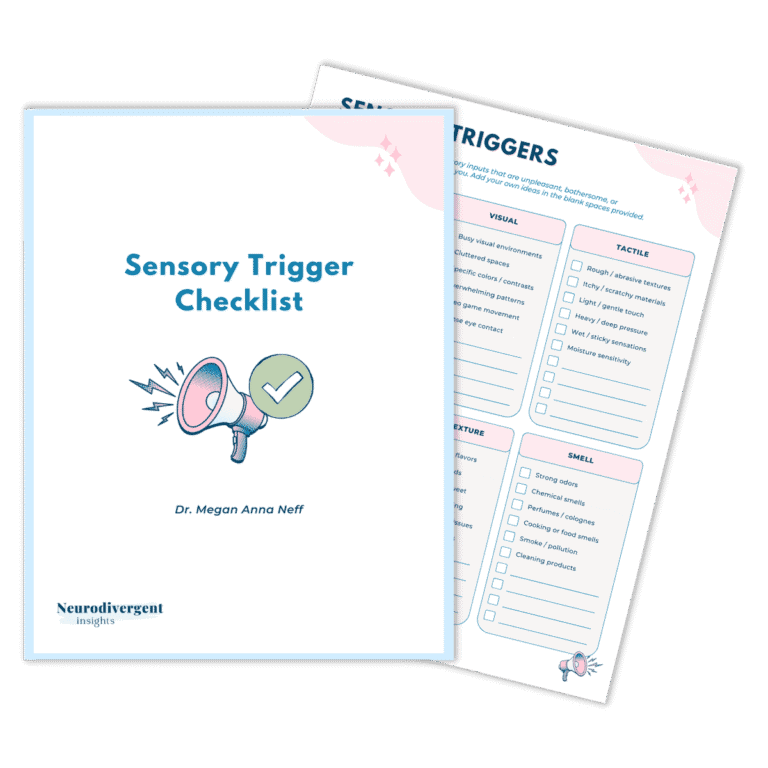
Curious how your own eight senses respond? Our free Sensory Trigger Checklist walks you through common triggers across each sense so you can start mapping your own sensory profile.
8 Senses FAQs
What are the 8 senses?
The 8 senses are the five classic senses (touch, hearing, sight, taste, and smell) plus three hidden, internal senses: vestibular (balance and movement), proprioception (where the body is in space), and interoception (what’s happening inside the body).
What are the 3 hidden senses?
The vestibular, proprioceptive, and interoceptive systems. They’re called hidden because they work inside the body, shaping balance, body awareness, and our sense of internal states like hunger, thirst, and emotion.
Is interoception the eighth sense?
Interoception is often called the eighth sense, a phrase popularized by occupational therapist Kelly Mahler. It’s our sense of what’s happening inside the body, from hunger and thirst to the physical side of emotions.
What’s the difference between a sensory seeker and a sensory avoider?
A sensory seeker (under-responder) takes in less input from a sense and looks for more of it. A sensory avoider (over-responder) takes in more and tries to reduce it. Many of us are seekers in some senses and avoiders in others.
Additional Resources

The Complete Adult Sensory Checklist Map your own sensory profile

Proprioception Inputs Eight forms of proprioceptive input

Autism and Interoception A deeper look at the body’s inner sense
My Sensory Support picks Sensory favorites on my ShopMy shop (affiliate links)
 Stay in the Neurodivergent Loop
For ongoing insights and updates, subscribe to the Neurodivergent Insights Newsletter. Each Sunday, I send out fresh thoughts and a roundup of the newest resources on topics related to neurodivergence, mental health, and wellness. My most personal writing is reserved for my newsletter, and subscribers also get access to the newsletter vault (12+ PDFs) when they join.
References
Ahn, R. R., Miller, L. J., Milberger, S., & McIntosh, D. N. (2004). Prevalence of parents’ perceptions of sensory processing disorders among kindergarten children. American Journal of Occupational Therapy, 58(3), 287–293. Link
Ben-Sasson, A., Carter, A. S., & Briggs-Gowan, M. J. (2009). Sensory over-responsivity in elementary school: Prevalence and social-emotional correlates. Journal of Abnormal Child Psychology, 37(5), 705–716. Link
Ben-Sasson, A., Hen, L., Fluss, R., Cermak, S. A., Engel-Yeger, B., & Gal, E. (2009). A meta-analysis of sensory modulation symptoms in individuals with autism spectrum disorders. Journal of Autism and Developmental Disorders, 39(1), 1–11. Link
Ghanizadeh, A. (2011). Sensory processing problems in children with ADHD, a systematic review. Psychiatry Investigation, 8(2), 89–94. Link
Zamariola, G., Maurage, P., Luminet, O., & Corneille, O. (2018). Interoceptive accuracy scores from the heartbeat counting task are problematic: Evidence from simple bivariate correlations. Biological Psychology, 137, 12–17. Link