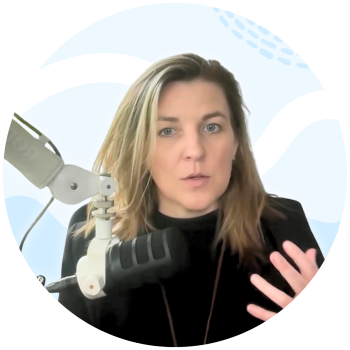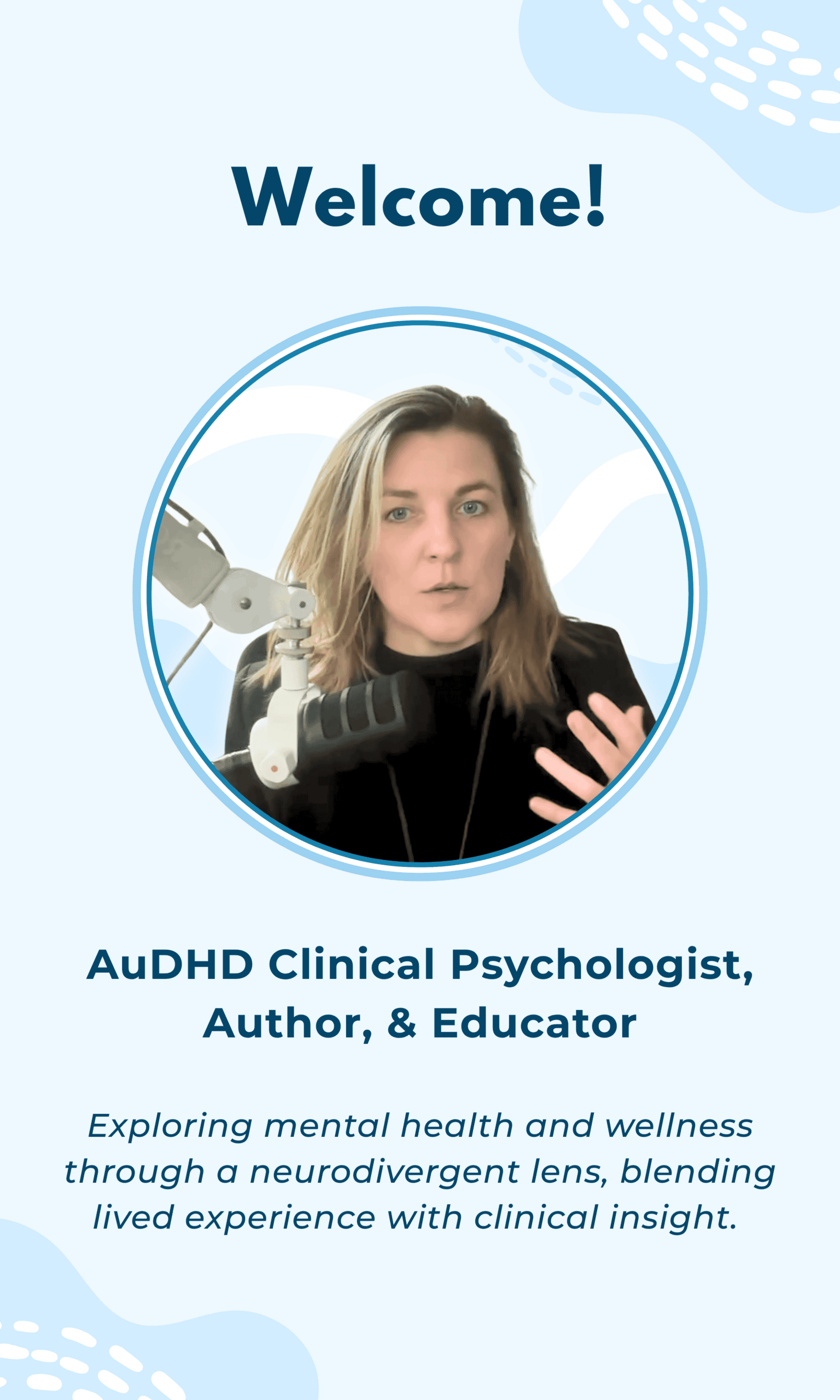
I’m a neurodivergent psychologist living with autism, ADHD, OCD, anxiety, and bipolar. I hold all of that at once, and it shapes everything I write and everything I think about how neurodivergence and mental health gets talked about. I know this will not fit everyone. And yes, sending it makes me nervous.
Table of Contents
Entering Neurodiversity-Affirming Spaces
In my early days in a neurodiversity-affirming space, I was speaking with a fellow ADHD clinician, and I mentioned my OCD. Their response was a bit off the cuff: “I wish I had some OCD to curb my ADHD.” We then had a conversation about the potential evolutionary advantages of OCD. I had a split reaction to this.
As you can imagine, this was great food for my morality OCD — the kind of OCD that fixates on whether I am being a good or bad person, often by replaying interactions and scanning for ways I might have caused harm. Now I felt like a bad OCD person — bad at having OCD and bad at appreciating it. Another part of me wanted to protest and say, “no, you are wrong, I feel no upside here.”
This would not be the last time that I would notice myself having this kind of reaction in a neurodiversity-affirming space, that reaction of not feeling an upside that others are identifying. And this has been a tension that I have carried with neurodiversity-affirming spaces ever since that first encounter: it seems that conversations about ADHD, autism and mental health conditions sometimes shift more quickly than I’d like to trying to identify potential upsides.
When "Upside" Talk Hurts
Several years ago I wrote an article about the “upsides” of dyslexia, which led me into thoughtful conversations with people who know that space much more deeply than I do. They shared how some of these ideas that are often circulated about the upside of dyslexia (creative problem solving, visual-spatial strengths, etc), are debated and how it can create a different kind of pressure for students.
The expectation that dyslexic children will be especially creative, brilliant problem solvers, or deeply empathetic can start to feel like an extra weight. One person I spoke with described it as: “It can make children feel like not only are they bad at reading but now they are also bad at dyslexia.” This was a moment of public learning for me. Learning while making mistakes has never been my favorite part of this work (hi there again morality OCD), but it’s also good for me, it’s how I grow, learn and do better. Since then, I have been much more careful about how I speak on this.
Autism, ADHD, and the Demand to Feel Positive
I’ve also seen this pattern of needing there to be an upside play out on social media. A while back I saw a social media post from a young woman talking about her struggle with autism, how sometimes she does not like her autism. The comments were filled with questions about whether she was depressed or struggling with internalized ableism. There didn’t seem to be space for the idea that autism itself can be a hard experience, an idea that seemed to be beyond the grasp of the casual social media observer, who held that it must mean she was depressed.
How I Hold AuDHD
That said, to be fair, I do see upsides to my autism and ADHD, for me it’s not all downsides.
I can (and do) talk about the upside of my autism — the webbed thinking, the passion, the monotropic brain. I can just as easily talk about the challenges: the sensory barriers to navigating a life I want, the deep focus that pulls me away from tiny moments with my family. I also know there are Autistic people whose experience of autism is so vastly different from mine that they would really struggle to speak to the upside at all.
The same is true with ADHD. Hyper-curiosity, out-of-the-box problem solving, associative thinking, the fuel to keep learning — these have all served me well in life. I can also speak in a more balanced way: the moldy coffee cups, the missed medical appointments, the friendship-maintenance struggles, the constant energetic and cognitive drain of living with executive function struggles. And again, I appreciate that some people will not relate to executive functioning as disabling in the same way, and yet others find their ADHD so profoundly disabling that talk of “upside” feels minimizing rather than validating.
Understanding my AuDHD brain as a mind and nervous system with both strengths and challenges has been deeply identity-shifting and life-shifting. It has changed how I think about myself, how I hold myself, how I talk to myself, and how I move through the world.
But I cannot say the same thing for my mental health conditions.
Why I Can’t Hold My Mental Health Conditions the Same Way
Sure, there may be some benefit to anxiety — it keeps me on guard. But it also wrecks my sleep and has, at times, led to $1,500 Emergency Department bills that I’ve then paid by selling off cherished belongings, because anxiety convinced me that mouse droppings in my apartment meant I had contracted Hantavirus. Doctor Google did not quiet my anxiety brain down, so I drove myself to the ER at two in the morning, only to have a visit with a disgruntled doctor who didn’t understand why I was there and to be sent home with a hefty bill I spent the next year paying off.
Sometimes depression connects me with my existential side. But it also keeps me pinned down, my limbs heavy with the ask of mere existence, my mind convinced that I am worthless and that nothing matters. The world goes grayscale and time stretches in an excruciating way.
The bipolar up wave of intensity can be full of aliveness, creativity, and frankly a lot of euphoria. And, to me, it can also be a lot like going on a shopping binge: it feels thrilling in the moment and then leaves me with debts: energetic, emotional, and financial, that take a long time to pay down. I admire people who stretch to find meaning in the waves and are looking to befriend them. I see clinicians and writers doing that in their work, and I respect it. It gives me hope that I will get there too.
Meaning, Not Upside
Finding meaning, befriending, acceptance — these are things I stretch for too. I also appreciate that these conditions were not birthed in a vacuum, they exist in a context. I don’t think they are my fault or that I’m bad for having them. But I also do not want to particularly talk about their evolutionary advantages or their upsides. I can appreciate that this frame is helpful for some people; for me, it is not. It minimizes the pain. It minimizes how hard I work to stay here and be an okay human through it all. I can appreciate the growth and character that has come from being a person with complex mental health while not appreciating the conditions themselves.
For me, there is a real difference between how I relate to my neurology (autism and ADHD) and how I relate to my mental health conditions. I can have compassion for why they are there, but I do not like that they are there, and I am not personally searching for the upside of their existence. Meaning, yes; upside, no. Meaning asks: what does this experience have to teach me? How can I grow from this? How can I find connection in the midst of it?
Meaning asks me to lean into the experience full force with intention so that I come out the other side a better human. I can’t choose whether I’m going to carry this or not, but I can choose how I carry it. For me, that is what it means to lean into my mental health conditions with an eye on meaning.
And I have found meaning. In the ways it’s shaped me, in the connections it’s formed. Conversations with other humans who get it matter so much to me. Connecting with people over the shared experience and pain points of OCD, depression, and bipolar has brought depth, compassion, and the sense that I am not alone in the darkness I carry.
Whatever hardship or suffering I encounter, seeking meaning throughout has always been my lifeline through. But I see this as a bit different than de-pathologizing or looking for the upside.
De-Pathologizing vs. De-Stigmatizing Neurodivergence and Mental Health
I see a lot of push to “de-pathologize” all forms of neurodivergence including mental health conditions, and when I see that, I often wonder: do we actually mean de-pathologize, or do we mean de-stigmatize? Because these are very different things.
By de-pathologize, I mean taking something out of the realm of illness or diagnosis. By de-stigmatize, I mean reducing shame, blame, and discrimination around it.
Stigma around neurodivergent conditions and mental health diagnoses is a beast that keeps us locked up in shame. The identity I have struggled to talk about publicly the most is not autism or ADHD, or even OCD, but bipolar — and that is largely because of stigma. We as a society have so much work to do around de-stigmatizing. But I’m actually okay with my mental health conditions being a pathology.
The thing is, when I’m not feeling well, I want my medical doctors to have a pathological lens. When I go in and speak about fatigue, wheezing lungs, a lump I am unsure of, or yes, depression that is keeping me pinned down and the world grayscale, I want them looking for pathology — for something with a name and, hopefully, a treatment or at least some palliative care. I also want spaces outside the medical system where I am not reduced to pathology. I hold both of these truths paradoxically.
De-stigmatizing is a different project. It speaks to how we treat one another, and the stigmas we internalize. I notice it most in myself — in the way I want to follow “I am bipolar” with a thousand caveats: “but I am very logical,” “I am hyper-rational,” “I am grounded,” “I know when I am up and I have insight into it,” “I do not experience psychosis,” “I am bipolar 2, which mostly means I am depressed.”
This is what Erving Goffman called “spoiled identity” — the way a culture decides which identities are acceptable and which are marked out for shame. It shows up in the way other people pull back when they hear the word “bipolar” (oh, you must not be stable). And it shows up in me, in those reflexive caveats.
As I accept bipolar as part of my mental health landscape, I am working through a new kind of ableism and stigma, a whole new wave I was not expecting, one that has been much harder to work through than Autistic or ADHD-related ableism. And I am still working through it. I am still working to break down my own stigma toward bipolar, even as I ask other people to examine theirs.
Making Room for Different Neurodivergent Stories
I talk publicly about neurodivergence and mental health conditions, and I am still sorting out my complex relationships to all of these things. You might read this and feel a sense of recognition, and perhaps it gives language to something you have been trying to find words for. You might also have a vastly different experience from mine, and are experiencing my words as jagged edges that are pressing upon old wounds and painful places.
My hope is not that we all have the same story about autism, ADHD, anxiety, depression, OCD, or bipolar. My hope is that whatever your experience is, you have space to reflect on it deeply and with care. That if you struggle to feel positively toward these things, you have permission to feel your feelings. That you can release the sense of “being bad at OCD” if you have carried that weight.
Whether you are Autistic, have ADHD, OCD, bipolar, anxiety, or are simply sorting through your own mental health story, I hope you have found something here that makes you feel a little less alone in what you carry.
And I hope that we, as a community, can hold one another’s different experiences of living with these conditions with curiosity and gentleness. That, to me, is part of the work of de-stigmatizing: making room for the full, messy range of our realities without demanding an upside to justify our existence. And for me, my stretch and growth is in accepting that some people do find liberation, resilience, and even resistance in the upside of mental health conditions, while I still reserve the right not to.
Follow-Up Resources
The Help Me Stay Plan (Free Resource)
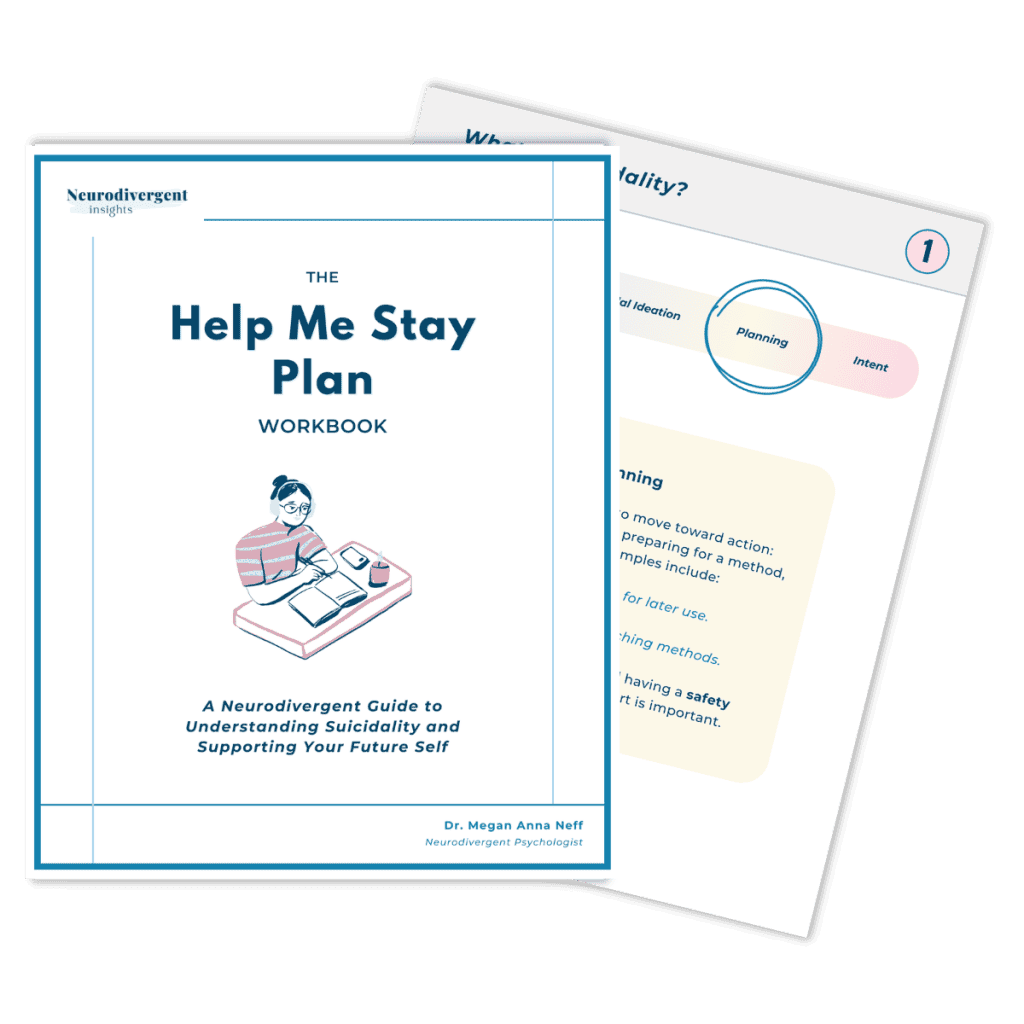
If you’re struggling with your mental health, thoughts of non-existence, or suicidal ideation, my team and I have created this free resource. It is a neurodivergent-adapted safety plan.
Stay in the Neurodivergent Loop
For ongoing insights and updates, subscribe to the Neurodivergent Insights Newsletter. Each Sunday, I send out fresh thoughts and a roundup of the newest resources on topics related to neurodivergence, mental health, and wellness. My most personal writing is reserved for my newsletter, and subscribers also get access to the newsletter vault (12+ PDFs) when they join.