Discover Your Sensory Preferences: The Complete Adult Sensory Checklist

Illustration of a clipboard with a checklist and a penWelcome to our mini-series on sensory safety. Over the last few articles, we’ve explored sensory regulation and how a sensory safety plan can support everyday life.

Today, we’re circling back to one of my favorite topics: developing a sensory lens, or noticing how our senses impact our daily experiences. We’ll look at practical ways to nurture that lens, like sensory checklists.

For me, this didn’t click until I was 37. That’s when I realized just how much my sensory world was shaping my days, my energy, and my relationship with my body.

Learning to honor my sensory needs was about comfort, and also about self-trust and healing.

Table of Contents

What is a Sensory Lens?

I think of a sensory lens like a pair of glasses that help you notice how your sensory world shapes your day-to-day life. It’s a way of tuning in to how sound, light, texture, movement (and so much more) influence your energy, emotions, and sense of ease in the world.

For many neurodivergent people, building a sensory lens can be a turning point. Years of masking or pushing through discomfort often leave us disconnected from our own bodies, unsure of what truly feels supportive or overwhelming.

A sensory lens helps us reconnect, giving us language and awareness to name our preferences and needs, both the ones we’ve always had and the ones we may only just be discovering.

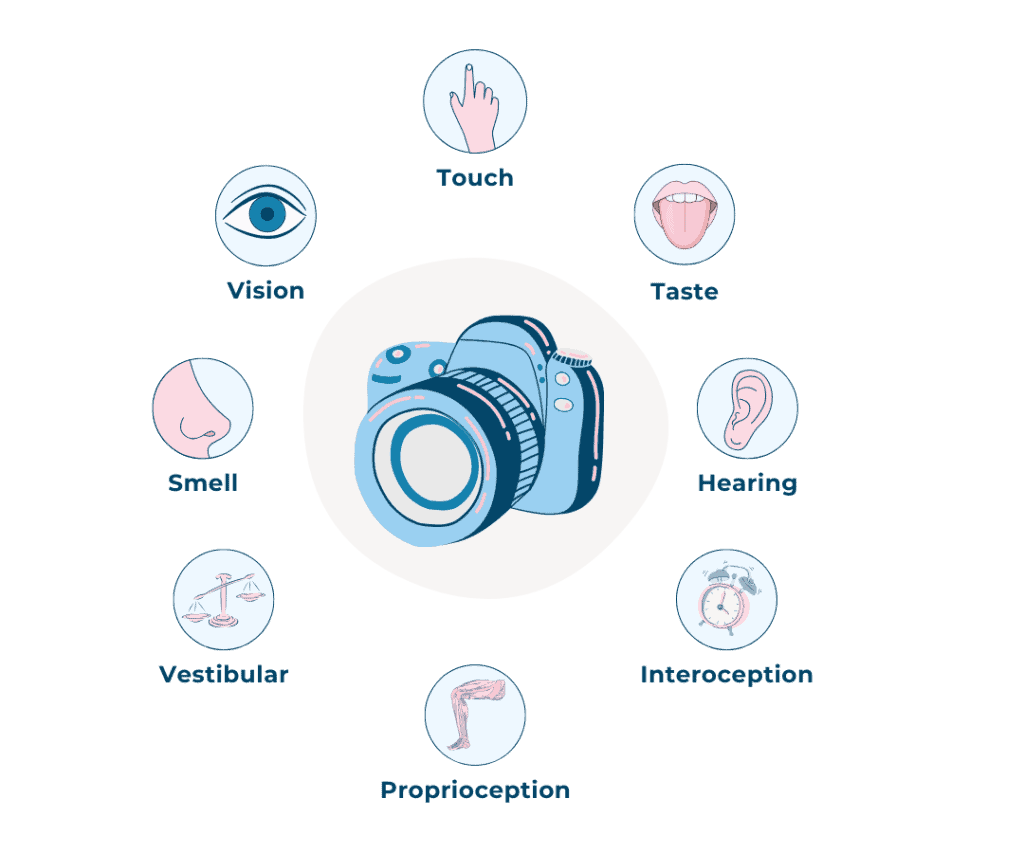
Illustration of a camera surrounded by icons of the eight senses: touch, taste, hearing, vision, smell, vestibular, proprioception, and interoception.

That’s why it’s worth taking the time to get to know our sensory world: noticing the small details, and getting curious about what feels supportive and what doesn’t. This becomes the foundation for a sensory safety plan that’s truly ours.

How to Develop a Sensory Lens

Developing a sensory lens is something we grow into over time, mostly by paying closer attention to how our senses show up in everyday life.

Here are a few ways to start developing your own sensory lens:

  • Build self-awareness
    Start by noticing your sensory world with curiosity. How do different sounds, textures, smells, tastes, and visuals land in your body? Do they lift your energy, drain it, calm you, or overwhelm you? Pay attention to the emotional, mental, and physical shifts that happen in response to sensory input.
  • Keep a sensory journal
    Writing things down can help make patterns visible. Try jotting notes in a sensory journal about what feels supportive, what feels challenging, and what consistently impacts your mood or energy. Over time, you’ll start to see connections that might otherwise stay hidden.
  • Engage in mindful practices
    Simple mindfulness tools, like slow breathing, body scans, or grounding exercises, can help you tune into the present moment and your senses.
  • Experiment with sensory activities
    Give yourself permission to play and explore. You might listen to different kinds of music, spend time in nature, try tactile activities, or explore new scents. Notice how each one feels in your body, and keep track of which experiences you’d like more (or less) of in your day.

Developing a sensory lens is personal work, and it looks different for everyone. Give yourself space to move at your own pace, and approach the process with curiosity. Over time, you’ll start to see the patterns and preferences that make up your sensory world.

Sensory Preference Checklist

When I first started paying attention to my sensory world, the sensory preference checklist was one of the most helpful tools I found. Back then, I often felt disconnected from my body and unsure what I actually enjoyed or needed. Seeing a list of possibilities gave me something concrete to work with. It helped me notice things I hadn’t realized were part of my sensory experience.

A sensory checklist is just what it sounds like: a list of sensory experiences, grouped by sense, that you can look through and see what fits. It’s less about checking every box and more about noticing what feels good, grounding, or energizing.

As you move through a sensory checklist, you might realize certain textures calm you, certain sounds help you focus, or certain scents make you feel more alive. Over time, that awareness can help you intentionally weave more of those supportive experiences into your day.

Identify Your Sensory Preferences

Lighting

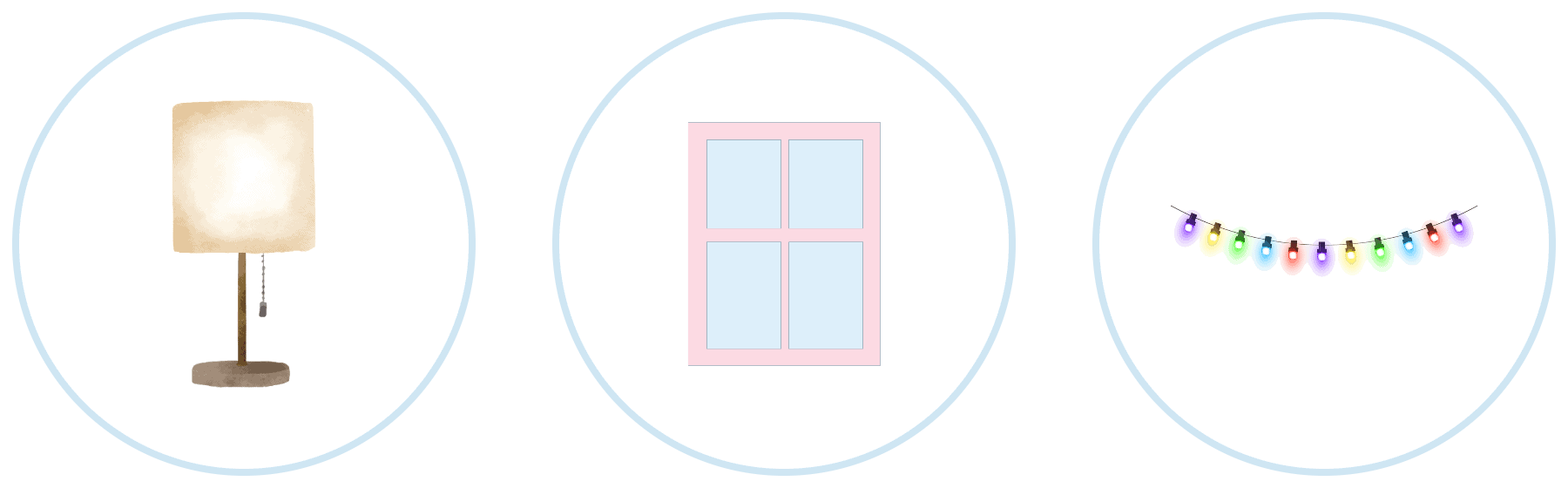
When exploring your lighting preferences, notice how different types of light affect you. Do you feel most at ease in the warm glow of natural sunlight, or do you prefer the cozy ambiance of dim lighting? Are you drawn to colorful lights that bring joy or visual interest?

Also pay attention to how your preferences shift depending on the activity. What works for studying might be different from what feels good for socializing or resting.

Illustrations for soft or dim lighting, natural light, and colorful LED lights

Visual

Consider the visual elements that help you feel calm, focused, or inspired. This might include the colors around you, the level of organization, the presence (or absence) of patterns, or how open or full a space feels. Noticing these preferences can help you shape an environment that supports your energy.

Illustrations for visually sparse & organized, patterns, and bright decor/colors

Tactile

Consider the types of touch that feel good to you, and the ones that don’t. This might include different textures, temperatures, or kinds of physical contact. Some people seek out touch for comfort, while others prefer little to no tactile input. Notice what feels calming, grounding, or pleasantly stimulating.

Illustrations for deep pressure touch, no touch, and fidget toy

Sound

Consider how different sound environments affect your energy, focus, and sense of comfort. You might feel most at ease in silence, prefer steady background noise, or seek out certain sounds for stimulation or relaxation.

Illustrations for quiet, background noise, and stimming music

Taste and Oral Input

Be mindful of the tastes and textures you’re drawn to, and notice which ones bring comfort, stimulation, or grounding.

Illustrations for chewing gum, chewing or sucking on ice cubes, and eating a crunchy snack

Smell

Consider the scents that bring you comfort, calm, or joy. Notice which fragrances feel grounding, energizing, or uplifting, and look for ways to weave them into your environment.

Illustrations for mild, subtle scents, aromatherapy, and fresh or clean scents

Proprioception

Proprioception is your sense of where your body is in space. Understanding your proprioceptive preferences, the ways you seek or avoid pressure and weight, can help you create an environment that supports regulation and comfort. Notice which activities or items feel grounding, stabilizing, or soothing, and which ones you’d rather avoid.

Movement (Vestibular)

Your vestibular sense, with receptors in your inner ear, processes balance and movement. Rocking, swaying, and swinging all give vestibular input.

Recognizing your movement preferences can help you choose activities that support sensory regulation and comfort. Notice which types of movement feel soothing, energizing, or grounding, and which ones you naturally seek or avoid.

Illustrations for swinging or being in motion, gentle rocking or swaying, and stimming

Environment

Pay attention to the spaces where you feel most comfortable and at ease.

Illustrations for indoors, nooks and crannies, and flexible seating

Temperature

Understanding your temperature preferences can help you create a more comfortable and supportive sensory environment.

Illustrations for heated or cooling blankets, cool or warm, and breezy, flowing air

Clothing

Understanding your clothing preferences can help you build a wardrobe that feels comfortable, supportive, and that fits your sensory needs. Pay attention to which fabrics, fits, and features feel most comfortable. 

Illustrations for tight, compressive clothing, loose-fitting clothing, and no tags or seams

People

Consider the types of social environments and interactions that feel most comfortable and fulfilling for you. Whether you recharge in solitude, feel energized in a crowd, or prefer something in between, noticing your preferences can help you shape social experiences that work for you.

Illustrations for lots of people, big crowds, only a few people, and solitude or time alone

Interoception

Interoception helps us notice and respond to signals from inside our body, like hunger, thirst, pain, or emotions. When interoception is harder, we might miss these signals, over-feel them, or have trouble telling a body signal from an emotion signal (is it hunger or anxiety?).

This one works a little differently from the other checklists. Instead of likes, it’s a list of ways to tune in to these signals. Notice which ones you already use, or would like to try.

Exploring Your Sensory Preferences

Exploring your sensory profile is an ongoing, personal process. The more you notice and experiment, the better you’ll understand what supports your comfort and energy. Here are a few ways to keep learning about yourself:

  • Reflect and self-observe – Pay attention to how different sensory inputs affect your mood, energy, and focus. Notice what feels calming, stimulating, or overwhelming.
  • Experiment with environments – Spend time in different settings, like parks, libraries, or coffee shops, and observe how each space impacts your comfort and regulation.
  • Engage in sensory activities – Try new textures, sounds, tastes, and movements. This might look like listening to music, making art, cooking, or spending time in nature.
  • Seek input from others – Trusted friends, family, or therapists may notice patterns you miss.

Exploring your sensory world is something you can keep coming back to. It changes and deepens over time. The more you notice, the easier it becomes to shape your spaces and routines around what truly supports you. If you want to keep going with this work, you can also check out our Sensory Workbook for more tools, prompts, and ideas.

⟳ Loading template...

Conclusion

The more you understand how your sensory experiences shape your days, the more insight you’ll have into what helps you feel grounded, energized, or at ease, and what tends to overwhelm or drain you.

With that awareness, you can begin shaping environments, routines, and habits that truly support you. Your preferences may shift over time, so keep exploring and adjusting as you go.

Sensory Preferences FAQs

A sensory checklist is just what it sounds like: a list of sensory experiences, grouped by sense, that we can look through and see what fits. It’s less about checking every box and more about noticing what feels good, grounding, or energizing.

Start by noticing your sensory world with curiosity. How do different sounds, textures, smells, tastes, and visuals land in your body? Writing things down can help make patterns visible, so try jotting notes in a sensory journal about what feels supportive, what feels challenging, and what consistently impacts your mood or energy.

I think of a sensory lens like a pair of glasses that help us notice how our sensory world shapes our day-to-day life. Years of masking or pushing through discomfort often leave us disconnected from our own bodies. A sensory lens helps us reconnect, giving us language and awareness to name our preferences and needs.

Proprioception is your sense of where your body is in space. Your vestibular sense, with receptors in your inner ear, processes balance and movement. Rocking, swaying, and swinging all give vestibular input.

Additional Resources

Sensory Workbook for Individuals: A guided resource for exploring and understanding your own sensory profile.

Sensory Workbook for Clinicians: A practical resource with license to share with clients to support clients in identifying and working with their sensory needs.

Sensory Toolkit Training for Clinicians: CPD and NBCC CE hours approved training designed to help clinicians confidently integrate sensory strategies into their practice.

Sensory Self-Care & Self-Advocacy Bundle: includes a printable version of this checklist, plus other sensory self-care and self-advocacy worksheets.

This post contains affiliate links. If you buy through them, we may earn a small commission at no extra cost to you. We only link to things we use or trust.

Sensory Blockers: Earplugs, noise-canceling headphones, and tinted glasses for turning down sound and light.

Sensory Soothers: Comfort items for when your body needs calming sensory input.

Stay in the Neurodivergent Loop

For ongoing insights and updates, subscribe to the Neurodivergent Insights Newsletter. Each Sunday, I send out fresh thoughts and a roundup of the newest resources on topics related to neurodivergence, mental health, and wellness. My most personal writing is reserved for my newsletter, and subscribers also get access to the newsletter vault (12+ PDFs) when they join.

Welcome!

Created by Dr. Megan Anna Neff, the Neurodivergent Insights Blog explores mental health and wellness through a neurodivergent lens, blending lived experience with clinical insight.

Stay in the loop

Weekly insights and resources on neurodivergence, mental health, and healing delivered to your inbox.

2026
Release

Dr. Neff’s card-deck provides easy-to-use activities that support your well-being across all aspects of life.

0
0
Your Cart
Empty CartYour cart is empty

     
Scroll to Top