Sensory triggers are the sounds, lights, textures, and situations that tip us toward overwhelm.
When we know our triggers, we can plan around them and ask for what we need. This checklist covers eleven areas, from lighting and sound to clothing and people.
How to Use This Checklist
As an Autistic-ADHD person with alexithymia, I find checklists easier than coming up with examples on my own. You might mark the triggers you recognize in each area. Most of us will have triggers that aren’t on this list.
If you’re not sure what sensory overload looks like for you, Sensory Overload: Signs, Triggers, and What Helps walks through what it can look like.
The Sensory Trigger Checklist
Lighting
Visual
Temperature
Touch
Taste and Food
Sound
Smell
Environment
People
Clothing
Movement
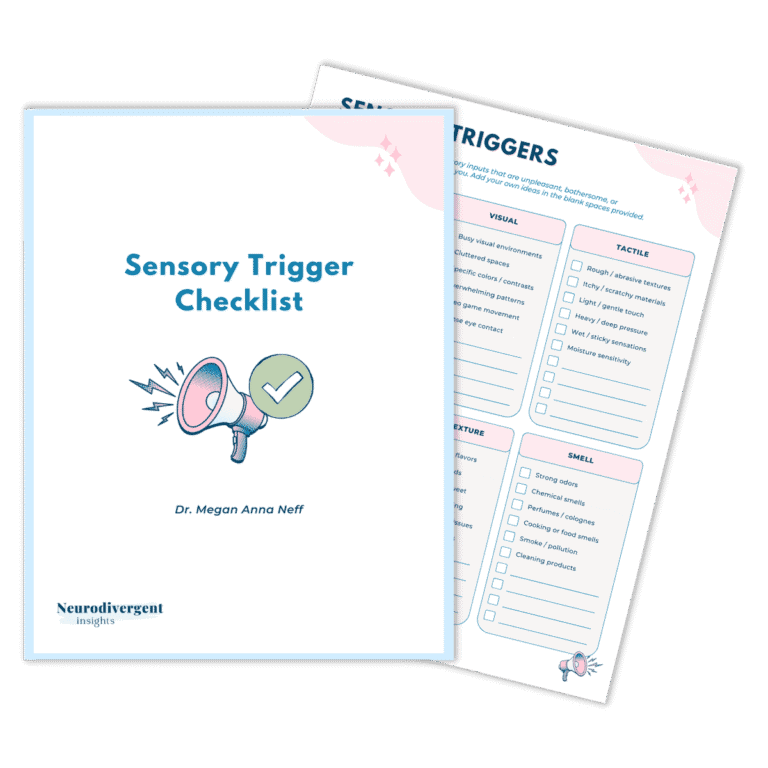
Free Sensory Trigger Checklist
Not sure what sets off your overload? Our free Sensory Trigger Checklist walks you through common triggers across each sense so you can start mapping your own.
A Few Closing Thoughts
Most of our triggers have been with us for a long time. There may have been ways that you’ve been accommodating around these for years. You may not have had words for them, or you might have learned to push through them at the cost of disconnecting from your body.
Paying attention can be a bit of a double-edged sword. On one hand it helps us manage these experiences with more intention, but it can also intensify our focus to them, which can cause them to feel more distressing initially.
And if you’re looking for Sensory Calming Techniques, we also have a soothers checklist to pair with this one, and having a sensory safety plan can help with the harder days.
Sensory Trigger Checklist FAQs
Additional Resources
For ongoing insights and updates, subscribe to the Neurodivergent Insights Newsletter. Each Sunday, I send out fresh thoughts and a roundup of the newest resources on topics related to neurodivergence, mental health, and wellness. My most personal writing is reserved for my newsletter, and subscribers also get access to the newsletter vault (12+ PDFs) when they join.






 Stay in the Neurodivergent Loop