Perhaps a friend you relate to was recently identified as Autistic or ADHD, or someone you follow on social media was diagnosed, and you resonate with their experiences. Maybe people in your life have suggested that you might be Autistic or ADHD. For a variety of reasons, you might find yourself wondering about this possibility, and perhaps you’re learning a lot from Autistic and ADHD adults on social media. Social media has significantly advanced awareness and education as Autistic and ADHD adults share their lived experiences.
As you interact with relatable content, you might be asking yourself, “What do I do next?” In this blog post, we’ll discuss the barriers many adults face when seeking an assessment and outline the steps you can take after initially considering this possibility.
Table of Contents
Is Autistic Self-Diagnosis Valid?
First, let’s address an important question that comes up frequently. As an AuDHD psychologist, I often get asked about my view on self-diagnosis. While I don’t think people should self-diagnose based on a few TikToks or Instagram reels (nor do I believe many people are doing this), I strongly support self-diagnosis for several reasons. There are significant barriers to comprehensive assessment, and identity exploration and discovery should not be put on pause because a person is unable to access these professional services. Here are just a few barriers to diagnosis:
Barriers to Assessment
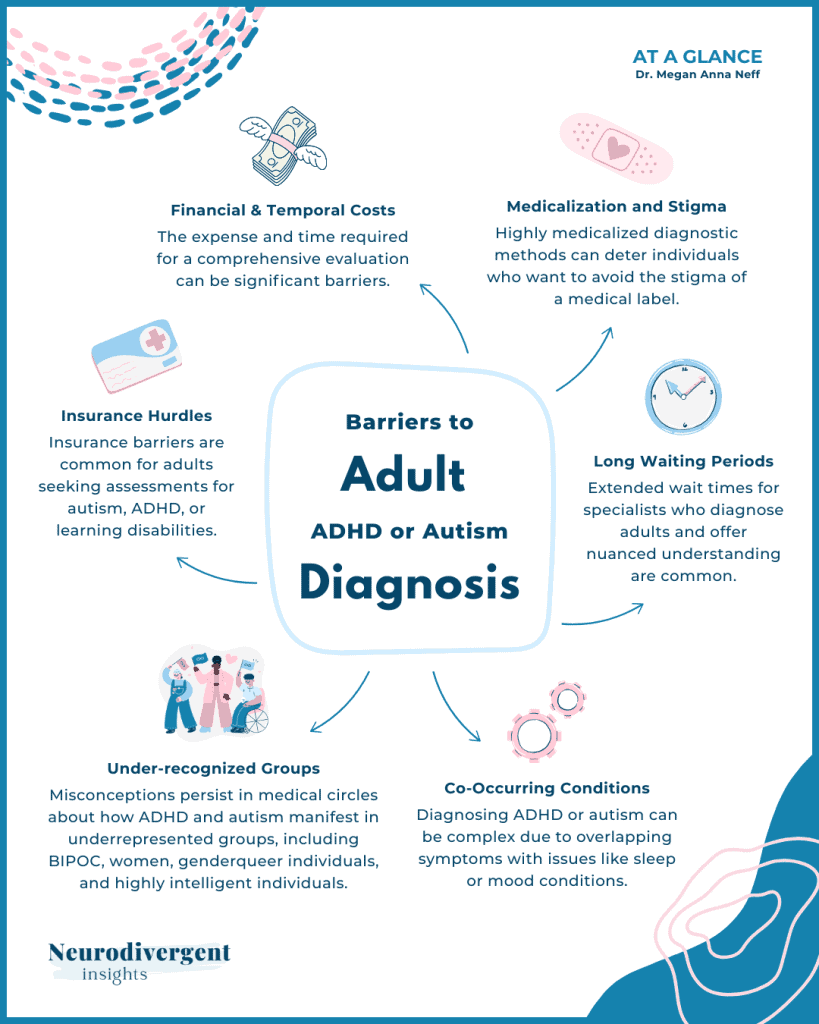
Many adults face significant barriers when attempting to get a diagnosis for autism or ADHD. Here are some of the key obstacles:
1. Medicalization and Stigma
Diagnostic methods can be highly medicalized, deterring individuals who wish to avoid the stigma associated with a medical label.
2. Financial and Temporal Costs
The expense and time required for a comprehensive evaluation can be significant barriers. Many people cannot afford the costs or do not have the time to invest in lengthy assessments.
3. Long Waiting Periods
Extended wait times for specialists who diagnose adults and offer nuanced understanding are common. This can delay access to necessary support and interventions.
4. Co-occurring Conditions
Diagnosing ADHD or autism can be complex due to overlapping symptoms with issues like sleep or mood conditions. These co-occurring conditions can complicate the diagnostic process.
5. Underrecognized Groups
Misconceptions persist in medical circles about how ADHD and autism manifest in underrepresented groups, including BIPOC, women, Trans people, and highly intelligent individuals. This can lead to misdiagnosis or missed diagnoses.
6. Insurance Hurdles
Insurance barriers are common for adults seeking assessments for autism, ADHD, or learning disabilities. Navigating insurance policies and finding covered providers can be challenging.
An Underdiagnosis of Autistic and ADHD Adults
Many adults face significant barriers when seeking an official diagnosis, resulting in many remaining unidentified. For example, one study reported that 28% of people referred to a clinic for mood and anxiety assessments had undetected ADHD (Sternat et al., 2016). Another study found that 19% of adults seeking outpatient psychiatric services met the criteria for an autism diagnosis, but only 0.53% were diagnosed (Nylander et al., 2018).
So yes, there are still many unidentified Autistic and ADHD adults out there, many of whom experience significant barriers. Access to identification provides more than just medical support; it also offers self-understanding, identity, community, and more.
What To Do Next If You Think You May Be Autistic or ADHD
If you think you might be Autistic or ADHD, here are some steps you can take:
1. Educate Yourself
Begin by spending some time with solid, evidence-based resources on autism and ADHD, alongside lived-experience voices. Websites like the Spectrum and ADDitude Magazine offer in-depth, research-informed information that can complement what you learn from social media and community spaces.
Peer‑reviewed articles and review papers can add another layer, helping you connect day-to-day experiences with current clinical and neuroscience research.
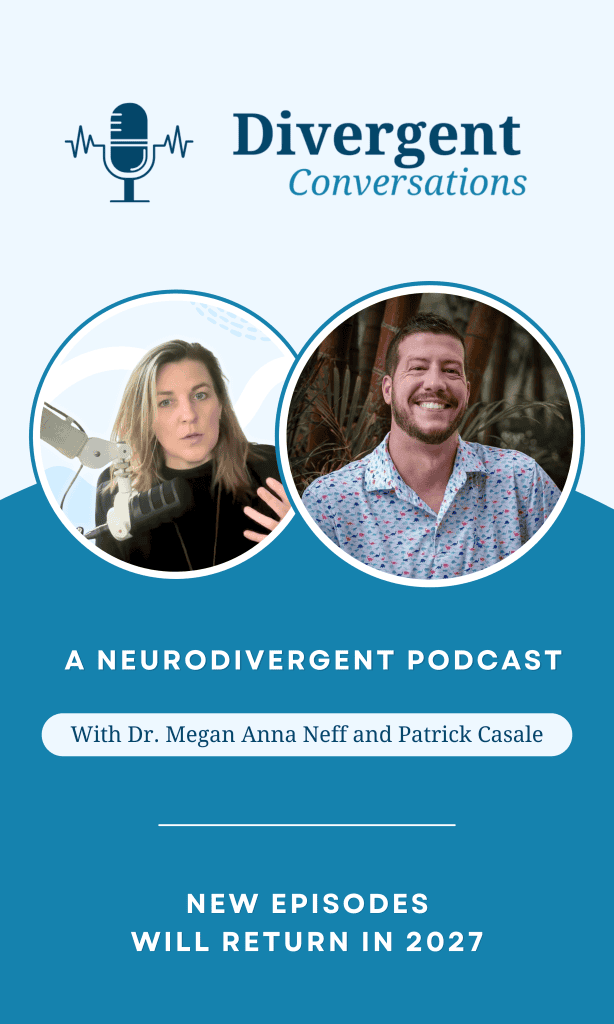
If you like to learn through podcasts, here are a few that weave together both clinical and lived perspectives. Divergent Conversations is a show I co-host with Patrick Casale, where we speak as two AuDHD mental health professionals about our own neurodivergent lives and clinical work. You might also appreciate The Neurodivergent Woman Podcast, which focuses on neurodivergence in women and gender-diverse people, blending research, clinical insight, and real-world stories.
2. Learn about the Diagnostic Criteria
Taking time to learn about the diagnostic criteria can help you better understand if this accurately fits (please note diagnostic criteria by nature is deficit-based). You can read our article on autism criteria here, or ADHD criteria here.
For audio learning, here are some podcast episodes to check out:
In Divergent Conversations, we did a series on autism diagnostic criteria (episodes 48-51) and a series on ADHD diagnostic criteria (episodes 55-58).
In this episode of The Testing Psychologist Donna Henderson provides an overview of the DSM-5 with specific attention on how it shows up in girls.
For those looking for a deeper dive, Is This Autism? by Donna Henderson and Sarah Wayland provides a comprehensive walk through of the diagnostic criteria for autism.
3. Take Online Screeners
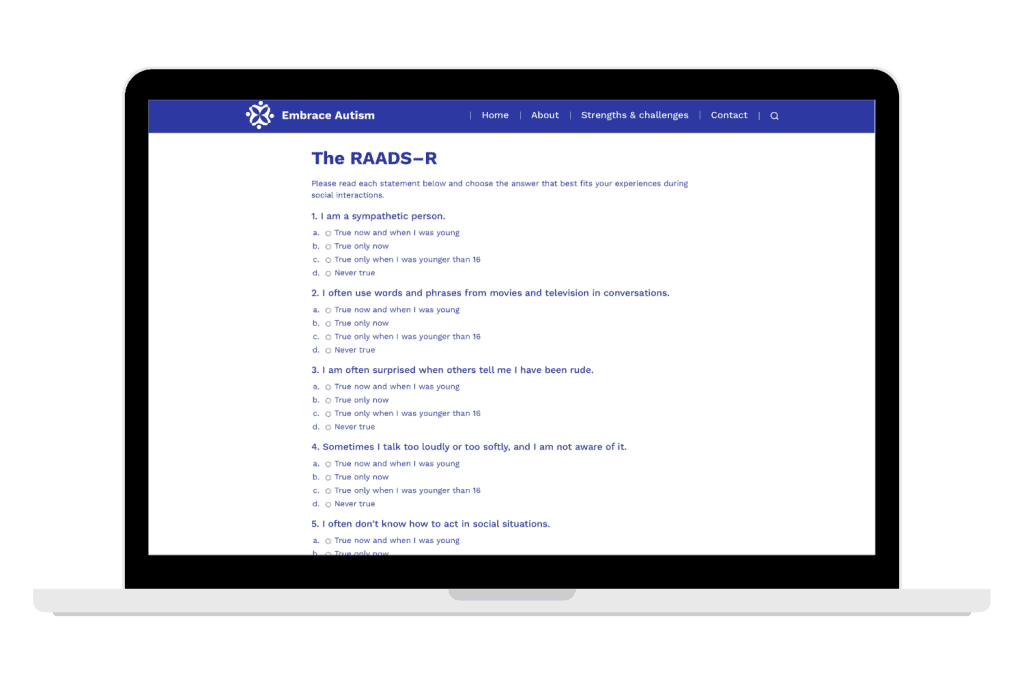
Online screeners can be a helpful first step in understanding whether your experiences align with autism or ADHD. Remember, these are not diagnostic tools but can provide useful data points. You can find lists of autism and ADHD screeners below:
In addition to these screeners, Embrace Autism is a fantastic website that provides an overview of several other screeners specific to autism.
4. Reflect on Your Experiences
After learning from lived experiences and understanding the diagnostic criteria, reconsider some of your lifetime experiences through a neurodivergent lens. Have you always been called sensitive? Think about the sensory experiences that might have contributed to this perception. Have you often struggled to maintain friendships? Reflect on these social challenges and how they might relate to autism or ADHD traits. Have you faced difficulties in school or been labeled as lazy? Consider whether executive functioning struggles could be underpinning these issues. Reflecting on your experiences in this way can help you understand how autism or ADHD may explain aspects of your life that you previously saw as character flaws.
For many it can be helpful to make note of their experiences on a spreadsheet using the diagnostic criteria as a framework (pro tip: having a resource like this will also be helpful should you decide to pursue a formal assessment).
5. Discuss Observations With a Therapist

If you’re currently seeing a therapist, bring up your observations with them. Share what you’re learning and considering about autism or ADHD.
It’s important to note that some therapists may not be fully up to date on current findings about autism and ADHD in adults. However, if you have a therapist who is curious and willing to learn, exploring this together can be very beneficial. They can offer insights into other conditions that may also be contributing to your experiences.
6. Talk to Trusted Friends or Family
Discuss your reflections and thoughts with trusted friends or family members. They can provide valuable insights from their perspectives as observers, and family members may offer memories and observations from your childhood. Friends and family might notice traits you haven’t considered.
However, it’s important to note that some friends or family members may react defensively, especially if they have limited awareness beyond autism or ADHD stereotypes or find it difficult to see these traits in themselves. Focusing on specific experiences can be more helpful. Consider asking questions like:
Did I have a lot of tantrums or meltdowns as a child?
Were there foods I wouldn’t eat?
How did I handle unexpected changes?
What kind of child was I? How would you describe me?
What did you notice about my friendships?
These questions can anchor the conversation in concrete experiences, making it easier to explore and understand your neurodivergent traits without necessarily activating “No, you can’t be Autistic” or “You can’t be ADHD” defenses.
7. Research Co-occurring Conditions
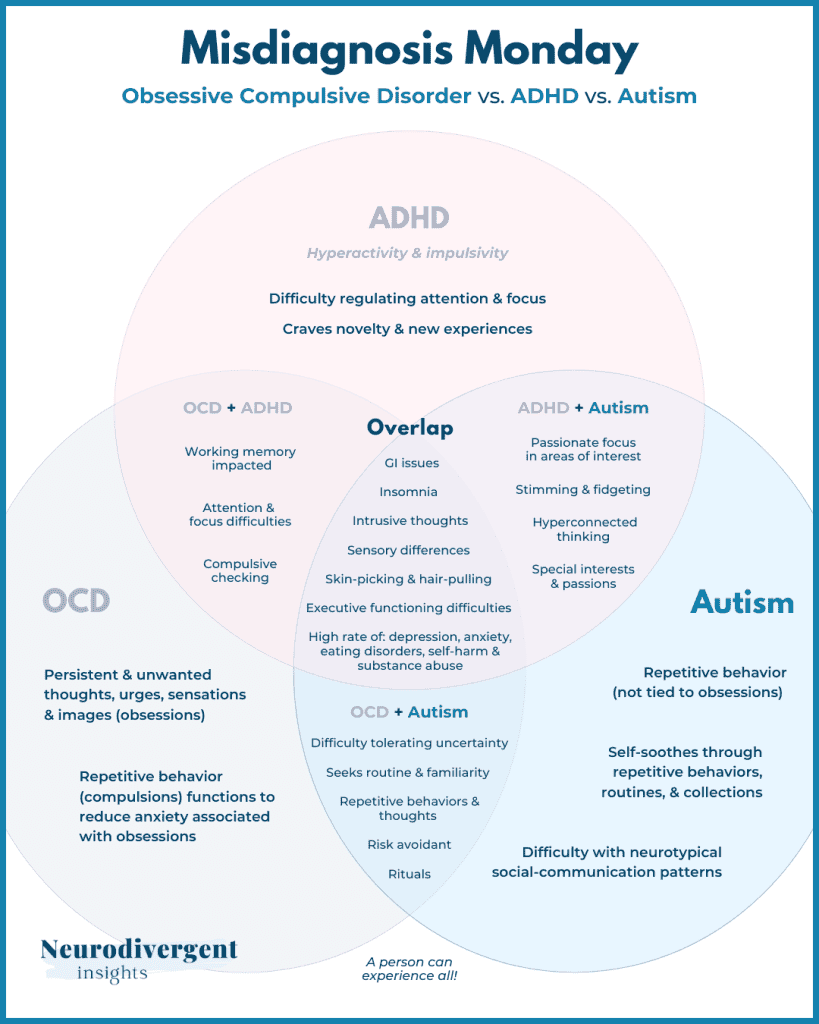
Many Autistic and ADHD people also have co-occurring conditions such as OCD, bipolar, or complex trauma. Recognizing these can help you better understand your experiences. It’s not an either/or situation, you might identify with ADHD traits due to complex trauma or bipolar disorder–or you could have multiple conditions such as ADHD, OCD, bipolar, and complex trauma.
Neurodivergence rarely exists in isolation. To learn more about common co-occurring conditions and their differences, you can check out the Misdiagnosis Monday series. Find links to all the ADHD Venn diagrams and articles here, and the Autism Venn diagrams and articles here.
8. Join Supportive Communities
Engaging with communities of Autistic and ADHD adults can provide support, validation, and a sense of belonging. There are several free online forums available through social media, particularly on Facebook.
Additionally, there are paid communities that tend to be smaller and more structured. Feel free to check out the NDI Learning Nook, our community which opens it’s doors to new members each quarter.

9. Seek a Professional Assessment
While self-identification is valid, a thorough professional assessment can provide a comprehensive understanding of all your needs. Remember, neurodivergence rarely walks alone. Understanding the distinctions between different conditions and how to treat each one — whether it be a medical or mental health condition — is important for your overall wellness. Seeking out a professional assessment, particularly from a neurodivergent-affirming provider, can be a crucial part of your wellness journey. For directories of neurodivergent-affirming therapists and assessment providers, you can check out our resource page where we’ve linked several such directories.
Many people are increasingly interested in non-formal, professional supported self-assessments, you can read more about this approach here.
Conclusion
Neurodivergent self-discovery can be a liberating and exciting process, but it can also be disorienting and accompanied by grief. Wherever you are in this journey of learning and discovery, I hope that it unfolds in a way that brings you clarity and peace. Whether you identify as autistic, ADHD, or find that another explanation resonates more with your experiences—such as social anxiety, high sensitivity, or complex trauma, my hope is that this process of discovery unlocks greater self-compassion and gentleness with yourself and your story.
Citations
Nylander, L., Axmon, A., Björne, P., Ahlström, G., & Gillberg, C. (2018). Older Adults with Autism Spectrum Disorders in Sweden: A Register Study of Diagnoses, Psychiatric Care Utilization and Psychotropic Medication of 601 Individuals. Journal of autism and developmental disorders, 48(9), 3076–3085. https://doi.org/10.1007/s10803-018-3567-0
Sternat T, Mohamed M, Furtado M, et al. SSRI treatment response may predict undetected attention deficit hyperactivity disorder in depressed patients. Presented at the Anxiety and Depression Association of America (ADAA) Conference 2016; 2 April 2016 (Abstract S2–10).
Follow-Up Resources
Stay in the Neurodivergent Loop
For ongoing insights and updates, subscribe to the Neurodivergent Insights Newsletter. Each Sunday, I send out fresh thoughts and a roundup of the newest resources on topics related to neurodivergence, mental health, and wellness. My most personal writing is reserved for my newsletter, and subscribers also get access to the newsletter vault (12+ PDFs) when they join.
Previous Graphics