
Autism and ADHD Burnout Recovery: How to Recognize It and What Helps

Illustration of a person resting in an armchair with a book, a mug of tea steaming on the side table

Autistic burnout is characterized by pervasive, long-term exhaustion, loss of function, and reduced tolerance to stimulus (Raymaker et al., 2020). ADHD burnout hasn’t been defined in research yet, but many ADHDers describe something similar, likely because of the overlapping demands on cognitive and emotional resources. (I write more about the ADHD side in ADHD Burnout Recovery.)

Table of Contents

Primary Characteristics of Neurodivergent Burnout

Research on autistic burnout describes three core features:

Chronic Exhaustion

Pervasive, long-term exhaustion: physical, mental and emotional.

Reduced Tolerance to Stimuli

Heightened sensitivity to sensory input, such as light, sound and touch.

Loss of Skills

It gets harder to think, plan, remember, and manage self-care and daily tasks.

Additional Symptoms

In addition to intense emotional, physical, and mental exhaustion, neurodivergent burnout can lead to:

Emotional Dysregulation: Increased difficulty managing emotions, leading to outbursts or intense anxiety.

Enhanced Neurodivergent Traits: Increase in repetitive behaviors, sensory sensitivities, and more difficulties adapting to change.

Cognitive Impairments: Increased difficulties with memory and focus, making it hard to perform everyday tasks.

Increased Executive Functioning Challenges: Greater difficulties in planning, organizing, remembering, and managing daily tasks.

Inability to Mask: People often lose or decline in their ability to mask, which is one reason burnout is a common time for many of us to start wondering about being Autistic or ADHD.

Time Perception Challenges: Greater difficulty in perceiving the passage of time, leading to procrastination or last-minute stress.

Increased Impulsivity: Heightened impulsivity that may lead to risky decisions.
Common Contributors to Neurodivergent Burnout

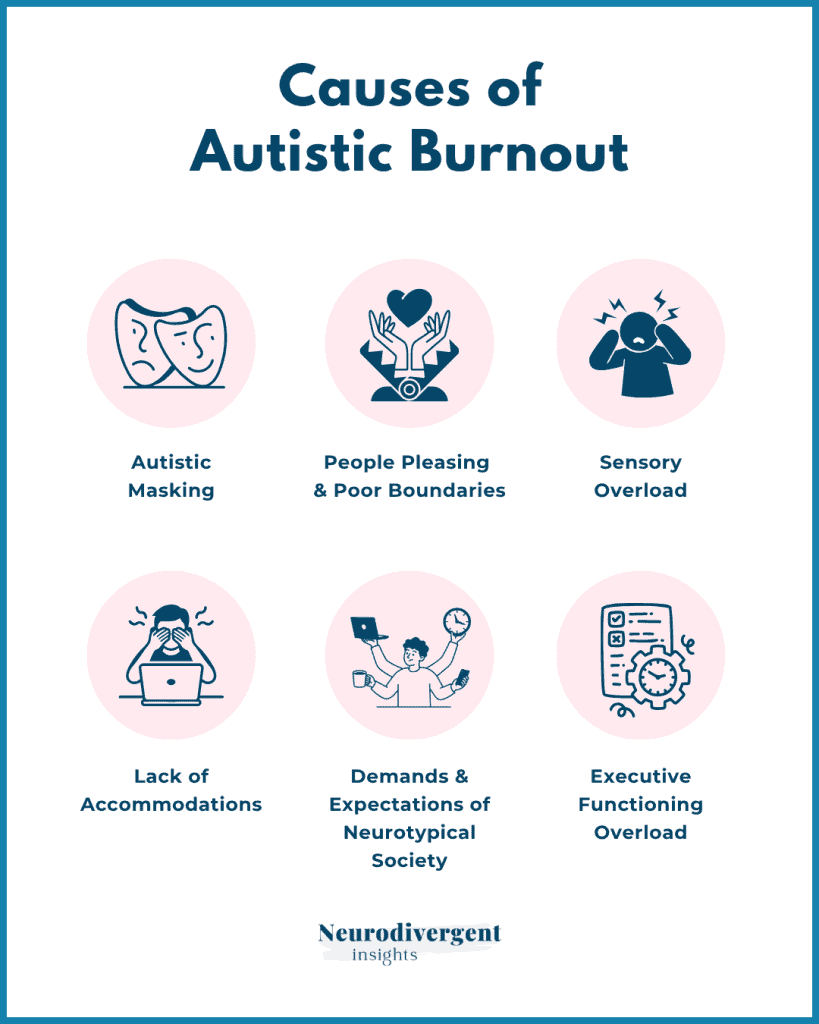
Research on autistic burnout, along with what many ADHDers describe, points to several common contributors:

1

Masking

Constantly suppressing Autistic or ADHD traits to appear “neurotypical” demands significant cognitive and emotional effort, leading to exhaustion. Masking creates a disconnect between one’s internal state and external presentation, increasing stress and anxiety.

2

Minimized Needs

Having social and sensory needs dismissed by others because they appear “fine” due to masking. Lack of understanding and support from those around them can exacerbate feelings of isolation and frustration.

3

Lack of Appropriate Supports and Accommodations

Not having access to necessary accommodations, whether in the workplace, school, or social settings.

4

Executive Functioning Fatigue

Frequent transitions and managing multiple stressors can lead to executive functioning fatigue. The mental effort required to organize, plan, and execute daily tasks becomes overwhelming, leading to decreased functionality.

5

Overall Load Exceeding Abilities and Supports

When the cumulative demands of life exceed a person’s capacity and available supports, burnout is the likely outcome.

6

Hyperfocus

Intense focus on a single activity to the exclusion of everything else can lead to neglect of basic self-care and rest. While hyperfocus can be productive, it can also drain energy reserves, contributing to burnout.

Causes of autistic burnout: masking, people pleasing, sensory overload, lack of accommodations and executive overload

Burnout Recovery

Recovery depends on the person and the specific causes. For a more prolonged season of burnout, a person may need to significantly restructure their lifestyle and remove themselves from the causes of their burnout. Some people find each round of burnout harder to recover from than the last.

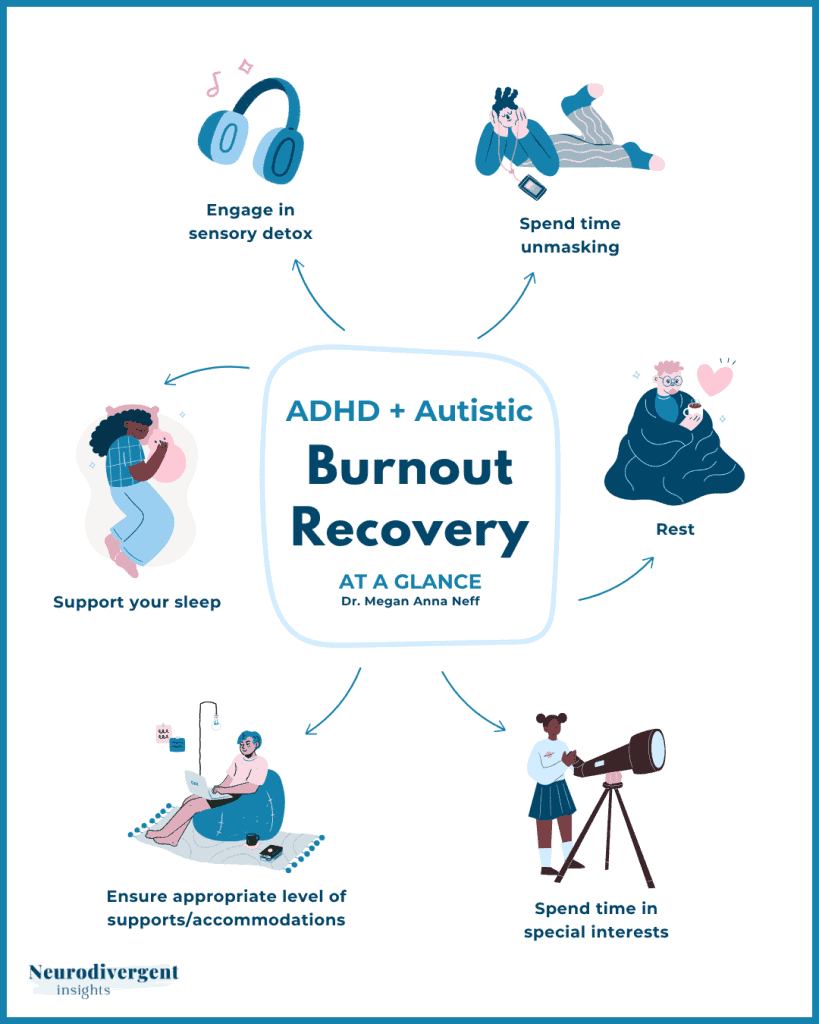
ADHD and Autistic burnout recovery at a glance: sensory detox, unmasking, rest, special interests, support and sleep

Here are some of my go-to tips for recovering from burnout:

Attend to the sensory. Moving in ways that feel natural and good, reducing sensory load, engaging in sensory activities that are restorative

Spend time unmasked (masking comes up again and again in burnout research).

Ensure appropriate accommodations are in place (at school, work, etc.).

Practicing good boundaries in relationships (we have fewer spoons).

Engage in activities that are enlivening (special interests, passions, time alone, or with those whom you can safely unmask).

Support healthy rhythms by prioritizing healthy sleep hygiene, routines, & practices.

Grid of nine burnout recovery practices, from sensory soothers and nourishing food to rest and good boundaries

Be Cautious of Depression Treatments for Undiagnosed Neurodivergent Burnout

Therapists often use “behavioral activation” for depression: scheduling activities that bring a sense of accomplishment and help a person get back out in the world. This may make burnout worse unless it is adapted for the Autistic or ADHD person. Behavioral activation, if used, should focus on implementing sensory activities, special interests, rest, and should avoid activities designed to increase time spent socializing in neurotypical spaces.

Similarly, “cognitive reframing” is a common technique used for treating depression. Attempts to “cognitively reframe” the experience may intensify shame around burnout (particularly if the therapist or person does not understand it is an Autistic/ADHD burnout).

âźł Loading template...

Autistic and ADHD Burnout FAQs

Autistic burnout is characterized by pervasive, long-term exhaustion, loss of function, and reduced tolerance to stimulus. ADHD burnout hasn’t been defined in research yet, but many ADHDers describe something similar, likely because of the overlapping demands on cognitive and emotional resources.

Research on autistic burnout, along with what many ADHDers describe, points to several common contributors: masking, having our needs minimized, a lack of appropriate supports and accommodations, executive functioning fatigue, an overall load that exceeds our abilities and supports, and hyperfocus.

Recovery depends on the person and the specific causes. For a more prolonged season of burnout, a person may need to significantly restructure their lifestyle and remove themselves from the causes of their burnout. Supports that often help include attending to sensory needs, spending time unmasked, appropriate accommodations, good boundaries, enlivening activities, and healthy sleep rhythms.

It can if it isn’t adapted. Behavioral activation may make burnout worse unless it is adapted for the Autistic or ADHD person, and attempts to “cognitively reframe” the experience may intensify shame around burnout, particularly if the therapist does not recognize it as Autistic or ADHD burnout.

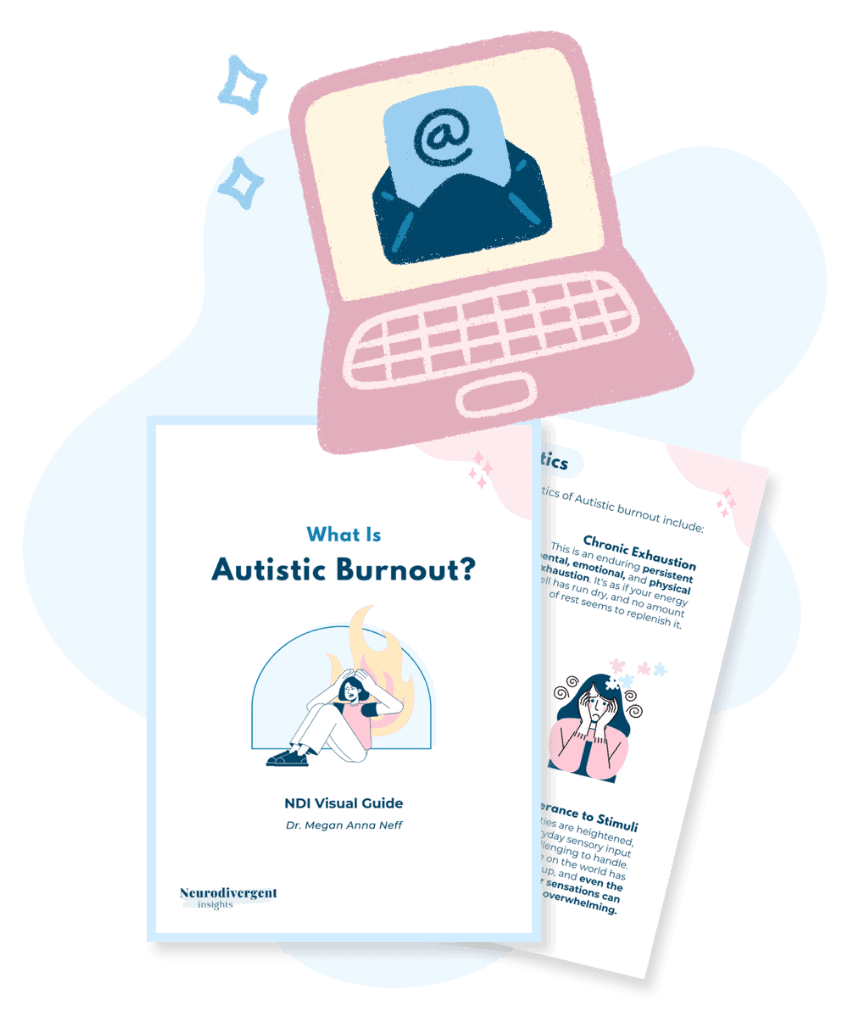
Autistic Burnout Roadmap free email course preview showing a visual guide cover, sample page, and pink laptop with email icon
Autistic Burnout Roadmap
A Free 5-Email Mini-Course

A short, gentle email series to help you name Autistic burnout, understand why you’re so tired, and begin imagining a life that asks less from your nervous system.

Sign Up Here

Additional Resources

Stay in the Neurodivergent Loop

For ongoing insights and updates, subscribe to the Neurodivergent Insights Newsletter. Each Sunday, I send out fresh thoughts and a roundup of the newest resources on topics related to neurodivergence, mental health, and wellness. My most personal writing is reserved for my newsletter, and subscribers also get access to the newsletter vault (12+ PDFs) when they join.

References

Mantzalas, J., Richdale, A. L., Adikari, A., Lowe, J., & Dissanayake, C. (2022). What is autistic burnout? A thematic analysis of posts on two online platforms. Autism in Adulthood, 4(1), 52–65. https://doi.org/10.1089/aut.2021.0021

Raymaker, D. M., Teo, A. R., Steckler, N. A., Lentz, B., Scharer, M., Delos Santos, A., Kapp, S. K., Hunter, M., Joyce, A., & Nicolaidis, C. (2020). “Having all of your internal resources exhausted beyond measure and being left with no clean-up crew”: Defining autistic burnout. Autism in Adulthood, 2(2), 132–143. https://doi.org/10.1089/aut.2019.0079

Welcome!

Created by Dr. Megan Anna Neff, the Neurodivergent Insights Blog explores mental health and wellness through a neurodivergent lens, blending lived experience with clinical insight.

Stay in the loop

Weekly insights and resources on neurodivergence, mental health, and healing delivered to your inbox.

2026
Release

Dr. Neff’s card-deck provides easy-to-use activities that support your well-being across all aspects of life.

0
0
Your Cart
Empty CartYour cart is empty

     
Scroll to Top