Revised March 9, 2026
What do you call it when your nervous system stops cooperating with the life you’ve built? When the words disappear before they reach your mouth, the sensory world gets louder, and the things you used to manage without thinking now take everything you have?
And no, sadly this isn’t the set up to a bad joke or punch line. I’ve been asking myself some version of this question for most of my adult life. The answer, it turns out, is Autistic burnout. And I’m not the only one who’s been looking for it.
The Growing Research Landscape
When I first started writing about Autistic burnout, the research was sparse. Dora Raymaker and their team had just published one of the first empirical studies — “Having All of Your Internal Resources Exhausted Beyond Measure and Being Left with No Clean-Up Crew” (Raymaker et al., 2020) — and it felt like a breakthrough moment. Someone in the research space had finally named what so many of us had been living.
Since then, the research has grown substantially. As of 2025 at least 48 studies on Autistic burnout have been published. The field has moved from almost nothing to a body of evidence that clinicians can no longer ignore.
And it means we, as a community, have more language and more evidence to advocate for ourselves.
Autism Burnout Defined
Autistic burnout is characterized by pervasive, long-term exhaustion, loss of function, and reduced tolerance to stimulus (Raymaker et al., 2020). But those clinical words don’t quite capture what it feels like from the inside.
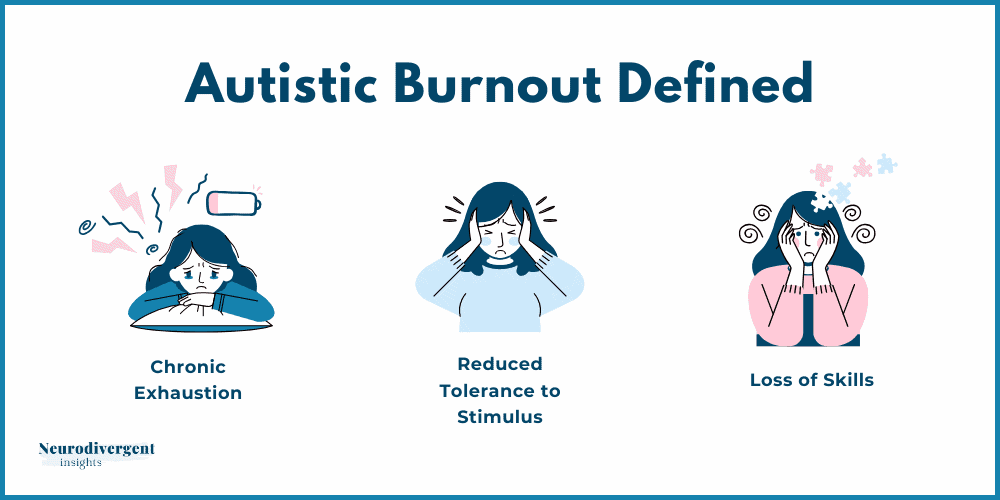
It’s three things happening at once:
Chronic exhaustion: physical, mental, and emotional. Not the kind that sleep fixes.
Loss of skills: executive functioning, verbal abilities, self-care, daily living tasks. Things you could do before become inaccessible.
Increased sensory sensitivities: stimuli that were once manageable become intolerable.
And there’s a fourth piece that the original definition didn’t name but that many of us recognize immediately: withdrawal. The pulling inward and retreating. Later research confirmed this as a core feature, along with increased manifestation of Autistic traits and cognitive disruption like memory problems and confusion (Higgins et al., 2021; Arnold et al., 2023a).
Other Symptoms of Autistic Burnout
Beyond the core features of exhaustion, skill loss, and sensory overwhelm, burnout can also bring:
- Difficulty managing emotions, with more frequent outbursts or intense anxiety
- Increased repetitive behaviors and stimming (which are often the nervous system’s attempt to self-regulate)
- Reduced tolerance for change and transitions
- Difficulties with memory and focus
- Confusion and dissociative states
- Low self-esteem and loss of self-care skills
Autistic burnout touches nearly every area of our lives. It’s physical, cognitive, sensory, emotional, and social. Which is part of why it gets mistaken for other things.
Occupational Burnout vs. Autistic Burnout
Understanding how Autistic burnout differs from both occupational burnout and depression is clinically crucial, because missing this distinction can lead to treatments that unintentionally do harm. Autistic burnout is not simply “being stressed at work” or “feeling depressed.” It is a whole-body, whole-life state that reflects chronic overload in a nervous system that is already working incredibly hard to navigate daily life.
Occupational burnout is usually described as physical and emotional exhaustion, depersonalization, and a reduced sense of accomplishment. Autistic burnout can include these experiences, yet it is more body-based and more pervasive, some of the key differences include:
Loss of functioning: Executive functioning begins to break down. The ability to regulate attention, organize tasks, break projects into steps, and use verbal language can all diminish. This is not the same as feeling frazzled after a busy week. It is losing skills and capacities you previously relied on.
Sensory aggravation: Sensory systems become more reactive during burnout. Sounds, lights, textures, and other stimuli that were once manageable can become overwhelming or even painful.
Pervasive exhaustion: This is not the tiredness that lifts after a weekend of rest. It is a bone-deep depletion that touches physical, emotional, and cognitive energy.
Autistic burnout is also not the same as depression, although from the outside the two can look very similar, which is why misdiagnosis is so common. Arnold and colleagues (2023a) found that many Autistic people in burnout had previously been diagnosed with depression, anxiety, bipolar disorder, or borderline personality disorder, when in fact they were experiencing Autistic burnout.
More problematically psychological treatments for depression can actually intensify Autistic burnout, especially when they encourage people to increase activities or social contact without accounting for sensory load, masking, and limited energy reserves.
When a clinician does not recognize Autistic burnout, they might recommend interventions that make perfect sense for depression, such as behavioral activation or more social engagement. For an Autistic person in burnout, however, these strategies can add pressure to an already overextended system and deepen exhaustion rather than relieve it.
Recent research has also given us better tools. A newer questionnaire called the AASPIRE Autistic Burnout Measure was found to spot Autistic burnout more accurately than a standard depression screener. It focuses on uniquely Autistic experiences, like sensory overload and masking. This is a meaningful shift, as it means clinicians now have a measure that can help them distinguish Autistic burnout from depression, and that distinction can result in safer, more compassionate, and more effective care.
Autistic Burnout Screeners
One of the most meaningful changes since I first wrote about burnout is that we now have measures created specifically for Autistic burnout:
The AASPIRE Autistic Burnout Measure (ABM) was validated by Bougoure and colleagues (2025) with 379 Autistic adults. It showed excellent internal consistency and a clear underlying structure, which tells us Autistic burnout hangs together as a single, coherent construct rather than a random mix of symptoms.
The Autistic Burnout Severity Items (ABSI) is a 20‑item measure developed by Arnold and colleagues (2023b). It looks at four key areas of autistic burnout: exhaustion, cognitive disruption, heightened autistic self‑awareness, and overwhelm and withdrawal.
These tools matter for two big reasons. They give clinicians a way to screen for Autistic burnout directly, instead of relying on occupational burnout or depression measures that miss autism‑specific features. Just as importantly, they offer scientific validation for what Autistic people have been saying for years: autistic burnout is a real, measurable, and a distinct experience.
Autistic Burnout and Suicidality
While Autistic burnout is distinct from depression, it often opens the door to depression, and more concerningly to suicidality.
Autistic burnout is a pathway to Autistic depression and suicidality. Arnold and colleagues (2023a) found that 52% of their respondents identified suicidal ideation as a consequence of Autistic burnout. Broader studies indicate that 42% of Autistic adults report suicidal ideation in the past year, and a Denmark nationwide study found Autistic people were over three times more likely to attempt suicide or die by suicide compared to non-autistic peers (Huntjens et al., 2023; Kõlves et al., 2021)
Autistic burnout and masking are increasingly identified as potentially unique risk factors for suicidality in Autistic people. Risk factors that standard mental health screenings are not designed to detect.
This is why clinicians need to understand and begin screening for Autistic burnout. Not as a “nice to know,” but as a clinical imperative.
What Causes Autistic Burnout?
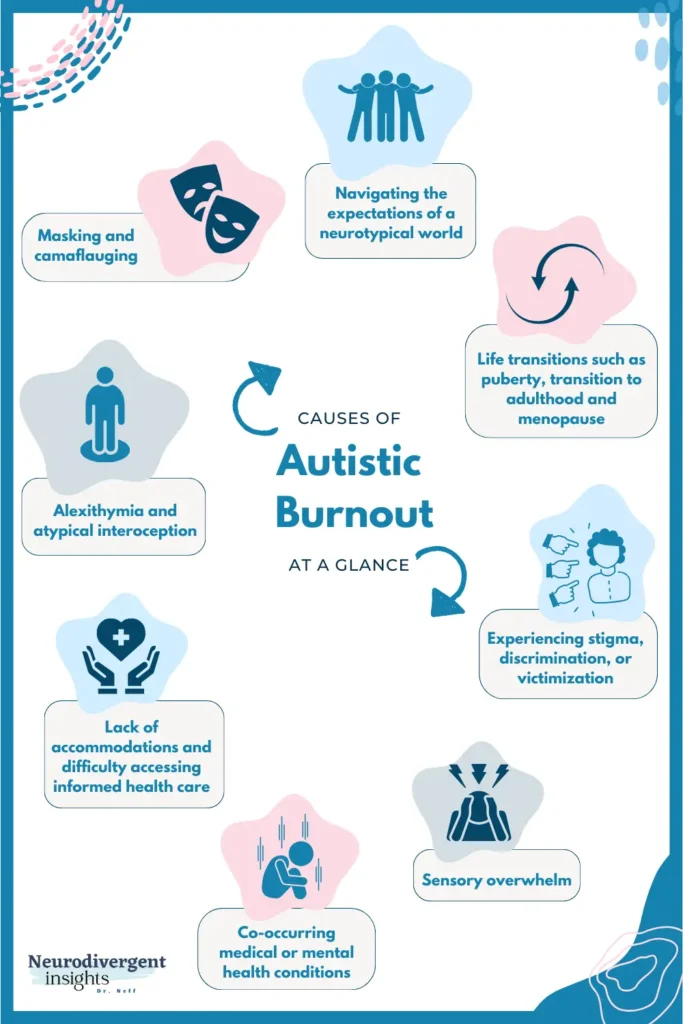
Autistic burnout comes from chronic stress that outpaces our ability to recover. For many of us it is less about one big event and more about the slow wear and tear of moving through a world that does not understand our brains and bodies.
Research on Autistic burnout suggests that it occurs when demands consistently exceed our ability to cope. In simple terms, when the overall load is greater than our coping skills plus supports, burnout becomes likely.
Common contributors include:
Masking or camouflaging to appear “fine”
Having social or sensory needs dismissed because we seem okay on the surface
Not having appropriate supports or accommodations
Executive functioning fatigue after multiple stressors or transitions
We spend enormous energy trying to meet allistic (non‑autistic) expectations in social life, sensory environments, and productivity.
When those expectations ignore our sensory realities, processing styles, and support needs, we are essentially asked to abandon ourselves in order to belong. Over time, the cost of that disconnection shows up as exhaustion, heightened sensitivity, and a feeling that we are losing skills we once had. Autistic burnout becomes an inevitable response to a chronic mismatch between who we are and what our environments demand.
Certain vulnerability factors also increase the risk of Autistic burnout. Co‑occurring and untreated mental or physical health conditions, a history of past burnout episodes, limited access to stimming, and alexithymia (difficulty identifying and describing one’s own emotions) all appear to make burnout more likely. If it is hard to notice when you are nearing your limits, it becomes harder to intervene early, which gives burnout more room to take hold (I explore the connection alexithymia and burnout more in this article).
Autistic Burnout Recovery
Recovery is possible, but it rarely looks like what our culture tells us recovery should look like. It is often slow, uneven, and very individual.
For some people, it means long stretches of rest and sleep. For others, it looks like eating the same safe foods because there is no bandwidth for meal planning. It might mean spending hours with a special interest, not as “avoidance,” but as a way for the nervous system to reset.
On a broader level, it often involves restructuring your life: rethinking your relationship with work, sleep, movement, food, alcohol, your sensory environment, and even what you consider “normal.”
Building a life that actually works for your nervous system takes creativity, commitment, and often grief. It can mean mourning the life you were told you should want, in order to slowly build one that is sustainable for the body and brain you actually have.
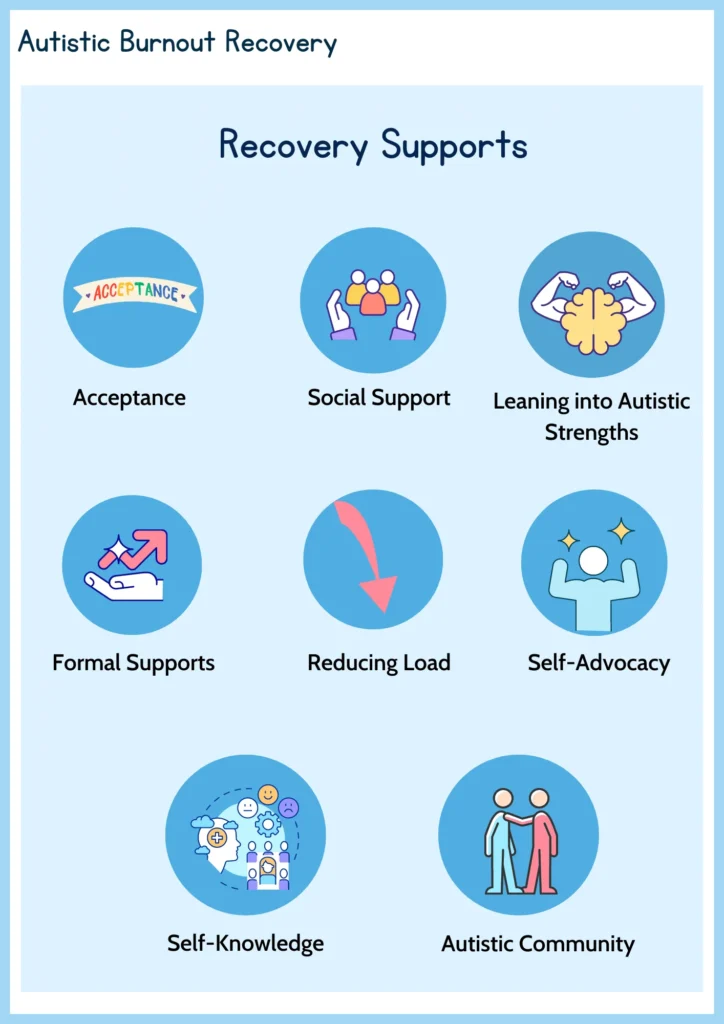
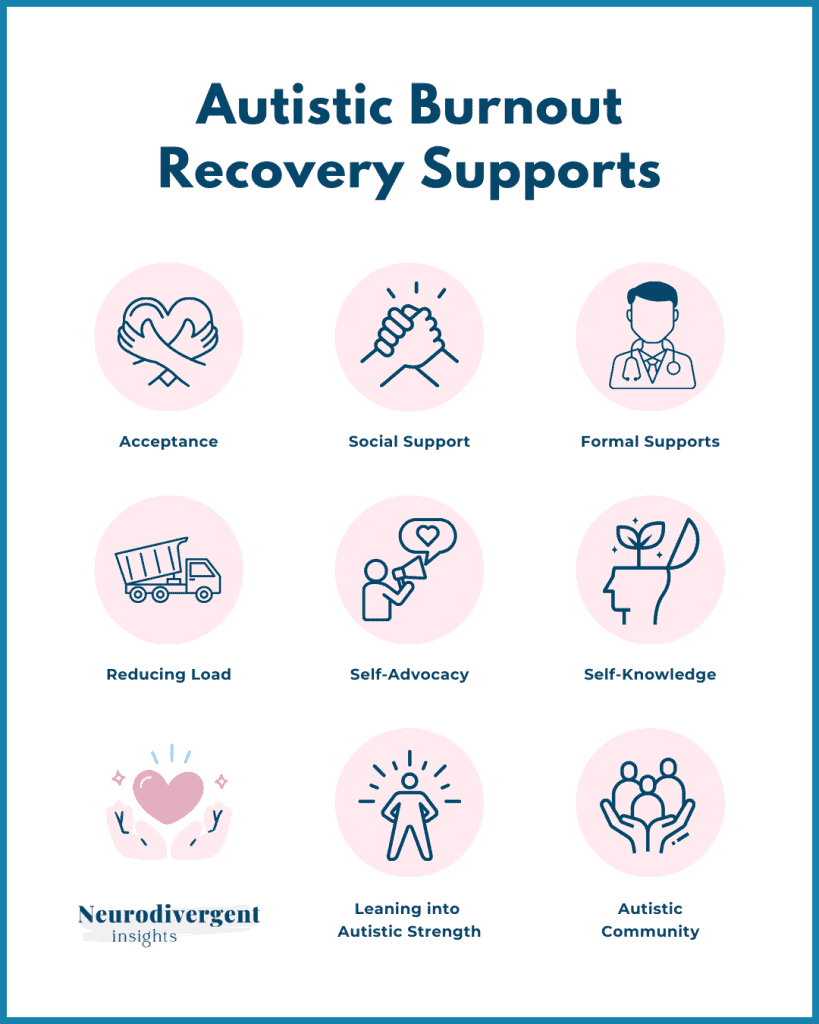
When you look across the research, from Raymaker’s original interviews through Ali et al.’s (2025) review of 48 studies, several common recovery themes appear:
An Accurate Framework for Self-Understanding
Ali and colleagues (2025) identified this as a key recovery factor. Knowing what Autistic burnout is, having language for it, and understanding that it is not laziness, depression, or moral failure can completely change how a person relates to their experience.
For many adults, receiving an autism diagnosis is itself part of recovery. It allows you to see patterns, recognize triggers, and start making more strategic, preventative choices.
Rest, Solitude, and Sensory Relief
Rest is not optional or a reward for productivity. It is a biological need that burnout makes impossible to ignore.
Sensory relief is part of this: reducing input, creating more controlled environments, and leaning into sensory experiences that actually feel restorative. I write elsewhere about pacing systems as a practical way to manage energy during recovery.
Individual and Community Support
Accessing support, both individual (therapy, accommodations, time off) and communal (peer support, engagement with the Autistic community), came up across studies. Engagement with the Autistic community can help a person name and validate their experience. Online communities can provide life-giving support during recovery, particularly for those who are isolated (Mantzalas et al., 2022). Advocating for and receiving reasonable accommodations at work, school, and in relationships are also part of recovery.
Spending Time Unmasked
Masking is one of the strongest predictors of burnout. Spending time unmasked, in relationships and spaces where you can be your full self, is deeply protective and often necessary for recovery. At the same time, unmasking is not equally safe or accessible for everyone; experiences of racism, sexism, queerphobia, ableism, and class-based risk all shape when and where it is possible to drop the mask. The goal is not to be unmasked everywhere, but to steadily grow the number of contexts where you are safe enough to be more fully yourself.
Leaning into Autistic Strengths and Special Interests
Special interests are not frivolous. In recovery, they can be a lifeline: a way to re‑engage with the world through something that truly energizes rather than drains you. Drawing on Autistic strengths, such as deep focus, pattern recognition, and passionate engagement, can also support healing.
Reducing Load
Recovery almost always involves reducing demands: doing fewer activities, setting clearer boundaries, and asking for help. During burnout, the demands on our systems are much higher than what most people account for. Protecting energy through healthy boundaries is not selfishness; it is survival.
Recovery also depends on the person and the causes of burnout. Prolonged burnout often requires deeper lifestyle changes and stepping back from sources of depletion. Jahandideh and colleagues (2025) note that repeated episodes can compound over time, making each recovery harder.
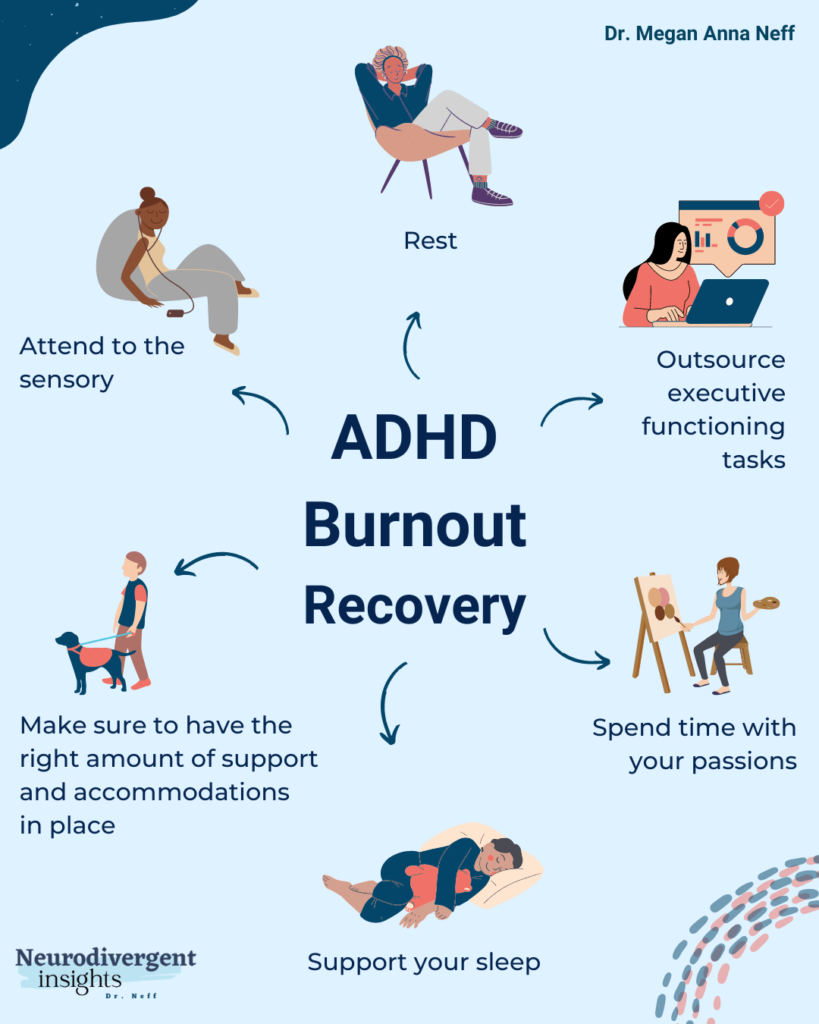
If you are AuDHD, burnout can have its own texture. The push‑pull between ADHD‑driven urgency and autistic need for rest can make recovery feel confusing or even paradoxical.
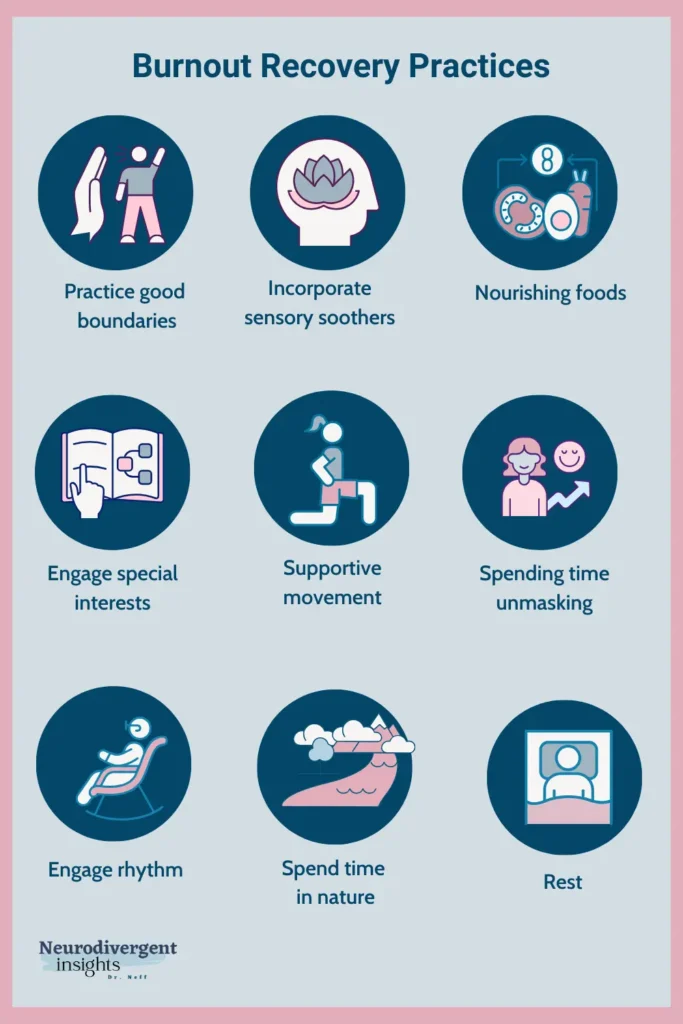
Some of My Go-To Practices

In addition to everything above, here are some of the personal strategies I return to when I feel my own system starting to tip.
Attend to the sensory: moving in ways that feel natural and good, reducing sensory load where I can, and seeking out sensory experiences that feel nourishing and restorative.
Practice clear boundaries in relationships. Because our spoons are limited, protecting energy through healthy limits becomes essential.
Engage in enlivening activities such as special interests, creative projects, time in nature, or time spent engaging in deeply meaningful projects.
Support nurturing rhythms by prioritizing sleep hygiene, predictable routines, and small daily practices that help my nervous system settle.
Notice how I talk to myself. The stories we tell about ourselves and the world communicate either threat or safety to our nervous systems. In burnout, I slide quickly into threat-based narratives, so I deliberately lean on self-compassion and mindfulness to give my system some breathing room.
I go deeper into all of this in The Autistic Burnout Workbook, which includes practical exercises, worksheets, and frameworks for mapping your burnout patterns and building a sustainable recovery plan. We also offer an Autistic Burnout Course, we offer scholarships and don’t turn people away, because every full-price purchase sponsors three scholarships. You can also check out our burnout resource hub which includes free articles, visual guides, podcast episodes, and more.
From Shame to Understanding
Autistic burnout can leave you feeling like you are failing at being a person, which easily deepens neurodivergent shame. It may seem as if everyone else is managing life’s demands without falling apart, and you are the only one who cannot keep up.
In reality, burnout in the kinds of environments many of us move through is a predictable nervous system response, not a personal flaw. It reflects living in a world that was not designed for how we process, feel, move, and relate.
In that context, working to build lives and communities that honour our needs is both care and quiet resistance. The exhaustion is real. The skill loss is real. Finding a way through often begins with naming what is happening and gently refusing to interpret it as laziness, weakness, or a character problem.

Follow-Up Resources
NDI Visual Guide
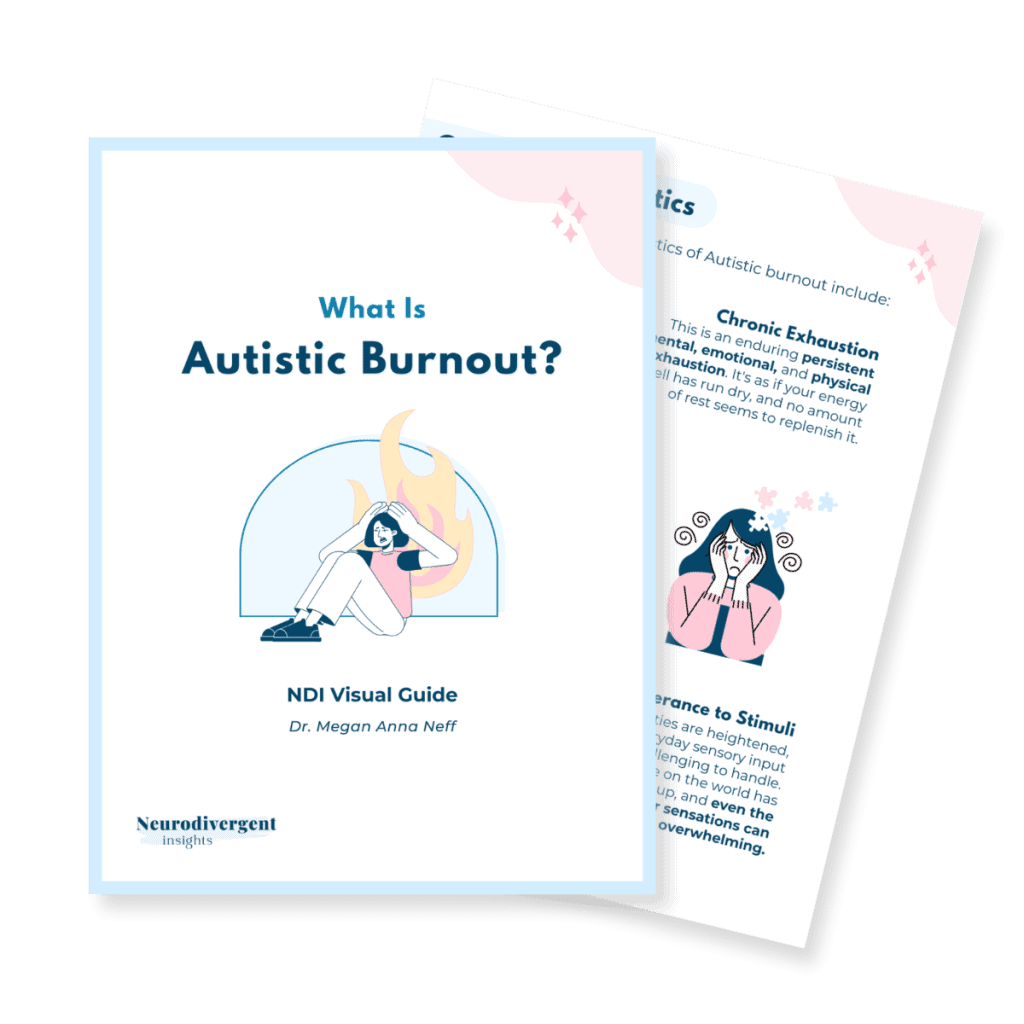
Prefer to engage or share this information visually? Our Free NDI visual Guides are abbreviated, visual-forward highlights of our longer articles.
Stay in the Neurodivergent Loop
For ongoing insights and updates, subscribe to the Neurodivergent Insights Newsletter. Each Sunday, I send out fresh thoughts and a roundup of the newest resources on topics related to neurodivergence, mental health, and wellness. My most personal writing is reserved for my newsletter, and subscribers also get access to the newsletter vault (12+ PDFs) when they join.
- Tags: Autism, Burnout, Energy Management
References
Ali, A., Elnahla, A., Engward, H., & Tuffrey-Wijne, I. (2025). Burnout as experienced by autistic people: A systematic review. Clinical Psychology Review, 122, 102669. https://doi.org/10.1016/j.cpr.2025.102669
Arnold, S. R. C., Higgins, J. M., Weise, J., Desai, A., Pellicano, E., & Trollor, J. N. (2023a). Confirming the nature of autistic burnout. Autism, 27(7), 1906–1918.
Arnold, S. R. C., Higgins, J. M., Weise, J., Desai, A., Pellicano, E., & Trollor, J. N. (2023b). Towards the measurement of autistic burnout. Autism, 27(1).
Bougoure, Q. H., Higgins, J. M., Arnold, S. R. C., & Trollor, J. N. (2025). Measuring autistic burnout: A psychometric validation of the AASPIRE Autistic Burnout Measure. Autism. https://doi.org/10.1177/13623613251355255
Higgins, J. M., Arnold, S. R. C., Weise, J., Pellicano, E., & Trollor, J. N. (2021). Defining autistic burnout through experts by lived experience: Grounded Delphi method investigating #AutisticBurnout. Autism, 25(8), 2356–2369. https://doi.org/10.1177/13623613211019858
Huntjens A, Landlust A, Wissenburg S, Van Der Gaag M. The Prevalence of Suicidal Behavior in Autism Spectrum Disorder: A Meta-Analysis. Crisis. 2023. doi: 10.1027/0227-5910/a000922
Jahandideh, S., et al. (2025). Low Battery Alarm: A Scoping Review of Autistic Burnout. Journal of Autism and Developmental Disorders.
Kowalczyk, O., et al. (2024). Camouflaging and autistic burnout: A structural modeling study. Unpublished manuscript / 2024 publication.
Kõlves K, Fitzgerald C, Nordentoft M, Wood SJ, Erlangsen A. Assessment of Suicidal Behaviors Among Individuals With Autism Spectrum Disorder in Denmark. JAMA Netw Open. 2021;4(1):e2033565.
Mantzalas, J., Richdale, A. L., Adikari, A., Lowe, J., & Dissanayake, C. (2022). What is autistic burnout? A thematic analysis of posts on two online platforms. Autism in Adulthood, 4(1).
Mantzalas, J., Richdale, A. L., & Dissanayake, C. (2024). Measuring and validating autistic burnout. Autism Research. https://doi.org/10.1002/aur.3129
Raymaker, D. M., Teo, A. R., Steckler, N. A., Lentz, B., Scharer, M., Delos Santos, A., Kapp, S. K., Hunter, M., Joyce, A., & Nicolaidis, C. (2020). “Having all of your internal resources exhausted beyond measure and being left with no clean-up crew”: Defining autistic burnout. Autism in Adulthood, 2(2), 132–143.
More Like This...
Previous Graphics