The NDI Glossary

Fatigue (Sensory, Social, Cognitive)

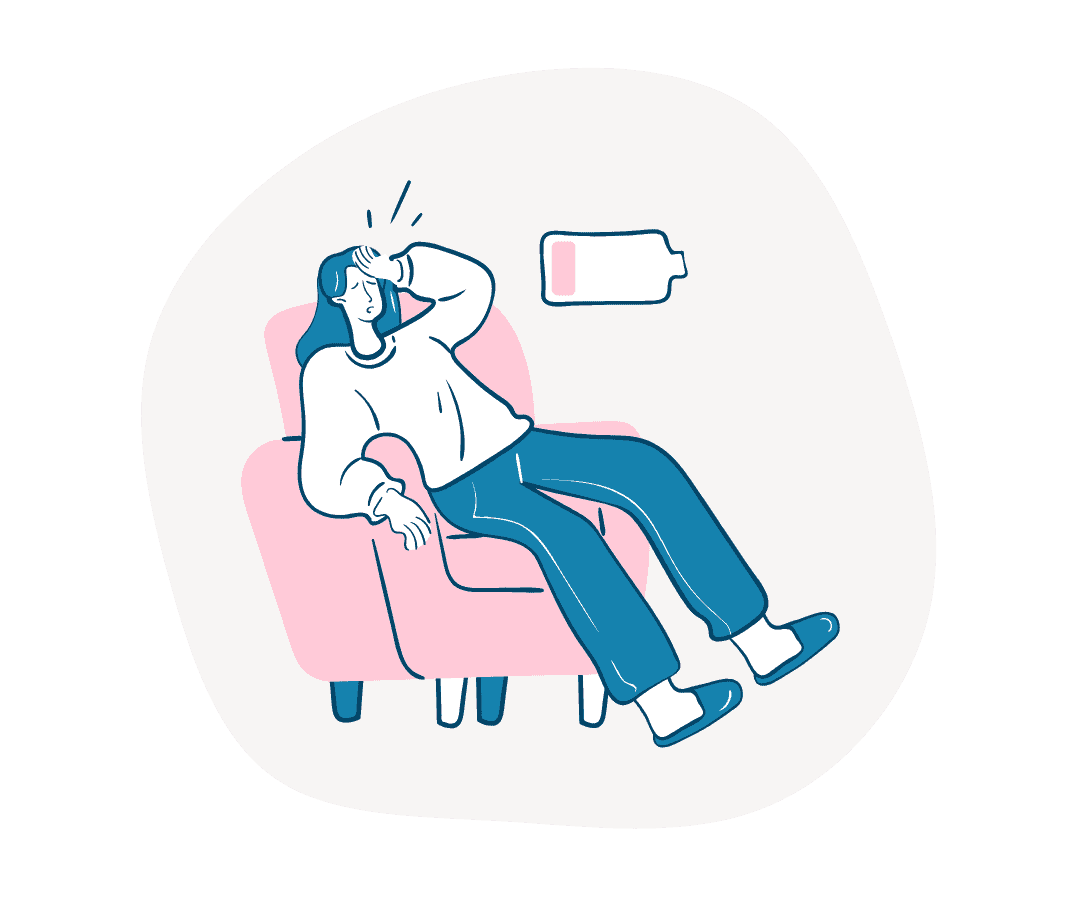
Describes exhaustion that builds from sustained sensory, social, or cognitive effort, even without physical exertion.

Sensory, social, and cognitive fatigue describe forms of exhaustion that come from sustained effort rather than physical activity. For many neurodivergent people, everyday environments require constant sensory processing, social interpretation, and cognitive regulation — all of which draw heavily on energy.

  • Sensory fatigue can build from ongoing exposure to noise, light, movement, textures, or crowded spaces.
  • Social fatigue often comes from navigating conversations, reading social cues, masking, or managing expectations.
  • Cognitive fatigue may develop after long periods of focus, decision-making, task switching, or making sense of complex or unclear information.

These forms of fatigue tend to stack. Over time, they may show up as brain fog, irritability, slowed thinking, reduced tolerance, or a strong need to withdraw. Neurodivergent fatigue reflects the cost of operating in environments that require constant adaptation. Support often centers on pacing, sensory regulation, predictable rhythms, and permission to rest — ideally before exhaustion tips into burnout.

Join over 250,000 followers for weekly insights on autistic, ADHD & AuDHD life.
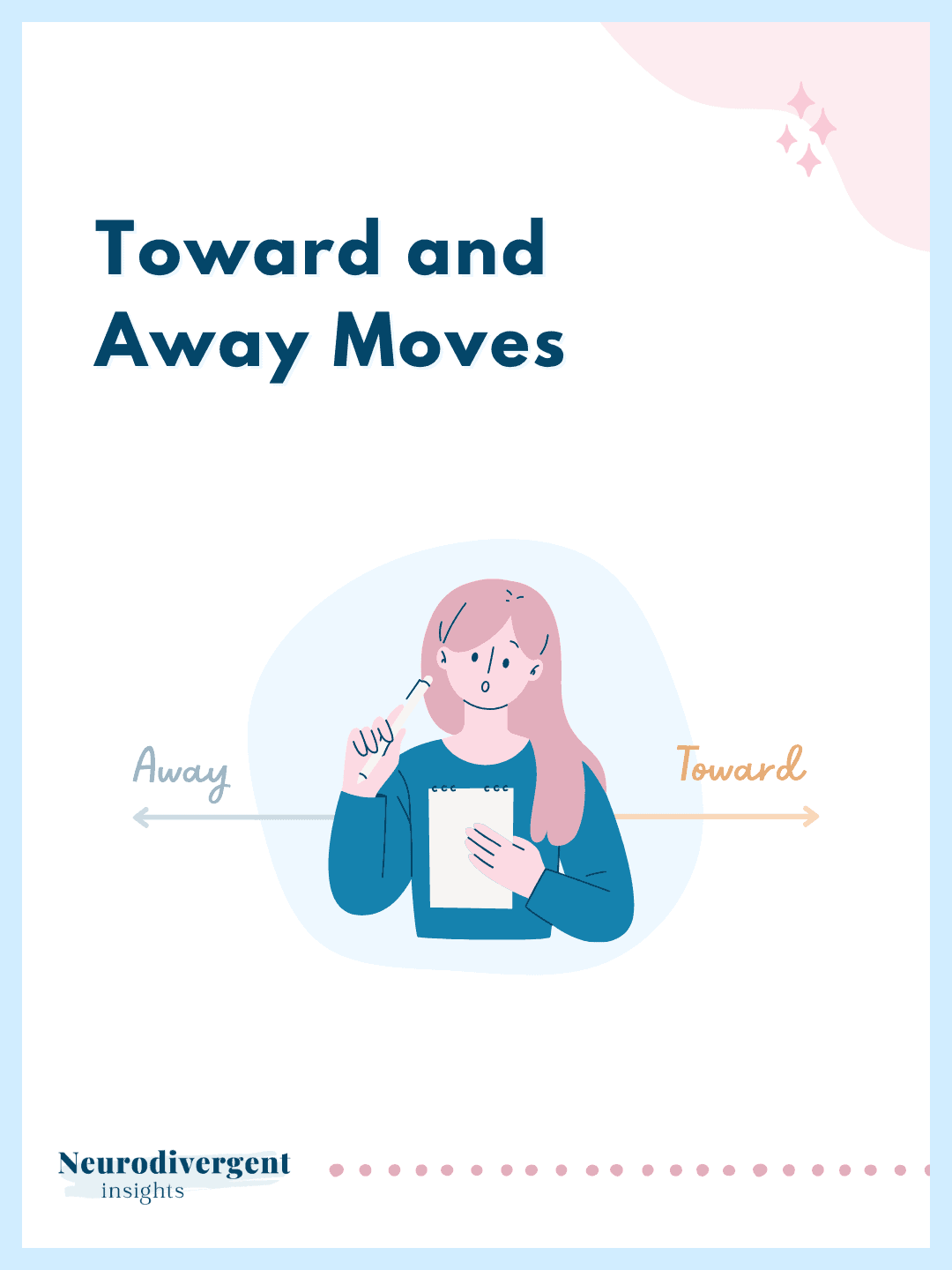
NDI social graphic with the heading Toward and Away Moves, showing an illustrated person holding a notepad with opposing arrows labelled Away and Toward.
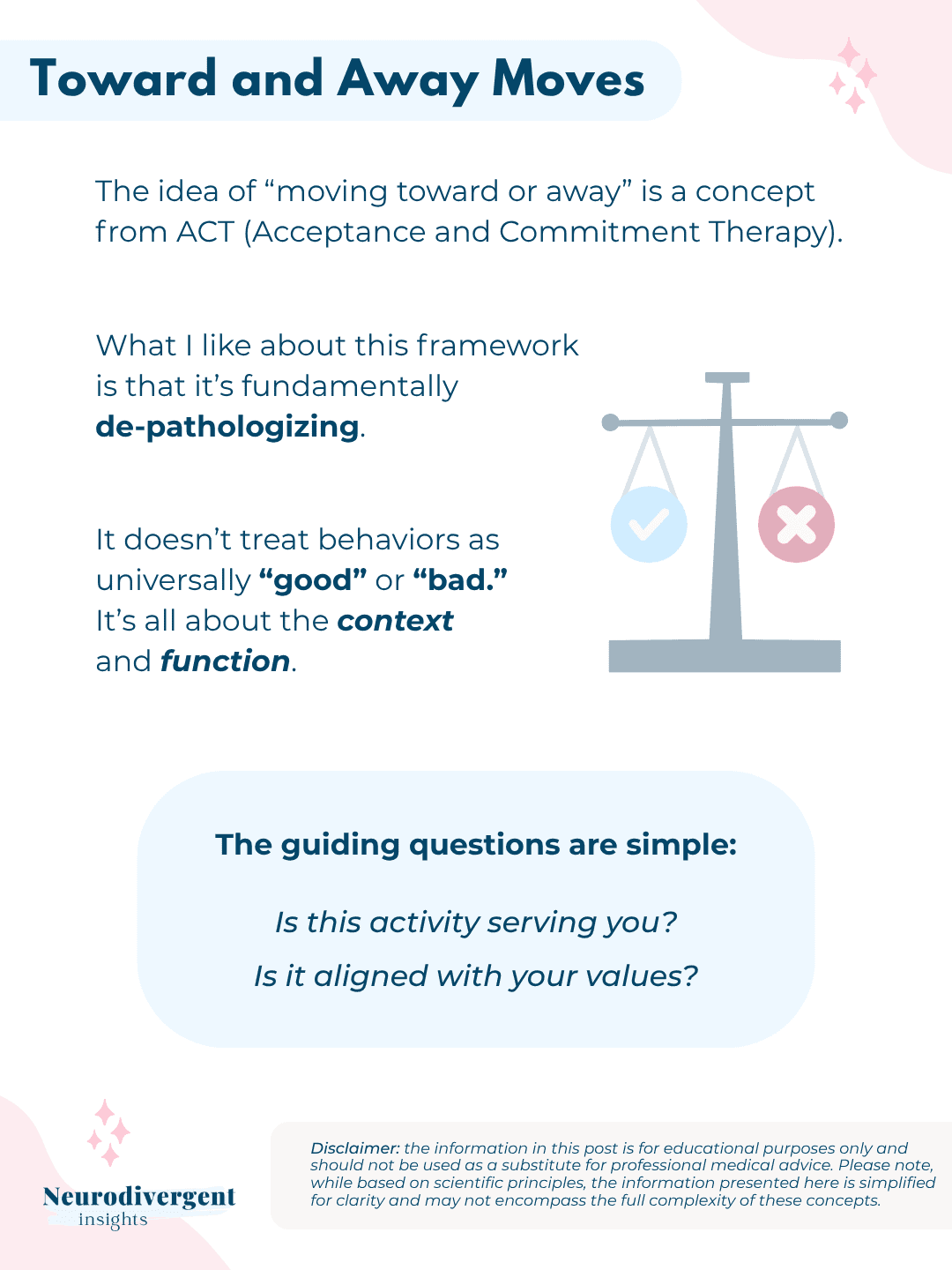
NDI infographic on Toward and Away Moves explaining the ACT concept as de-pathologizing, with a balance scale and guiding questions about values alignment.
Illustrated hand holding a pink smartphone displaying a social media post with a heart, with blue sparkles, representing NDI social media content.
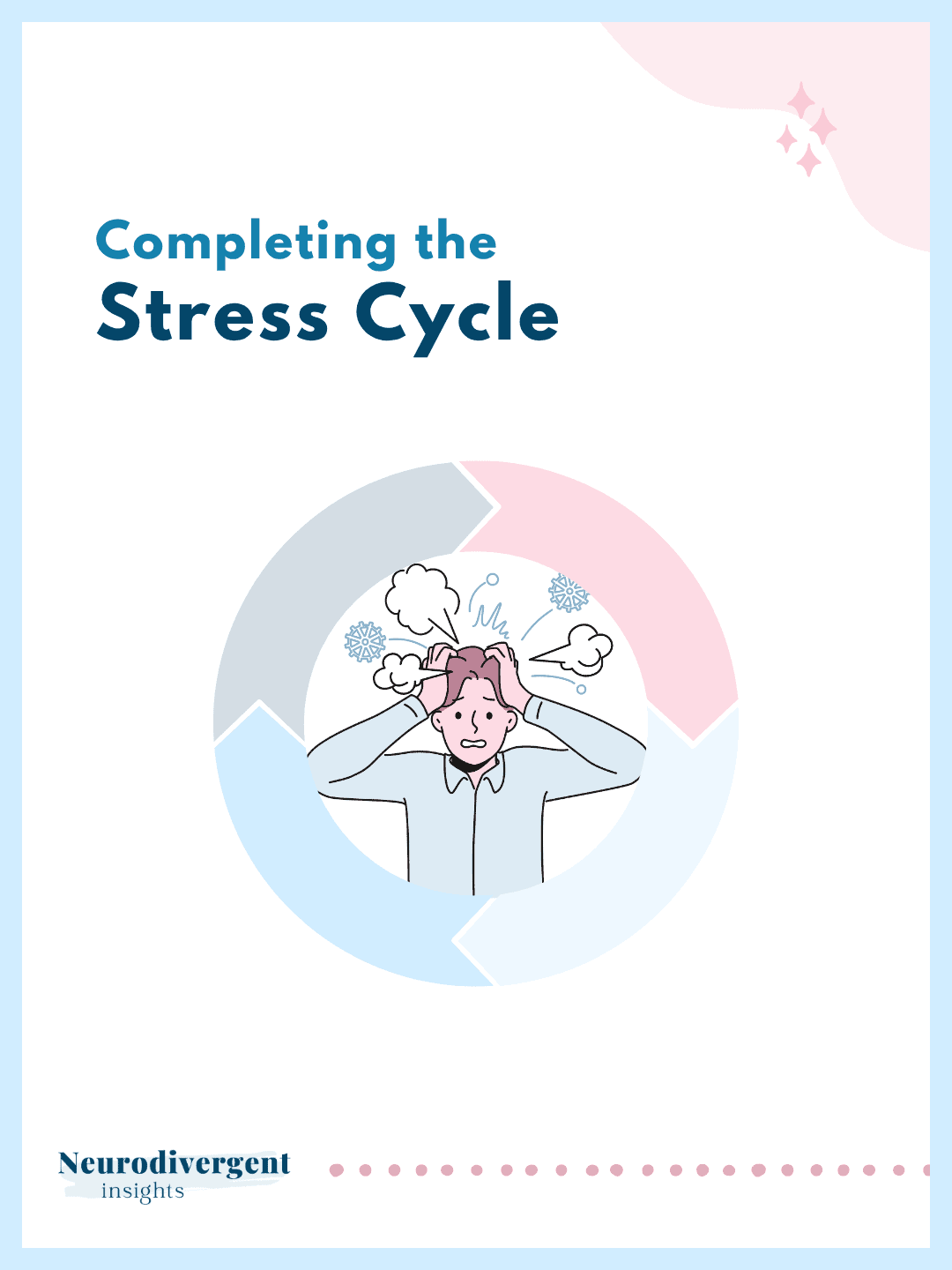
NDI social graphic with the heading Completing the Stress Cycle, showing an illustrated person overwhelmed with steam coming from their head inside a circular cycle diagram.
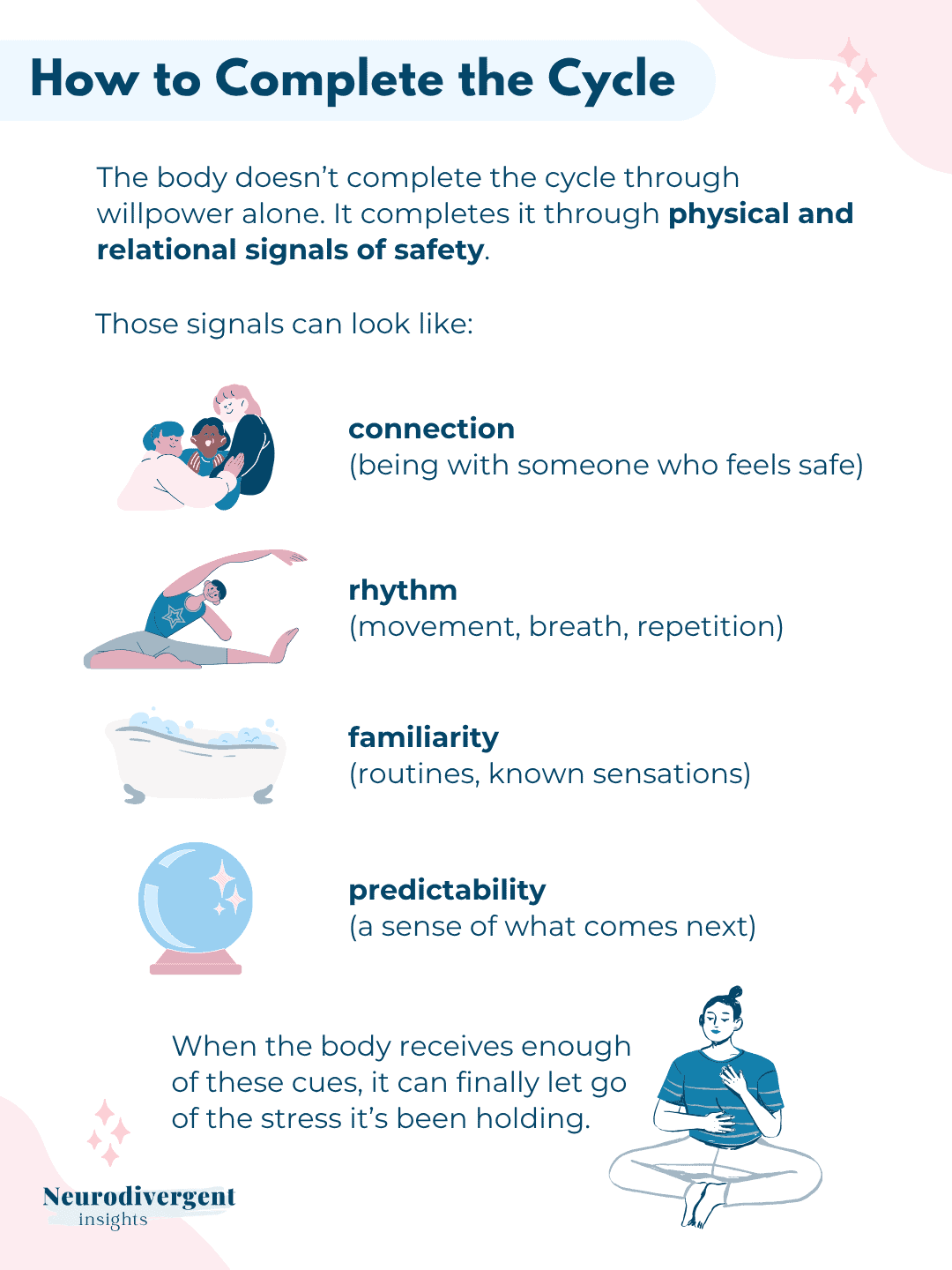
NDI infographic titled How to Complete the Cycle, listing connection, rhythm, familiarity, and predictability as physical and relational signals of safety for stress cycle completion.
0
0
Your Cart
Empty CartYour cart is empty

     
Scroll to Top

Fatigue (Sensory, Social, Cognitive)

Describes exhaustion that builds from sustained sensory, social, or cognitive effort, even without physical exertion.

Sensory, social, and cognitive fatigue describe forms of exhaustion that come from sustained effort rather than physical activity. For many neurodivergent people, everyday environments require constant sensory processing, social interpretation, and cognitive regulation — all of which draw heavily on energy.

  • Sensory fatigue can build from ongoing exposure to noise, light, movement, textures, or crowded spaces.
  • Social fatigue often comes from navigating conversations, reading social cues, masking, or managing expectations.
  • Cognitive fatigue may develop after long periods of focus, decision-making, task switching, or making sense of complex or unclear information.

These forms of fatigue tend to stack. Over time, they may show up as brain fog, irritability, slowed thinking, reduced tolerance, or a strong need to withdraw. Neurodivergent fatigue reflects the cost of operating in environments that require constant adaptation. Support often centers on pacing, sensory regulation, predictable rhythms, and permission to rest — ideally before exhaustion tips into burnout.