Sleep trouble is very common in this day and age. Because so many of us are overworked, have neurodivergence or undiagnosed medical conditions, deal with mental health issues, and more, our sleep is usually one of the first things to be affected. Thankfully, there are things we can do to actively protect our rest, including practicing relaxation exercises for sleep.
In this article, I am going to go over some of my favorite relaxation exercises I practice and regularly give to my clients. We will discuss some breathing techniques, progressive muscle relaxation, and some other resources to help you relax at night.
Table of Contents
I am a neurodivergent clinician. That means that I am neurodivergent, and I work primarily with neurodivergent clients. So, although this article is helpful for everyone, no matter your neurotype, there are some specifications for my Autistic and ADHD audience.
There is a strong relationship between ADHD, Autism, and sleep trouble. Research shows that there is a significant overlap between ADHD, Autism, and lots of sleep issues. These include insomnia, sleepwalking, sleep terrors, sleep apnea, sleep paralysis, narcolepsy, circadian rhythm disorders, restless leg syndrome, and more.
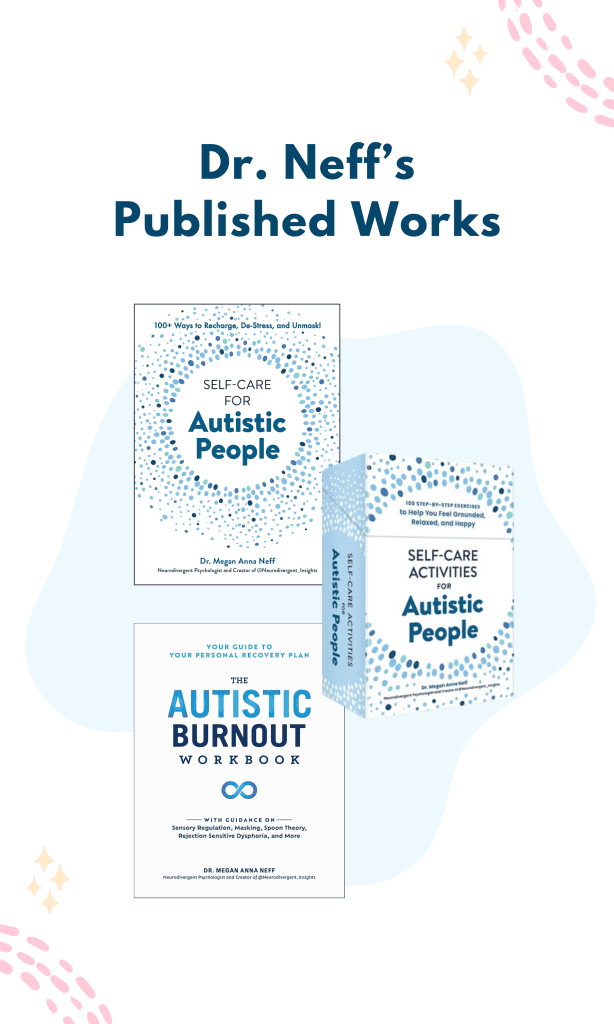
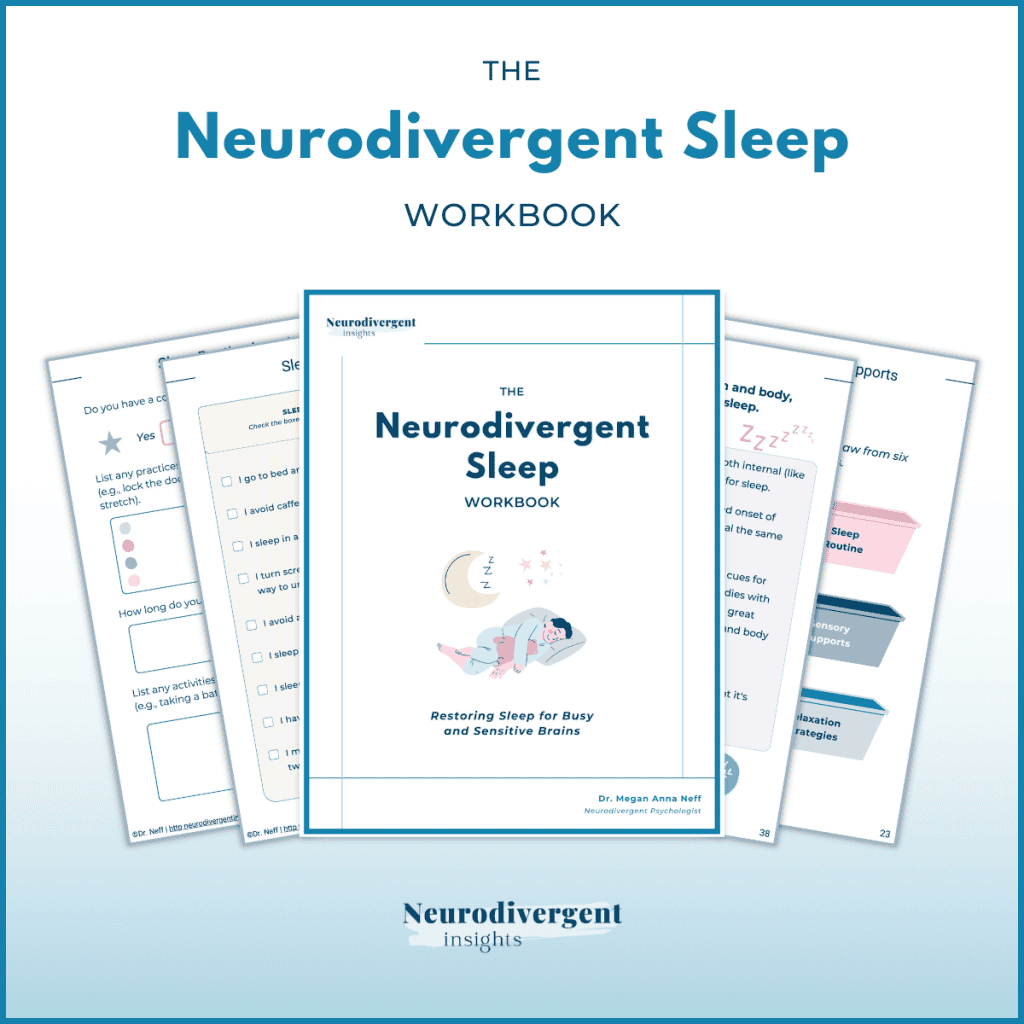
If you’re neurodivergent and need help with your sleep, I recommend looking at my Neurodivergent Sleep Workbook. In this workbook, you will find an abundance of information about your brain and sleep as well as a dozen worksheets and guides to help you tailor a sleep plan for you.
Relaxation Exercises for Sleep
One cause of sleep trouble is difficulty relaxing enough to sleep. Of course, there are a variety of potential causes for this, but there are some things you can do to help your mind and body relax at night time. These exercises include breathing techniques, progressive muscle relaxation, and meditations.
Before we dive into these techniques, I have a few disclaimers. First, this article is not meant to diagnose or treat medical conditions. If you are struggling with chronic sleep issues like insomnia or snoring, I recommend seeing a sleep therapist or other medical professional. That way, you can get specified diagnoses and treatments and rule out other underlying problems.
Second, there are many reasons why you may be having trouble falling asleep and staying asleep. Relaxation exercises are only one piece of a larger puzzle. If you are struggling with sleep, I recommend checking out our extensive article on neurodivergent sleep.
Third, these exercises work best when you use them consistently over a long period of time. Yes, they will help you on those one-off nights when you have difficulty sleeping. But if sleep is a regular issue for you, these exercises may not help in the long run if you only use them every once in a while. If this sounds like you, I recommend sticking to a regular routine by practicing one or some of these techniques nightly.
Now, let’s get into it!
Breathing Techniques
The first set of techniques I will introduce to you is breathing techniques. Many studies show how effectively conscious breathing regulates the body and nervous system. When you’re having trouble falling asleep because you’re too wired, breathing techniques can help you get back to a calm place where your body feels safe enough to sleep. Here are some techniques I like to use for myself and give to my clients.
The 4-7-8 Breathing Technique
- Start by taking a few mindful breaths and then exhaling completely
- Begin by inhaling for a count of four silently through your nose
- Then, hold your breath for a count of seven
- Open your mouth and exhale completely to a count of eight
- Repeat as many times as feels comfortable
Diaphragmatic Breathing
- Get comfortable either sitting or lying down
- Place your right hand on your stomach and your left hand on your heart
- Breathing in through your nose, fill up your belly with air until it feels strained
- Feel your right-hand rise with the inhale while keeping your chest and left hand relatively still
- Exhale through your nose, feeling your right-hand fall on your belly
- Repeat as many times as feels comfortable
The Box Breath
- Breath naturally for a few breaths, then exhale all of your air
- To begin, breathe in for a count of four
- At the top, hold your breath for another four counts
- Exhale through our mouth for another count of four
- Hold again for four counts
- Repeat as many times as feels comfortable
- As you breathe in and out, you can picture yourself drawing a square (up on the inhale, to the right on the hold, down on the exhale, and to the left on the hold)
Progressive muscle relaxation (PMR)
Progressive muscle relaxation (PMR) is a way of inviting the body to relax. It works by intentionally creating tension in the body, which creates a release in the muscles. Here are the PMR guidelines:
- Get in a comfortable position, preferably lying down
- Take a few conscious breaths before beginning
- Start with the feet: clench your toes and hold for about 5 seconds
- Release, wait a moment, and repeat once or twice more
- Then, move to the next muscle group, the calves
- Clench your calves, hold for about 5 seconds, release, and repeat
- Continue this moving up the body: to your thighs, glutes, abs, back, shoulders, fists, arms, neck, and face
- Then clench the entire body, hold for 5 seconds, release, and repeat once or twice more
If you want to listen to a recording of this exercise, check out this PMR recording from Dartmouth.
Relaxation Apps

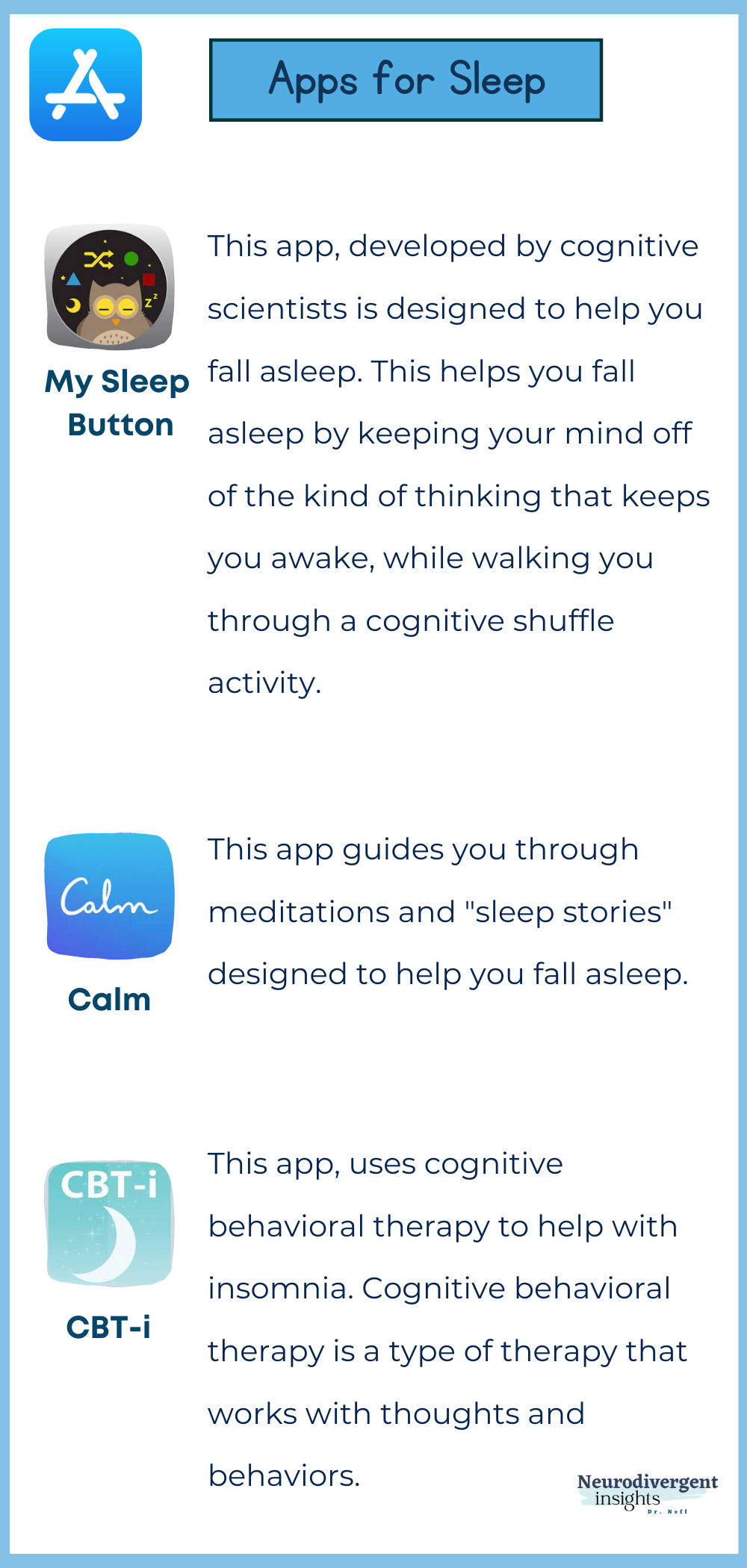
Besides online guided meditations, there are some other resources for you to try. Here are my favorite apps to use for sleep and relaxation:
Breathe2Relax: This app is a stress management tool that walks you through guided breathing exercises helping to decrease “flight-or-fight” responses.
Calm: This app guides you through meditations.
Mindshift CBT: This app uses Cognitive Behavioral Therapy (CBT) techniques to help you learn to relax and be mindful while developing effective ways of thinking.
Some Other Sleep Strategies to Try
As I said earlier, relaxation exercises are only one piece of a larger puzzle. And sometimes, it’s not the most effective tool for us to use to sleep better at night time. If you are consistently struggling with your sleep and relaxation exercises aren’t working as well as you’d like them to, you can try some other things.
You can try tending to your sleep hygiene, improving your bedtime routine, exploring sleep stimulus and stimulus control, adding sensory supports, or trying out CBT-I exercises. All of these and more are available in my Neurodivergent Sleep Workbook.
If you’re really struggling, then you could also see a therapist or a medical professional to help you get to the root of your sleep problems. Sometimes, medical conditions, trauma, or other things behind our sleep problems can be difficult to identify and address on our own.
Conclusion: Relaxation Exercises for Sleep
Sleep is hard, especially if you’re neurodivergent. Although it may take time, and our sleep may never be perfect, there are things we can do to aid our sleep patterns. Even though relaxation exercises are only one part of a larger solution, they can still be very effective, especially if used consistently over time. These exercises include breathing techniques, progressive muscle relaxation, guided meditations, and more.
If you’re looking for more support and resources, you can check out my expert sleep guide. Here, you’ll find loads more resources for getting better sleep at night and ways to tailor a sleep care plan for yourself.
Thank you for reading, and I hope these exercises are useful to you!
- Tags: Sleep
Follow-Up Resources
Stay in the Neurodivergent Loop
For ongoing insights and updates, subscribe to the Neurodivergent Insights Newsletter. Each Sunday, I send out fresh thoughts and a roundup of the newest resources on topics related to neurodivergence, mental health, and wellness. My most personal writing is reserved for my newsletter, and subscribers also get access to the newsletter vault (12+ PDFs) when they join.
Dr. Megan Anna Neff
More Like This...
Previous Graphics