When sensory overload and emotions collide, it can be deeply disorienting. Before I understood my experiences through a sensory lens, I struggled to make sense of those moments. All I knew was that I would have periods of feeling disconnected from myself, and my emotional responses seemed amplified beyond my control. This often led to self-criticism and the creation of new rules to follow in an attempt to regain a sense of stability.
Learning about my nervous system changed that. I’ve come to see that sensory regulation and emotional regulation are deeply connected. Without sensory regulation, it becomes challenging to achieve emotional regulation. Now, in hard sensory moments, I try to meet myself with compassion, knowing my reactions come from a dysregulated nervous system, not a personal failing.
What Is Sensory Overload?
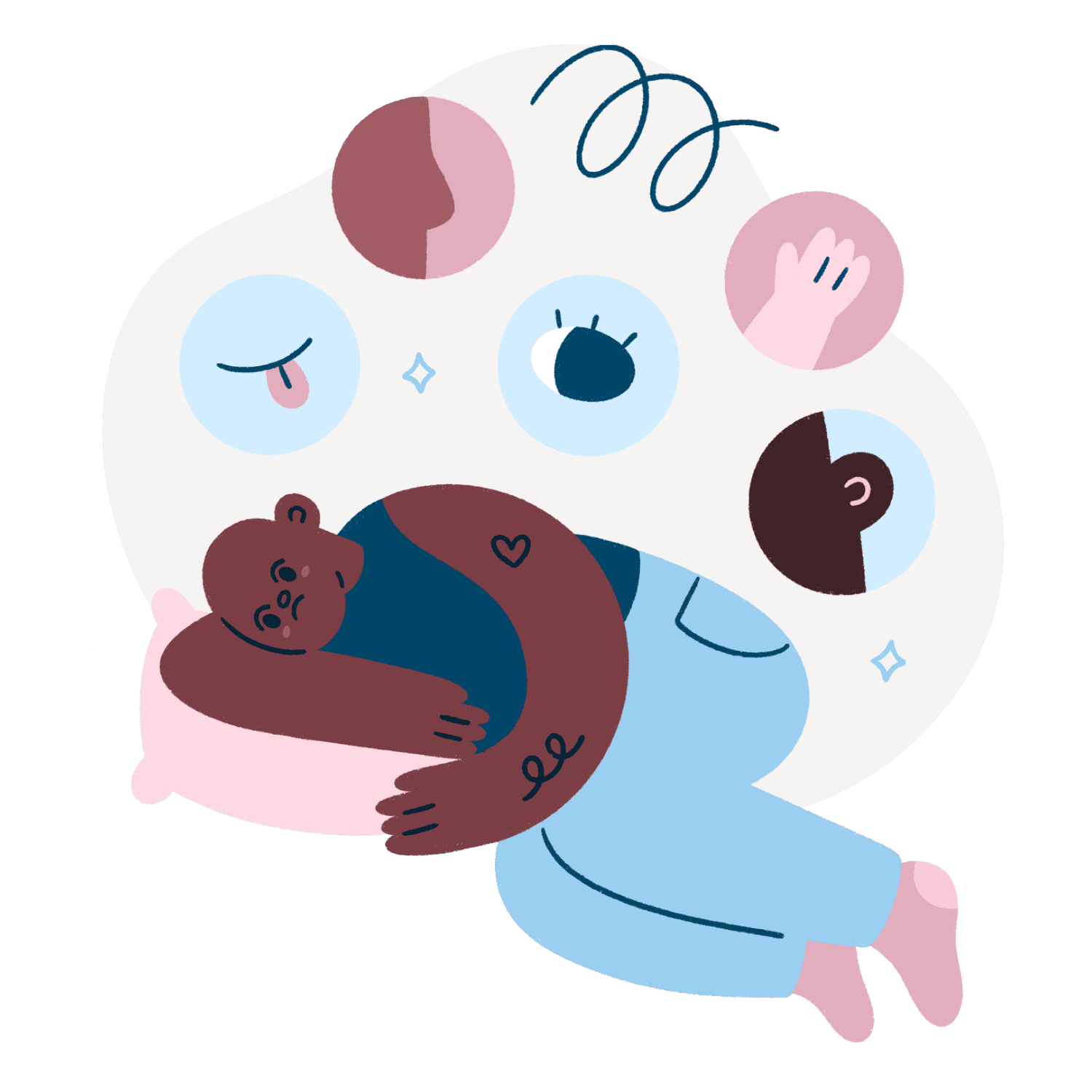
Sensory overload happens when the brain takes in more sensory input than it can process at once: sights, sounds, smells, tastes, touch, and input from inside the body. It can feel as if the volume on every sense has been turned all the way up.
When we’re overloaded, regulating our behavior and emotions becomes much harder. The stress response takes over until we can get back to sensory safety.
Common triggers include:
High-pitched or overlapping sounds
Too much information at once
Tense emotions in the room
For some of us, a single trigger is enough. For others, overload builds as several triggers stack up.
Signs of Sensory Overload
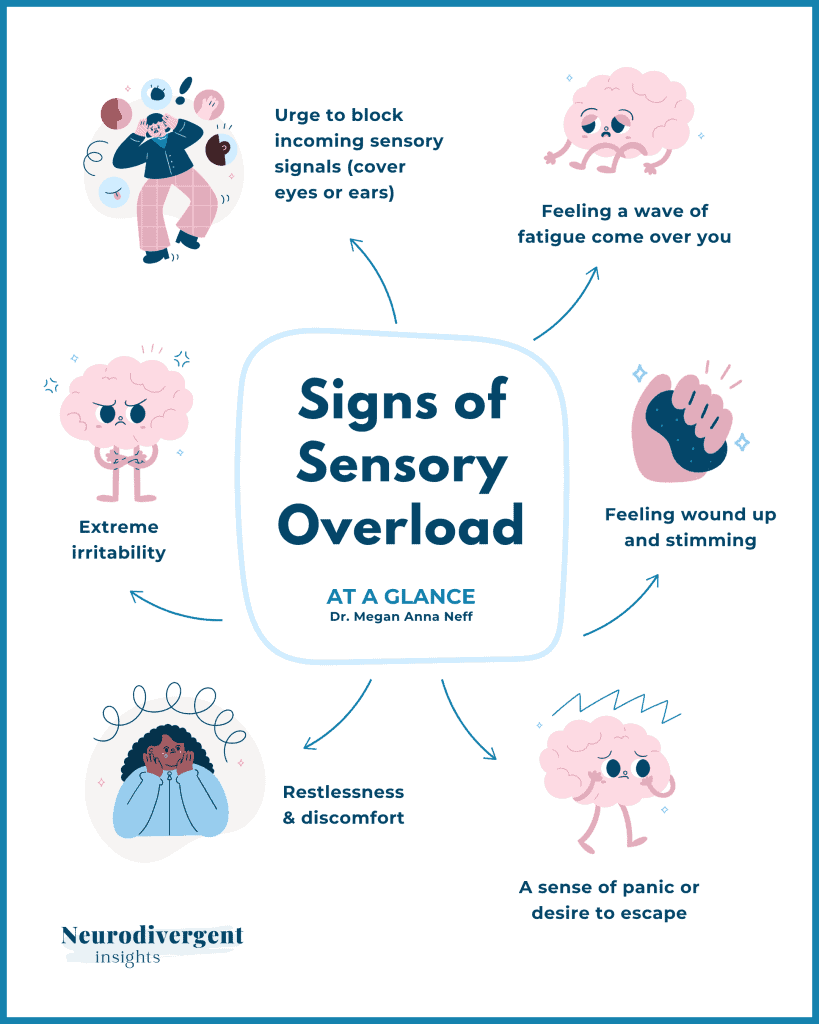
Sensory overload shows up differently for each of us. Some common signs:
- Heightened anxiety
- Irritability
- Restlessness
- Trouble concentrating
- Physical discomfort
- Difficulty regulating emotions
- Freezing up or having trouble making decisions
- Meltdowns or shutdowns
In a shutdown, we may become very tired, foggy, and disconnected from what we’re experiencing.
How Sensory Overload Affects Emotions
When sensory input overwhelms the brain, emotions can range from frustration and anger to anxiety, sadness, or numbness. When we’re overloaded:
- Our patience runs out faster.
- Emotions come on more quickly.
- It’s harder to bring emotions back down to a tolerable level.
Overload can push the nervous system into a stress response. Sometimes that looks like hyperarousal: panic, agitation, and a sense of being out of control. With so much coming in, it’s also harder to focus, think clearly, and make decisions, which adds to the frustration.
Other times, the body drops into hypoarousal. We may feel a wave of exhaustion, or as if life feels foggy or less real. Autistic clinician and author Finn Gratton calls this faux regulation: looking calm on the surface while the body is frozen in a stressed state. More on these states in the window of tolerance.
Our emotional reactions during sensory overload aren’t a sign of weakness. They’re a natural response to an overwhelmed nervous system.
Research is starting to reflect this. In a 2022 study of 246 Autistic adults, stronger sensory reactions were linked with more anxiety, and participants tended to see their sensory reactivity as more of a cause of their anxiety than an effect of it.
Over time, frequent overload can add up to more stress, more anxiety, and less capacity for everyday demands. For neurodivergent people, making sensory regulation part of how we regulate emotions is key.
Building a Sensory Safety Plan
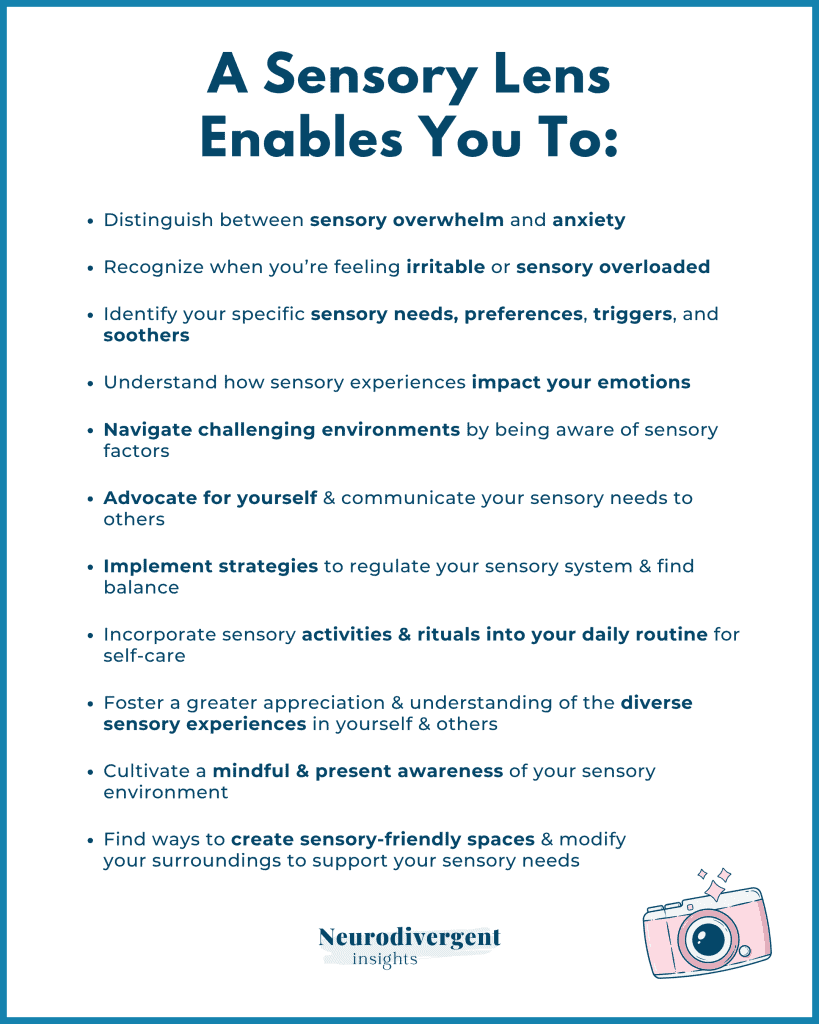
A sensory safety plan helps us understand our sensory needs and prepare for overload before it hits. It starts with developing what I call a sensory lens: seeing our daily lives through the filter of our sensory experiences, and noticing how sensory input shapes our emotions, thoughts, and wellbeing.
With that lens in place, the plan comes together in six steps:
1Get clear about your sensory needs. Masking and disconnection from the body can hide what we actually like and need, so this step can take time.
2Identify your sensory triggers. Writing them down helps us spot patterns and plan ahead.
3Create trigger management strategies. Find your soothers (a hot bath, a walk, pacing, stimming) and the accommodations that help.
4Find sensory-safe spaces. A calm, low-light spot at home or work, or a decompression routine at the end of a big day.
5Make a plan for hard moments. An exit strategy, a code word with a trusted person, or a short script like “I need to leave to regulate.”
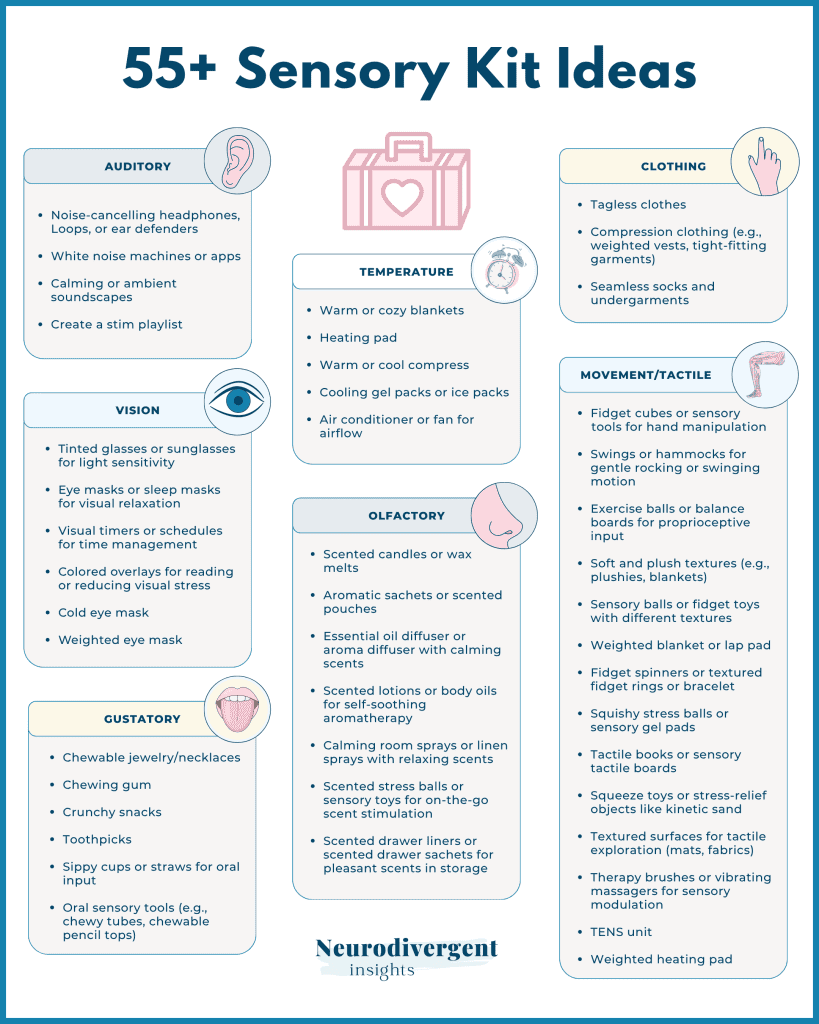
6Pack a sensory kit. One small soothing item for each sense, ready for when you’re out in the world.
I go through each step in detail, with examples, in Sensory Safety Plans: How to Prepare for and Manage Sensory Overload.
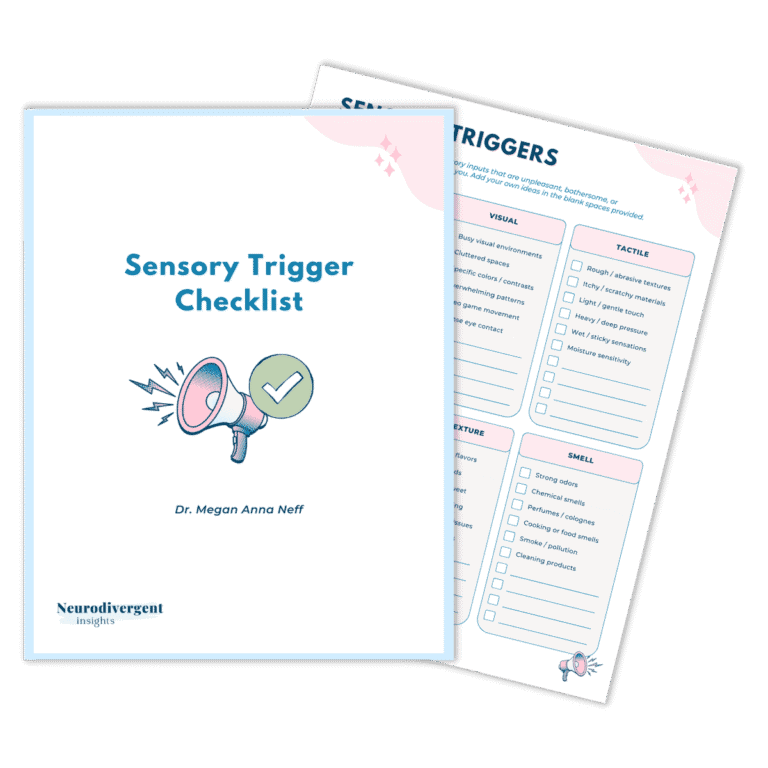
Free Sensory Trigger Checklist
Not sure what sets off your overload? Our free Sensory Trigger Checklist walks you through common triggers across each sense so you can start mapping your own.
Ideas for Your Sensory Kit
This post contains affiliate links. If you buy through them, we may earn a small commission at no extra cost to you. We only link to things we use or trust.
A few starting points for each sense:
Touch: a stress ball, a fidget, or a soft fabric swatch.
Taste: mints, gum, a crunchy snack, or a square of dark chocolate.
Review your kit now and then so it keeps up with what you need.
A Few Closing Thoughts
Sensory overload can deeply affect our emotions. When we see our reactions through a sensory lens, they start to make more sense, and we can respond with more compassion.
A sensory safety plan gives us a way to prepare, rather than just react. It helps us know our needs, spot triggers early, and have support ready for hard moments. For more ways to settle an overwhelmed system, see sensory calming techniques.
If body signals are hard to read in the first place, Autism and Interoception goes deeper, and Where Do Emotions Come From? explains how the brain turns body signals into feelings.
Sensory Overload and Emotions FAQs
Additional Resources
For ongoing insights and updates, subscribe to the Neurodivergent Insights Newsletter. Each Sunday, I send out fresh thoughts and a roundup of the newest resources on topics related to neurodivergence, mental health, and wellness. My most personal writing is reserved for my newsletter, and subscribers also get access to the newsletter vault (12+ PDFs) when they join.
References
Verhulst, I., MacLennan, K., Haffey, A., & Tavassoli, T. (2022). The perceived causal relations between sensory reactivity differences and anxiety symptoms in autistic adults. Autism in Adulthood, 4(3), 183–192. Link





 Stay in the Neurodivergent Loop