
Welcome to the next installment of our series on cultivating sensory safety and well-being. In previous posts, we have discussed the significance of developing a sensory lens and understanding our sensory preferences. Now, we shift our focus to an equally important component of creating a comprehensive sensory safety plan: identifying sensory triggers. While sensory preferences bring us joy and comfort, sensory triggers can lead to feelings of overwhelm and distress. In this blog post, we will delve into the realm of sensory overload and explore the profound impact it can have on our daily lives. Furthermore, we provide a practical checklist of sensory triggers to assist you in identifying your own personal triggers. By gaining insight into these triggers, we can take proactive steps toward creating environments that promote our well-being and mitigate sensory overload.
Table of Contents
Developing a Sensory Lens
Just as we discussed the concept of a sensory lens in our previous blog post, it is equally applicable to understanding and managing sensory triggers. By cultivating awareness and insight into our individual sensory experiences, we can better understand what triggers us and why. This self-awareness empowers us to recognize and respond to sensory triggers more effectively, allowing us to navigate our environments with greater ease and well-being.
When we understand our sensory triggers, we can proactively manage and avoid them. This is why identifying sensory triggers is a vital step in creating a sensory safety plan.
What is Sensory Overload?
Imagine being in a room filled with blaring music, flashing lights, overwhelming chatter, and a cacophony of different smells. Your heart starts racing, your head pounds, and you feel an intense urge to escape from the overwhelming sensory input bombarding your senses. This experience is just a glimpse into what it feels like to have sensory overload.
Sensory overload occurs when our nervous system becomes overwhelmed by the amount or intensity of sensory information it receives. Our senses, such as sight, sound, touch, taste, and smell, are constantly processing the world around us. Usually, our brain filters and organizes this sensory input, allowing us to focus on what is relevant and important.
However, for those of us with sensory processing difficulties, including those with autism, ADHD, or sensory processing disorder, this filtering and organizing process may not work as effectively. As a result, we may experience heightened sensitivity to sensory stimuli and have difficulty regulating our responses.
What Does Sensory Overload Feel Like?
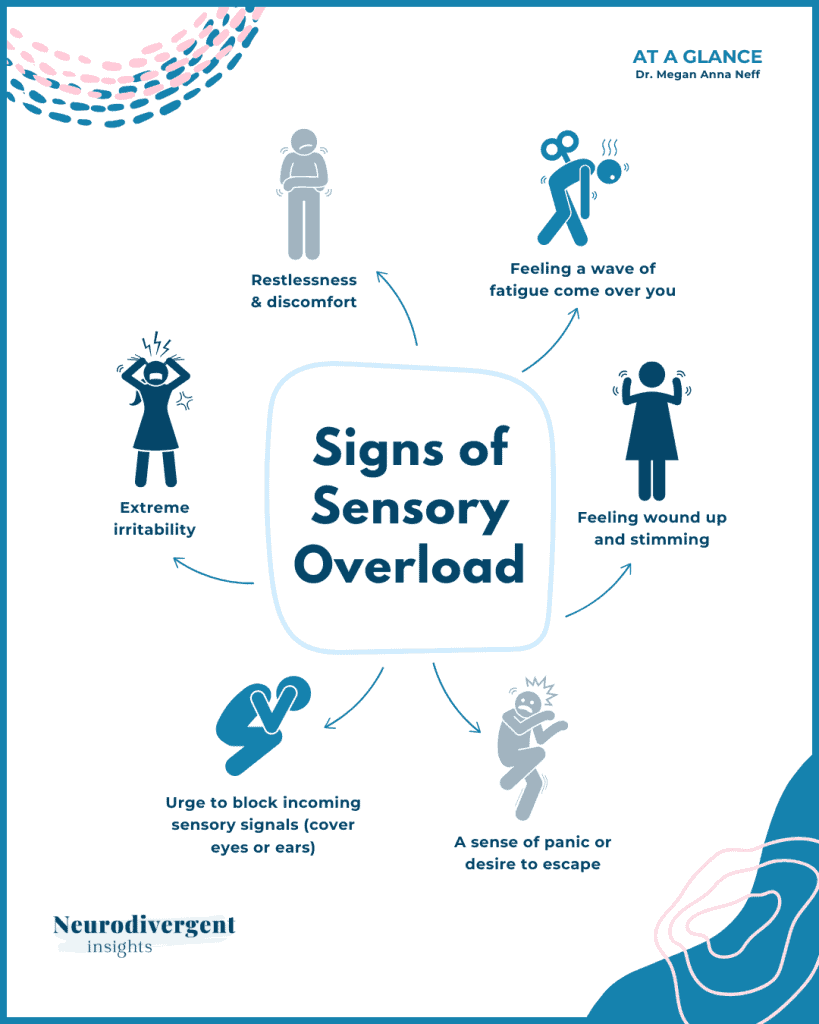
Sensory overload can manifest differently for each person. Some people may be hypersensitive, meaning they are easily overwhelmed by even mild sensory input. Others may be hyposensitive, needing stronger or more intense sensory input to feel regulated. Sensory processing differences lead to various sensory challenges and difficulties in everyday life. Here are some common signs of sensory overload:
Common signs of sensory overload symptoms:
- Emotional distress: Feeling anxious, irritable, or overwhelmed.
- Physical discomfort: Experiencing headaches, fatigue, or a sense of being physically drained.
- Sensory hypersensitivity: Being easily startled or bothered by bright lights, loud sounds, strong smells, or certain textures.
- Difficulty concentrating: Finding it hard to focus or becoming easily distracted.
- Withdrawal or avoidance: Feeling the need to retreat from overwhelming environments or activities. There may be a panicky need to escape the situation.
- Behavioral changes: Displaying signs of agitation, restlessness, or seeking sensory stimulation to cope.
- Dissociation: A person may experience extreme fatigue or depersonalization and derealization (feeling as if like feels less real or like you are in a dream). This low-grade dissociation is the brain’s attempt to block out the overwhelming sensory input.
Understanding sensory overload is crucial for both individuals experiencing it and those around them. By recognizing the signs and triggers, we can take proactive steps to manage and prevent overload episodes. This includes creating sensory-friendly environments, practicing self-care and relaxation techniques, and seeking support from healthcare professionals or occupational therapists specializing in sensory processing difficulties.
Remember, sensory overload is not a choice or a sign of weakness or oversensitivity. It is a real and valid experience that can significantly impact a person’s well-being. Identifying sensory triggers that cause sensory overload is one of the first steps in helping to cultivate sensory safety. Knowing our sensory triggers can help us to be more informed and to create plans to deal with sensory-rich environments. The following section provides a sensory trigger checklist that can be used to help you identify common triggers.
Sensory Trigger Checklist
Using sensory checklists can greatly assist in identifying your sensory triggers. As an Autistic-ADHD person with alexithymia I find checklists helpful because I have a hard time generating examples on my own and find it easier when examples are provided for me. Here, I’ve compiled a sensory trigger checklist encompassing various sensory domains. Take a moment to review the checklist and mark the triggers that resonate with you in each domain. There are likely sensory triggers you experience that aren’t included on this list, treat this as a starting point for self-reflection and exploration.

Sensory Trigger Checklist: Lighting
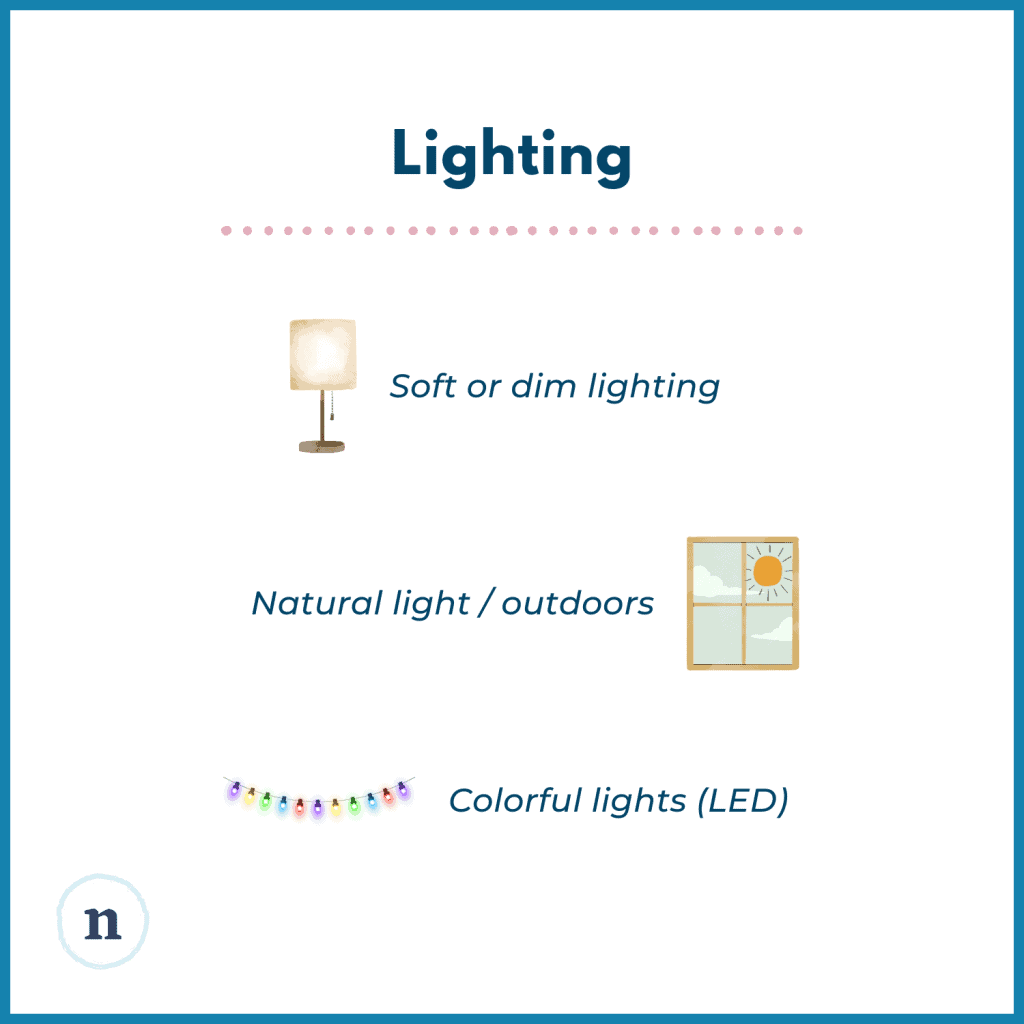
☐ Bright or harsh lighting
☐ Flickering or flashing lights
☐ Overhead fluorescent lighting
☐ Intense or direct sunlight
☐ Rapid changes in lighting
☐ Dim or low lighting
☐ Glare or reflections
☐ Colored or neon lights
☐ Strobe lights or disco lighting
☐ Rapidly moving or flashing visuals
☐ Other: ___________________
Sensory Trigger Checklist: Visual

☐ Busy visual environments
☐ Cluttered environments
☐ Strained/intense eye contact
☐ Specific colors or contrasts
☐ Overwhelming patterns or designs
☐ Certain types of visual media (e.g., fast-paced movies or video games)
☐ Other: ___________________
Sensory Trigger Checklist: Temperature

☐ Extreme heat
☐ Extreme cold
☐ Rapid changes in temperature
☐ Stuffy or stagnant air
☐ Drafts or breezes
☐ Humidity or dryness
☐ Sweating
☐ Overheating or being bundled up
☐ Other: ___________________
Sensory Trigger Checklist: Tactile

☐ Rough or abrasive textures
☐ Itchy or scratchy materials
☐ Light or gentle touch
☐ Heavy or deep pressure
☐ Wet or sticky sensations
☐ Moisture
☐ Sensitivity to temperature (e.g., hot or cold objects)
☐ Other: ___________________
Sensory Trigger Checklist: Gustatory

☐ Strong or overpowering flavors
☐ Spicy or hot foods
☐ Bitter tastes
☐ Sour tastes
☐ Sweet tastes
☐ Food touching sensitivities
☐ Food temperature issues
☐ Unfamiliar or new foods
☐ Textural experiences (e.g., mushy, yogurt, avocado)
☐ Sensitivities or allergies to certain ingredients
☐ Other: ___________________
Sensory Trigger Checklist: Sound

☐ Loud noises
☐ Sudden bursts of sound
☐ Background noise or chatter
☐ High-pitched or piercing sounds
☐ Echoes or reverberations
☐ Crowded or busy environments
☐ Certain types of music or specific instruments
☐ Repetitive or constant noises (pen clicking)
☐ Other: ___________________
Sensory Trigger Checklist: Smell

☐ Strong or overpowering odors
☐ Chemical smells
☐ Perfumes or colognes
☐ Certain foods or cooking smells
☐ Smoke or pollution
☐ Cleaning products
☐ Floral or fragrant scents
☐ Other: ___________________
Sensory Trigger Checklist: Environment

☐ Crowded or busy spaces
☐ Confined environments
☐ Overly cluttered or disorganized environments
☐ Strong or overwhelming scents in the environment
☐ Harsh or uncomfortable seating surfaces
☐ Unpredictable or rapidly changing environments
☐ Other: ___________________
Sensory Trigger Checklist: People

☐ Loud or intrusive voices
☐ Prolonged eye contact
☐ Personal space invasion
☐ Physical touch or proximity from others
☐ Unpredictable or unexpected movements from others
☐ Overstimulating social interactions or group settings
☐ Specific facial expressions or gestures
☐ Social demands and small talk
☐ Other: ___________________
Sensory Trigger Checklist: Clothing

☐ Rough or scratchy fabrics
☐ Tags or labels on clothing
☐ Tight or constricting clothing
☐ Clothing that is too tight around specific body parts
☐ Uncomfortable or restrictive footwear
☐ Clothing that is too loose or baggy
☐ Specific textures, patterns, or colors that bother you
☐ Sensitivity to certain types of fabric (e.g., wool, lace)
☐ Other: ___________________
Sensory Trigger Checklist: Movement

☐ Fast or erratic movements
☐ Being in crowds or confined spaces
☐ Rapid changes in motion or direction
☐ Intense or excessive physical activity
☐ Certain types of transportation (elevators, escalators, or cars)
☐ Spinning or rotating movements
☐ Swinging
☐ Other: ___________________
Conclusion
In conclusion, understanding and managing our sensory triggers is a vital step in cultivating sensory safety and well-being. By developing a comprehensive awareness of our preferences and triggers across different sensory domains, we gain valuable insights into creating environments that support our comfort and reduce overwhelming sensations. Armed with this knowledge, we can proactively navigate our sensory experiences, make informed choices, and advocate for our individual needs.
Exploring and managing sensory triggers is a deeply personal and often ongoing process. It requires patience, self-compassion, and a willingness to embrace the unique aspects of our sensory profiles. Progress is often made through small steps and self-discovery.
For further resources and support, I encourage you to explore the initial blog post in this series, which provides insights into the importance of sensory regulation. Additionally, you can delve into the blog post that explores the relationship between sensory regulation and emotions. If you are seeking additional tools, consider my sensory safety workbook, designed to guide you in creating a personalized sensory safety plan.

Follow-Up Resources
Stay in the Neurodivergent Loop
For ongoing insights and updates, subscribe to the Neurodivergent Insights Newsletter. Each Sunday, I send out fresh thoughts and a roundup of the newest resources on topics related to neurodivergence, mental health, and wellness. My most personal writing is reserved for my newsletter, and subscribers also get access to the newsletter vault (12+ PDFs) when they join.
Dr. Megan Anna Neff
More Like This...
Previous Graphics