 Autistic burnout and depression can look a lot alike. Both can bring exhaustion, brain fog, a pull away from people, and a deep sense of emptiness. It isn’t always clear which one we’re experiencing (and sometimes it’s both). Telling them apart is important, though, because some of what helps with depression can make burnout worse. Encouragement to do more and reconnect can help with depression, but in burnout it can drain what little energy we have left. Social withdrawal is a good example of this: in depression it’s often a red flag, but in burnout, pulling back can be part of how we recover.
When you come to an autism discovery late in life, it is often followed by a season of a thousand “ah-ha” moments. It’s like all the unanswered questions of your life finally become answerable. It can be a powerful and intense experience.
For me, one of those powerful ah-ha moments was around the concept of Autistic burnout. I have struggled with fatigue my whole life, most intensely in the aftermath of childbirth/having young children. I’ve been diagnosed with depression a handful of times. And yes, I was depressed, and it was good to be treated for depression. However, each season of depression followed a particularly intense period of pushing, masking, and performing.
If I had had an accurate understanding of Autistic burnout, I believe my episodes of depression would have resolved more quickly. It is important that we increase awareness of Autistic burnout within the mental health world because it appears to be one pathway to depression and suicidality for Autistic people.
What I now realize is that each season of depression was instigated by a season of Autistic burnout.
The Connection Between Autistic Burnout and Depression
While Autistic burnout is distinct from depression, it often leads to depression; it seems to be its own pathway to Autistic depression and suicidality. So it is not hyperbolic to say that understanding the difference and treating Autistic burnout can save lives. I realize that sounds dramatic, but that’s kind of the point; this is important for clinicians to understand.
So, if you’re a clinician reading this, consider ways to sharpen your eye so you can spot Autistic burnout. If you love an Autistic person, sharpen your eye and find ways to reduce their overall social/cognitive load when they start to burn out. And if you are Autistic, take care of yourself, learn some of the strategies that will help prevent Autistic burnout, and know your triggers and early signs of burnout.
If you’re in burnout and having thoughts of suicide or of not wanting to exist, please reach out for support. You don’t need to know whether it’s burnout or depression first. Our crisis resources page lists neurodivergent-affirming places to start as well as a free neurodivergent-adapted safety plan.
Autistic Burnout Overview
Autistic burnout became widely talked about because Autistic self-advocates shared their internal experiences of autism. In 2020, Raymaker and colleagues published the first formal study of Autistic burnout. Much of what follows still comes from their research, along with some newer studies.
Since 2020 the research has grown quickly. A 2025 systematic review pulled together 48 studies with roughly 4,000 Autistic participants, and the same themes came up across many of them: exhaustion, a loss of abilities, sensory and social overwhelm, and camouflaging.
Because Autistic burnout is distinct from occupational burnout and from depression, there is a clear need for specific training and education. Raymaker et al. suggest that suicide prevention programs include education on Autistic burnout, and that therapists learn to recognize it. They also offered a working definition of Autistic burnout:
Definition: Autistic burnout is a syndrome conceptualized as resulting from chronic life stress and a mismatch of expectations and abilities without adequate supports. It is characterized by pervasive, long-term (typically 3+ months) exhaustion, loss of function, and reduced tolerance to stimulus. (Raymaker et al., 2020).
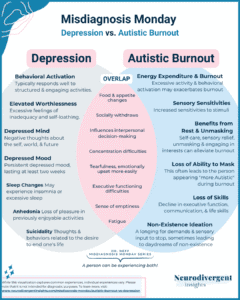
Are You Depressed Or Is It Autistic Burnout?
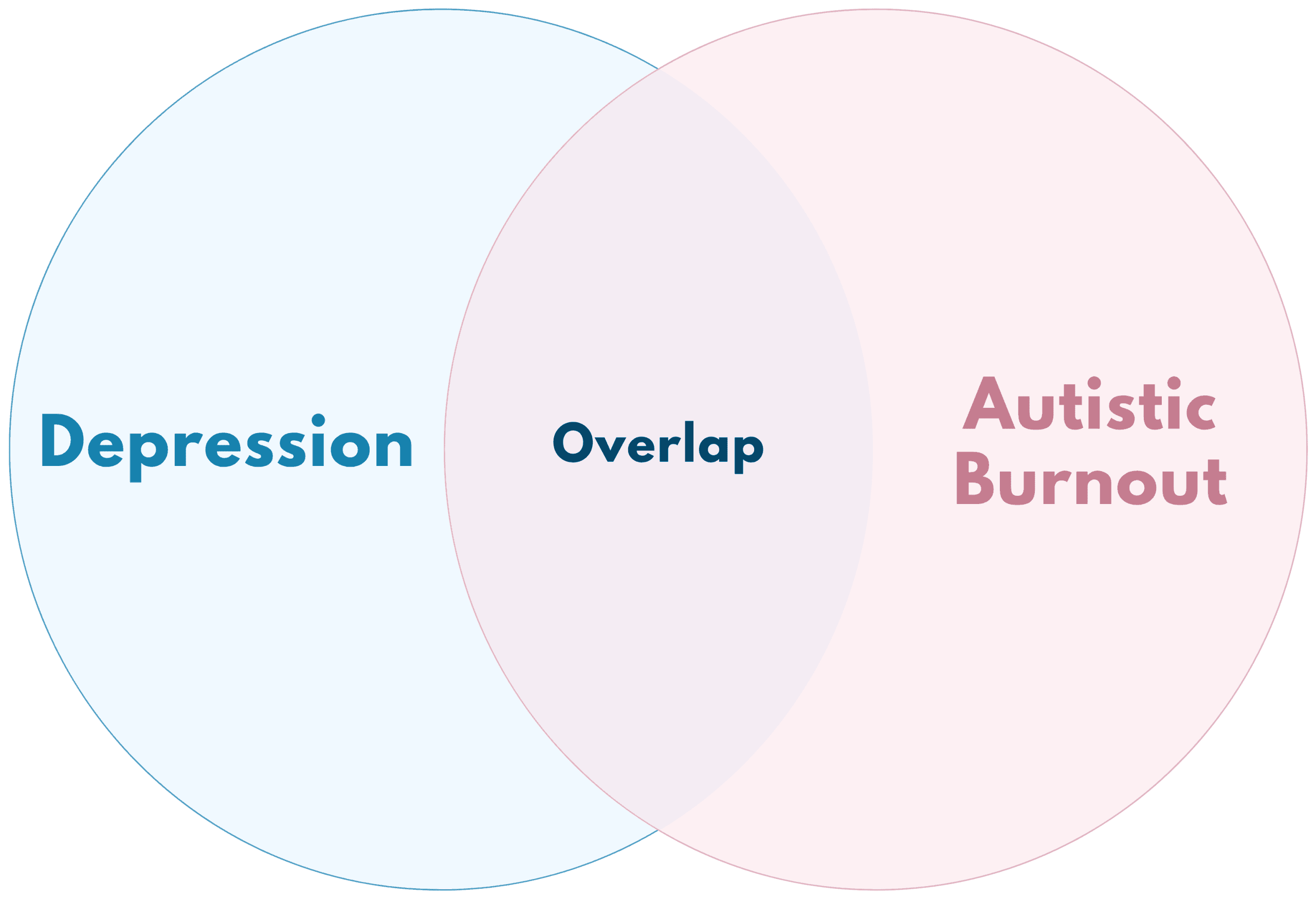
A question I’ve often pondered, and one that comes up a lot in the Autistic community, is how to tell depression and Autistic burnout apart. Throughout my life, I’ve sometimes found myself in what I believed was depression, only to realize later that it was Autistic burnout that eventually led to depression. It’s not surprising that this misdiagnosis happens, as the symptoms can look similar. Here’s how they tend to differ, and where they overlap:
In depression…

Withdrawal is often a red flag, pulling away from low self-worth and loss of pleasure.
A deep loss of interest (anhedonia) is a key sign.
Emotions may feel numb or extra sensitive.
Appetite and sleep often change in a big way.
In Autistic burnout…

Withdrawal is often adaptive, stepping back from sensory and social load to recover.
Interests are still there, but it’s hard to engage with them.
Sensory shutdowns and meltdowns come more often.
We lean more on safe foods, since eating becomes a high-sensory activity.
- Influences on Interpersonal Decision-Making: Both depression and burnout can result in social withdrawal. In depression, this may stem from low self-esteem, a sense of worthlessness and a loss of pleasure, while in burnout, the overwhelming sensory and social demands may feel insurmountable. The decreased ability to mask during burnout can also influence social interactions and decisions.
- Emotional Sensitivity: In depression, emotional vulnerability might show up as numbness or heightened sensitivity. During burnout, our already sensitive nervous systems are pushed to the limit, leading to more frequent sensory shutdowns and meltdowns.
- Food and Appetite Changes: Appetite changes are a hallmark of depression. In burnout, there’s often a greater reliance on safe foods, and sensory sensitivities can further alter appetite, as eating becomes a high-sensory activity.
- Social Withdrawal: While social withdrawal is a symptom of depression, Autistic people also tend to withdraw more than usual in burnout. However, this withdrawal can actually be adaptive, helping to manage overwhelming sensory input.
- Executive Functioning Difficulties: Tied to concentration challenges, this symptom reflects the brain operating more sluggishly.
- Fatigue and Loss of Motivation: The overwhelming tiredness and lack of drive are common in both, making even getting out of bed feel like too much some days.
- Sense of Emptiness: Depression is often characterized by a deep sense of emptiness. In burnout, the inability to engage with interests can lead to a similar feeling, especially when those interests are closely linked to one’s identity.
Distinguishing between Autistic burnout and depression is hard, and it matters. Raymaker et al.’s research points to two key differences: a deep loss of interest (anhedonia) and significant sleep changes, both more closely associated with depression than with burnout.
The nuanced use of withdrawal in these conditions also makes a difference. Whether withdrawal is adaptive or maladaptive can be a helpful clue in telling depression and Autistic burnout apart.
Recognizing the Nuances of Social Withdrawal: Adaptive vs. Maladaptive
When it comes to depression, withdrawal often serves as a red flag, signaling that the depression is deepening and the person is isolating. In depression, a person may withdraw due to a lack of interest, pleasure, and motivation. This type of withdrawal can lead to a loss of meaning and purpose, and deepen the depression.
As a result, mental health professionals tend to focus on addressing avoidance behaviors. Understandably, when we witness someone withdrawing, it can raise concerns, as it often signifies a deeper descent into unwellness.
However, Autistic burnout adds a layer that is frequently misunderstood by those seeking treatment and those around them. This is the concept of what I refer to as adaptive vs. maladaptive (helpful or unhelpful) withdrawal.
Understanding Social Withdrawal: A Functional Approach in Autistic Burnout
For many Autistic adults, managing energy is a daily reality. In this context, social and sensory withdrawal is not merely avoidance; it’s a strategic coping mechanism. In one study of more than 1,000 online posts by Autistic adults, people described pulling back from social and sensory input as part of how they recovered.
Each day starts with a limited number of energy units, with every interaction and sensory experience costing a bit of our battery’s power. The cost for Autistic people can be much higher than for neurotypical people, making strategic withdrawal essential. It’s a way to conserve energy for meaningful activities and interactions that bring joy and a sense of belonging.
Yet, this form of withdrawal is often misunderstood. Seen by many as avoidance or disengagement, it is actually a functional form of self-care, a way of knowing and respecting one’s limits. Family, friends, and therapists who push us to be more social may not fully grasp the sensory and emotional toll of that social interaction. They miss that this withdrawal is about preservation and recovery.
In my experience, finding a balance is key. It’s important to stay connected to energizing and fulfilling activities, hobbies, causes, or nurturing relationships, and to know when to step back, to recharge, and to protect our energy.
Understanding social withdrawal in the context of Autistic burnout is key for untangling depression vs. Autistic burnout. In the context of Autistic burnout, social withdrawal is often a strategic, adaptive response to the challenges faced by Autistic people.
Can Autistic Burnout Cause Depression?
It’s possible for Autistic burnout to lead to depression, and for a person to experience both at once. During burnout, motivation drops, making it hard to engage in activities that usually bring meaning, joy, pleasure, and interest. This lack of engagement is a known precursor to depression.
The difficulties in accomplishing basic life tasks, a common feature of Autistic burnout, can trigger a spiral of negative self-perception. Feelings of worthlessness or inadequacy often come with this struggle, which can leave a person more vulnerable to depression. This lines up with a 2023 study of 141 Autistic adults, which found that more severe burnout went along with more masking and more depression.
Recognizing and addressing Autistic burnout early is therefore important. Timely support can ease burnout and reduce the likelihood of it turning into severe depression.
When we’re supporting someone in burnout, it helps to keep the depression risk in view too. That might mean we prioritize sensory safety, engage more deeply with Autistic culture, make time for personal interests, and plan a gradual re-engagement in meaningful connections and activities.
Characteristics of Autistic Burnout
Autistic burnout, as defined, has three primary characteristics:
First, there’s that pervasive exhaustion, a fatigue that seeps into every aspect of life.
Second, there’s the heightened sensitivity to sensory input, making the world feel even more overwhelming.
Finally, there’s the unsettling loss of skills, something that can be quite disorienting for those experiencing it. (e.g., reduced executive functioning such as thinking, remembering, creating and executing plans, performing basic self-care skills, and activities in daily living).
Other Symptoms: In addition to intense emotional, physical, and mental exhaustion, burnout can also lead to difficulty managing emotions and more meltdowns or intense anxiety. It can also increase Autistic traits such as repetitive behaviors, reduced tolerance for sensory sensitivities, and increased difficulty adapting to change.
Autistic burnout isn’t a fleeting phase. In Raymaker and colleagues’ definition, it typically sticks around for three months or longer, though that number comes from a research definition and isn’t a diagnostic cutoff.
Causes of Autistic Burnout
Autistic burnout doesn’t come out of nowhere; it builds up as a result of continued strain and stress in navigating a world primarily designed for allistic (non-autistic) people. These are some of the main contributors:
The Stress of Navigating a Neurotypical World: For many Autistic people, the constant effort to adapt to allistic expectations is a major factor in burnout. This is particularly true for those who frequently use camouflaging and masking in social settings.
Sensory Overstimulation: Continual bombardment with overwhelming and exhausting sensory stimuli.
Executive Functioning Demands: The ongoing need for high levels of executive functioning can lead to a lot of fatigue.
Co-occurring Conditions: The presence of other mental health conditions or health issues can exacerbate the effects of burnout.
Life Transitions and Stressful Events: Major life changes such as puberty, transitioning into adulthood, or experiencing menopause, can act as catalysts.
Incomplete Stress Cycles: Continuous nervous system activation without adequate resolution can contribute to burnout (an idea from Emily and Amelia Nagoski’s work on burnout).
Alexithymia and Interoception Challenges: Difficulties understanding and processing emotions and internal bodily sensations can be an additional stressor.
Autistic burnout is often seen as a side effect of the intense effort to meet neurotypical expectations, combined with sensory overstimulation and high executive functioning demands. Most of the research so far has involved Autistic adults who could take part in written interviews and surveys, many of whom mask a lot. We know much less about burnout for Autistic people with higher support needs.
The Burnout Equation: A Framework by Raymaker et al.
Raymaker et al. also offered a helpful framework for understanding Autistic burnout. They describe it as a consequence of life stressors and barriers to support piling up until they outpace a person’s coping abilities.
When the expectations placed upon us exceed our abilities (and the support available), we find ourselves in an unsustainable situation, leading to burnout. This rings particularly true for those of us in the Autistic community who navigate neurotypical standards and environments through masking, whether it’s in our personal lives, workplaces, or educational settings.
According to Raymaker’s research, the most common stressors contributing to this imbalance include masking, suppressing Autistic traits, pretending to be allistic, and the constant pressure of social expectations. One participant in their study described it vividly:
“The metaphor I use is that long-term camouflaging and masking leaves behind a kind of psychic plaque in the mental and emotional arteries. Like the buildup of physical plaque over time can result in heart attack or stroke, the buildup of this psychic plaque over time can result in burnout.”
Many participants had trouble getting accommodations and resources. A big stressor was the tendency of others to dismiss or “gaslight” the struggles of Autistic people as unreal, largely due to the invisibility of their efforts to conform. This dismissal adds to the overall stress and burden, speeding up burnout.
Autistic Burnout Triggers
While there are many chronic causes of Autistic burnout, it is helpful to identify triggers that can cause burnout, and it is particularly helpful to know your specific triggers. Some people have mild burnout every time their schedule changes or perhaps after a season of high social demand.
Knowing your specific triggers for burnout can help with burnout prevention and help you better understand your needs.
Autistic Burnout Recovery
Recovery depends on the person and the specific causes. For a prolonged season of burnout, a person may need to significantly restructure their lifestyle and remove themselves from the causes of their burnout. In the same study of online posts, many Autistic adults described repeated rounds of burnout as wearing down their resilience over time.
Dr. Neff’s Tips for Autistic Burnout Recovery
- Rest. Try to focus on rest that feels restorative. Binge-watching television may feel restful but is likely not restorative. Reading or listening to a book related to a special interest, engaging in activities that you experience as soothing to your sensory system are examples of rest-providing activities.
- Find alternative ways to express yourself. Many Autistic people have alternative ways of expressing emotions. Writing, art, making a collage, writing a poem, or finding music that matches your mood are just a few examples of alternative ways of expressing yourself. And, if you feel empty and if there isn’t anything to express, that’s okay, too.
- Don’t let the routine go. In burnout, we’re tempted to lose the routine altogether. However, routines are soothing to our nervous systems and minds because they tell us what to expect. The routine can be: “wake up, make coffee and rest on the couch for two hours while reading;” it doesn’t have to be rigorous, but having a few anchor points during the day will be helpful.
- Engage in activities that are soothing to your senses. Gentle movement is likely helpful; find gentle and soothing ways to move your body.
- Nature is restorative for many of us. If you have access, take time to go and sit by a lake, the ocean, a beautiful meadow, or simply listen to nature sounds.
Autistic Burnout Recovery Tips
Acceptance and access to Social Support: individual and community support, peer support, attending to Autistic needs, unmasking.
Self-Advocacy and Health: Focusing on a healthy lifestyle, early recognition, and receiving an autism diagnosis
Self-Knowledge: Understanding patterns and triggers and making strategic decisions to be preventative.
Engagement with the Autistic community: Engagement with the Autistic community can help a person name and validate their experience of burnout.
Autistic Burnout Prevention
Prevention is the best strategy for Autistic burnout. Self-knowledge is key for this: knowing your triggers and identifying early signs of burnout. For some people, early signs will be increased sensitivity to sensory input; for others, it will be depersonalization and detachment or vision changes such as tunnel vision.
Such signals can inform a person that it’s time to remove themselves from the situation and arrange some sensory detox and downtime. Self-knowledge can also help a person self-advocate, seek out appropriate supports and accommodations, and plan travel and daily rhythms to build in sensory detox/downtime.
Autistic Burnout vs. Depression FAQs
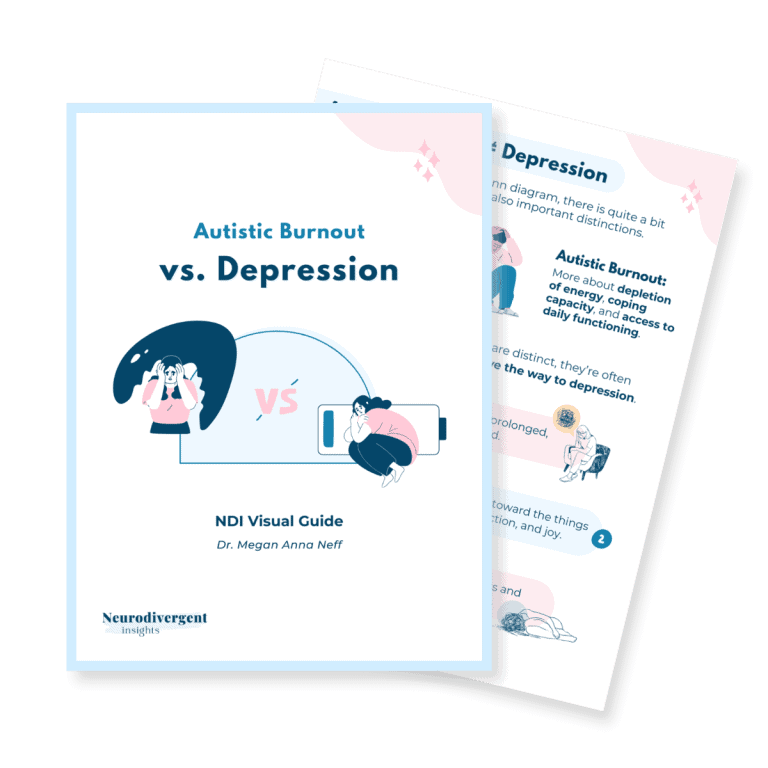
Visual Guide
Prefer to engage or share this information visually? Our free NDI Visual Guides are abbreviated, visual-forward highlights of our longer articles. This one, Autistic Burnout vs. Depression, walks through where the two overlap and how they differ.
Additional Resources
For ongoing insights and updates, subscribe to the Neurodivergent Insights Newsletter. Each Sunday, I send out fresh thoughts and a roundup of the newest resources on topics related to neurodivergence, mental health, and wellness. My most personal writing is reserved for my newsletter, and subscribers also get access to the newsletter vault (12+ PDFs) when they join.
References
Ali, D., Bougoure, M., Cooper, B., Quinton, A. M. G., Tan, D., Brett, J., Mandy, W., Maybery, M., Magiati, I., & Happé, F. (2025). Burnout as experienced by autistic people: A systematic review. Clinical Psychology Review.
Arnold, S. R., Higgins, J. M., Weise, J., Desai, A., Pellicano, E., & Trollor, J. N. (2023). Towards the measurement of autistic burnout. Autism.
Mantzalas, J., Richdale, A. L., & Dissanayake, C. (2022). A conceptual model of risk and protective factors for autistic burnout. Autism Research.
Mantzalas, J., Richdale, A. L., Adikari, A., Lowe, J., & Dissanayake, C. (2022). What is autistic burnout? A thematic analysis of posts on two online platforms. Autism in Adulthood.
Raymaker, D. M., Teo, A. R., Steckler, N. A., Lentz, B., Scharer, M., Delos Santos, A., Kapp, S. K., Hunter, M., Joyce, A., & Nicolaidis, C. (2020). “Having all of your internal resources exhausted beyond measure and being left with no clean-up crew”: Defining autistic burnout. Autism in Adulthood.

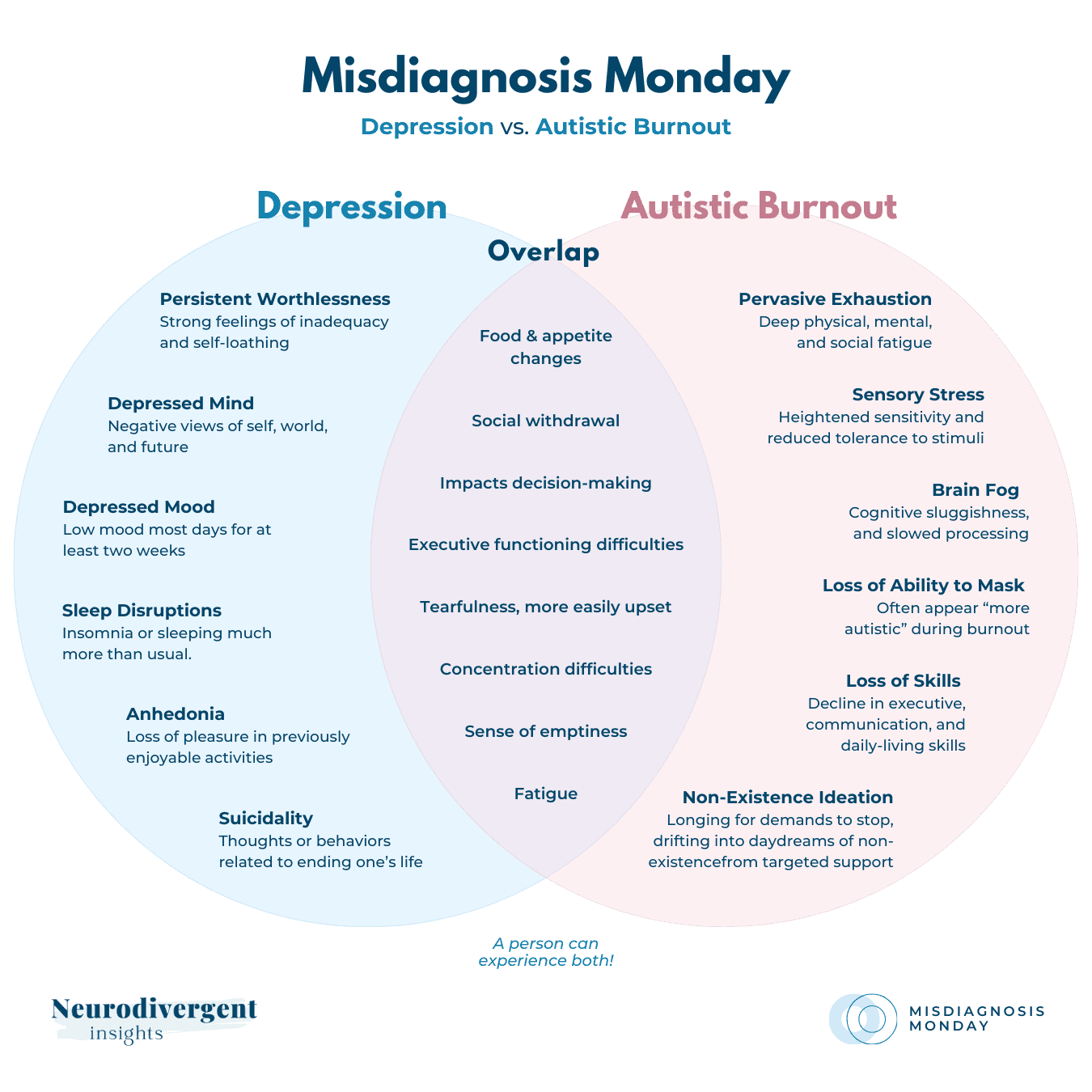
 In both: brain fog, executive functioning difficulties, fatigue, and low motivation



 Stay in the Neurodivergent Loop