We’re rounding the corner into the holiday season
For many, this time of year means navigating the class of sensory needs and values, practicing boundaries, and honouring limits. But it also means your inbox is likely flooding with Black Friday and Cyber Monday deals. I’ve been thinking about this since I have a holiday offer I want to share, but I also feel a lot of ambivalence, knowing what I do, about how holidays hit neurodivergent brains.
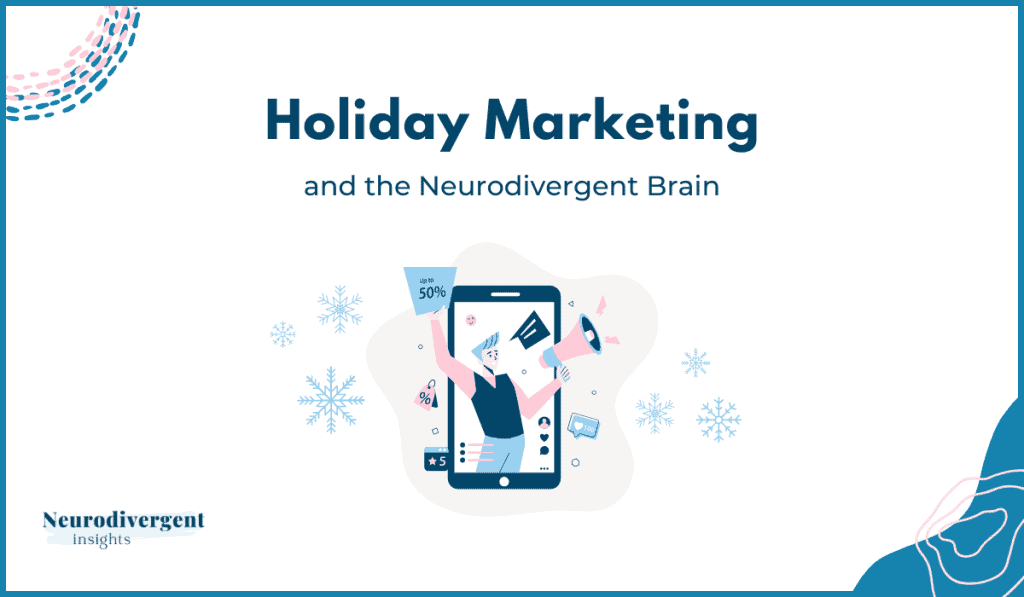
In past years, I’ve talked about navigating holiday gatherings as a neurodivergent person, but today I want to explore another side of this season: consumerism. Specifically, how marketers tap into our psychology — and why this disproportionately impacts ADHD and otherwise neurodivergent brains and what we can do about it. And while I do have a holiday offering, my intent is to offer it with caution, advice, and non-urgency. More on that once we’ve unpacked what’s going on at the intersection of holidays, neurodivergence, and marketing.
Table of Contents
Why It’s Harder for Neurodivergent Brains
Marketers are backed by research to understand your psychology on a deep level to tap directly into our psychological vulnerabilities. Their strategies are designed to trigger specific emotions, behaviors, and desires — making it harder to resist clicking “buy now.” These tactics are powerful for everyone but can hit even harder for neurodivergent people, whose brains tend to be more sensitive to impulsivity, emotional appeals, and decision fatigue. Here’s how it works:
How Marketers Tap Into Our Psychology
Urgency & Scarcity
Phrases like “Only 24 hours left!” or “Limited stock available!” aren’t just catchy — they’re leveraging urgency and scarcity bias, a psychological principle that makes us perceive something as more valuable when it feels rare or time-sensitive. This triggers FOMO (fear of missing out), which can create that sense of urgency for us to act before it’s “too late.”
For neurodivergent brains, which often struggle with impulsivity and decision-fatigue, the sense of urgency can activate impulsive purchases. The adrenaline spike we get from scarcity messaging — combined with our desire to avoid regret — pushes us to click “buy now” before we’ve had time to consider whether we truly need or want the item (let alone can afford the item).
Social Comparison
Ads are filled with aspirational imagery — beautiful people, curated lifestyles, and picture-perfect homes — designed to make us compare ourselves to others. This taps directly into the psychological concept of social comparison theory, which suggests we evaluate our own worth based on how we perceive others.
For many of us, this leads to upward social comparison, where we compare ourselves to people we think are “better off” or more successful. Research shows that this type of comparison can fuel anxiety, depression, and negative self-talk, which is one reason why heavy social media use is often linked to lower self-esteem.
For neurodivergent people, this can hit even harder. Many of us have grown up feeling “less than,” making us particularly vulnerable to products that promise the illusion of belonging, self-improvement, or social status. These ads don’t just sell products — they sell the idea that ***you’ll be more like this idealized person if you buy x, y, or z.***This subtle but powerful messaging can create unconscious desires that are the hardest to resist.
Emotional Appeals
Marketers know that we don’t make decisions based on logic alone — our emotions often drive the bus. That’s why they use emotional appeals to make us feel something before we even think.
Storytelling is one of the most powerful tools in their arsenal, designed to evoke joy, nostalgia, or even fear. Ads might show a family joyfully exchanging gifts to sell holiday happiness, or use nostalgia to connect a product to fond memories of childhood.
For neurodivergent people, who often experience heightened emotional sensitivity, these appeals can feel even more compelling. We connect with the story on a visceral level, and before we know it, we’ve made an emotional decision rather than a rational one.
Ease of Access
One-click shopping, auto-payments, and same-day delivery have revolutionized how we shop — but they’ve also removed the “friction” that used to slow us down. Psychologically, friction is anything that gives us a moment to pause before taking action. Without it, we’re more likely to act on impulse, skipping the reflective step of asking, Do I really need this?
For neurodivergent people, ease of access can amplify impulsive buying behaviors. The dopamine hit we get from instant gratification — knowing that the item will be on our doorstep tomorrow — is hard to resist. What once required effort and consideration now happens with a single tap, making it easier than ever to accumulate things we don’t truly need.
What Can We Do? Slowing Down the Consumption Cycle
If you feel overwhelmed or regret purchases you’ve made during this season, you’re not alone. Here are a few tips to navigate holiday marketing (or marketing in general) more consciously:
Identify the Hook: When you’re tempted by an ad, pause and ask: What tactic are they using? Is it scarcity? Novelty? Social comparison? This helps you pinpoint what’s driving your desire and then from there it gives you a beat to decide if the product actually aligns with your actual needs.
The 24-Hour Rule: Put the item in your cart, then step away for 24 hours. If you still want it after the initial emotional pull has passed, it might be worth considering.
Real Self vs. Ideal Self: Before buying, ask yourself: Is this something I actually want or need, or is it for an idealized version of myself? My cabinets are filled with reminders of my “ideal self” — vitamins and supplements I thought my ideal self would be consistent in taking that would magically improve my energy and health, workout equipment I barely touched, and digital courses I never opened.
Make It Harder: If you’re prone to impulse purchases, try adding friction. This can look like doing things like removing tools like Apple Pay or auto-fill credit cards to create a small buffer of friction before buying. If you have to actually go out of your way to find your credit card and input the details into the website, this additional friction gives your brain time to pause. And, as many of us know, for the ADHD brain – finding the credit card can be a lot of friction! So it might give you quite a bit of time to consider if this is something that aligns with your needs and values.
A Few Final Thoughts on Consumerism
While modern shopping conveniences can make life easier in many ways, they also make it harder to slow down and reflect. Marketing often sells us a fantasy: that more is always better, faster is the ultimate goal, and newness will fill the gaps we feel in our lives.
The truth is, our things meant something because we chose them with intention. When we slow down enough to notice what we value and choose from that place, we reclaim some of the power that marketing tries to tug away from us.
This week, as our inboxes fill up with rapid-fire deals designed to activate urgency and spark dopamine, let’s practice slowing down. We can choose to focus on what aligns with our real needs and values and leave the rest behind.
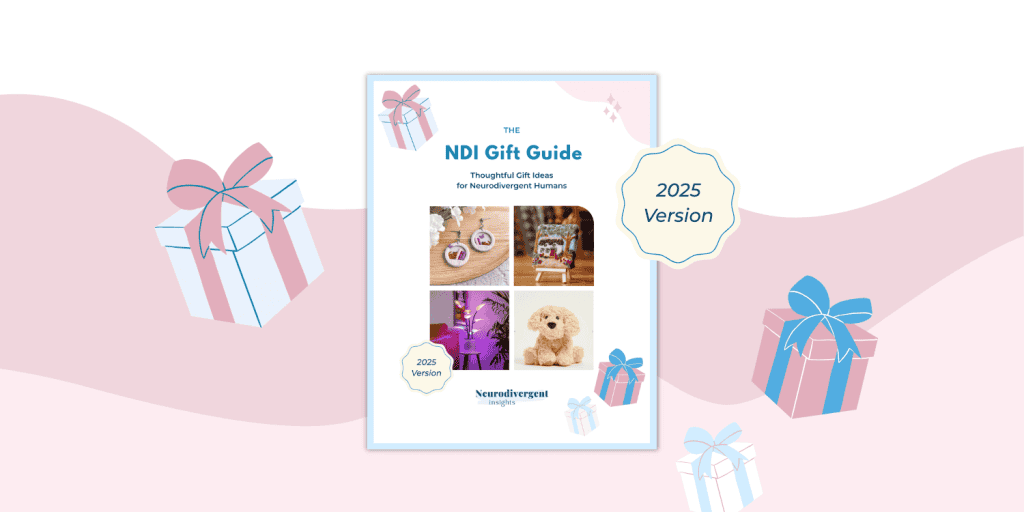
Neurodivergent Gift Guide (Free)
We’ve just updated our annual neurodivergent gift guide! Inside, you’ll find sensory supports, fidgets, creative kits, practical tools, and most importantly, some neurodivergent-owned businesses we’re excited to highlight .
🗞️ Stay in the Neurodivergent Loop
For ongoing insights and updates, subscribe to the Neurodivergent Insights Newsletter. Each Sunday, I send out fresh thoughts and a roundup of the newest resources on topics related to neurodivergence, mental health, and wellness. My most personal writing is reserved for my newsletter, and subscribers also get access to the newsletter vault (12+ PDFs) when they join.