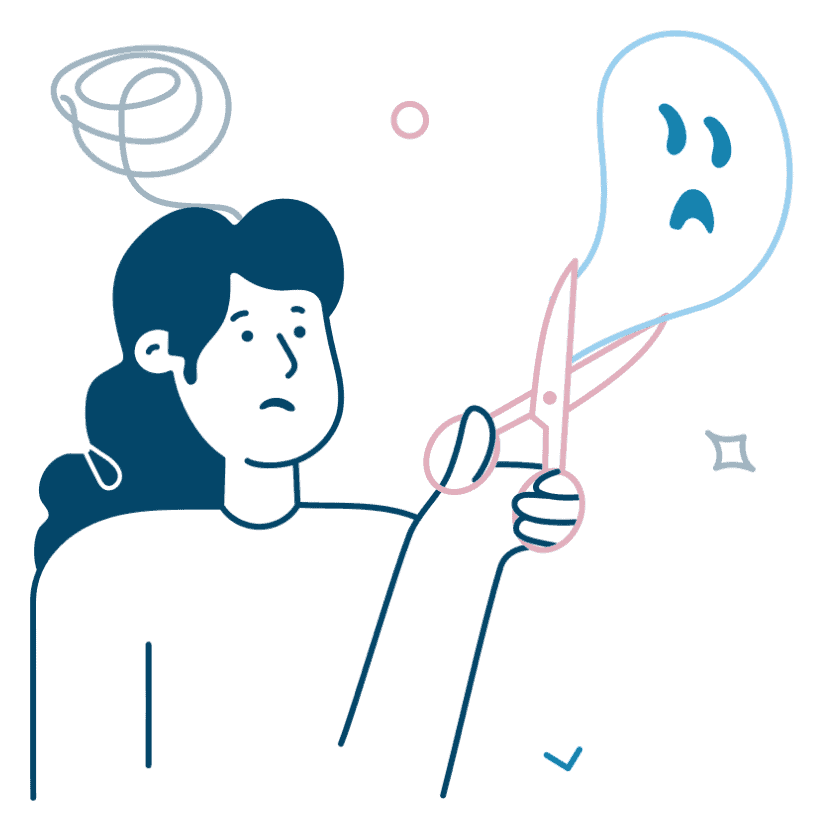
Rejection Sensitive Dysphoria (RSD) is an intense emotional reaction to rejection or criticism, and it often comes with ADHD. It can shape how we feel, how we show up in relationships, and how we handle work. Psychiatrist William Dodson has written that about a third of his adult patients with ADHD describe RSD as the most impairing part of their ADHD.
In my work as a neurodivergent clinical psychologist, I saw firsthand the toll RSD can take on our lives. Any good ADHD support plan needs to make room for it.
While I wish I could tell you there is a “five-step process to getting rid of RSD”, it’s just not the case. There is no quick fix to RSD. We live with more neurological vulnerability and, as such, will likely always live with RSD vulnerability. However, I do believe we can learn practices that help us manage it better and make it so that RSD has less power over our decisions and our lives.
What is Rejection Sensitive Dysphoria?
Rejection Sensitive Dysphoria (RSD) is an intense emotional response characterized by extreme sensitivity to perceived criticism or rejection. RSD often manifests as overwhelming emotions, anxiety, and self-doubt in response to social or professional situations involving judgment or evaluation.
RSD can trigger a cascade of negative thoughts and feelings, leading to self-criticism, low self-esteem, and strained relationships.
Do I Have Rejection Sensitive Dysphoria?
How to Deal with Rejection Sensitive Dysphoria
Rejection Sensitive Dysphoria (RSD) can create significant challenges. This section covers practical tools for working with RSD.
Both medication and behavioral supports can help with RSD. This article focuses mostly on behavioral strategies, which come from psychotherapy and are about changing how we respond to our thoughts and feelings. There’s a short note on medication at the end.
Any decisions about medication are best made with your medical team.
For some people, medication makes behavioral strategies easier to use. Others prefer to work with behavioral strategies alone. Here are the ones I find most helpful.
Working with the Story
Catch the Narrative
When we encounter rejection, our minds often weave negative stories that lead to rumination and self-blame. To break this pattern, practice “catching the narrative” by recognizing it as it unfolds. Take a moment to breathe and observe your thoughts and feelings without judgment. Give these narratives a name to distance yourself from them; for example, you might say the “Rejection script” or the “Bad Friend” script is playing right now. Over time, you’ll become better at identifying and disrupting these patterns. Naming the story makes it easier to see it as a story, not the truth.
Put It in Writing
Writing down heavy thoughts can be surprisingly soothing. It gives them somewhere to go, and it makes them easier to look at. Recognize common stories triggered by rejection sensitivity, such as feelings of incompetence, unlikability, or unworthiness of recognition. If you’re drawn to art, art journaling works too.
In one study, college students who wrote about a recent rejection from a wider view (“How do you think you will view this event in 1–2 years?”) reported less depression and rumination afterward than students who wrote about why it happened. Open-ended journaling can be beneficial, but if you prefer prompts, you can find a variety of journal prompts to get you started on RSD and Relationships/Friendships in the RSD Journal resource.
Working with the Feeling
Emotional Acceptance
Accepting your emotions without judgment or resistance can help you navigate feelings of rejection more effectively. Many of us learned to cope by pushing emotions away, which makes this both harder and more important.
However, emotional acceptance can be challenging due to factors like alexithymia, societal stigma, or past trauma. One way in is to practice noticing and allowing your emotions without attempting to change them. It takes time and practice, but it can provide clarity and reduce self-criticism.
Emotional Distancing
If emotional acceptance feels challenging, you can explore emotional distancing as an alternative approach. This technique involves viewing your experience of rejection from an external standpoint, like an observer or passerby. People who naturally look back on painful memories from an observer’s view tend to feel less stirred up, both in the moment and over time (Ayduk and Kross, 2010).
The earlier exercise mentioned, known as ‘catching the narrative,’ is a practical example of emotional distancing. It helps you gain a fresh perspective and create distance from negative thoughts and emotions.
If the feeling is overwhelming, it’s okay to distract yourself with a favorite show or funny videos until it settles enough to process.
Emotional Regulation Practices
Rejection can register in the body much like a threat and set off a stress response. Emotional regulation practices can help settle that stress response. Think of the practices below as a menu, not a prescription. What helps varies a lot from person to person, so it’s okay to try a few and leave the rest.
Slow breathing. Slow breathing helps many people settle. One version to try: breathe in gently through your nose for a count of 4, hold for 1–2 seconds, then slowly exhale through your mouth for a count of 6 (the longer exhale can help your body shift toward calm). If focusing on your breath makes you more anxious, skip this one.
Progressive muscle relaxation (PMR). PMR involves tensing and then relaxing different muscle groups, starting with your feet and working upward. For many people, it eases the physical tension that comes with stress. Some people find tensing and releasing uncomfortable, especially if body signals are hard to read; a gentler body scan or visualization may suit you better. You can find a guided PMR exercise here.
Guided meditations. Guided meditations give your attention somewhere to go besides the rejection replay, and many people find them calming. Over time, they can also help us notice distressing thoughts and emotions with a little more distance. If you’re curious, try a few styles (short, body-based, visual) and keep what feels supportive.
Sensory grounding. Engaging our senses can shift our focus away from distressing thoughts and back to the present moment. This might look like running your hands under warm water, sipping tea, taking a warm bath, or breathing in a scent you love. It can help to stay with the sensation for a moment, coming back to it if your mind drifts. Because it’s hard to think clearly mid-spiral, some people keep a short list of soothing things somewhere easy to reach.
Visualization. Visualization means spending a few minutes with a calming image or scene, like a favorite place, real or imagined. Some people find it eases the stress of rejection and gives the mind a break from RSD narratives, and some add music, like binaural beats or drumming. If you don’t think in pictures, imagining sounds, textures, or a place you know well can work too.
Self-Compassion and Acceptance

Rejection often sets off harsh self-talk about our worth. Self-compassion offers a different script, closer to how we’d talk to a friend who just got hurt.
You can also use affirmations or affirmation cards to help remind you of your intrinsic worth. Many of us carry years of negative self-talk, so big, glowing statements may not feel believable yet.
It helps to choose a few statements ahead of time that feel true to you. If traditional self-compassion statements are challenging, consider trying some of the following:
This is a difficult moment.
This is a painful experience. I hurt because I care.
This experience is painful, and that is okay.
I am learning and growing from this.
My worth is not determined by this one experience.
Mistakes are part of being human, and they don’t define me.
I’ve gotten through hard moments before.
Practicing self-compassion and using affirmations may take time. With practice, they get easier to use.
A Note on Medication
Some people with RSD find that medication helps. Psychiatrist William Dodson, who specializes in adult ADHD, points to two medications in the alpha-agonist class: guanfacine and clonidine. Neither is a stimulant, and both have been used for decades to treat high blood pressure, and extended-release versions are approved for ADHD. MAOIs are an older option, but their strict dietary restrictions make them hard to live with.
In Dodson’s clinical experience, about one in three people feel relief from RSD on guanfacine or clonidine, and trying both in turn (one at a time, not together) might help roughly 55 to 60 percent of people. These numbers come from his practice rather than clinical trials. RSD isn’t a formal diagnosis, and we haven’t found trials testing these medications for it specifically.
If you’re curious about medication, it helps to talk with a prescriber who knows ADHD well. You can also listen to Dodson’s full interview on RSD.
Conclusion
RSD may always be part of our lives, but we can change how much power it has over our choices.
Finding the right mix of supports, whether medication, behavioral strategies, or both, usually takes some trial and error.
Go easy on yourself while you figure it out, and lean on people who get it: peers, a therapist, or a support group.
Managing RSD FAQs
Additional Resources
For ongoing insights and updates, subscribe to the Neurodivergent Insights Newsletter. Each Sunday, I send out fresh thoughts and a roundup of the newest resources on topics related to neurodivergence, mental health, and wellness. My most personal writing is reserved for my newsletter, and subscribers also get access to the newsletter vault (12+ PDFs) when they join.
References
Ayduk, Ö., & Kross, E. (2010). From a distance: Implications of spontaneous self-distancing for adaptive self-reflection. Journal of Personality and Social Psychology, 98(5), 809–829. https://doi.org/10.1037/a0019205
Dodson, W. (n.d.). Rejection sensitive dysphoria (RSD): ADHD and emotional dysregulation. ADDitude. https://www.additudemag.com/rejection-sensitive-dysphoria-adhd-emotional-dysregulation/
Dodson, W. (n.d.). RSD: Meaning of rejection sensitive dysphoria, ADHD link. ADDitude. https://www.additudemag.com/rejection-sensitive-dysphoria-and-adhd/
Rude, S. S., Mazzetti, F. A., Pal, H., & Stauble, M. R. (2011). Social rejection: How best to think about it? Cognitive Therapy and Research, 35(3), 209–216. https://doi.org/10.1007/s10608-010-9296-0







 Stay in the Neurodivergent Loop