
Table of Contents
We all want to be more present, flexible, and grounded people. Sometimes, it seems that it comes so naturally for some people, while many of us struggle every day. If that sounds like you, I’m here to tell you that there’s a reason for this and that you can become more grounded and engaged, too. Specifically, we do this by learning how to increase our vagal tone.
I am a clinician specializing in working with neurodivergent adults. I am passionate about helping people learn about their nervous systems and grow their capacity to be more engaged and present. Through my work, I have collected many practices that help to increase vagal tone and nervous system flexibility. All of these practices are listed here in this article.
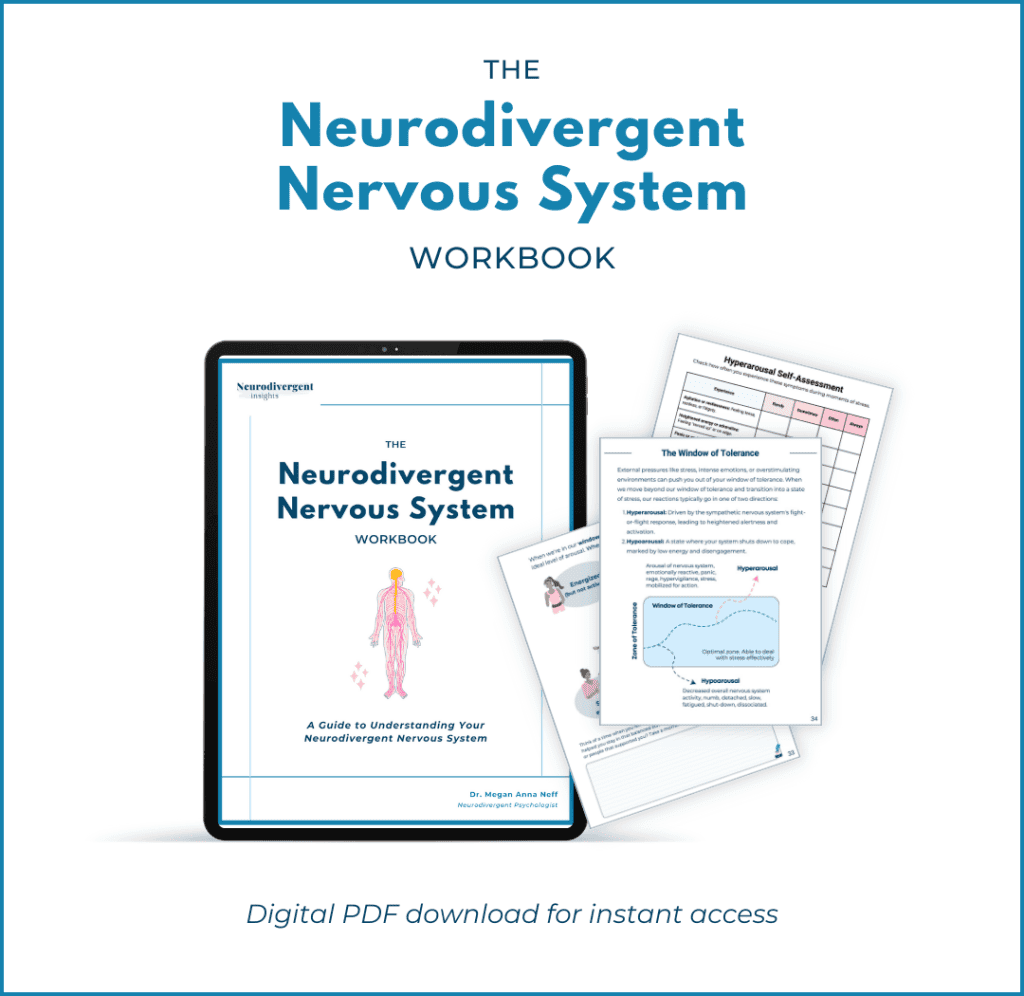
In this article, we will go over what the vagus nerve is and how to improve vagal tone. There is a lot more information about the nervous system in my nervous system workbook. Here, not only will you get more information about the nervous system, but you’ll also receive workbook pages to help you learn about yourself and work toward healing and growth.
What is Vagal Tone?
Before we dive into how to improve vagal tone, let’s define what it is. To understand vagal tone, we first have to understand the vagus nerve.
The Vagus Nerve
The vagus nerve is a cranial nerve that belongs to the parasympathetic nervous system. The parasympathetic nervous system is automatic (not under conscious control) and is responsible for the “rest and digest” response (which is the opposite of the “fight or flight” response controlled by the sympathetic nervous system). This is the largest cranial nerve as it winds through most of our internal organs. Because it is part of the autonomic nervous system, it is responsible for the function of most of our bodily processes, including our heart rate, blood pressure, digestion, urination, and reproductive system.
Because the vagus nerve is a part of the parasympathetic nervous system, it plays a huge role in our nervous system regulation. When activated, it slows us down, similar to the brake pedal in a car. When activated, it slows our heart and breathing rates, decreases our blood pressure, facilitates digestion, and allows us to feel relaxed. However, when the vagus nerve is deactivated, it allows our sympathetic nervous system and fight or flight response to take over. This, as you can imagine, increases energy but can also increase anxiety, fear, anger, and irritation.
Vagal Tone
When the vagus nerve is running the show, that’s when we feel grounded, present, engaged, and level-headed. We can face stress with a clear mind and recover quickly from stressful events. We are flexible, open-minded, and curious when our vagus nerve is active.
The more stress we can take on while staying present in this way, the higher our vagal tone is. High vagal tone means a higher capacity for stress, change, and challenge and a higher capacity for rest, recharge, and recovery. Likewise, a low vagal tone means the opposite. Low vagal tone means less tolerance for stress, change, and challenge while making it more difficult to rest, recharge, and recover. The lower the vagal tone, the easier it is to become dysregulated.
Vagal Tone and Neurodivergence
Studies have shown that people with Autism and ADHD have lower vagal tone than neurotypicals. That means, on average, we have more difficulty adapting to changes, tackling challenges, recharging, and recovering. This also means that our nervous systems are less flexible and are more easily overwhelmed by things neurotypicals may not be. Our nervous systems are more rigid than others.
How to Improve Vagal Tone
Whether you have high vagal tone or low vagal tone, there are ways we can work to improve it. It’s important to note that these changes take time. If you want to improve your vagal tone, it’s not going to happen overnight. Increasing vagal tone often requires lifestyle changes that involve daily effort over a long period of time. As you make these shifts and you likely notice your capacity expanding.
It’s important not to overwhelm yourself by making too many changes to your daily routines and habits all at once. Too much change too quickly is a good way to burn yourself out! Therefore, I recommend picking one exercise listed below, trying it out consistently for 30-60 days, then moving on to add another. When you introduce practices to your nervous system this way, you show that the practice is safe, and you give yourself the opportunity to open up to it.
Breathwork
Our lungs and diaphragm are directly connected to the vagus nerve. When we breathe deeply and consciously, we message the vagus nerve and send signals to the brain that we are safe and we are allowed to relax. Slow, deep breathing helps to soothe anxiety, re-focus the mind, and ground the body. Similarly, if you’re feeling low energy or shut down, quick and shallow breathing (like the breath of fire) is a great way to create the activation you need.
Cold Exposure
Studies have shown that cold exposure can stimulate the vagus nerve and increase vagal tone. Ice or cold water applied to the back of the neck is particularly beneficial. Now, you don’t have to jump in a frozen lake every day to receive the benefits of cold exposure (but you definitely can!). Instead, you could add 30 seconds of cold water to your shower, put your face in a bowl of ice water, or place an ice pack on the back of your neck. If you have other medical conditions, you should consult your medical team before adding in cold exposure into your routine.
Exercise and Movement
Exercise has been shown to increase vagal tone. Specifically, vigorous movement (like walking and running), weightlifting, and somatic movement are all great options. Weight lifting has the added benefit of putting deep pressure on the joints, which many neurodivergent people find relaxing. Somatic movement is especially useful for healing trauma and relaxing the body in a mindful way.
It’s important to note that neurodivergent people often have joint and mobility issues. If that’s you, be mindful of the kind of movement you do. I also recommend working with a neurodivergent-informed practitioner. Dr. Sam Zoranovich is a queer and neurodivergent-affirming chiropractor and has many great resources for neurodivergent-friendly somatic movement exercises.
Mindfulness and Meditation
Mindfulness and meditation have been shown to have many health benefits. Not only is meditation linked to decreased brain inflammation, better memory, and increased ability to learn new information, but it is also linked to improved vagal tone. Specifically, mindfulness has the ability to activate the vagus nerve, especially when there is breathwork involved.
Probiotics and Omega-3s
Like how the vagus nerve is connected to organs like the heart, it is also deeply interconnected with the gut. It is, after all, responsible for digestion. Therefore, when the gut is stressed, so is the vagus nerve. By taking care of our gut with probiotics and omega-3s, we can, in turn, take care of our nervous system.
Laughter
Laughter really is the best medicine! Studies have shown that laughter stimulates the vagus nerve by inducing diaphragmatic breathing. Only about ten minutes of laughter per day is shown to have many health benefits. Try adding more comedy to your life or some intentional laughter meditation.
Humming, Chanting, and Singing
Humming, chanting, and singing are powerful ways of activating the vagus nerve. One study even showed that chanting “om” can deactivate the limbic center of the brain, which is responsible for threat and emotion. The vagus nerve is interconnected with our vocal cords and the muscles at the back of the throat. Therefore, using your vocal cords in mindful ways directly activates this nerve.
Massage
Massage is another great way to increase vagal tone. Mindful human-to-human contact both stimulates the vagus nerve and increases oxytocin, the bonding hormone. Although you can get this kind of massage from someone else, there are also ways to give yourself simple massages.
Relaxation Exercises
Relaxation exercises directly target the vagus nerve to calm the body out of dysregulation. We can use them before bed, to ground ourselves in the morning, to recover from stressful events, or to engage more mindfully in conflict. These exercises can include a variety of breathing techniques, progressive muscle relaxation (PMR), and meditations.
Summary: How to improve Vagal Tone
If you struggle with staying present, grounded, and engaged, there’s a reason for that. When we are feeling present in this way, that means our vagus nerve is running the show. The vagus nerve is responsible for the rest and digest state and is what allows us to relax. The higher the vagal tone, the more capacity we have for stress and change. So, if you struggle with stress and change, you likely have a low vagal tone.
Through many kinds of practices, you can begin to improve your vagal tone. Practices such as breathwork, cold exposure, exercise, meditation, taking probiotics, laughter, singing, massages, and relaxation exercises help to increase vagal tone.
If you would like to learn more about the nervous system, check out my article on the neurodivergent nervous system. You can also purchase my nervous system workbook if you want more help increasing your nervous system capacity. In the workbook, you’ll find lots more information about the nervous system and many more ways you can heal and grow.
Follow-Up Resources
For ongoing insights and updates, subscribe to the Neurodivergent Insights Newsletter. Each Sunday, I send out fresh thoughts and a roundup of the newest resources on topics related to neurodivergence, mental health, and wellness. My most personal writing is reserved for my newsletter, and subscribers also get access to the newsletter vault (12+ PDFs) when they join.
Stay in the Neurodivergent Loop