
The NDI Glossary

Window of Tolerance

The window of tolerance is the range of arousal where a person can think, feel, and respond with flexibility.

The window of tolerance describes the range of nervous system activation where a person can stay present, think with some clarity, and respond with flexibility. Within this window, arousal is well-matched to the moment, enough activation to engage with what’s happening, without tipping into overwhelm or collapse. When we are within our window of tolerance our body sensations and emotions are manageable, even when things are stressful.

When someone moves outside their window of tolerance, the nervous system shifts into survival states. This may show up as hyperarousal (anxiety, panic, irritability, racing thoughts) or hypoarousal (numbness, shutdown, dissociation, or collapse).

For many neurodivergent people, the neurodivergent nervous system is often more sensitive to sensory input, social demands, fatigue, and cumulative stress, which can narrow the window of tolerance. Our window of tolerance can expand through supporting nervous system health and resilience, increasing safety and predictability, strengthening regulation, processing past trauma and attachment wounds, and tending to the basic building blocks of nervous system health, like sleep, movement, and nutrition.

Join over 250,000 followers for weekly insights on autistic, ADHD & AuDHD life.
NDI social graphic with the heading Toward and Away Moves, showing an illustrated person holding a notepad with opposing arrows labelled Away and Toward.
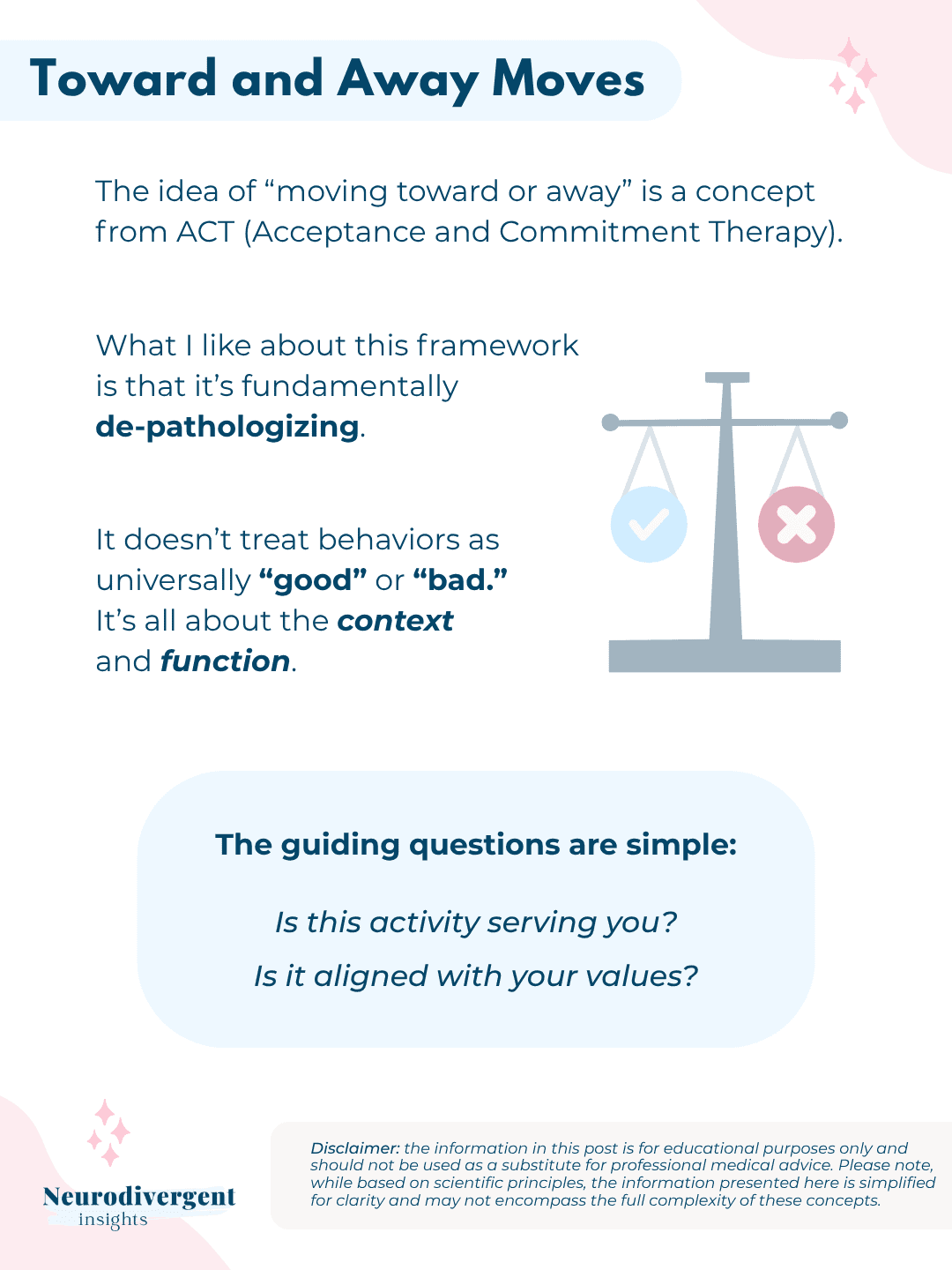
NDI infographic on Toward and Away Moves explaining the ACT concept as de-pathologizing, with a balance scale and guiding questions about values alignment.
Illustrated hand holding a pink smartphone displaying a social media post with a heart, with blue sparkles, representing NDI social media content.
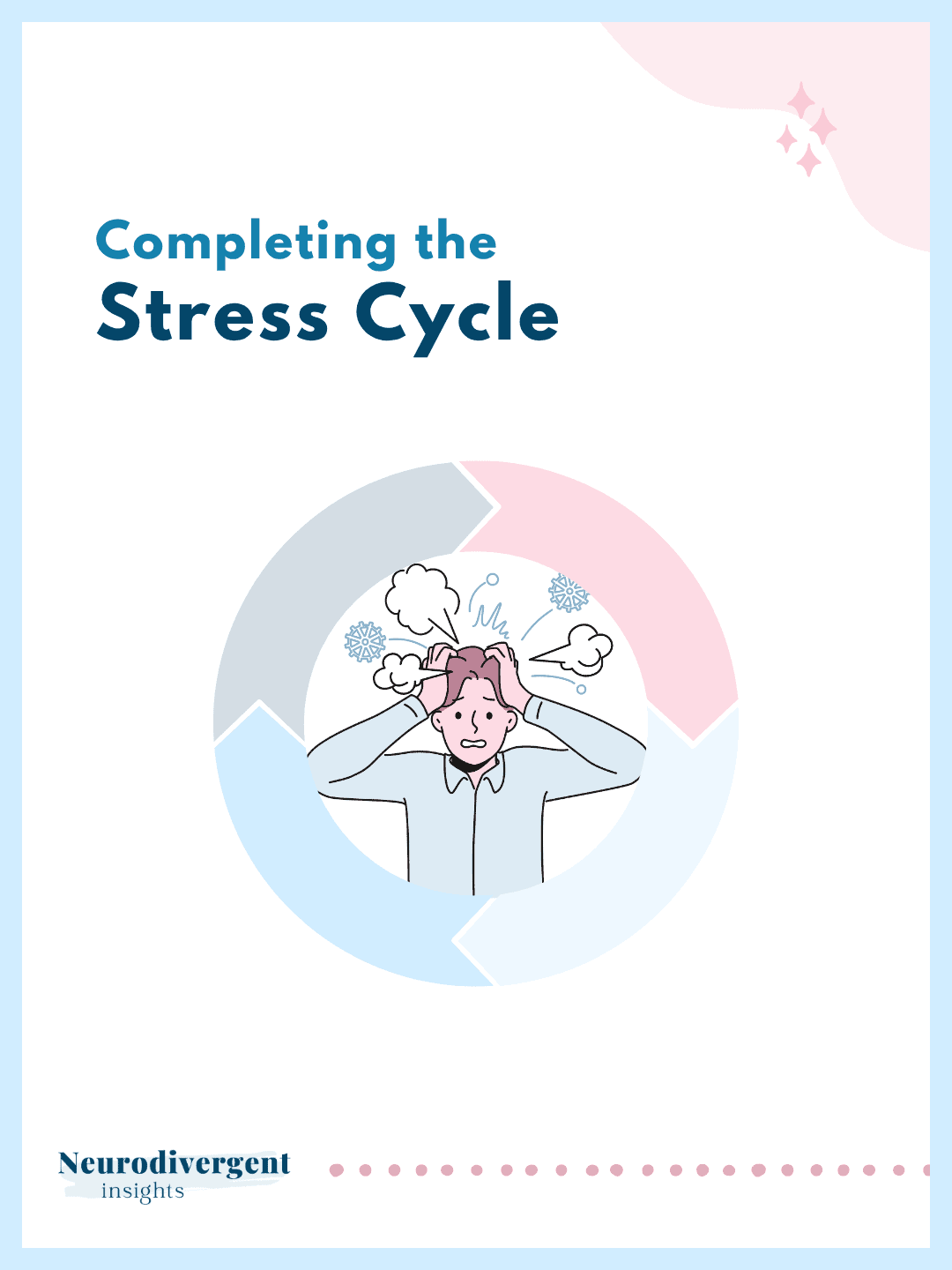
NDI social graphic with the heading Completing the Stress Cycle, showing an illustrated person overwhelmed with steam coming from their head inside a circular cycle diagram.
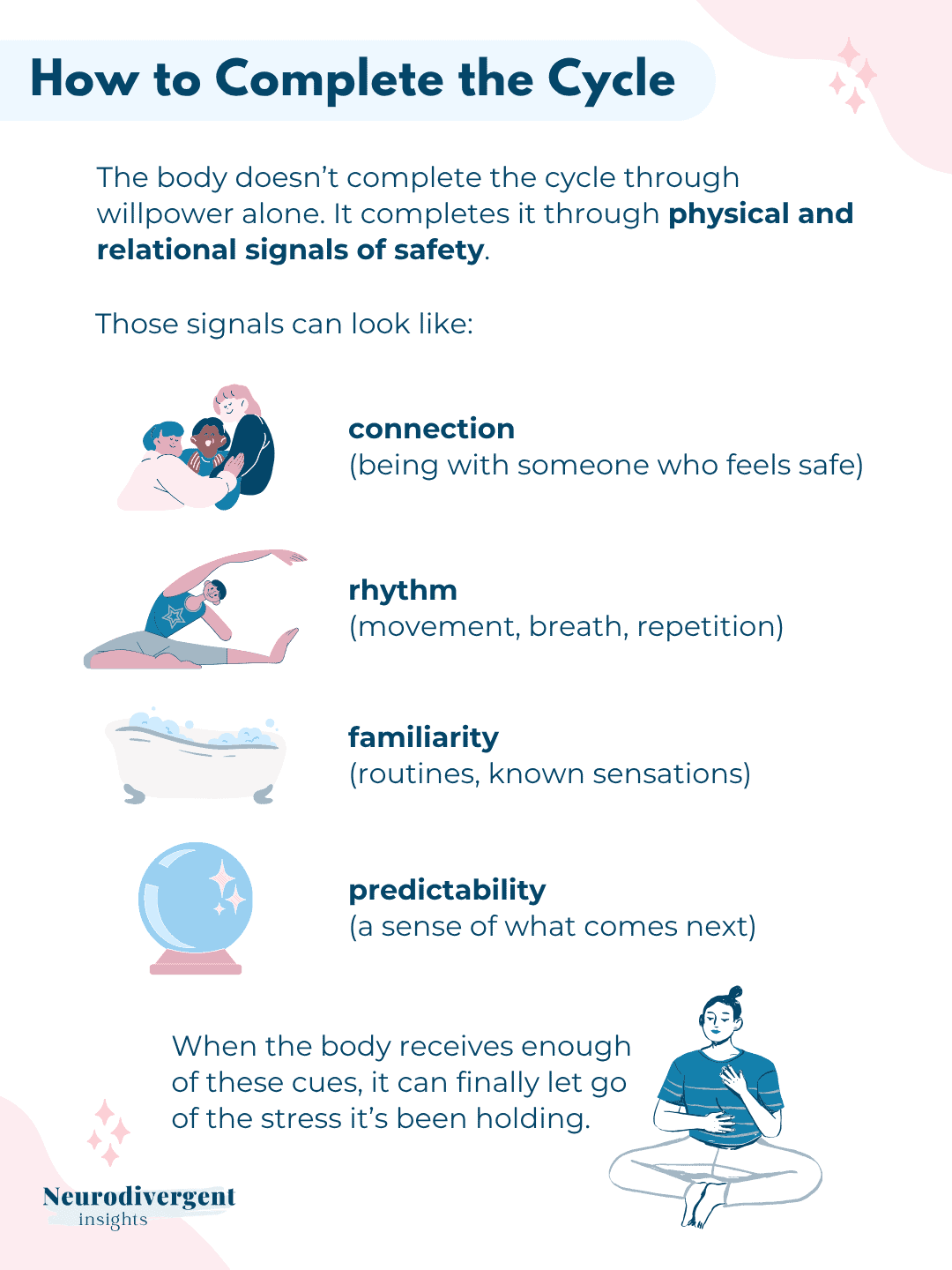
NDI infographic titled How to Complete the Cycle, listing connection, rhythm, familiarity, and predictability as physical and relational signals of safety for stress cycle completion.
0
0
Your Cart
Empty CartYour cart is empty

     
Scroll to Top

Window of Tolerance

The window of tolerance is the range of arousal where a person can think, feel, and respond with flexibility.

The window of tolerance describes the range of nervous system activation where a person can stay present, think with some clarity, and respond with flexibility. Within this window, arousal is well-matched to the moment, enough activation to engage with what’s happening, without tipping into overwhelm or collapse. When we are within our window of tolerance our body sensations and emotions are manageable, even when things are stressful.

When someone moves outside their window of tolerance, the nervous system shifts into survival states. This may show up as hyperarousal (anxiety, panic, irritability, racing thoughts) or hypoarousal (numbness, shutdown, dissociation, or collapse).

For many neurodivergent people, the neurodivergent nervous system is often more sensitive to sensory input, social demands, fatigue, and cumulative stress, which can narrow the window of tolerance. Our window of tolerance can expand through supporting nervous system health and resilience, increasing safety and predictability, strengthening regulation, processing past trauma and attachment wounds, and tending to the basic building blocks of nervous system health, like sleep, movement, and nutrition.