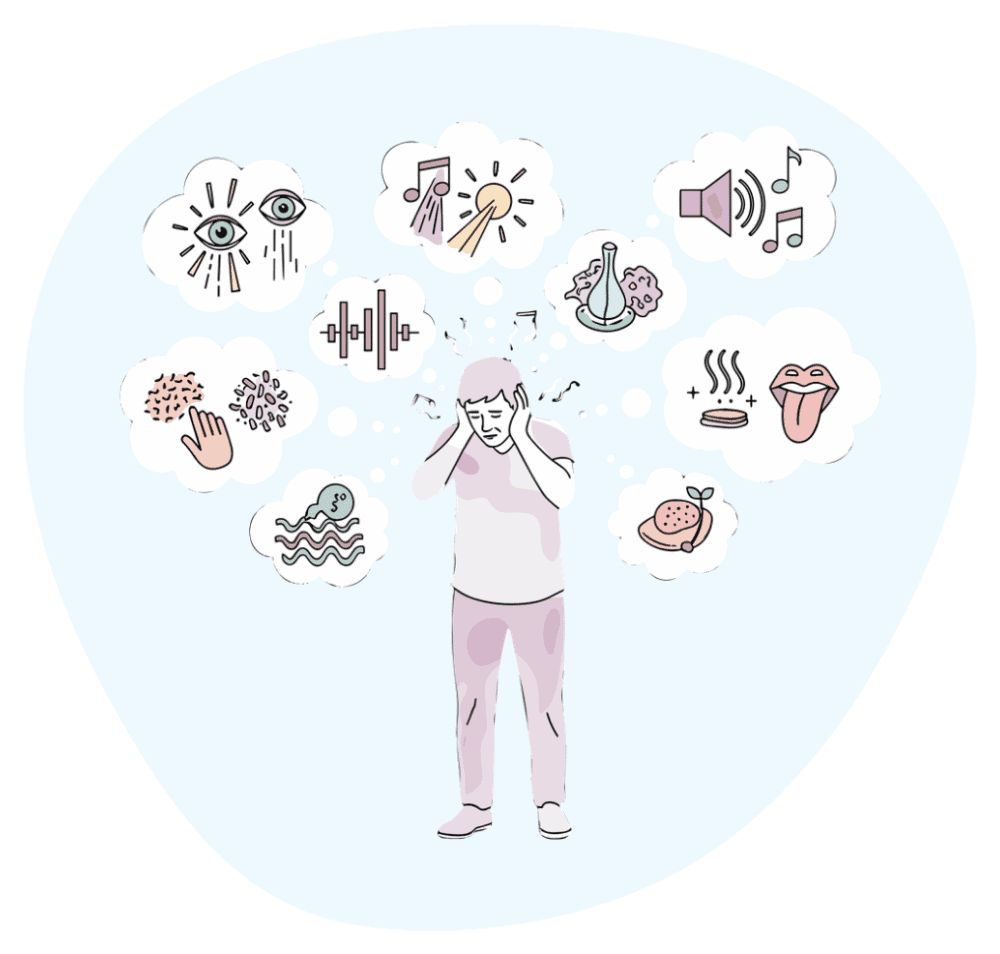
When I went looking online to better understand sensory overload as an adult, I mostly found images of small boys with fidgets and weighted vests. While this was helpful for my parenting, I longed for guidance on sensory issues as an adult.
In this article, I share what has helped, drawn from my own experience with sensory processing differences and my work as a clinical psychologist.
Table of Contents
What Is Sensory Overload?
Sensory overload happens when our sensory systems take in more input than they can process. Think about a busy restaurant: people talking, dishes clinking, a mix of smells, bright lights, and music in the background. With that much coming in, the brain struggles to keep up, and we feel stressed and uncomfortable.
Sensory overload looks different for each of us. Some of us feel overwhelmed by even small things in a crowded space; others become irritable or agitated. Concentrating, making decisions, and staying organized can all get harder.
Sensory Overload in ADHD and Autistic Adults
Anyone can feel overloaded now and then, but for many ADHD and Autistic adults, it is a frequent companion, and it can make everyday tasks exhausting.
Common experiences of sensory overload in adults include:
- Feeling overwhelmed, anxious, or stressed in sensory-rich environments
- Difficulty focusing or filtering out background noise, light, and movement
- Physical signs such as headaches, fatigue, or muscle tension
- Emotional reactions, from irritability and frustration to feeling drained
- Withdrawing, seeking solitude, or stimming to self-regulate
- Trouble sleeping or restless sleep
- Feeling restless, agitated, or irritable, with more difficulty managing emotions
- Shutdowns: feeling foggy, numbed out, or mildly dissociated
Getting to know our own signs of overload is the first step in knowing when and how to step in.
11 Signs of Sensory Overload in Adults
If you suspect you have sensory sensitivities, here are eleven signs to watch for:

Sensitivity to sounds, especially loud or sudden noises at home or work
Discomfort in bright or fluorescent lighting, such as offices or stores
Difficulty concentrating in settings with a lot going on
Feeling overwhelmed in crowded places, like public transportation, malls, or social events
Aversion to certain textures or fabrics, which makes choosing clothing or bedding hard
Distress from strong odors in public spaces or from household products
Discomfort with certain food textures and tastes, which complicates cooking and eating out
Ongoing fatigue from processing so much sensory information
Irritability or anxiety in overloading environments, which can strain relationships
Headaches or nausea in sensory-rich environments, and finding parenting or other daily responsibilities harder because of sensory demands
Difficulty with aspects of intimacy and sex because of sensory aversions
What the Research Shows
Sensory differences don’t end in childhood. One study found that 94% of Autistic adults reported extreme sensory processing patterns in at least one area. Another study found more sensory hyper- and hyposensitivity in ADHD adults, especially women, whether or not they also had autistic traits.
How to Manage Sensory Issues as an Adult
Realizing in adulthood that you have sensory processing differences can be eye-opening. Learning that not everyone experiences the world as an intense sensory bombardment brings a mix of surprise, confusion, and grief for the years spent struggling without this knowledge. When I came to terms with my own sensory sensitivities, the world’s loudness hit me harder, bringing up sorrow, frustration, and even despair.
Shifting Perspective: Living With Sensory Issues
A common question I hear is how to gain control over sensory issues. I don’t think we can fully control them, but we can learn to live alongside them with less overwhelm. Acceptance helps here: it lets us make room for our sensitivities and even find joy in experiences we once avoided.
Living well with sensory issues is an ongoing process of self-awareness and accommodations. That might mean a calm, sensory-friendly space at home, noise-cancelling headphones in loud places, or a weighted blanket at the end of a sensory-rich day.
Acknowledging Your Sensory Limits
For those of us identified later in life, recognizing the emotions tied to our sensory struggles is an important step toward self-awareness and kindness. Many of us became skilled at pushing past our limits to meet the world’s demands. Respecting our sensory boundaries matters for daily wellbeing and for breaking the cycle of burnout.
My process of acknowledging my sensory limits has been both important and challenging. The grief I’ve experienced over sensory-driven disconnections (missed joys at family gatherings, school events, and vacations) has been deep. Recognizing that moments I longed to cherish were being overshadowed by my sensory sensitivities was painful. Understanding that not everyone experiences these events in a state of sensory overload brought both clarity and sorrow.
This acknowledgment also made room for necessary boundaries and a life less burdened by constant overload. It began with grieving the realities of my limitations. Only through this grief could I truly understand and advocate for my needs, finding solace in calmer, sensory-friendly environments for meaningful connection.
It’s a balance of mourning what cannot be and finding the strategies that allow us to navigate our world more comfortably.
Cultivating Sensory Safety
Once we’ve acknowledged our sensory limits, the next step is understanding our sensory profile: developing a sensory lens to identify our preferences, triggers, and soothers. This becomes the foundation of a personal sensory safety plan.
Exploring Your Sensory Profile
This sounds simple, but after years of sensory overload, many of us have become disconnected from our bodies. It can be hard to tell what brings pleasure and what tips us into overload, so it helps to explore each piece separately.
Getting to Know Your Sensory Preferences
Start with the sensory experiences that bring comfort, joy, or calm: the sights, sounds, textures, tastes, and smells that feel good to you.
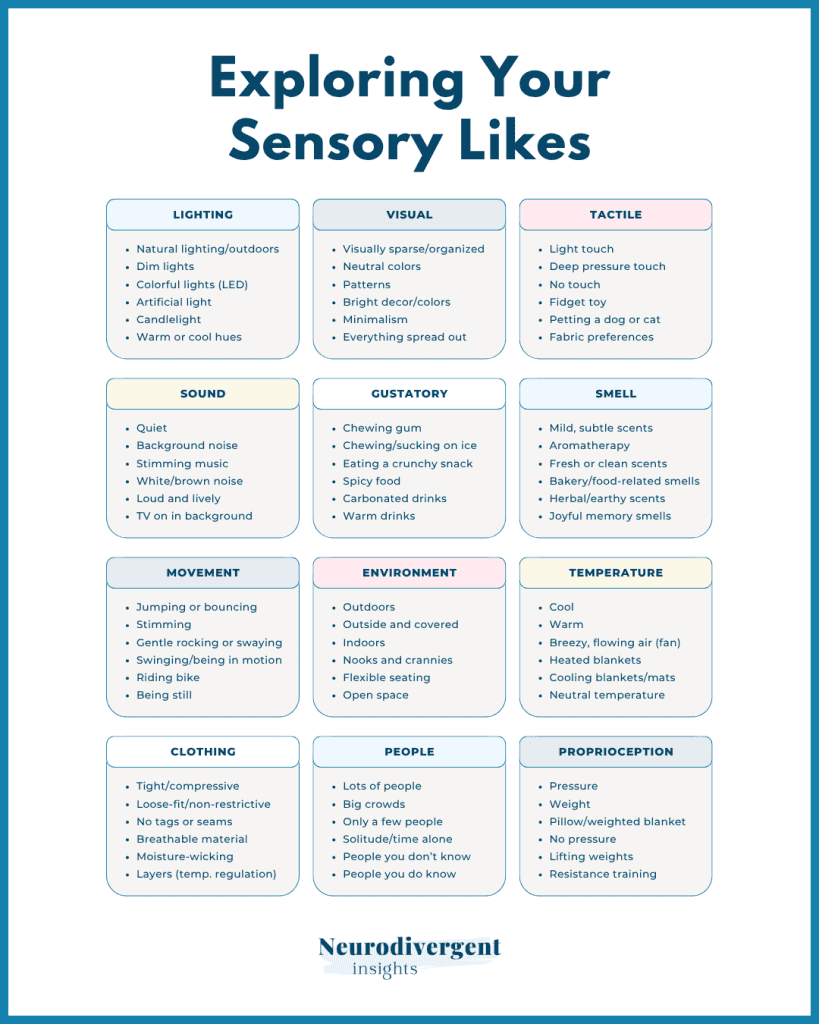
Identifying Your Sensory Triggers
Next, notice which sensory experiences lead to discomfort, stress, or overwhelm. Paying attention to the moments we feel most dysregulated helps us spot patterns, so we can plan around them.
Discovering Your Sensory Soothers
Finally, identify your sensory soothers. These overlap with preferences, but they are the specific inputs that help us come back to baseline when we’re overwhelmed: rhythmic movement, a familiar song, deep pressure, or a calm, comfortable space.
Building Sensory Accommodations Into Your Life
With a clearer sense of our sensory profile, we can build accommodations into our homes, workplaces, and routines.
Creating a Sensory-Friendly Environment
This might mean adjusting lighting to reduce glare, cutting background noise, decluttering for visual calm, and adding comforting textures and scents. It can also mean putting together a sensory kit for when you’re out in the world.

Sensory Tools and Strategies
A few tools many of us find helpful:

Noise-cancelling headphones to turn down noisy environments
Fidgets for quick tactile input and focus
Breathing or mindfulness practices, if they work for you
Movement and pressure: walking, rocking, or a weighted blanket
Creating Sensory Downtime
Our sensory systems need time to rest. Building in what I call “sensory rest” periods, planned breaks from stimulating environments, gives our nervous system a chance to recover and helps protect against sensory burnout.
Self-Care and Relaxation
Activities that calm the nervous system can help with sensory balance: gentle stretching, a warm bath, a low-key creative project, or time in nature. Some people find vibration devices like the Sensate (affiliate link; code NeuroInsights saves 10%) calming.
Meditation doesn’t work for everyone, especially many of us with ADHD. Find what works for you, even if it doesn’t look like traditional self-care. Apps like Calm, Headspace, and 59 Breaths offer guided options if you’d like a starting point.
A Few Closing Thoughts
Managing sensory issues as an adult takes self-exploration and self-compassion. Recognizing our limits, understanding our sensory profile, and building sensory safety into our days can make overload less frequent and easier to recover from.
If you’d like more structure, The Sensory Workbook walks you through building your own sensory safety plan. And if you’d like company along the way, the Learning Nook is a community for neurodivergent adults.
Sensory Issues in Adults FAQs
Can you develop sensory issues as an adult?
Sensory differences usually start early, but many adults only recognize them later, especially after an autism or ADHD identification. Stress, burnout, and big life changes like parenting can also make sensitivities more noticeable.
What does sensory overload feel like for adults?
It can feel like everything is too loud, bright, or close at once. Many adults feel irritable, anxious, or exhausted, have trouble concentrating, or shut down and feel foggy.
Is sensory sensitivity part of ADHD?
Sensory sensitivities aren’t part of the ADHD diagnostic criteria, but research suggests they are common in ADHD adults, especially women, even without autistic traits.
How do I calm sensory overload?
Reduce the input first if you can: step away, dim the lights, or use headphones. Then turn to your sensory soothers, like deep pressure, movement, or a familiar sound. A sensory safety plan helps you prepare these ahead of time.
Additional Resources

The 8 Senses of the Body The five classic senses and the three hidden ones

Sensory Overload and Emotions Why overstimulation hits so hard

Sensory Safety Plans How to prepare for and manage sensory overload
My Sensory Support picks Sensory favorites on my ShopMy shop (affiliate links)
 Stay in the Neurodivergent Loop
For ongoing insights and updates, subscribe to the Neurodivergent Insights Newsletter. Each Sunday, I send out fresh thoughts and a roundup of the newest resources on topics related to neurodivergence, mental health, and wellness. My most personal writing is reserved for my newsletter, and subscribers also get access to the newsletter vault (12+ PDFs) when they join.
References
Bijlenga, D., Tjon-Ka-Jie, J. Y. M., Schuijers, F., & Kooij, J. J. S. (2017). Atypical sensory profiles as core features of adult ADHD, irrespective of autistic symptoms. European Psychiatry, 43, 51–57. Link
Crane, L., Goddard, L., & Pring, L. (2009). Sensory processing in adults with autism spectrum disorders. Autism, 13(3), 215–228. Link