Updated March 20, 2026
“Did I close the garage. Did I turn off the stove. Did I talk over them. Was I rude. Is there something I’m forgetting.” The what‑ifs and what‑did‑I‑dos chug along in the background while I’m supposedly “just” answering email or writing or making dinner, until I can’t tell where the ADHD worries ends and the anxiety begins.
If that sounds uncomfortably familiar, you’re not the only one living in that mental tug‑of‑war. ADHD and anxiety show up together in a lot of people, and when they do, they tend to intensify each other rather than take turns.
Table of Contents
How Common Is Anxiety Among ADHD People?
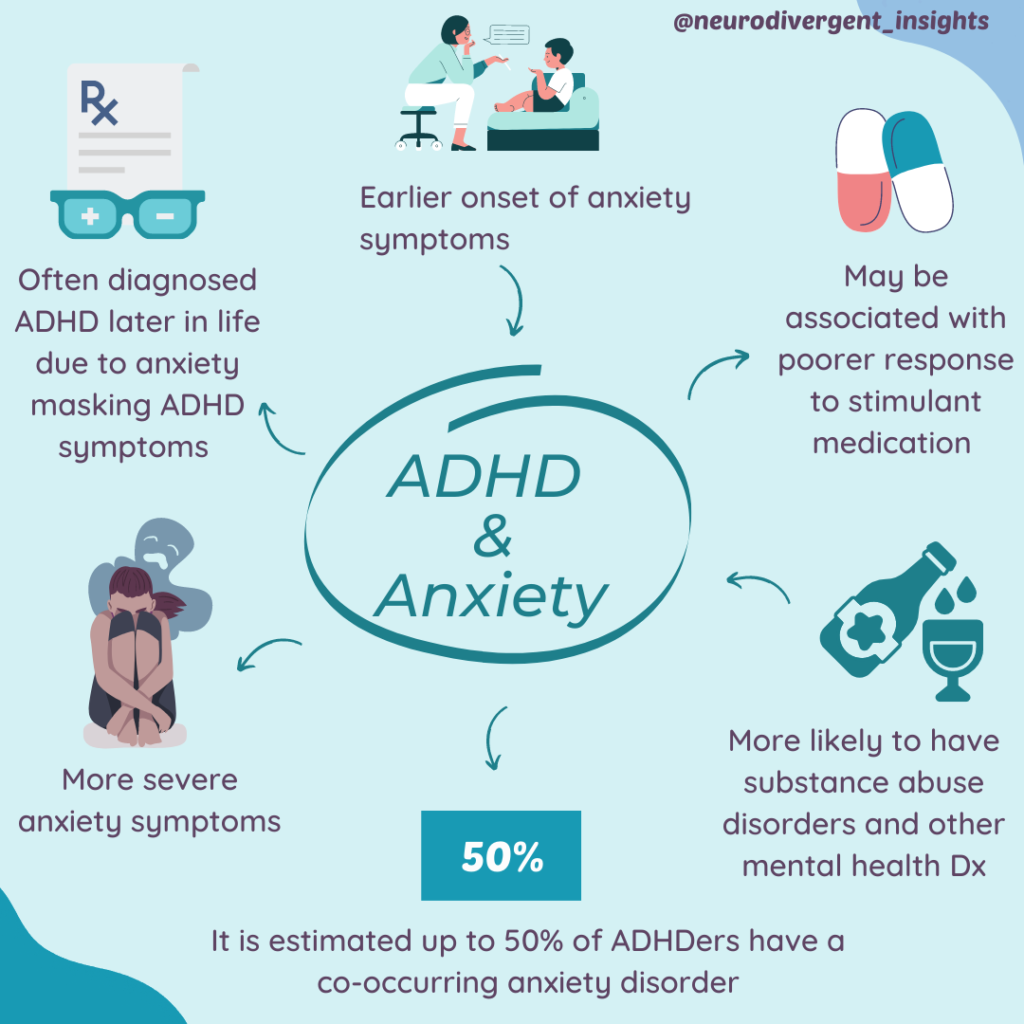
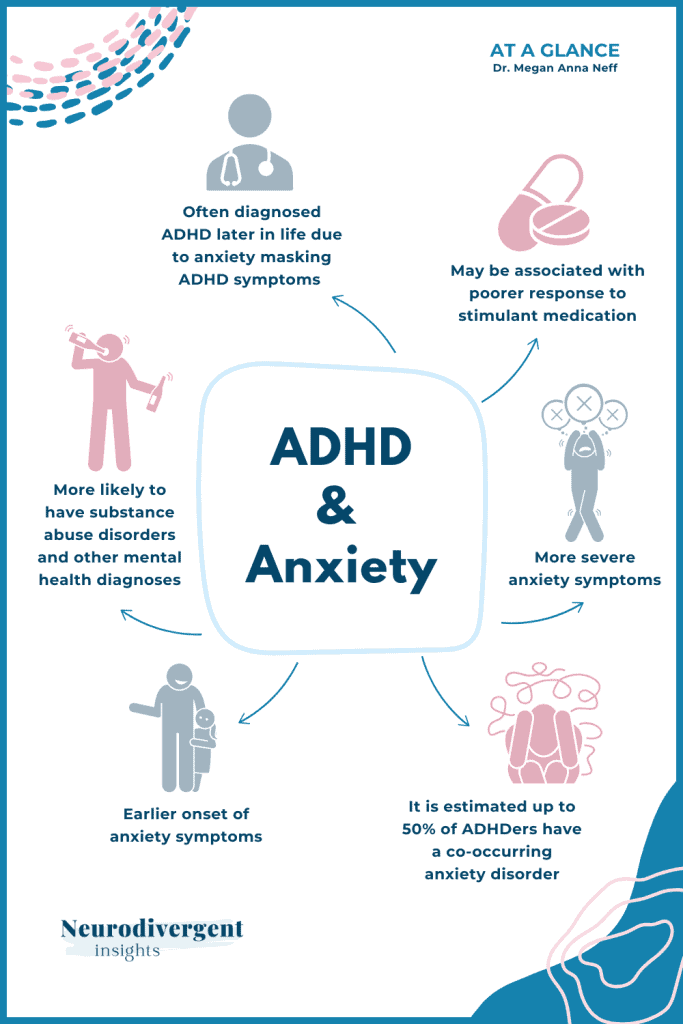
Research consistently finds that anxiety disorders are among the most prevalent co‑occurring conditions in ADHD. Current estimates suggest that 25 to 50 percent of adults with ADHD will experience a clinically significant anxiety disorder at some point in their lives (Katzman et al., 2017; Fu et al., 2025). In one study of 353 adults with ADHD, 56 percent met criteria for at least one anxiety disorder (Quenneville et al., 2022).
That number is striking on its own. But what makes the ADHD–anxiety overlap particularly complex is not just how often these two conditions co‑occur; it is how they interact with each other, changing the way both conditions look, feel, and respond to treatment.
As someone who has lived with both ADHD and anxiety, I can tell you that the textbook descriptions only get you so far. The lived reality is messier, more layered, and far harder to untangle than a list of diagnostic criteria.
Why ADHD and Anxiety So Often Come as a Package Deal
There are a few reasons ADHD and anxiety show up together so often. Understanding those reasons helps us reshape how we think about treatment, self‑compassion, and the kind of anxiety support that can actually help an ADHD mind.
Shared neurobiology
ADHD and anxiety don’t just happen to share space; they share a lot of the same brain wiring. Both involve shifts in dopamine and norepinephrine and rely on overlapping circuits for things like working memory and scanning for threat, which helps explain why they so often show up as a pair. In plain terms, these aren’t two totally separate issues; they’re drawing on many of the same systems in the brain.
The cumulative toll of living with ADHD
Not all anxiety in ADHD is a separate “anxiety disorder.” Some of it is what I call ADHD‑based anxiety: the kind of anxiety that grows out of years of missed deadlines, social missteps, sensory overwhelm, and the chronic work of trying to function in a world that isn’t set up for how your brain works.
When you have to work harder and still end up behind, it becomes very easy to stop trusting your own mind. So we may end up spending lots of time worrying about forgetting something important, overstepping socially, or missing a detail because we have a long track record of exactly those experiences. In that context, the worry is not random or exaggerated; it is proportional to the situations we’ve lived through.
When you need to work harder to accomplish less, worry is a reasonable response. I explore this more in my article on ADHD and Autistic anxiety.
Emotional dysregulation
Emotional dysregulation is increasingly recognized as a core feature of ADHD. The American Psychological Association acknowledged in 2024 that emotional dysregulation is a key component of ADHD across all subtypes (APA, 2024).
One way this can show up is through intense, rapidly shifting emotional responses that can look and feel a lot like anxiety. And sometimes, the emotional intensity of ADHD generates very real anxiety in response.
The NDI glossary entry on emotional dysregulation goes deeper into this, but the short version is: when your emotional thermostat runs hotter and responds faster than average, the world can register as a more threatening place. What looks like “being anxious” from the outside is often your nervous system doing its best with the wiring it has.
How Anxiety Changes the ADHD Picture
Diagnosis gets harder
When anxiety and ADHD coexist, ADHD often becomes harder to see clearly, and more likely to be diagnosed later, because anxiety can curb or mask impulsivity and the more obvious impulsive or hyperactive behaviors clinicians are trained to notice in ADHD, which means ADHD can fly under the radar.(Katzman et al., 2017).
At the same time, the inattention that comes from anxious rumination can look very similar to ADHD‑related inattention, making it harder in a brief appointment to tease apart what is driving what.
This gets especially tricky for people with primarily inattentive ADHD presentations, where there is no visible hyperactivity to draw attention to the diagnosis. And it shows up differently across genders. Large health‑record studies have found that, when ADHD and other mental health conditions co‑occur, females are more likely than males to receive diagnoses such as anxiety or depression, and to be prescribed antidepressant medication, before ADHD is ever identified (Martin, 2024).
Qualitative work with late‑diagnosed women adds the lived‑experience layer to this picture: many describe being told for years that they were “just anxious” or “just depressed,” and they point to those earlier labels as one of the reasons their ADHD went unrecognized for so long (Holden et al., 2025). In other words, anxiety and depression are often noticed and treated first, while ADHD remains hidden in the background.
For more on how this plays out in practice, see ADHD Masking vs. Self-Monitoring.
Inattention increases, impulsivity decreases
Anxiety tends to make inattention worse while often reducing outward impulsivity. The mechanism appears to involve cognitive load: anxiety generates intrusive thoughts, worry loops, and constant threat monitoring, all of which consume working memory resources that are already strained in ADHD.
A 2025 study by Rauch and colleagues found that anxiety symptoms uniquely predicted poorer working memory performance in adults with ADHD. When we are ADHD with anxiety, anxiety is not just a vague overlay; it is actively competing for the same cognitive resources that ADHD already taxes.
Symptoms feel more severe
When anxiety and ADHD co-occur, both tend to be more severe than either condition alone. ADHD traits classified as “severely impairing” occur at higher rates in people who also have anxiety (Hammerness et al., 2010). Anxiety onset tends to be earlier, and the number of additional co-occurring conditions (depression, substance use, sleep disorders) increases as well (Katzman et al., 2017).
Roughly 65 to 89 percent of ADHD adults have at least one additional psychiatric condition, with anxiety and depression being the most common (Johnson et al., 2026). This is not a case of ADHD plus a little worry. It is a compounding picture where each condition amplifies the other.
Treatment: What Actually Helps
There is no single approach that works for everyone with co-occurring ADHD and anxiety. But the research does offer some useful direction.
Medication: a more complicated picture
Stimulant medication is still the most effective medication we have for core ADHD symptoms, with the strongest research behind it. For ADHDers who also live with significant anxiety or depression, the story is more nuanced: for some people, stimulants will help reduce anxiety by dialing down ADHD‑related chaos; for others, stimulants can crank anxiety or emotions up or are hard to tolerate. A minority of adults either don’t get enough benefit from stimulants or can’t stay on them because of side effects, and emerging work suggests this group may be larger among AuDHDers (Autistic ADHDers).
This is where non‑stimulant options matter. Atomoxetine, guanfacine, and viloxazine offer alternatives that can be easier on anxiety or emotional dysregulation for some people.
And then many adults end up on a combination: a stimulant (or atomoxetine) for ADHD and an SSRI or SNRI for anxiety or depression, with a prescriber watching closely for interactions and side effects. There isn’t a single “right” sequence, but when ADHD is clearly driving most of the day‑to‑day challenges, starting with a long‑acting stimulant can sometimes improve both ADHD symptoms and secondary mood symptoms by making life more manageable—fewer missed deadlines, fewer dropped balls, less constant self‑criticism. When anxiety or depression are just as disabling as ADHD, it is recommended to treat both conditions, but generally adding medications one at a time so you can tell what’s helping and what isn’t (Fu et al., 2025).
One key point from this research: SSRIs and SNRIs can be very helpful for anxiety and depression, but they do not treat core ADHD symptoms. Leaving ADHD untreated can set the stage for anxiety and depression over time, whereas effectively treating ADHD, whether with stimulants or with non‑stimulants like atomoxetine, can sometimes ease co-occurring anxiety and depression simply because life stops feeling like a daily series of preventable crises (Fu et al., 2025).
Executive functioning support
A piece of the anxiety puzzle that often gets overlooked is executive functioning. When ADHD makes it harder to plan, organize, and follow through, anxiety rushes in to fill the gap. The worry becomes a compensatory strategy: if I can’t trust my memory, I will just worry about everything instead. This is exhausting. And it is treatable.
Executive functioning accommodations, coaching and concrete strategies can reduce the baseline anxiety that comes from living in a state of chronic disorganization.
Nervous system support
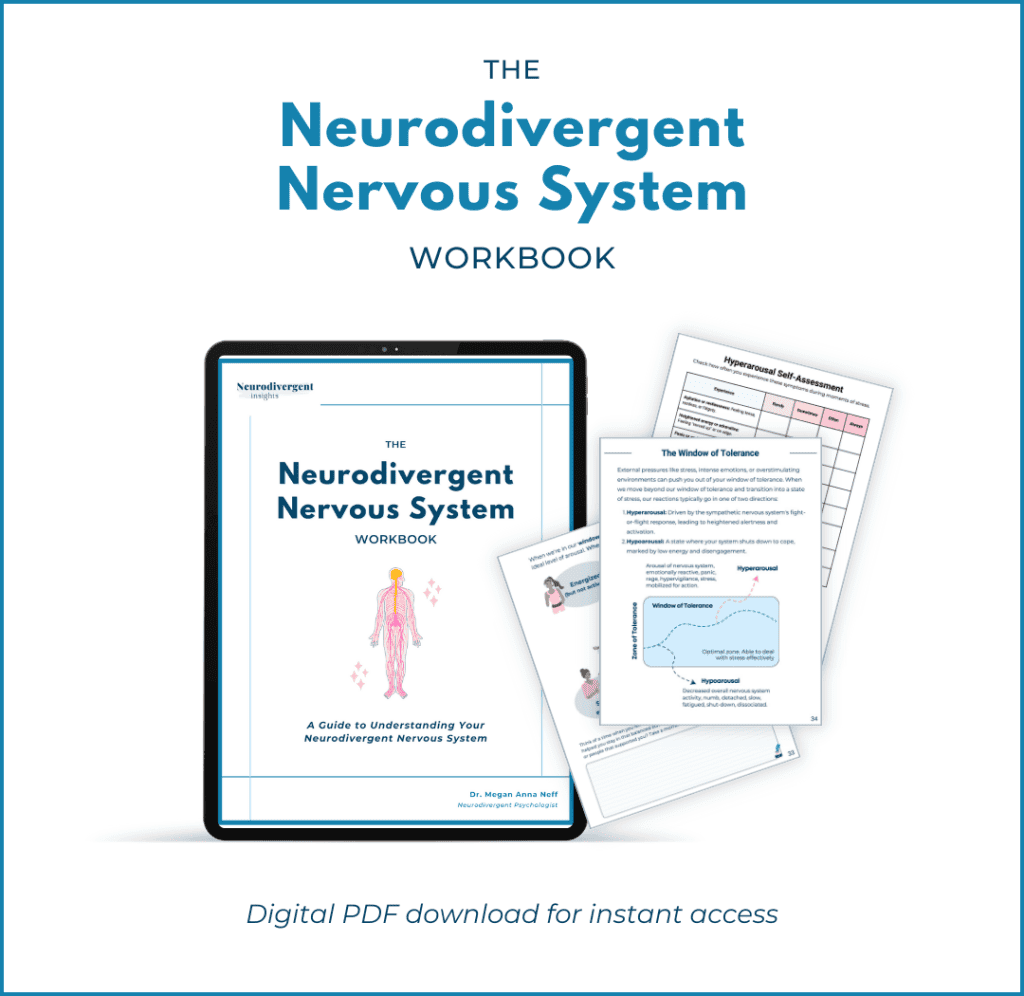
Because both ADHD and anxiety involve a revved‑up nervous system, interventions that directly support regulation can make a meaningful difference. ADHD often comes with a bumpy arousal system, and anxiety tends to push that system toward “always on,” so the two can easily amplify each other. Learning about your nervous system, and experimenting with ways to gently down‑regulate it, is part of the work.
Regular physical movement, adequate sleep, sensory regulation, and compassionate mindfulness practices become core ingredients in supporting a neurodivergent nervous system. This is not about giving your already overloaded brain a longer to‑do list; it is about recognizing that your nervous system has legitimate needs, and that tending to those needs is part of treatment, not a personal indulgence.
In my own life, this looks less like ‘perfect routines’ and more like concrete supports: my sensate device when my system is buzzing, a weighted blanket for evenings when I can’t settle, and engaging in mindfulness practices when my catastrophic thinking is on a loop. These aren’t magic fixes, but they give my body a different experience of safety to return to
If you want to go deeper into the sensory side of this, I wrote more about it in sensory regulation and emotional well‑being, and you can learn more about the AADHD nervous system here.


ADHD Specific Therapies
CBT tailored for ADHD has some of the strongest evidence so far for psychological treatment in adults. A 2025 meta‑analysis of 20 randomized controlled trials found that CBT for ADHD not only reduced core ADHD symptoms, but also improved anxiety, depression, quality of life, and emotional dysregulation, with benefits over and above medication alone. On the back of this, UK and Australian guidelines now recommend CBT‑style interventions as a first‑line psychological treatment alongside medication for adults with ADHD (Solantro, 2025)
At the same time, CBT is not the only therapy that shows promise for ADHD plus anxiety. Mindfulness‑based interventions and mindfulness‑based cognitive therapy have growing evidence for helping adults with ADHD improve attention, emotional regulation, and internal restlessness, with small‑to‑moderate effects on symptoms and functioning. Acceptance and Commitment Therapy (ACT) has emerging support for reducing ADHD symptoms, procrastination, and associated anxiety and depression by focusing on values, psychological flexibility, and gentler relationships with thoughts and feelings rather than trying to control them directly (Kim and Jung, 2025).
For many neurodivergent people, therapies that explicitly work with parts (like Internal Family Systems or other parts‑based approaches) can also be helpful, especially around shame, self‑trust, and the internalized “mean coach” that so often develops after years of being misunderstood. While the formal evidence base for IFS in ADHD is still early, it is considered an evidence‑based model for a range of mental health issues and is increasingly used in complex, trauma‑shaped presentations.
The throughline across all of these approaches is not finding the “right” brand of therapy, but finding a therapist and modality that
(1) Understands ADHD and anxiety
(2) Works with your nervous system instead of against it
(3) Helps you build skills and self‑compassion rather than more self‑criticism
When It Is Not What It Looks Like
One of the things I find myself saying often in clinical work is: what looks like anxiety is not always anxiety. And what looks like ADHD is not always ADHD.
Sensory overload can mimic anxiety. Rejection sensitive dysphoria can mimic anxiety. Autistic burnout can mimic both anxiety and ADHD deterioration. The internal experience matters at least as much as the observable symptoms, and this is something that standard diagnostic tools do not always capture.
If you have been treated for anxiety and it is not getting better, it may be worth asking whether ADHD has been adequately assessed. And if you have been treated for ADHD and you still feel that constant undercurrent of dread, it may be worth exploring whether anxiety, sensory overload, or both are part of the picture.
Sitting with the Complexity
ADHD and anxiety create both a complex inner life and a complex clinical picture when they weave together. They interact, mask each other, and amplify each other. For those of us living at this intersection, the inside often feels much messier and louder than anything other people can see.
I don’t think the goal is to erase that complexity. The goal is to understand it well enough that it stops running the show: to know how to step outside the worry loop that grabs us at 2 a.m., to soften the shame we carry about our “too much” minds, and to re‑contextualize a life shaped by missed ADHD and the coping strategies that got us through. To offer ourselves real compassion for the work it takes to live with two overlapping conditions at once—which is, honestly, a lot.
And maybe, to hold the possibility that naming this overlap is the beginning of giving yourself the kind of support you’ve been needing all along.
Follow-Up Resources
Anxiety Defined
Learn more about anxiety in our NDI glossary.
Stay in the Neurodivergent Loop
For ongoing insights and updates, subscribe to the Neurodivergent Insights Newsletter. Each Sunday, I send out fresh thoughts and a roundup of the newest resources on topics related to neurodivergence, mental health, and wellness. My most personal writing is reserved for my newsletter, and subscribers also get access to the newsletter vault (12+ PDFs) when they join.
More Like This...

References
APA (2024). Emotional dysregulation is part of ADHD. APA Monitor on Psychology. https://www.apa.org/monitor/2024/04/adhd-managing-emotion-dysregulation
Fu, X., Wu, W., Wu, Y., Liu, X., Liang, W., Wu, R., & Li, Y. (2025). Adult ADHD and comorbid anxiety and depressive disorders: a review of etiology and treatment. Frontiers in psychiatry, 16, 1597559. https://doi.org/10.3389/fpsyt.2025.1597559
Holden, E., & Kobayashi-Wood, H. (2025). Adverse experiences of women with undiagnosed ADHD and the invaluable role of diagnosis. Scientific reports, 15(1), 20945. https://doi.org/10.1038/s41598-025-04782-y
Johnson, S., Lim, E., Jacoby, P., et al. (2026). Prevalence of attention deficit hyperactivity disorder/hyperkinetic disorder of pediatric and adult populations in clinical settings: A systematic review, meta‑analysis, and meta‑regression. Molecular Psychiatry, 31, 576–586. https://doi.org/10.1038/s41380-025-03178-8
Hammerness, P., Geller, D., Petty, C. et al. Does ADHD moderate the manifestation of anxiety disorders in children?. Eur Child Adolesc Psychiatry 19, 107–112 (2010). https://doi.org/10.1007/s00787-009-0041-8
Katzman, M.A., Bilkey, T.S., Chokka, P.R. et al. Adult ADHD and comorbid disorders: clinical implications of a dimensional approach. BMC Psychiatry 17, 302 (2017). https://doi.org/10.1186/s12888-017-1463-3
Kim, H. H., & Jung, N. H. (2025). Mindfulness-based interventions for adults with ADHD: A systematic review and meta-analysis. Medicine, 104(37), e44308. https://doi.org/10.1097/MD.0000000000044308
Li, Y., & Zhang, L. (2024). Efficacy of Cognitive Behavioral Therapy Combined with Pharmacotherapy Versus Pharmacotherapy Alone in Adult ADHD: A Systematic Review and Meta-Analysis. Journal of Attention Disorders, 28(3), 279-292.
Martin, J. (2024). Why are females less likely to be diagnosed with ADHD in childhood than males? The Lancet Psychiatry, 11(4), 303–310. https://doi.org/10.1016/S2215-0366(24)00010-5[1]
Solanto M. V. (2025). The efficacy of cognitive-behavioral therapy for adults with ADHD. World psychiatry : official journal of the World Psychiatric Association (WPA), 24(3), 378–379. https://doi.org/10.1002/wps.21349
Rauch, A.A., Soble, J.R., & Silton, R.L. (2025). Anxiety symptoms are distinctly related to working memory deficits in adults with ADHD. Applied Neuropsychology: Adult. https://doi.org/10.1080/23279095.2024.2449170
Quenneville, A. F., Kalogeropoulou, E., Nicastro, R., Weibel, S., Chanut, F., & Perroud, N. (2022). Anxiety disorders in adult ADHD: A frequent comorbidity and a risk factor for externalizing problems. Psychiatry Research, 310, 114423. https://doi.org/10.1016/j.psychres.2022.114423