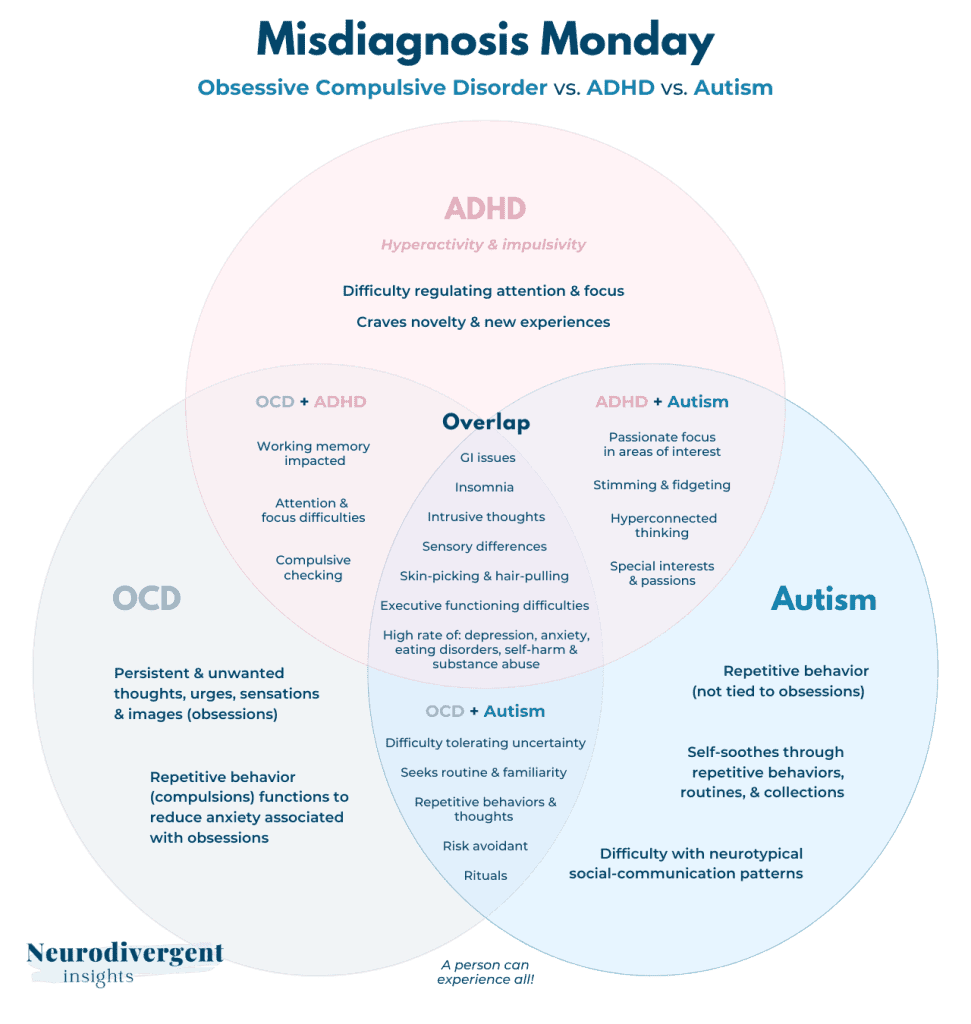
Autism, ADHD, and OCD are frequently confused with one another — and for many people, that confusion has real consequences. While these conditions can share surface-level traits, they often serve very different functions.
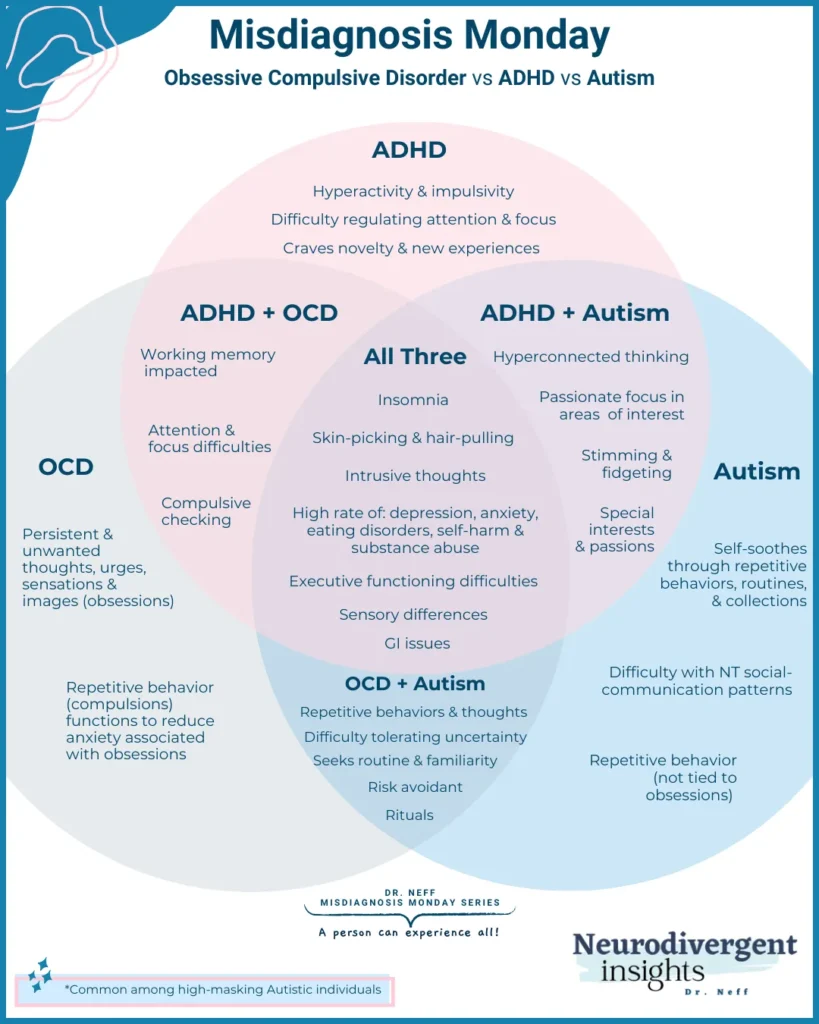
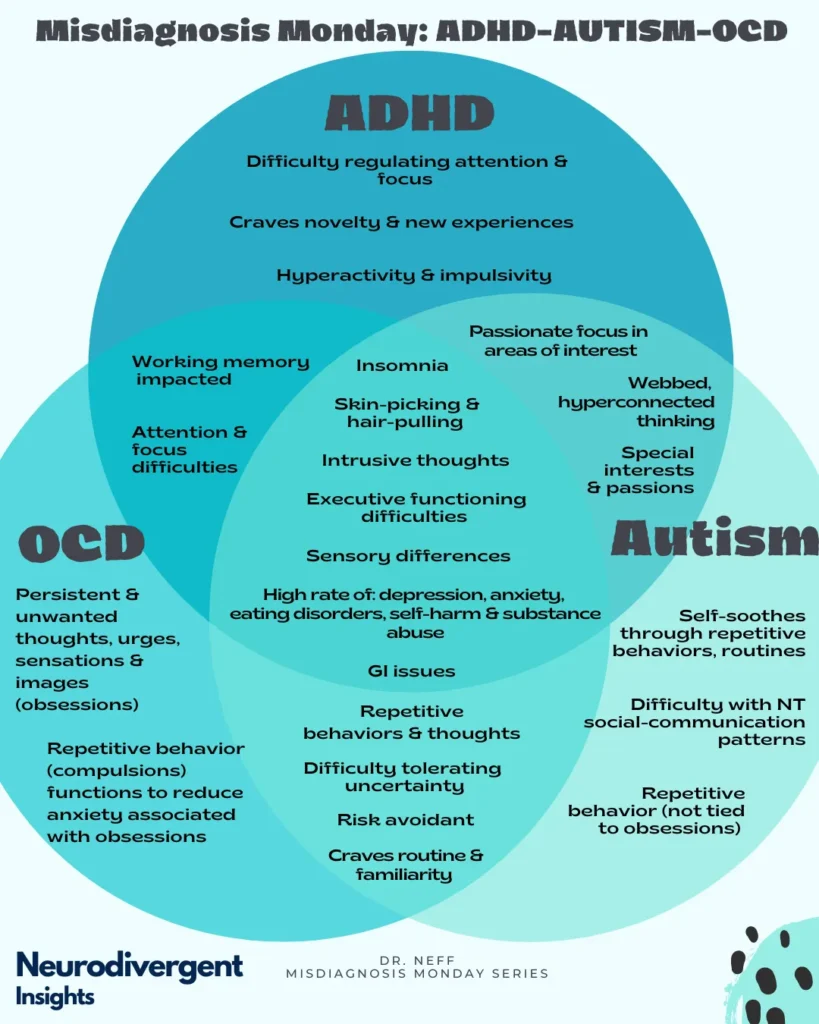
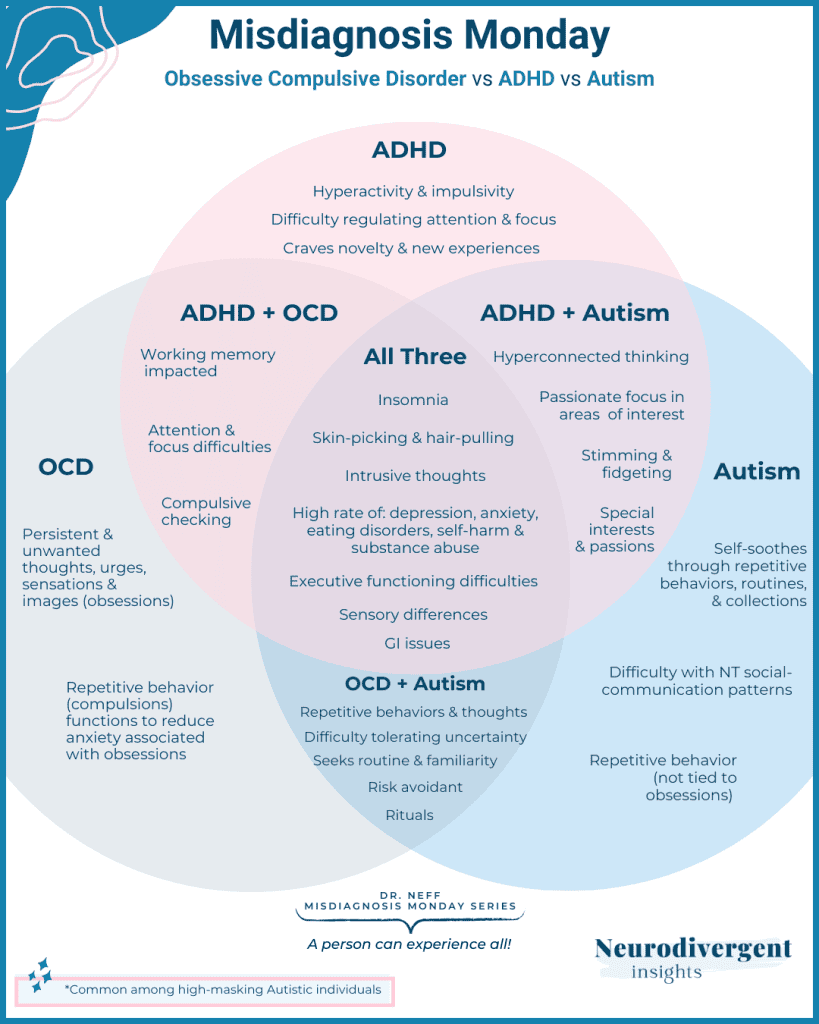
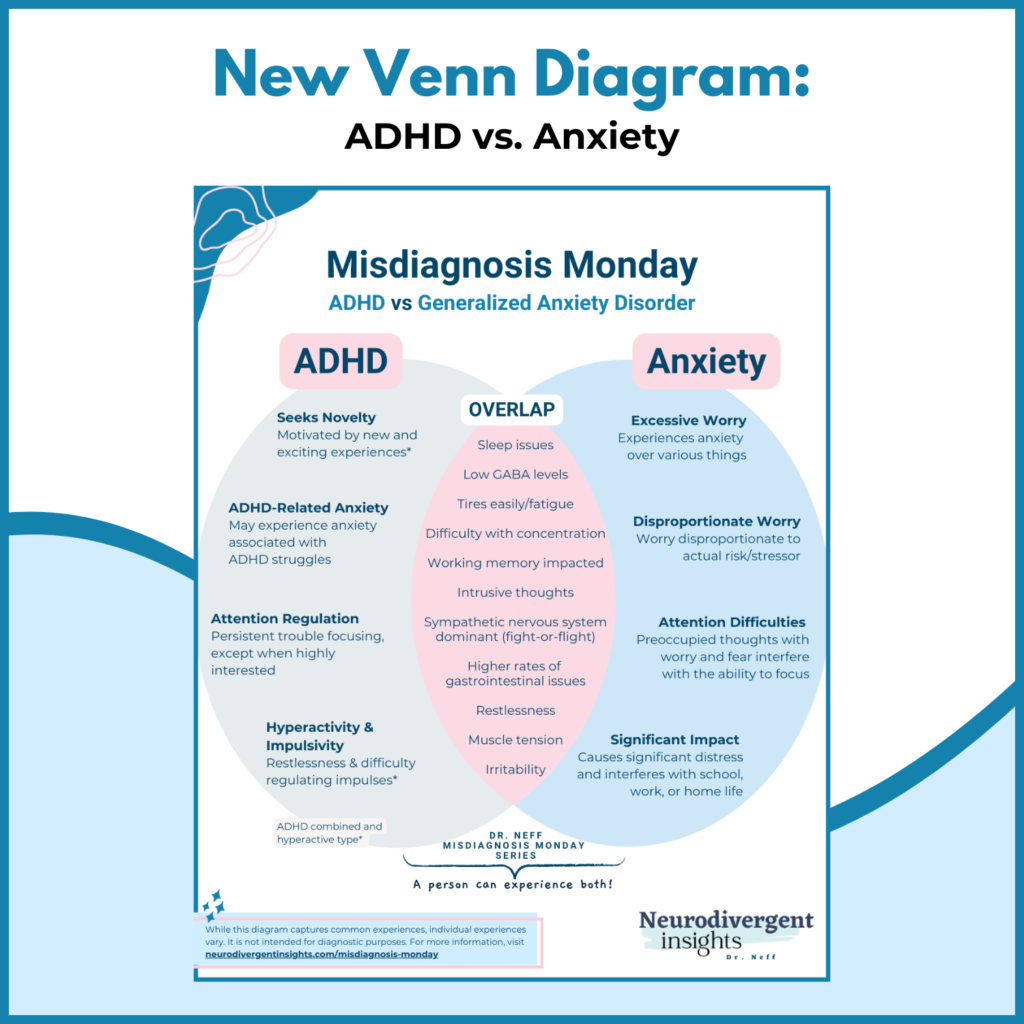
In response to community questions about misdiagnosis, I created a triple Venn diagram to map where these experiences overlap and where they meaningfully differ.
How to read the diagram
- Center overlap: Shared traits that can appear across all three conditions, helping explain why distinguishing between them can be challenging.
- Partial overlaps: Traits shared by two conditions, offering insight into where confusion, misdiagnosis, or missed diagnosis can occur.
Misdiagnosis gets a lot of attention, but missed diagnosis is just as common — and often just as costly. Many people are accurately identified with one condition, while other parts of their neurodivergence remain unseen. Someone might receive an OCD diagnosis, for example, while co-occurring ADHD or autism goes unrecognized, leaving key aspects of their experience unsupported.
This diagram is an attempt to make sense of why that happens so often. ADHD, OCD, and autism share overlapping traits, and they also co-occur at higher rates than we tend to acknowledge. People with ADHD or autism are significantly more likely than the general population to also experience OCD, yet our diagnostic frameworks don’t always account for that complexity.
By mapping both overlaps and differences, this visual is meant to support a more layered understanding — one that moves beyond single-label explanations and toward more comprehensive understanding.
Table of Contents
Co-Occurrence Rates for ADHD, Autism, and OCD
OCD affects an estimated 2–3% of people in the U.S., and research suggests it often runs in families, in part due to genetic factors. For neurodivergent people, especially ADHD and Autistic people, OCD shows up at much higher rates than in the general population.
Adding another layer, autism and ADHD themselves overlap frequently — a combination often referred to as AuDHD. These shared patterns can make it harder to see where one condition ends and another begins, particularly within systems built around single diagnoses.
To make sense of this complexity, let’s take a closer look at what we know about rates of co-occurrence.
How Often do ADHD and OCD Co-Occur?
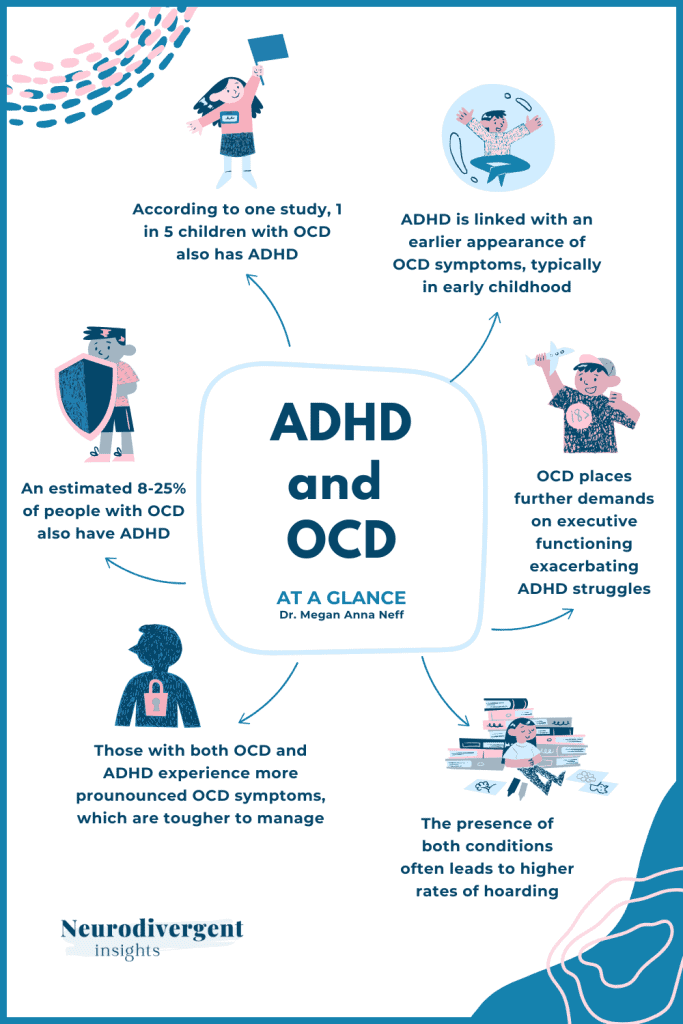
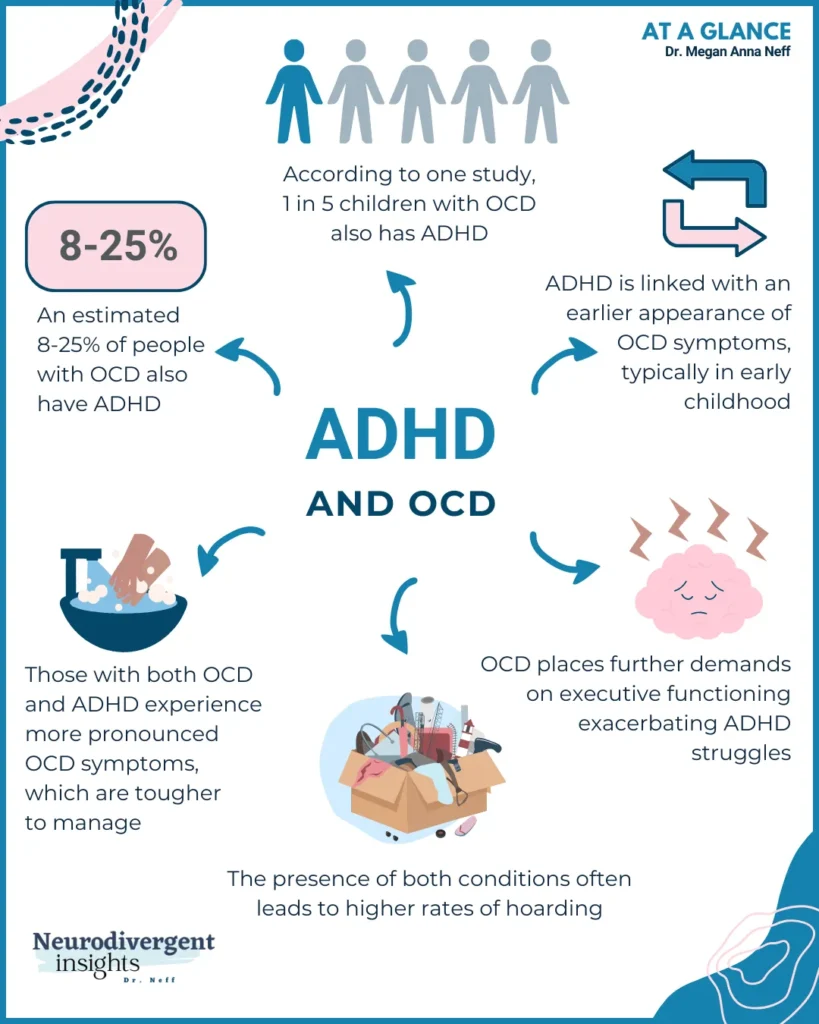
Research consistently shows that OCD and ADHD overlap more often than many people expect. These conditions co-occur at meaningful rates, which helps explain why they’re so often confused or partially identified. Here are a few key findings that help make sense of that overlap:
Up to 30% of people with OCD also meet criteria for ADHD, highlighting a substantial overlap between the two (Brem, 2014).
Among people with ADHD, 17–25% experience OCD symptoms, suggesting the relationship goes both ways (Masi, 2010).
ADHD is the most common co-occurring condition in early-onset OCD, underscoring the importance of screening for both, especially in children (Brem, 2014).
In pediatric samples, roughly 1 in 5 children with OCD also have ADHD, with studies reporting co-occurrence rates ranging from 17% to 25% (Abramovitch and Mittelman; 2013; Masi, 2006; Masi, 2010).
Among adults with OCD, approximately 1 in 12 are believed to have ADHD, though this is likely an underestimate — particularly for inattentive presentations, which are often missed (Olivardia, 2021).
One study found that 20% of people with OCD met definite or probable criteria for ADHD, and that those with ADHD were more likely to also experience hoarding disorder (Sheppard et al., 2010).
You can read more about the overlap of ADHD and OCD here.
How Often do Autism and OCD Co-Occur?
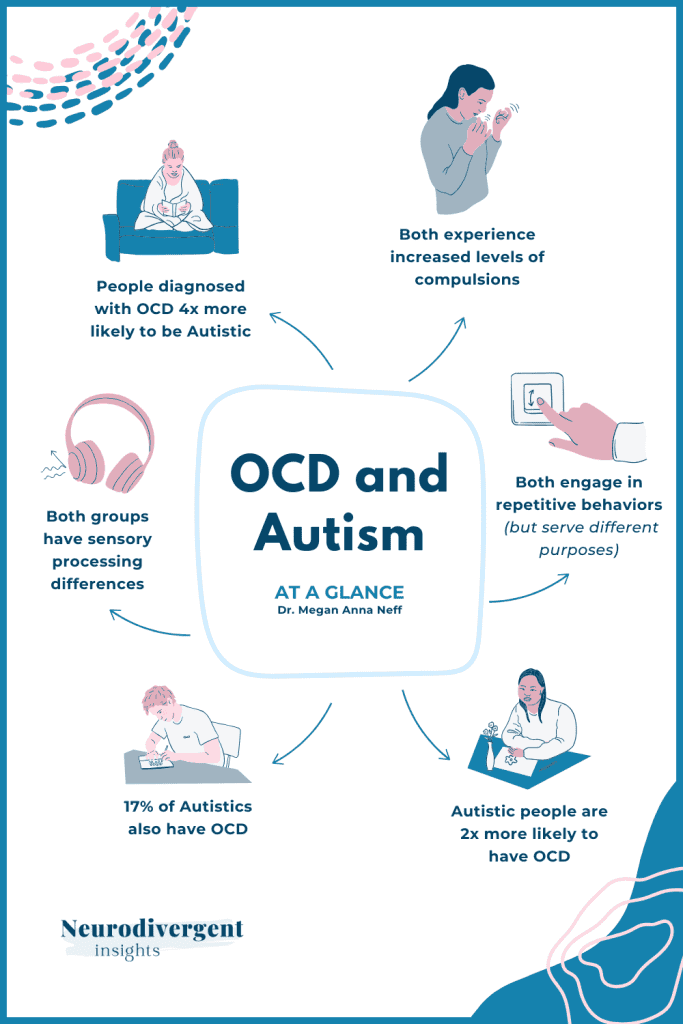
Research also points to a meaningful overlap between autism and OCD — one that has likely been underrecognized for a long time:
Large population-based research suggests a strong connection between OCD and autism. A Danish study found shared familial risk, and showed that Autistic people were about twice as likely to be diagnosed with OCD later in life (Meier et al., 2015).
Looking at this from the other direction, people with OCD were four times more likely to receive an autism diagnosis compared to the general population, pointing to a deeper relationship between the two conditions than was previously assumed (Meier et al., 2015).
In clinical samples, Autistic traits appear frequently among people with OCD. One UK study found that nearly half of adults with OCD scored above the clinical threshold for Autistic traits, and more than a quarter met criteria for an autism diagnosis, suggesting that many Autistic individuals with OCD may go undiagnosed (Wikramanayake et al., 2018).
Taken together, these findings suggest that autism and OCD often coexist — and that autism may be overlooked when OCD becomes the primary focus.
You can read more about the overlap between OCD and autism here.
How Often do ADHD and Autism Co-occur?
ADHD and autism also co-occur at notably high rates, adding another layer to why single diagnoses so often fall short:
Research suggests that between 22–83% of Autistic children also meet criteria for ADHD, depending on how and where it’s assessed (Sokolova et al., 2017).
Looking from the other direction, around 30–65% of children diagnosed with ADHD show significant Autistic traits, even if they don’t meet full diagnostic criteria for autism (Sokolova et al., 2017).
Twin and family studies consistently point to substantial shared genetic factors, with estimates suggesting 50–72% overlap in contributing genetics between ADHD and autism (Sokolova et al., 2017).
At the same time, co-occurrence doesn’t always mean meeting full criteria for both diagnoses. It’s common to see elevated ADHD traits within Autistic people, or elevated Autistic traits within people diagnosed with ADHD. Many individuals live in this overlap without ever receiving both labels.
You can read more about the overlap between ADHD and autism here.
Navigating ADHD Routines, Autistic Rituals, and OCD Compulsions
With so much overlap between autism, ADHD, and OCD, behaviors can look similar on the surface while serving very different functions. For clinicians, being able to distinguish between coping strategies, routines, and compulsions matters — not just for diagnosis, but for providing care that’s truly responsive.
And for neurodivergent people, understanding these differences can help us identify underlying unmet needs and support ourselves with more clarity and compassion.
Here’s a brief overview of how these experiences differ:
ADHD and Routines: People with ADHD often depend on routines to bolster executive functioning. These routines act as a crucial scaffold, aiding in stress and anxiety management. Disruption to these routines can exacerbate stress, indicating that these are pragmatic, designed more for navigating daily life than fulfilling any ritualistic or compulsive need.
Autistic Rituals: For Autistic individuals, rituals are vital for sensory regulation and creating predictability. These rituals offer comfort, serving as an end in themselves rather than a means to avoid negative outcomes. This contrasts with OCD compulsions, as Autistic rituals are not performed out of fear but as positive, self-soothing actions that address sensory needs.
OCD Compulsions: OCD compulsions, conversely, are closely linked with obsessions and are performed to prevent negative outcomes. They’re marked by the belief that certain actions are necessary to avoid harm, such as thinking, “If I don’t perform this ritual, something bad will happen.” Unlike the self-soothing nature of Autistic rituals, OCD compulsions are a response to anxiety and fear, offering temporary relief but not pleasure or comfort.
Understanding these distinctions is key to connecting with and effectively supporting each person on their unique journey. It’s about more than categorizing behaviors; it’s about understanding individual needs and tailoring our support accordingly. The journey to effective therapy for OCD can be long, with Ziegler (2021) noting it can take around 12 years for adequate treatment, which underscores the importance of accurate diagnosis and treatment strategies.
Dive Deeper into Understanding
The interplay between ADHD, Autism, and OCD is complex and nuanced, with each condition carrying its own complexities and nuances. For those keen on exploring the subtle distinctions and overlaps further, I’ve compiled a series of in-depth articles. Each piece is designed to peel back the layers of how these conditions interact, offering further insights into their unique and shared characteristics.
ADHD vs. Autism: Uncover the unique and overlapping characteristics of ADHD and Autism, providing insights into their distinct and shared traits. Explore the deep dive.
ADHD vs. OCD: Investigate the interplay between ADHD and OCD, shedding light on how these conditions can mimic each other and what sets them apart. Dive deeper.
Autism vs. OCD: Delve into the relationship between Autism and OCD, understanding the commonalities and differences that define their co-occurrence. Read the in-depth article here.
Each article is crafted to give you an understanding of how these conditions intersect and differ. These articles aim to provide you with the insights needed to identify both the distinct and shared symptoms, helping to navigate the complexities with greater clarity.
Follow-Up Resources
Stay in the Neurodivergent Loop
For ongoing insights and updates, subscribe to the Neurodivergent Insights Newsletter. Each Sunday, I send out fresh thoughts and a roundup of the newest resources on topics related to neurodivergence, mental health, and wellness. My most personal writing is reserved for my newsletter, and subscribers also get access to the newsletter vault (12+ PDFs) when they join.
More Like This...

Previous Graphics