ADHD can be difficult to diagnose, especially in adults, which can lead to a missed diagnosis or misdiagnosis. Bipolar disorder is one of the conditions it’s most often confused with.
The presentation of ADHD in adults is often poorly understood, which leaves adults with undiagnosed ADHD vulnerable to being diagnosed and treated for co-occurring mood disorders while their ADHD is missed.
When the underlying ADHD is diagnosed and treated, the mood symptoms often improve. As one 2017 review puts it:
“Studies have concluded that emotional dysregulation is a distinctive attribute of adult ADHD psychopathology. However, these symptoms may be misdiagnosed as a mood disorder. Similarly, ADHD symptoms may be masked by substance use.
Physicians are often more familiar with mood and anxiety disorders, which may contribute to misdiagnosis and delays in treating ADHD in adults. It has been suggested that stress, depression, and anxiety could manifest as a consequence of undiagnosed and untreated ADHD.”
The most common co-occurring conditions with ADHD include depression, anxiety disorders, bipolar disorder, substance use disorders, and personality disorders.
Table of Contents
How ADHD and Bipolar Overlap
ADHD and bipolar can be tough to tell apart, as there are many overlapping traits. This matters because the medications are very different.
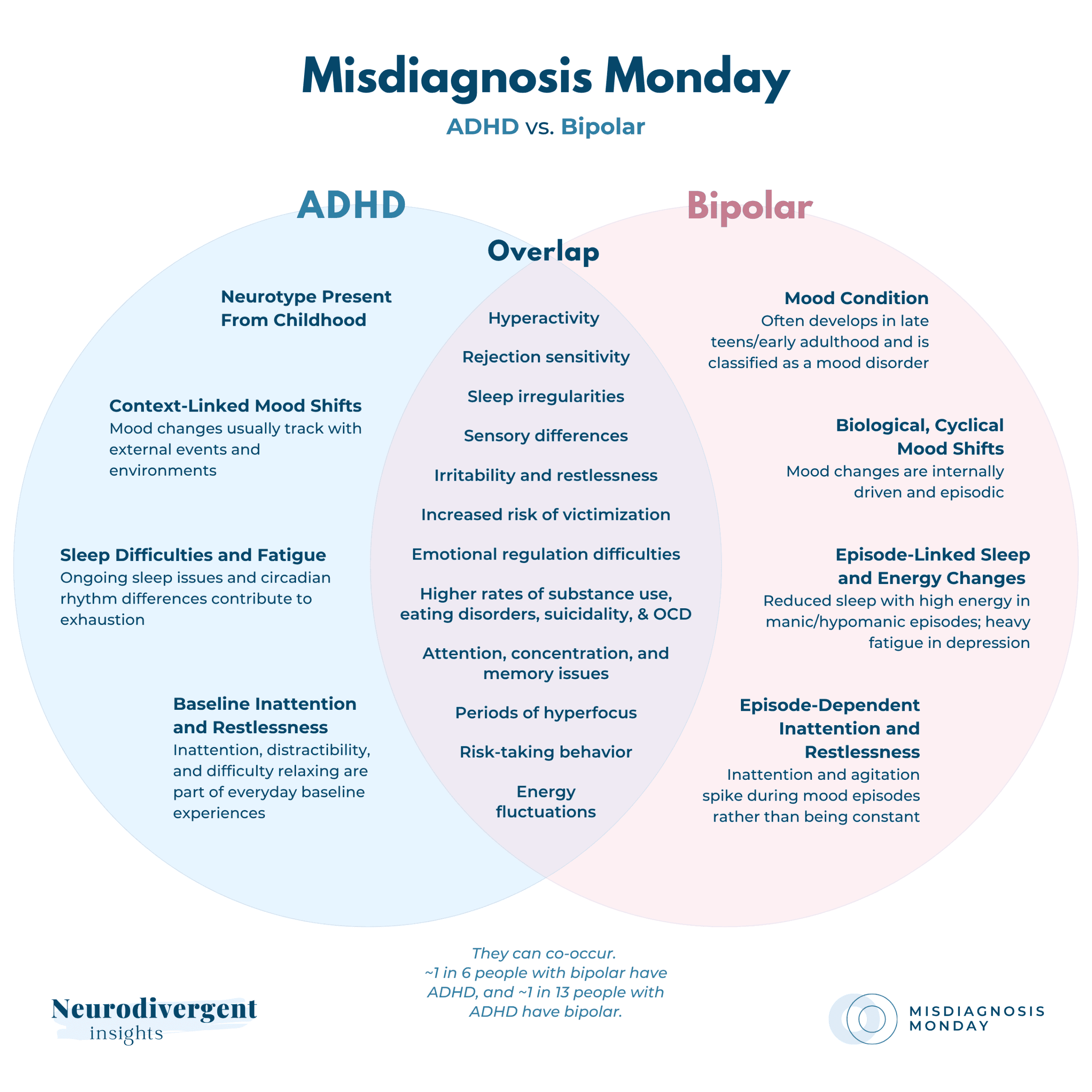
Misdiagnosis happens, but what may happen even more often is one diagnosis being missed when a person has both. Living with both is complex and needs close monitoring.
How Common Are ADHD and Bipolar?
- About 5% of children and teens worldwide have ADHD (one large review), and about 1 in 9 U.S. children have been diagnosed. For adults, estimates run from about 2.6% (ADHD that started in childhood and continued) to about 6.8% (current ADHD symptoms).
- About 4.4% of U.S. adults will have bipolar at some point in their lives (NIMH).
How Often Do ADHD and Bipolar Occur Together?
These figures come from a 2021 meta-analysis of 71 studies.
- Rates vary a lot from study to study, depending on the country, the sample, and the diagnostic system used.
- About 1 in 13 adults with ADHD also have bipolar (about 8%).
- Nearly 1 in 6 adults with bipolar have ADHD (about 17%).
- People with ADHD are at elevated risk for bipolar, and first-degree relatives of people with bipolar are at elevated risk for ADHD. A 2023 meta-analysis found the same two-way link.
What Co-occurrence Means
Unless noted, these come from the same 2021 meta-analysis.

- Bipolar symptoms start about four years earlier in people with co-occurring ADHD.
- When they co-occur, one diagnosis is often missed.
- Early diagnosis and treatment of ADHD helps reduce risks associated with both conditions.
- There is some evidence that early treatment of ADHD can protect against later depression and bipolar. In one Norwegian study of adults with ADHD, those treated with stimulants as children had lower rates of depression and bipolar later in life.
- Co-occurrence has implications for medication (see the medication section below).
What About AuDHD?
Research on autism, ADHD, and bipolar together is still early, but a few threads point the same way. In a large Taiwanese study, autism and ADHD each raised the chance of a later bipolar diagnosis on their own, so AuDHD people may carry two separate risk factors. In a small clinic study of adults diagnosed later in life, bipolar showed up in about 14% of people with both autism and ADHD, compared with about 4% of people with autism alone (Pehlivanidis and colleagues, 2020).
There’s also emerging research suggesting that ADHD adds to the mental health load autistic people carry. In a large U.S. survey study, autistic teens who also had ADHD were more likely to have anxiety and depression than autistic teens without ADHD. And a 2025 genetics study in Nature found that autism diagnosed later in life shares more genetic ground with ADHD, depression, and PTSD than autism diagnosed in early childhood. The researchers stress that these are average differences along a gradient, not two separate types of autism.
I’ve written more personally about living with autism, ADHD, and bipolar in Not Everything Needs an Upside. You can also read more in our article on bipolar and autism.
What Is Bipolar Disorder?
Many people consider bipolar a form of neurodivergence, like ADHD. Bipolar is characterized by distinct mood shifts between mania and depression. Moods may cycle quite rapidly or be more prolonged and distinct from one another. Some mood episodes have “mixed features,” where people experience elements of both highs and lows within a single episode. Psychotic symptoms such as hallucinations may be present during mania.
Types of Bipolar Episodes

Distinct manic episodes
Hypomanic episodes (similar to mania but generally shorter, and can feel more manageable)
Depressive episodes
Mixed features (symptoms of mania and depression in the same episode)
Psychotic symptoms (typically during mania; not everyone experiences these)
Signs of Mania and Hypomania
Mania is characterized by euphoria, a decreased need for sleep, a sense of grandiosity, and increased risk-taking. A person may also experience agitation, irritability, hypervigilance (feeling jumpy), increased sensory sensitivities, and psychotic symptoms (hallucinations and delusions). Hypomania is a less intense version of mania. Signs of mania include:
More energized than usual despite a reduced desire and ability to sleepFeeling so hyper that the person doesn’t act like their usual selfRapidly shifting ideas, racing thoughts, or quickly changing topics when speakingExcessive talking or speaking faster than usual (pressured speech)More social and outgoing than typicalIncreased self-confidence and grandiosity (feeling invincible or on top of the world)More activity, engagement, or restlessness, such as working on many projects at onceIncreased irritability, sometimes aggressionRisky behaviors (driving, sex, substances, or spending)Psychotic symptoms, like hallucinations or delusions (bipolar I only)Signs of Bipolar Depression
During a depressive episode, a person may experience:
 Reduced or lost interest in activities previously enjoyedUnexplained fatigue and exhaustionIntense, overwhelming sadness, hopelessness, and worthlessnessChanges in sleep and appetiteDifficulty concentrating and focusing (executive functioning difficulties)Thoughts of suicide and death
What Is ADHD?
ADHD is a neurodevelopmental difference that is present from childhood and has a strong genetic component. ADHD traits appear in childhood; however, they may not become noticeable until stressors outweigh compensatory strategies. Here are the DSM-5 criteria in brief. (The DSM-5 refers to the ADHD types as “presentations.”)
Inattentive Presentation
To meet diagnostic criteria, children need six of the nine traits, and people 17 and older need five. Several traits must be present before age 12 and cause difficulty in more than one setting, for example, at home and work or home and school.
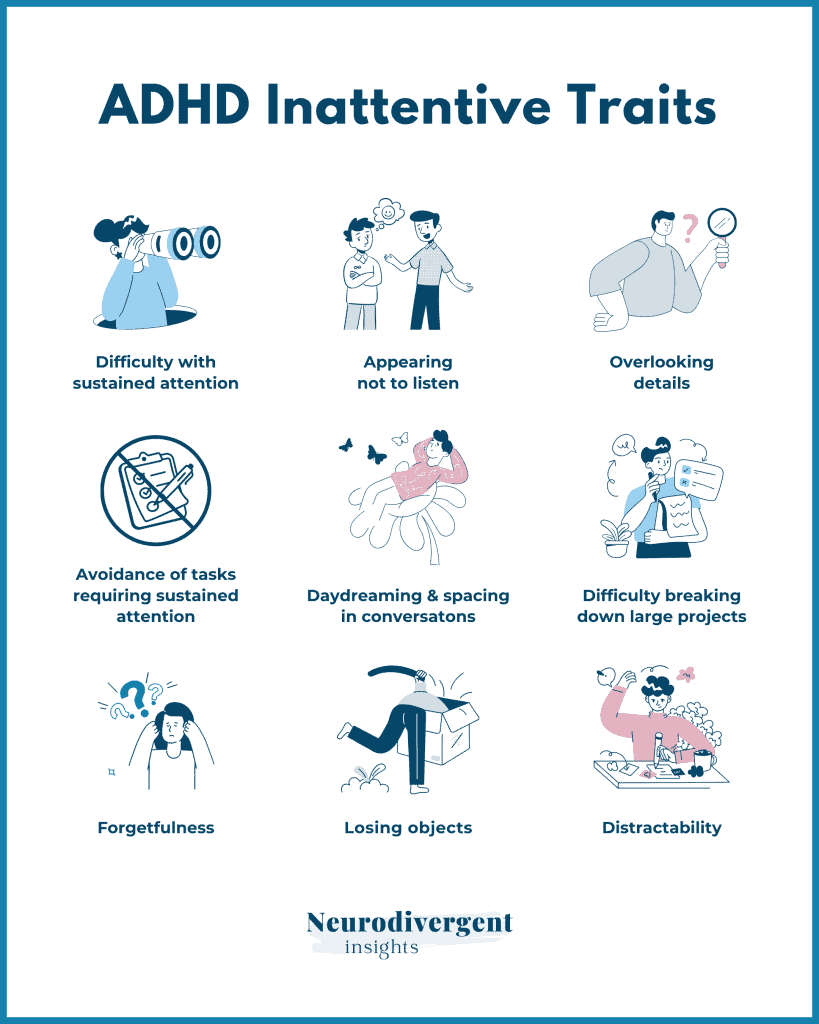
Inattentive traits
Overlooking details
Task inattention
Appearing not to listen or difficulty listening
Failing to finish tasks
Difficulty organizing tasks
Avoiding tasks that require sustained mental effort
Tendency to lose things
Distractibility
Forgetfulness in daily activities
Hyperactive-Impulsive Presentation
The same thresholds apply (six traits for children, five for people 17 and older).

Hyperactive-impulsive traits
Fidgeting or squirming
Leaving their seat when sitting is expected
Running or climbing when it isn’t appropriate (in adults, this may be feeling restless)
Difficulty doing leisure activities quietly
Often “on the go,” as if driven by a motor
Excessive talking
Blurting out answers
Struggling with turn-taking
Interrupting or intruding on others
ADHD or Bipolar? How to Tell the Difference
Mood Shifts
Mood fluctuations are common with ADHD, and they can look like bipolar mood fluctuations.
How to tell the difference: ADHD mood fluctuations are more likely to be situational and tied to an outside cause (rejection sensitive dysphoria, work or school struggles related to ADHD, or sensory overload). Bipolar mood fluctuations are more likely to appear to have no cause (random and cyclical), which makes it harder to pinpoint a reason for a low mood. The mood shifts in bipolar also tend to last longer than those in ADHD, and they tend to be more cyclical (see this ADDitude guide by Janice Rodden and Roberto Olivardia).
What to look for (clinicians): Does the person have a history of depressed mood without a clear cause? Does it have a cyclical nature? Also, be aware that a person with bipolar can have mixed features (symptoms of both mania and depression in the same episode).
Impulsivity and Risk-Taking
A hallmark of mania is risk-taking (risky sex, driving fast, gambling, excessive spending, and more). While impulsivity with ADHD can also show up as reckless behavior, it is more likely to come from not thinking through the consequences of our actions. In mania, a person may behave in ways that are farther from their values and baseline.
What to look for (clinicians): What is the gap between the person’s values or baseline and the behavior?
In the context of ADHD, reckless behavior is often due to difficulty thinking through the consequences of actions. In the context of mania, there is a disregard for consequences.
Restlessness and High Energy
Some of the characteristic experiences of mania can look like ADHD. Restlessness, talkativeness, distractibility, and fidgeting are common both with ADHD hyperactivity and with mania.
What to look for (clinicians): With bipolar, this will be cyclical, will track with other symptoms of mania, and will be absent during depression. For the ADHD person, it is part of their baseline. The quality of the energy differs, too. With ADHD, people can feel excited and energetic; manic energy, however, can be much harder to stop or contain. In the ADDitude guide, Olivardia describes people in mania feeling like there is “electricity going through their bodies that they cannot stop or dampen.”
This can be difficult to tease out when a person has both ADHD and bipolar. In these situations, ADHD symptoms become more exaggerated during mania, and the person will likely benefit from both a stimulant (or bupropion) and a mood stabilizer (psychiatrist Tracey Marks explains this in a video).
Starting Multiple Projects
Because of an interest-based nervous system and attention differences, it is common with ADHD to start multiple projects and fizzle out before they are finished. This is also common during mania.
How to tell the difference: Notice whether it happens alongside other symptoms of mania and is cyclical, or whether it is part of the person’s baseline. With ADHD, a person may be excited to start new projects but lose interest quickly; the interest simply shifts to something new. With mania, the person frantically starts many projects and may struggle to complete them, especially if their mood shifts into depression, when they lose pleasure and interest in everything.
Executive Functioning
Executive functioning differences are a core feature of ADHD. With an interest-based nervous system, focus and attention can become quite difficult when an activity isn’t innately interesting. In bipolar depression, a person can feel slow, unmotivated, foggy, and fatigued, which contributes to attention problems and difficulty starting tasks.
Executive functioning difficulties are most noticeable during a depressive episode in bipolar. But research suggests that even outside a mood episode, people with bipolar can struggle with executive functioning tasks. As psychiatrist Susan Stern notes:
Patients with bipolar disorder often manifest cognitive disturbances during acute manic, depressive, and mixed states, which include difficulties with attention, concentration, planning, and memory. It may come as a surprise, though, to learn that cognitive deficits can persist into euthymia – a state of relative mood stability. Indeed, approximately 40 % of euthymic bipolar patients show evidence of cognitive impairment involving attention, executive function (i.e., planning and organization, cognitive flexibility and set-shifting, and working memory), verbal memory, processing speed, and visual memory. Patients with bipolar I and bipolar II disorder appear to have a similar pattern of deficits.
Sleep Changes
Changes in sleep are common with ADHD. One review estimates that 25–50% of people with ADHD seen in clinics have sleep problems, such as insomnia or another sleep disorder (circadian rhythm sleep disorder, sleep-disordered breathing, restless legs syndrome, or narcolepsy). During mania, sleep is often disrupted, and a person may go with little or no sleep.
How to tell the difference: A key feature of mania is a sudden change in sleep. A person may go from a fairly typical sleep schedule to sleeping only 1–3 hours a night without feeling fatigued (or may be awake for a few days straight). In the context of mania, the person will not be tired. With ADHD, people feel the impact of reduced sleep: executive functioning often gets worse, and they feel fatigued.
Appetite Changes
It is not uncommon for appetite and weight to ebb and flow with ADHD. Appetite shifts are also common in bipolar. A person may lose their appetite and significant weight over a short time during mania. On the flip side, appetite may increase (or decrease) during a depressive episode, which also contributes to weight changes.
How to tell the difference: Notice whether the appetite or weight change is connected to an underlying mood cycle (distinct manic or depressive symptoms) or to behavioral and environmental factors. For example, if an ADHDer is hyperfocused on a project and eating less, the appetite change is more situational.
Dissociation
Dissociation covers a wide range, from mild zoning out to identity shifts. One case report raised the idea that dissociative identity disorder and bipolar might share some “neurophysiological architecture.” Dissociative experiences also show up in bipolar depression, more so than in unipolar depression (one 2018 study). Dissociation can also be linked to sensory overload, which can tip some of us into a freeze response (part of the nervous system’s threat response) that can look like mild dissociation.
How to tell the difference: Notice whether it happens during a mood episode or is triggered by sensory overload. People with bipolar can also have sensory sensitivities, though these tend to be more pronounced during mania (while dissociation in bipolar tends to be more pronounced during depression).
Sensory Sensitivities
Sensory sensitivity is common in ADHD; it is a lesser-known part of bipolar. In one clinic study, most people with bipolar described changes in their senses during hypomania or mania, usually heightened ones. People with bipolar I may also filter out repeated sounds less well (one small brain-imaging study).
How to tell the difference: With ADHD, sensory sensitivity tends to be a steady part of a person’s baseline. With bipolar, sensory changes tend to come and go with mood episodes, often sharpening during hypomania or mania.
Rejection Sensitivity
Rejection sensitive dysphoria (an intense reaction to perceived rejection; it isn’t a formal diagnosis) often co-occurs with ADHD. In bipolar, rejection sensitivity can rise during depressive episodes (one 2014 study).
How to tell the difference: With ADHD, rejection sensitivity is usually a lifelong pattern that flares in response to a specific moment of perceived rejection. With bipolar, it tends to rise and fall with depressive episodes.
Hyperfocus
People with ADHD don’t have a lack of focus; we have difficulty regulating focus and can hyperfocus on a project of interest. During mania, a person may also experience hyperfocus.
Loss of Pleasure vs. Boredom
It is common with both ADHD and mania to start many projects and not finish them. With ADHD, this may come from getting bored with projects easily. With bipolar, a person may lose a sense of pleasure in all activities during a depressive episode.
Shared Risks: Eating Disorders, Substance Use, Self-Harm, and More
Along with overlapping traits, many of us who live with ADHD, bipolar, or both share a set of psycho-social risks.
Eating Disorders
Co-occurring eating disorders are common in both.
- Many people with bipolar have eating issues like bulimia nervosa, anorexia nervosa, and binge-eating disorder. A 2011 study of 875 people with bipolar found that 14% (about 1 in 7) met criteria for a lifetime eating disorder (McElroy and colleagues).
- In a five-year study, girls with ADHD were 3.6 times more likely to develop an eating disorder than girls without ADHD (16% vs. 5%). A large U.S. study also linked ADHD with both binge/purge and restrictive eating.
Substance Use
Substance use disorders are common among both ADHDers and people with bipolar. This may be related to a tendency to self-medicate, self-soothe, or regulate sensory experiences, or it may happen alongside co-occurring depression or anxiety.
- One review found that about 25% of adults and 30% of teens in treatment for alcohol and drug use have ADHD, compared with 2–5% of adults in the general population.
- At least 40% of people with bipolar I, and at least 20% with bipolar II, have had a substance use disorder. Drugs and alcohol often make bipolar symptoms worse. Alcohol was the most commonly misused substance (one study of people with bipolar).
OCD
Both have higher rates of OCD.
- About 1 in 6 people with OCD also have ADHD. Going the other way, a 2025 meta-analysis of ADHD children and teens estimated that about 4% had OCD. You can read more about ADHD and OCD here.
- Lifetime OCD among people with bipolar was 11–21%, and bipolar occurred in 6–10% of people with OCD (a 2014 systematic review). Compared with people with OCD alone, OCD symptoms in people with both tended to come and go more, getting worse during depression and easing during mania or hypomania. People with both also tended to have more depressive episodes, possibly more mania triggered by antidepressants, and higher risks of suicidality and substance use than people with bipolar alone.
Self-Harm and Suicide
This section covers self-harm and suicide. If that feels too activating right now, skip ahead to Victimization.
Self-harm and suicidality are high in both groups. Self-harm may be an attempt to regulate sensory load or difficult emotions.
- Self-harm is alarmingly high among girls with ADHD. Girls are more prone to internalize many ADHD symptoms. In a study that followed girls with ADHD into early adulthood, 51% of those with the combined presentation had self-injured, compared with 19% of girls without ADHD, and 22% had attempted suicide, compared with 6%.
- In a Finnish birth-cohort study, adolescents with ADHD reported more deliberate self-harm (69% vs. 32%) and more suicidal thoughts (57% vs. 28%) than adolescents without ADHD. A 2014 review found a consistent link between ADHD and self-harm across studies.
- The rate of suicide is about 10–30 times higher among people with bipolar. Up to 20% of people with bipolar (mostly untreated) die by suicide, and 20–60% have made at least one suicide attempt in their lifetime (a 2019 review).
- Among adults, 52% of people with bipolar had self-harmed at least once, compared with 37% of people with depression (one 2017 study).
If you are in crisis or struggling with thoughts of suicide, our neurodivergent crisis support page lists affirming places to reach out.
Victimization
Both groups have elevated rates of victimization. This is likely even higher for people with ADHD or bipolar who hold other marginalized identities.
- ADHD traits, particularly hyperactivity-impulsivity, are linked to a higher risk of peer victimization (one 2021 study; see also Humphrey and colleagues).
- Girls with ADHD may be at particular risk.
- One study of adults with serious mental illness (not bipolar alone) found that about 1 in 4 had been victimized, and women had about twice the odds.
Clinician’s Corner: Screening for ADHD and Bipolar
Screening for ADHD
Screening questions from Katzman and colleagues (2017):
Have you had long-standing and consistent problems with attention and distractibility?
Have your current complaints been present over the last 10 or 20 years?
If I could see you in the classroom when you were a child, what would you be like?
If these questions point to possible ADHD, a routine screener such as the Adult ADHD Self-Report Scale (ASRS) can be used. An in-depth clinical interview for ADHD, such as the ACE+ (free to download), can also help. You may also include:
Wender-Reimherr Adult Attention Deficit Disorder Scale (WRAADDS)
Conners Adult ADHD Rating Scales (CAARS)
Barkley Deficits in Executive Functioning Scale (BDEFS for Adults)
Weiss Functional Impairment Rating Scale (WFIRS)
Adult ADHD Quality of Life Scale (AAQoL)
For more on these tools, see ADHD Screeners: 5 Tools I Use in Clinical Practice.
Screening for Bipolar
- Assess for psychosis. With bipolar I, a person may have psychotic symptoms (delusions or hallucinations), most often during mania. These are not symptoms of ADHD.
- Assess for classic manic symptoms, such as an inflated sense of self or grandiosity that differs from the person’s baseline.
- Routinely include the Mood Disorder Questionnaire (MDQ) in ADHD assessments and intake paperwork.
- Consider the DES-II, given the higher rate of dissociative experiences in bipolar. It is a 28-item scale, rated from 0 to 100% in steps of 10, that measures how often dissociative experiences happen (for ages 18+).
- Clinical interview. For screening questions, see the last several slides of this UW PACC presentation, “Bipolar Disorder: Screening and Diagnosing in Primary Care,” or consider the SCID-5-CT.
Why It Matters for Medication
Research on medication is mixed. Current research points to stimulant medication being safe with bipolar, and stimulants continue to be used as first-line treatment for ADHD with bipolar. Still, there is some risk that a stimulant could worsen or trigger mania (Katzman and colleagues, 2017).
The person will likely benefit from closer medication management and monitoring to make sure the stimulant does not worsen mania. Prescribers who want to proceed with caution may start with bupropion. For example, the Canadian Network for Mood and Anxiety Treatments (CANMAT) recommends bupropion as first-line treatment for people with co-occurring ADHD and bipolar, followed by a stimulant (as reported by Katzman and colleagues).
Others suggest that a long-acting stimulant can be useful once mood is stabilized with a mood stabilizer, and newer research fits with this order. One large Swedish study found that starting methylphenidate raised the risk of mania only in people with bipolar who weren’t also taking a mood stabilizer. A 2024 review by the International Society for Bipolar Disorders reached a similar conclusion. Even so, the person should still be monitored closely for stimulant-associated mania or hypomania.
A Few Closing Thoughts
ADHD and bipolar can look alike, and they can also show up together. Asking when a trait started, and whether it comes and goes with mood or is part of a person’s baseline, helps tell them apart.
For those of us who live with both, having both named can change a lot, from how medication is approached to how we make sense of our own ups and downs. If one diagnosis has never fully explained what you live with, it’s worth raising with your care team.
ADHD and Bipolar FAQs
Can ADHD be mistaken for bipolar disorder?
Yes. Restlessness, talkativeness, distractibility, impulsivity, and mood shifts can show up in both. ADHD traits are part of a person’s baseline, while bipolar symptoms tend to come in episodes that track with mood.
Can you have both ADHD and bipolar?
Yes. About 1 in 13 adults with ADHD also have bipolar, and nearly 1 in 6 adults with bipolar have ADHD. When both are present, one diagnosis is often missed.
How can you tell ADHD mood swings from bipolar mood episodes?
ADHD mood shifts are usually tied to something that happened, like rejection, sensory overload, or work or school stress. Bipolar mood episodes tend to last longer, come in cycles, and can show up without a clear cause.
Are stimulants safe for people with ADHD and bipolar?
Current research suggests stimulants can be used, but there is some risk they could trigger mania. In a large Swedish study, the higher risk showed up only in people who weren’t also taking a mood stabilizer, so close monitoring with a prescriber matters.
Additional Resources

How Are ADHD and Bipolar Related? A closer look at how often they co-occur and why

Bipolar vs. Autism: differences, overlap, and assessment

Bipolar 1 vs. Bipolar 2: what’s the real difference?
ADHD DSM in Pictures and Bipolar 1 DSM in Pictures: visual guides to the criteria
Keeping Your Balance (Centre for Clinical Interventions): free, self-paced bipolar workbook modules with mood tracking
Neurodivergent Crisis Support: affirming places to reach out
This post contains affiliate links. If you buy through them, we may earn a small commission at no extra cost to you. We only link to things we use or trust.
For clinicians: Executive Functions by Russell Barkley
ADHD reads: Outside the Box by Thomas E. Brown and A Radical Guide for Women with ADHD by Sari Solden and Michelle Frank
Bipolar reads: The Bipolar II Disorder Workbook and The Bipolar Disorder Survival Guide by David Miklowitz
 Stay in the Neurodivergent Loop
For ongoing insights and updates, subscribe to the Neurodivergent Insights Newsletter. Each Sunday, I send out fresh thoughts and a roundup of the newest resources on topics related to neurodivergence, mental health, and wellness. My most personal writing is reserved for my newsletter, and subscribers also get access to the newsletter vault (12+ PDFs) when they join.
References
Accardo, A. L., Pontes, N. M. H., & Pontes, M. C. F. (2022). Heightened anxiety and depression among autistic adolescents with ADHD: Findings from the National Survey of Children’s Health 2016–2019. Journal of Autism and Developmental Disorders.
Allely, C. S. (2014). The association of ADHD symptoms to self-harm behaviours: A systematic PRISMA review. BMC Psychiatry, 14, 133.
Amerio, A., Odone, A., Liapis, C. C., & Ghaemi, S. N. (2014). Diagnostic validity of comorbid bipolar disorder and obsessive-compulsive disorder: A systematic review. Acta Psychiatrica Scandinavica, 129(5), 343–358.
Biederman, J., Ball, S. W., Monuteaux, M. C., Surman, C. B., Johnson, J. L., & Zeitlin, S. (2007). Are girls with ADHD at risk for eating disorders? Results from a controlled, five-year prospective study. Journal of Developmental & Behavioral Pediatrics, 28(4), 302–307.
Bleck, J. R., DeBate, R. D., & Olivardia, R. (2015). The comorbidity of ADHD and eating disorders in a nationally representative sample. Journal of Behavioral Health Services & Research, 42, 437–451.
Cerullo, M. A., & Strakowski, S. M. (2007). The prevalence and significance of substance use disorders in bipolar type I and II disorder. Substance Abuse Treatment, Prevention, and Policy, 2, 29. https://doi.org/10.1186/1747-597X-2-29
Chatterjee, S. S., Pal, A., Mallik, N., Ghosal, M., & Saha, G. (2018). Dissociative experience in unipolar and bipolar depression: Exploring the great divide. Clinical Psychopharmacology and Neuroscience, 16(3), 262–266. https://doi.org/10.9758/cpn.2018.16.3.262
Chengappa, K. R., Levine, J., Gershon, S., & Kupfer, D. J. (2000). Lifetime prevalence of substance or alcohol abuse and dependence among subjects with bipolar I and II disorders in a voluntary registry. Bipolar Disorders, 2(3), 191–195. https://doi.org/10.1034/j.1399-5618.2000.020306.x
Chien, Y.-L., Wu, C.-S., & Tsai, H.-J. (2021). The comorbidity of schizophrenia spectrum and mood disorders in autism spectrum disorder. Autism Research, 14(3), 571–581.
Danielson, M. L., et al. (2024). ADHD prevalence among U.S. children and adolescents in 2022. Journal of Clinical Child & Adolescent Psychology, 53(3), 343–360.
Dome, P., Rihmer, Z., & Gonda, X. (2019). Suicide risk in bipolar disorder: A brief review. Medicina, 55(8), 403. https://doi.org/10.3390/medicina55080403
Ehnvall, A., et al. (2014). Rejection sensitivity and pain in bipolar versus unipolar depression. Bipolar Disorders, 16(2), 190–198. https://doi.org/10.1111/bdi.12147
Halmøy, A., Fasmer, O. B., Gillberg, C., & Haavik, J. (2009). Occupational outcome in adult ADHD: Impact of symptom profile, comorbid psychiatric problems, and treatment. Journal of Attention Disorders, 13(2), 175–187. https://doi.org/10.1177/1087054708329777
Hargis, B. (2020, January 1). Overstimulation and the dissociative brain. HealthyPlace. https://www.healthyplace.com/blogs/dissociativeliving/2020/1/overstimulation-and-the-dissociative-brain
Hinshaw, S. P., et al. (2012). Prospective follow-up of girls with ADHD into early adulthood: Continuing impairment includes elevated risk for suicide attempts and self-injury. Journal of Consulting and Clinical Psychology, 80(6), 1041–1051.
Humphrey, J. L., Storch, E. A., & Geffken, G. R. (2007). Peer victimization in children with attention-deficit hyperactivity disorder. Journal of Child Health Care, 11(3), 248–260.
Hurtig, T., Taanila, A., Moilanen, I., Nordström, T., & Ebeling, H. (2012). Suicidal and self-harm behaviour associated with adolescent ADHD: A study in the Northern Finland Birth Cohort 1986. Nordic Journal of Psychiatry, 66(5), 320–328.
Katzman, M. A., Bilkey, T. S., Chokka, P. R., et al. (2017). Adult ADHD and comorbid disorders: Clinical implications of a dimensional approach. BMC Psychiatry, 17, 302. https://doi.org/10.1186/s12888-017-1463-3
Khoury, E., Acquaviva, E., Purper-Ouakil, D., et al. (2023). Meta-analysis of personal and familial co-occurrence of attention deficit/hyperactivity disorder and bipolar disorder. Neuroscience & Biobehavioral Reviews, 146, 105050.
Marks, T. ADHD vs. bipolar disorder: How to tell the difference [Video]. YouTube. https://www.youtube.com/watch?v=pGUvXPL57as
McElroy, S. L., et al. (2011). Prevalence and correlates of eating disorders in 875 patients with bipolar disorder. Journal of Affective Disorders, 128(3), 191–198. https://doi.org/10.1016/j.jad.2010.06.037
Miskowiak, K. W., Obel, Z. K., Guglielmo, R., et al. (2024). Efficacy and safety of established and off-label ADHD drug therapies for cognitive impairment or attention-deficit hyperactivity disorder symptoms in bipolar disorder: A systematic review by the ISBD Targeting Cognition Task Force. Bipolar Disorders, 26(3), 216–239.
National Institute of Mental Health. Bipolar disorder statistics.
Njardvik, U., Wergeland, G. J., Riise, E. N., Hannesdottir, D. K., & Öst, L.-G. (2025). Psychiatric comorbidity in children and adolescents with ADHD: A systematic review and meta-analysis. Clinical Psychology Review, 118, 102571.
Papadopoulos, A., Seguin, D., Correa, S., et al. (2021). Peer victimization and the association with hippocampal development and working memory in children with ADHD and typically-developing children. Scientific Reports, 11, 16411.
Parker, G., Paterson, A., Romano, M., & Graham, R. (2017). Altered sensory phenomena experienced in bipolar disorder. American Journal of Psychiatry, 174(12), 1146–1150. https://doi.org/10.1176/appi.ajp.2017.16121379
Pehlivanidis, A., Papanikolaou, K., Mantas, V., et al. (2020). Lifetime co-occurring psychiatric disorders in newly diagnosed adults with attention deficit hyperactivity disorder (ADHD) or/and autism spectrum disorder (ASD). BMC Psychiatry, 20, 423.
Polanczyk, G., de Lima, M. S., Horta, B. L., Biederman, J., & Rohde, L. A. (2007). The worldwide prevalence of ADHD: A systematic review and metaregression analysis. American Journal of Psychiatry, 164(6), 942–948.
Rodden, J., & Olivardia, R. ADHD vs. bipolar: A guide to distinguishing look-alike conditions. ADDitude. https://www.additudemag.com/adhd-vs-bipolar-a-guide-to-distinguishing-look-alike-conditions/
Savitz, J., Solms, M., Pietersen, E., Ramesar, R., & Flor-Henry, P. (2004). Dissociative identity disorder associated with mania and change in handedness. Cognitive and Behavioral Neurology, 17(4), 233–237. https://pubmed.ncbi.nlm.nih.gov/15622020/
Schiweck, C., et al. (2021). Comorbidity of ADHD and adult bipolar disorder: A systematic review and meta-analysis. Neuroscience & Biobehavioral Reviews, 124, 100–123. https://doi.org/10.1016/j.neubiorev.2021.01.017
Sharma, E., et al. (2021). Comorbidities in obsessive-compulsive disorder across the lifespan: A systematic review and meta-analysis. Frontiers in Psychiatry, 12, 703701.
Smith, B. H., Molina, B., & Pelham, W. E., Jr. (2002). The clinically meaningful link between alcohol use and ADHD. Alcohol Research & Health, 26(2), 122–129.
Song, P., et al. (2021). The prevalence of adult attention-deficit hyperactivity disorder: A global systematic review and meta-analysis. Journal of Global Health, 11, 04009. https://doi.org/10.7189/jogh.11.04009
Stern, S. (2017). My mood is better, so why am I struggling so much? Cognitive challenges in bipolar disorder. Chicago Psychiatry Associates. https://www.chicagopsychiatryassociates.org/blog/2017/11/13/my-mood-is-better-so-why-am-i-struggling-so-much-cognitive-challenges-in-bipolar-disorder/
Viktorin, A., Rydén, E., Thase, M. E., et al. (2017). The risk of treatment-emergent mania with methylphenidate in bipolar disorder. American Journal of Psychiatry, 174(4), 341–348.
Wajszilber, D., Santisteban, J. A., & Gruber, R. (2018). Sleep disorders in patients with ADHD: Impact and management challenges. Nature and Science of Sleep, 10, 453–480. https://doi.org/10.2147/NSS.S163074
Wang, Y., et al. (2014). Auditory M50 and M100 sensory gating deficits in bipolar disorder: A MEG study. Journal of Affective Disorders, 152, 131–138. https://doi.org/10.1016/j.jad.2013.08.010
Weintraub, M. J., Van de Loo, M. M., Gitlin, M. J., & Miklowitz, D. J. (2017). Self-harm, affective traits, and psychosocial functioning in adults with depressive and bipolar disorders. Journal of Nervous and Mental Disease, 205(11), 896–899. https://doi.org/10.1097/NMD.0000000000000744
White, M. C., Chafetz, L., Collins-Bride, G., & Nickens, J. (2006). History of arrest, incarceration and victimization in community-based severely mentally ill. Journal of Community Health, 31(2), 123–135. https://doi.org/10.1007/s10900-005-9005-1
Wiener, J., & Mak, M. (2009). Peer victimization in children with attention-deficit/hyperactivity disorder. Psychology in the Schools, 46(2), 116–131.
Zhang, X., Grove, J., Gu, Y., et al. (2025). Polygenic and developmental profiles of autism differ by age at diagnosis. Nature, 646, 1146–1155.