
The Autistic and ADHD nervous system is often more sensitive. Many of us struggle to adapt to change, stress, and conflict, and Autistic and ADHD people are more likely to live with anxiety and depression. One 2019 meta-analysis estimated that about 20% of Autistic people have an anxiety disorder and about 11% a depressive disorder.
When I was working with neurodivergent clients, part of what I did was help them understand what was going on in their nervous system. As an Autistic ADHDer myself, I know firsthand how much this understanding matters. When we learn why our nervous systems behave the way they do, we can start to work with them rather than against them.
If you’d like more support putting these ideas into practice, my Nervous System Workbook walks you through tracking your own nervous system and building exercises into your routine.
Table of Contents
How to Use This Article
There’s a lot packed into this article, so please take your time and come back when you need to. When you get to the exercises at the end, try them one or two at a time. Too many changes at once can overwhelm the body and do more harm than good.
The Neurodivergent Nervous System
Before getting into the neurodivergent nervous system, here’s a quick refresher on what we mean by “the nervous system.” The human nervous system has two major parts.
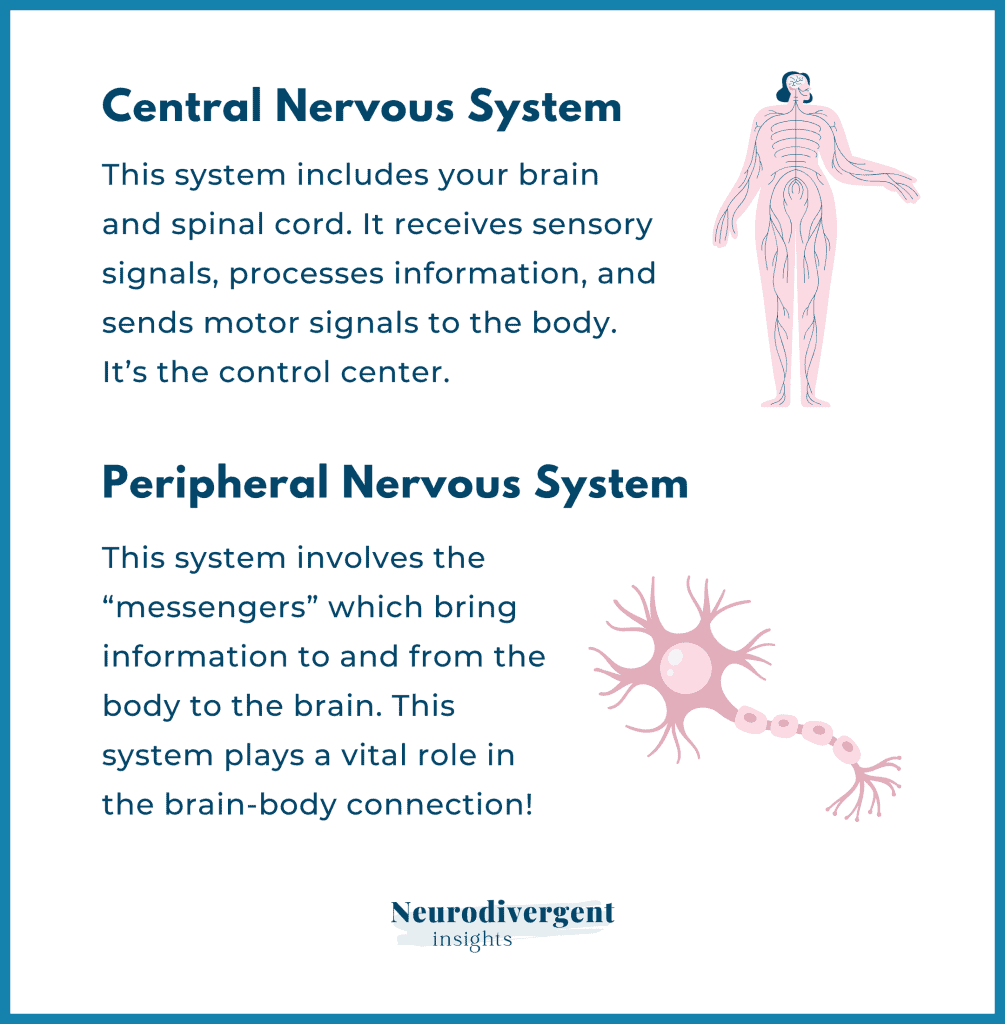
The first is the central nervous system (CNS), made up of the brain and the spinal cord. The CNS receives sensory signals, processes information, and sends motor signals to the body. It’s the control center.
The second is the peripheral nervous system (PNS), which includes all the nerves outside the brain and spinal cord. It carries commands from the CNS to the body and brings back information about what’s happening inside and around us. The PNS plays a big role in the mind-body connection.
The Peripheral Nervous System
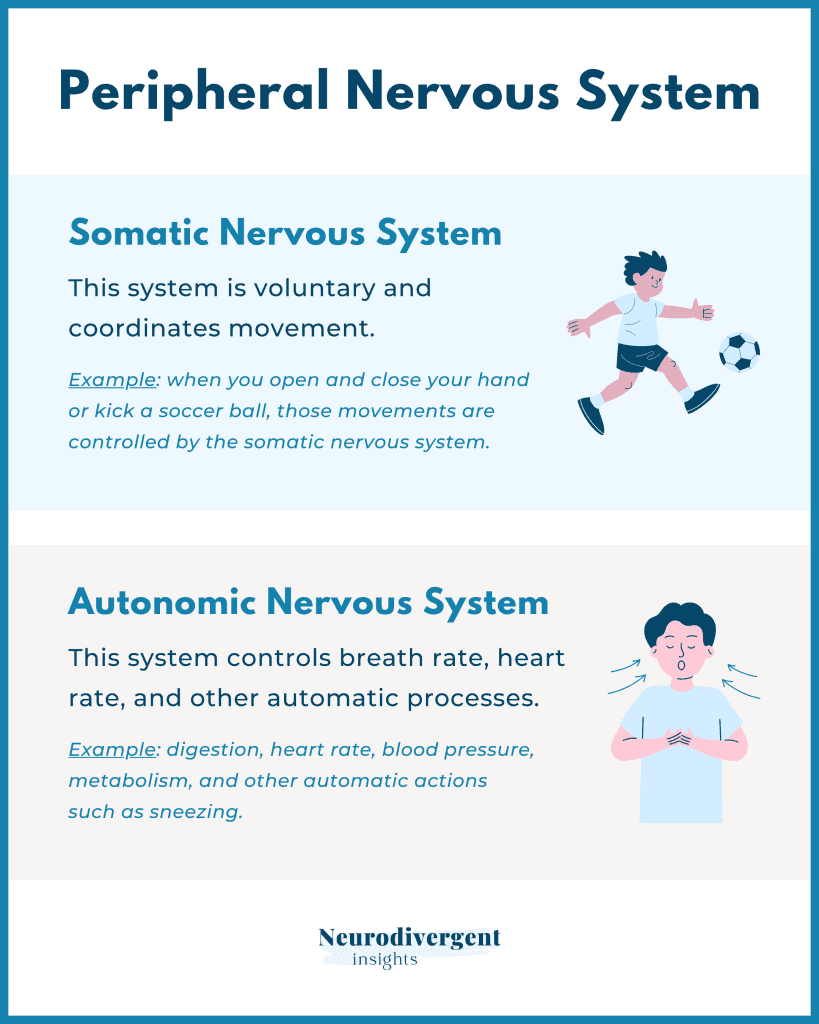
The PNS also has two parts. The first is the somatic nervous system, which handles voluntary movement. When you open and close your hand or kick a ball, that’s the somatic nervous system.
The second is the autonomic nervous system, which runs everything we don’t consciously control: digestion, heart rate, blood pressure, metabolism, and (most of the time) breathing. When we talk about trauma, anxiety, and nervous system regulation, the autonomic nervous system is the main player, so it’s the focus of the rest of this article.
The Autonomic Nervous System
The autonomic nervous system also has two branches: the sympathetic nervous system and the parasympathetic nervous system. In a regulated body, they work together like the gas and brake pedals of a car. The sympathetic branch is the gas pedal, activating and speeding up the body’s systems; when your heart rate rises, that’s sympathetic activation. The parasympathetic branch is the brake, slowing things down; when your heart rate slows, that’s the parasympathetic branch at work.
The hypothalamus, a part of the brain, is a key control center for both branches and helps keep the body in balance.
The Sympathetic Nervous System
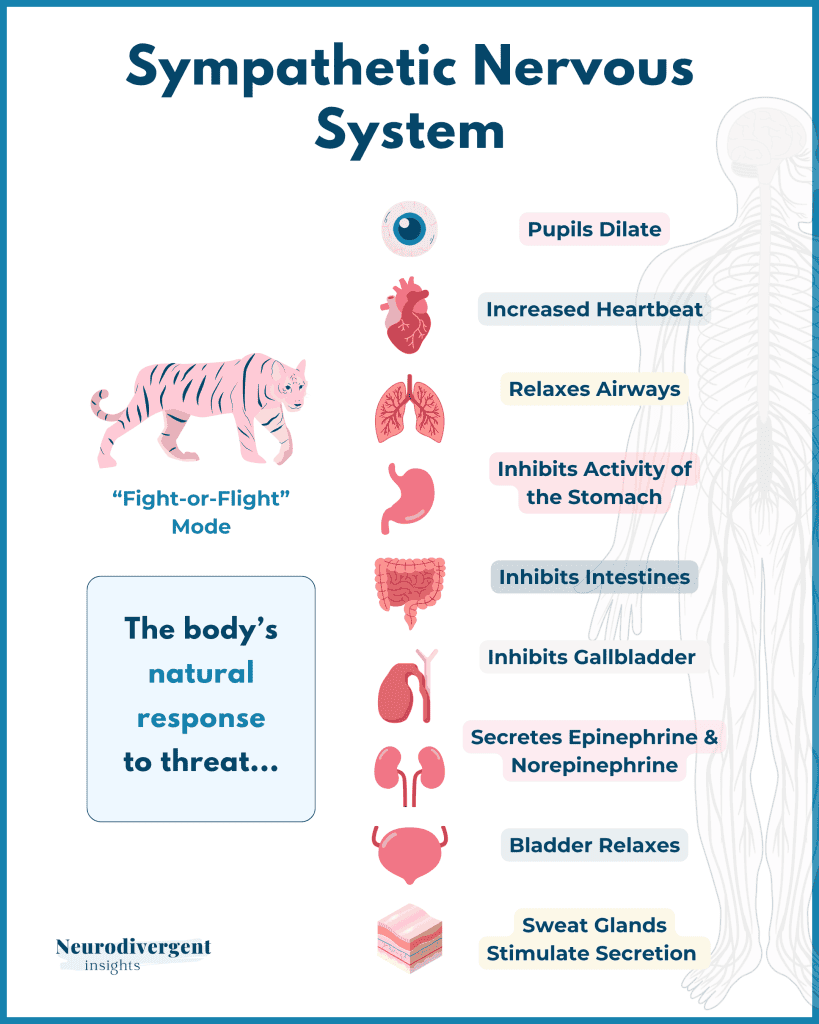
The sympathetic nervous system activates the body. We can really see it in action when we’re stressed, because it switches on our “fight or flight” response. Heart rate, breathing, and blood pressure rise, pupils dilate, and muscles tense, all to mobilize us for action. Hormones join in too: a rush of adrenaline and cortisol boosts our energy and helps the body meet the stressor.
Here are some of the changes that happen when the sympathetic nervous system, or “fight or flight” response, is activated:
- Rapid heart rate
- Fast, shallow breathing
- Increased blood pressure
- Dilated pupils
- High levels of adrenaline and cortisol
- Muscle tension
- Increased energy
- Increased vigilance
- Narrow focus
- Slowed digestion
- Immune function dialed down (especially with ongoing stress)
- Decreased sexual arousal
All of these changes help us fight or flee, take in critical information about our surroundings, and pause processes we don’t need in the moment, like digestion.
This is all unconscious. Whatever the body reads as a threat, the threat response switches on, whether or not you think it’s reasonable. Being stalked by an animal in the woods and hearing your boss say they need to talk to you privately can set off the same response. And because many of our bodies are more sensitive to stimulation, a loud sound or an unexpected touch can set it off too.
The Parasympathetic Nervous System
Working in the opposite direction, the parasympathetic nervous system lets the body slow down. It’s responsible for “rest and digest.” You might notice it at the end of the day, while stretching, or while meditating: your heart rate and breathing slow, your breaths get fuller, and your muscles relax. Just as sympathetic activation keeps us safe, parasympathetic activation lets us recover. It helps us digest, heal, fight off infections, and fall asleep.
Here’s what’s going on in the body in “rest and digest”:
- Slow, steady heart rate
- Deep breathing
- Lower blood pressure
- Smaller pupils
- Low levels of adrenaline and cortisol
- Relaxed muscles
- Lower energy or sleepiness
- Lower vigilance
- Broad awareness
- Increased digestion
- Immune function and bodily repair
- Increased sexual arousal
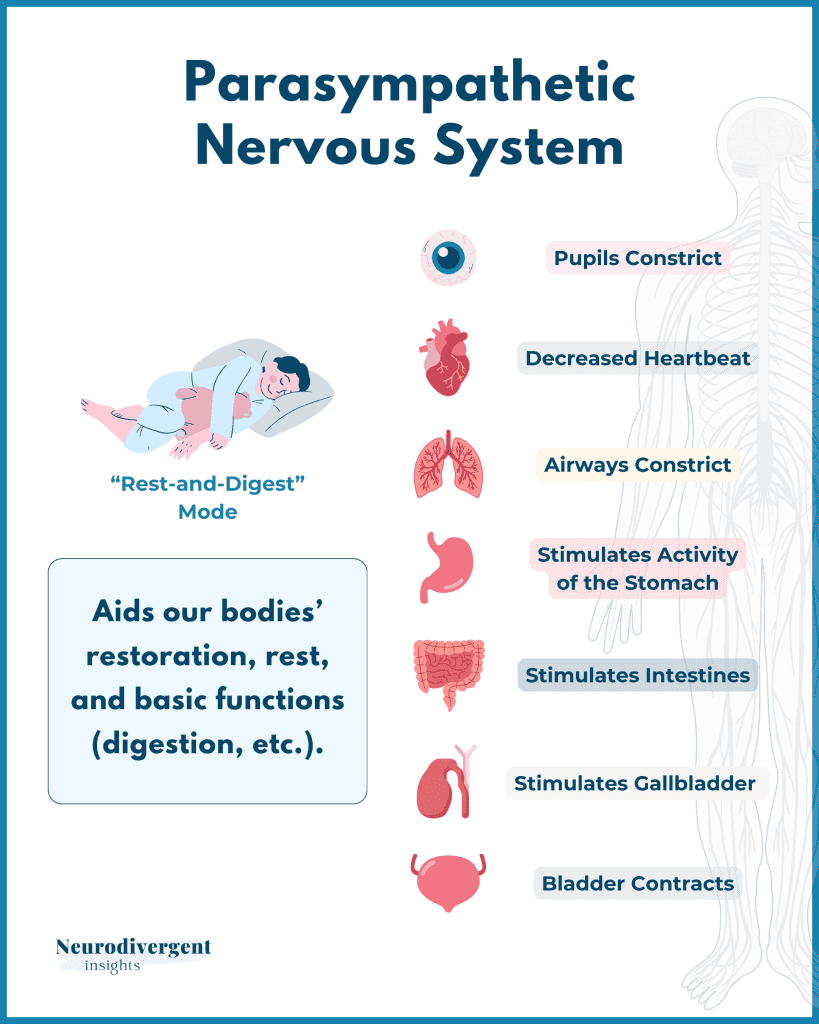
Like the sympathetic branch, this system is unconscious. The body only switches on “rest and digest” after it has scanned the environment and decided it’s safe, no matter how relaxed you think you should feel. For many of us, the body is picking up more information, which can make it harder to convince it that we’re safe. This is true for many people with trauma too.
Two things help us understand how regulated our autonomic nervous system is: the vagus nerve and vagal tone.
The Vagus Nerve
The vagus nerve, also called the 10th cranial nerve, is the main nerve of the parasympathetic nervous system. Its name comes from the Latin vagus, meaning “wanderer,” which fits its reach through the body. It connects the brain to many major organs, including the heart, lungs, and digestive system, and helps regulate heart rate, digestion, breathing, and reflexes like coughing and swallowing.
The vagus nerve is also one of the main lines of communication between the gut and the brain, and it helps calm the body after the sympathetic nervous system has been activated.
Vagal Tone
Vagal tone refers to the activity of the vagus nerve. Higher vagal tone is linked with a more flexible nervous system, where the sympathetic and parasympathetic branches work together smoothly. Lower vagal tone means the nervous system has a harder time shifting between them, which puts more strain on it.
Autistic and ADHD people often have what I call a more “rigid nervous system.” Research points in a similar direction: a 2020 meta-analysis of 34 studies found lower resting heart rate variability (HRV), a common measure of vagal tone, in Autistic people, and a 2019 meta-analysis found slightly lower HRV in ADHD during tasks, though findings in ADHD are mixed.
When we talk about nervous system healing and building resilience to stress, vagal tone matters. Higher vagal tone is linked with a wider window of tolerance and more room to adapt to stress.
The Autistic and ADHD Nervous System and the Window of Tolerance
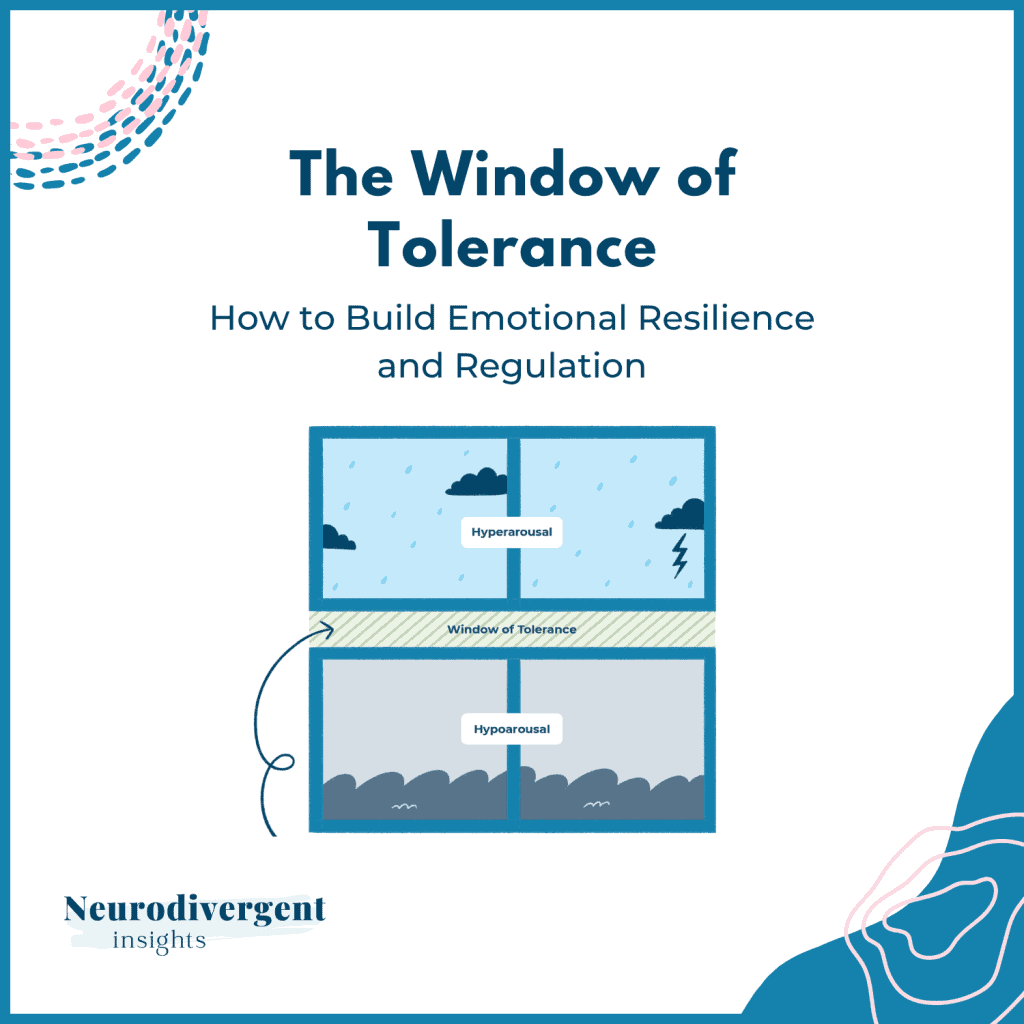
When our nervous systems are in balance, we’re in what’s called the window of tolerance. Here, we can respond to stress, stay present and calm, and recover fairly quickly. But the window has limits. When stress is extreme, or keeps coming without the support or time we need to recover, we tip out of the window into hyperarousal or hypoarousal. (I go deeper into the window in The Window of Tolerance: How to Widen It.)
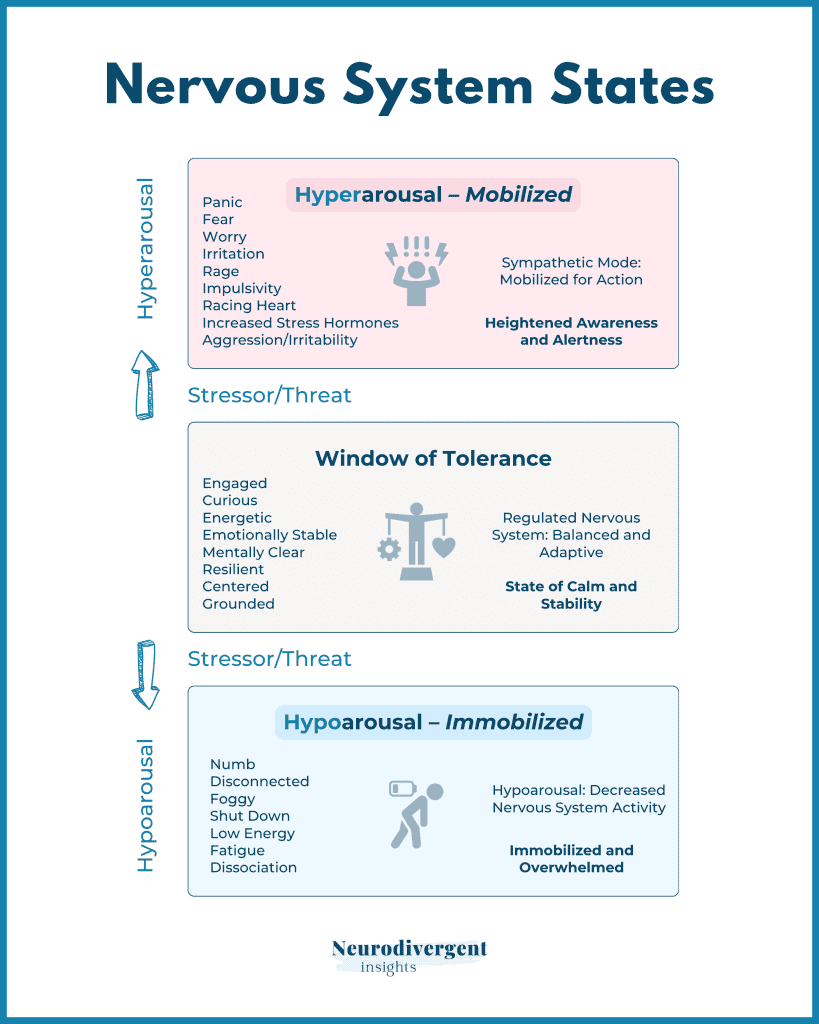
Hyperarousal
In hyperarousal, the body is mobilized to face a perceived danger, and the sympathetic nervous system is highly active. This brings more energy, vigilance, and physical readiness. When it lasts, it can show up as anger, anxiety, hypervigilance, and even paranoia.
Hyperarousal helped our ancestors survive immediate threats, and afterward it mattered to “shake off” the extra energy. Modern life brings many subtle, chronic stressors, like public speaking, money pressure, or conflict, and our bodies respond to them much as they would to physical danger. That can leave many people stuck in hyperarousal for long stretches.
Hypoarousal
Under overwhelming stress, the body may move into hypoarousal, a state of shutdown. The body and mind slow down, and we may feel fatigue, numbness, dissociation, foggy thinking, or even physical immobility.
This response is thought to protect us from overwhelming stress or trauma. By turning down sensory input and mental activity, the body lowers the experience of pain and stress, a little like how some animals “play dead” when threatened. It can be protective in the short term, but when it becomes chronic, it can bring ongoing fatigue, headaches, and low-grade dissociation.
The Freeze State
The freeze response is another reaction to overwhelming stress, where the body becomes immobilized. Unlike hyperarousal (ready to fight or flee) or hypoarousal (everything slowing down), freeze involves both at once: the body is primed for action but also stuck.
Staying still may once have meant survival. For neurodivergent people, especially those of us who are sensitive to sensory input or have trauma histories, freeze can kick in during situations that feel overwhelming even when they aren’t dangerous.
Faux Regulation
Before leaving hypoarousal and freeze, it’s worth naming faux regulation. Autistic clinician and author Finn Gratton calls it faux regulation: looking calm on the surface while being stressed underneath. In this state, our nervous system is shut down, so to others we may look calm and collected while inside we feel frozen and numb.
Many Autistic people, especially those of us who learned to survive by masking, know this state well. It’s part of why a sensory shutdown can look like calm to everyone else.
Understanding Your Window of Tolerance
When we’re in our window of tolerance, we feel present, curious, open, and engaged, and we can manage our emotions and stress. The larger our window, the more room we have to stay in that state.
When the window is small, we tip out more easily, into hyperarousal (angry, anxious, irritable) or hypoarousal (frozen, dissociated, numb). Many things can narrow the window, including PTSD, anxiety, and neurodivergence. Because many neurodivergent nervous systems are more sensitive and less flexible, our windows tend to be narrower.
If you want to widen your window, start by getting to know it. By checking in with your body regularly and using the graphics in this article, you can notice where your nervous system is at a given time. Over time, patterns appear, and you can start adding exercises to widen the window.

Heart Rate Variability
One way to track vagal tone is heart rate variability (HRV), which measures how much your heart rate varies over time and in changing situations. Higher vagal tone goes with higher HRV, and lower vagal tone with lower HRV.
This post contains affiliate links. If you buy through them, we may earn a small commission at no extra cost to you. We only link to things we use or trust.
If you’d like to track your HRV, an Apple Watch or a Fitbit can do it. Writing down your HRV each week, before and after you start adding vagal tone exercises, lets you watch your nervous system build capacity.
Ways to Support Vagal Tone
These are lifestyle practices and habits that can support vagal tone. Living in a nervous system that is easily triggered, vigilant, or shut down brings more fear and discomfort, and building flexibility can bring more ease, curiosity, and a sense of safety.
Remember: please take it slow. These practices can’t all be added at once. Too many changes at one time can overwhelm the nervous system and make it resist the exercises. The goal is to create safety, which means moving slowly and mindfully. We can’t heal with the same hustle that caused the trauma! I recommend starting with one exercise (whatever calls to you first) and staying with it for a few weeks to a month before adding another. When we’re dealing with rigid or traumatized nervous systems, they require that we show them a lot of proof that we’re safe before they begin to relax.
Alongside these exercises, I also recommend working with a somatic practitioner, who can help you fit these practices to what your body needs.
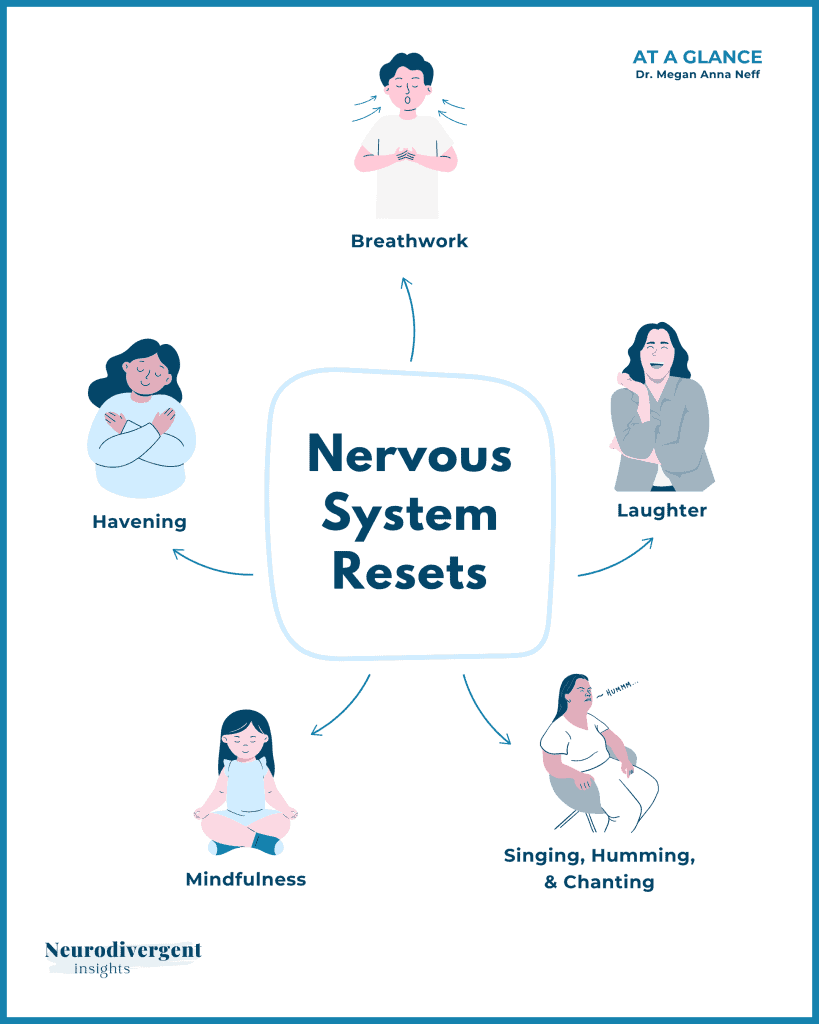
Breathwork
You’ve probably heard it a million times, but breathwork is one of the best practices for regulation. Slow, deep breathing can engage the vagus nerve and the parasympathetic nervous system, easing anxiety, refocusing the mind, and grounding the body. On the flip side, faster breathing can bring some activation when the body feels stuck or shut down.
Cold Exposure
Brief cold exposure may help stimulate vagal activity. It can look like ending a shower with 30 seconds of cold water, dipping your face in a bowl of ice water, or holding ice on the side of your neck for 30 seconds to a minute. In one study, cold applied to the side of the neck raised heart rate variability in healthy adults.
Exercise and Movement
Fitness and vagal activity are closely linked. Vigorous movement (like long walks or runs), weightlifting, and somatic movement are all good options. Many neurodivergent people have hypermobile joints, so be gentle with your body whatever kind of movement you choose.
Weightlifting has the added benefit of deep pressure through the joints, which many neurodivergent people find calming. Somatic movement can be especially helpful for working with trauma and relaxing the body in a mindful way.
Mindfulness and Meditation
Contemplative practices are linked with many mental health benefits, and they may help raise HRV and vagal tone, especially when they include slow breathing. Mindfulness practices may also help with interoception (noticing internal states like hunger, thirst, and sleepiness), which many Autistic people and ADHDers find hard.
Omega-3s and Gut Health
The gut and the brain are in constant communication, and the vagus nerve is one of the main pathways between them. Some research links omega-3s to higher heart rate variability, though results aren’t consistent, and researchers are still exploring how gut health shapes stress and mood.
Laughter
Laughter often brings deep belly breathing with it, which may help stimulate the vagus nerve. Try making room for more comedy in your life, or some intentional laughter.
Humming, Chanting, and Singing
Chanting is found in cultures all over the world. The vagus nerve connects to the vocal cords and the muscles at the back of the throat, so humming, chanting, and singing may help engage it. One small brain-imaging study found that chanting “om” quieted activity in the limbic system, the part of the brain involved in threat and emotion.
Massage
Massage, from someone else or self-massage, can be a soothing way to calm the body. Human contact matters, and many of us are walking around touch-starved. Mindful touch may also help release oxytocin, the bonding hormone. This video by Sukie Baker shows a simple self-massage.
Havening
Havening is a form of self-soothing that uses comforting touch to create a sense of safety. Try cupping your hands on your cheeks, holding a hand across your chest, or crossing your arms as if giving yourself a hug while stroking your shoulders and upper arms. (Many Autistic people prefer deep pressure, so use whatever pressure feels good.)
Relaxation Exercises
Last but not least, relaxation exercises are one of the most useful tools in our regulation toolbox. They can help bring the body out of a stressed state, and we can use them before bed, to ground ourselves in the morning, to recover after stressful events, or to engage more mindfully in conflict. They include breathing techniques, progressive muscle relaxation (PMR), and meditation.
A Few Closing Thoughts
Understanding our nervous system is an important part of learning to regulate. In a regulated body, the sympathetic and parasympathetic branches work together to adapt to stress and change. When our nervous systems are more rigid, whether because of neurodivergence or trauma, we can tip into hyperarousal or hypoarousal more easily.
There is always hope for us. By getting to know our own vagal tone and window of tolerance, and slowly adding exercises that support vagal tone, we can widen the window over time. If you want more guidance, the Neurodivergent Nervous System Workbook has worksheets to help you get to know your own nervous system.
Autistic and ADHD Nervous System FAQs
How is the Autistic and ADHD nervous system different?
Many Autistic and ADHD people have more sensitive nervous systems that pick up more information and shift less flexibly between activation and rest. Research finds lower heart rate variability, on average, in Autistic people, with more mixed findings in ADHD.
What is vagal tone?
Vagal tone describes the activity of the vagus nerve, the main nerve of the parasympathetic (“rest and digest”) system. Higher vagal tone is linked with a more flexible nervous system that recovers from stress more easily.
What is faux regulation?
Faux regulation means looking calm on the surface while being stressed underneath. The nervous system is shut down, so the person can look composed while feeling frozen or numb inside.
How can I support my nervous system?
Go slowly. Slow breathing, movement, cold exposure, humming, soothing touch, and relaxation exercises can all help. Try one at a time for a few weeks before adding another.
Visual Guide

Prefer to engage or share this information visually? Our free NDI Visual Guides are abbreviated, visual-forward highlights of our longer articles. This one, What Is the Nervous System?, walks through the basics.
Additional Resources

The Window of Tolerance: How to Widen It: the window, what narrows it, and how to widen it

Nervous System & Sensory Comfort: my shop collection of tools I use (affiliate links)

Hypoarousal vs. Hyperarousal: what each state looks and feels like
13 Ways to Reset Your Nervous System: more practical regulation tools
 Stay in the Neurodivergent Loop
For ongoing insights and updates, subscribe to the Neurodivergent Insights Newsletter. Each Sunday, I send out fresh thoughts and a roundup of the newest resources on topics related to neurodivergence, mental health, and wellness. My most personal writing is reserved for my newsletter, and subscribers also get access to the newsletter vault (12+ PDFs) when they join.
References
Bellato, A., Arora, I., Hollis, C., & Groom, M. J. (2020). Is autonomic nervous system function atypical in attention deficit hyperactivity disorder (ADHD)? A systematic review of the evidence. Neuroscience & Biobehavioral Reviews, 108, 182–206.
Cheng, Y.-C., Huang, Y.-C., & Huang, W.-L. (2020). Heart rate variability in individuals with autism spectrum disorders: A meta-analysis. Neuroscience & Biobehavioral Reviews, 118, 463–471.
Christensen, J. H. (2011). Omega-3 polyunsaturated fatty acids and heart rate variability. Frontiers in Physiology, 2, 84.
Csecs, J. L. L., Iodice, V., Rae, C. L., et al. (2021). Joint hypermobility links neurodivergence to dysautonomia and pain. Frontiers in Psychiatry, 12, 786916.
Fülling, C., Dinan, T. G., & Cryan, J. F. (2019). Gut microbe to brain signaling: What happens in vagus…. Neuron, 101(6), 998–1002.
Gerritsen, R. J. S., & Band, G. P. H. (2018). Breath of life: The respiratory vagal stimulation model of contemplative activity. Frontiers in Human Neuroscience, 12, 397.
Gourine, A. V., & Ackland, G. L. (2019). Cardiac vagus and exercise. Physiology, 34(1), 71–80.
Gratton, F. V. (2019). Supporting transgender autistic youth and adults: A guide for professionals and families. Jessica Kingsley Publishers.
Jungmann, M., Vencatachellum, S., Van Ryckeghem, D., & Vögele, C. (2018). Effects of cold stimulation on cardiac-vagal activation in healthy participants: Randomized controlled trial. JMIR Formative Research, 2(2), e10257.
Kalyani, B. G., Venkatasubramanian, G., Arasappa, R., et al. (2011). Neurohemodynamic correlates of ‘OM’ chanting: A pilot functional magnetic resonance imaging study. International Journal of Yoga, 4(1), 3–6.
Lai, M.-C., Kassee, C., Besney, R., et al. (2019). Prevalence of co-occurring mental health diagnoses in the autism population: A systematic review and meta-analysis. The Lancet Psychiatry, 6(10), 819–829.
Robe, A., Dobrean, A., Cristea, I. A., Păsărelu, C. R., & Predescu, E. (2019). Attention-deficit/hyperactivity disorder and task-related heart rate variability: A systematic review and meta-analysis. Neuroscience & Biobehavioral Reviews, 99, 11–22.