This post contains affiliate links. If you buy through them, we may earn a small commission at no extra cost to you. We only link to things we use or trust.

Sometimes stress makes us go numb instead of panicky. Our bodies feel heavy and our thinking slows, and the world can start to feel far away. Some people call this dorsal vagal shutdown, a term that comes from polyvagal theory.
The experience of shutdown is well verified, but the theory’s explanation for it has been strongly challenged, so in this article I mostly use plainer terms: shutdown and hypoarousal.
You may be wondering, “What exactly is Dorsal Vagal Shutdown?” While the concept of “freezing” in response to a crisis is widely recognized, there’s less awareness about the prolonged states of withdrawal and disconnection that can occur. In the wider research, the closest terms are tonic immobility and collapsed immobility, the body’s last-resort responses when escape isn’t possible. Freezing is something different, a tense, alert pause before fight or flight.
This nervous system response can be triggered by trauma but can also result from sensory overload, leading to what some might call a sensory shutdown. This matters a lot for neurodivergent people, who may be more prone to these states.
Table of Contents
What is Dorsal Vagal Shutdown?
Dorsal vagal shutdown can be thought of as the body’s natural way of hitting the pause button when faced with extreme stress or trauma. In this state, everything slows down internally to conserve energy. It’s like dimming the lights and lowering the volume in response to overwhelming conditions.
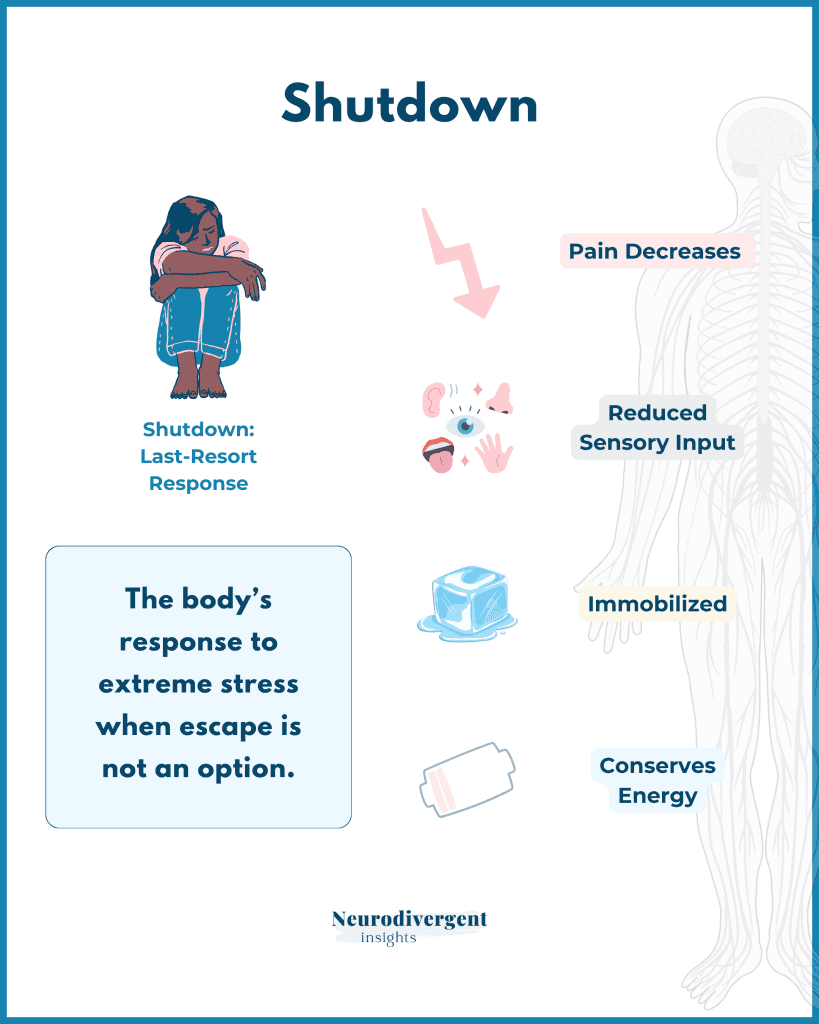
Polyvagal theory proposes that one branch of the vagus nerve, the dorsal branch, drives this state. That’s the part of the theory researchers dispute most. The state itself is well described in psychology and neuroscience, usually as hypoarousal: the nervous system turns its activity down in response to overwhelming stress, which can bring fatigue, dissociation and emotional numbness.
In this mode, the body shifts its priorities to protection, reducing pain signals and lowering both mobility and arousal levels, as if bracing for a situation from which there is no escape. This response can make us feel extremely tired, numb, or disconnected from the world around us and even from our own emotions. Essentially, it’s the body’s way of shielding itself during overwhelming situations.
Many Autistic people describe shutting down under stress rather than fighting or fleeing, though this hasn’t been studied much directly. From the outside, shutdown can look like calm, which is part of why the distress underneath gets missed. You can read more about the neurodivergent nervous system here.
The Parasympathetic Nervous System
The parasympathetic nervous system handles “rest and digest.” It works alongside the sympathetic nervous system, which drives fight or flight.
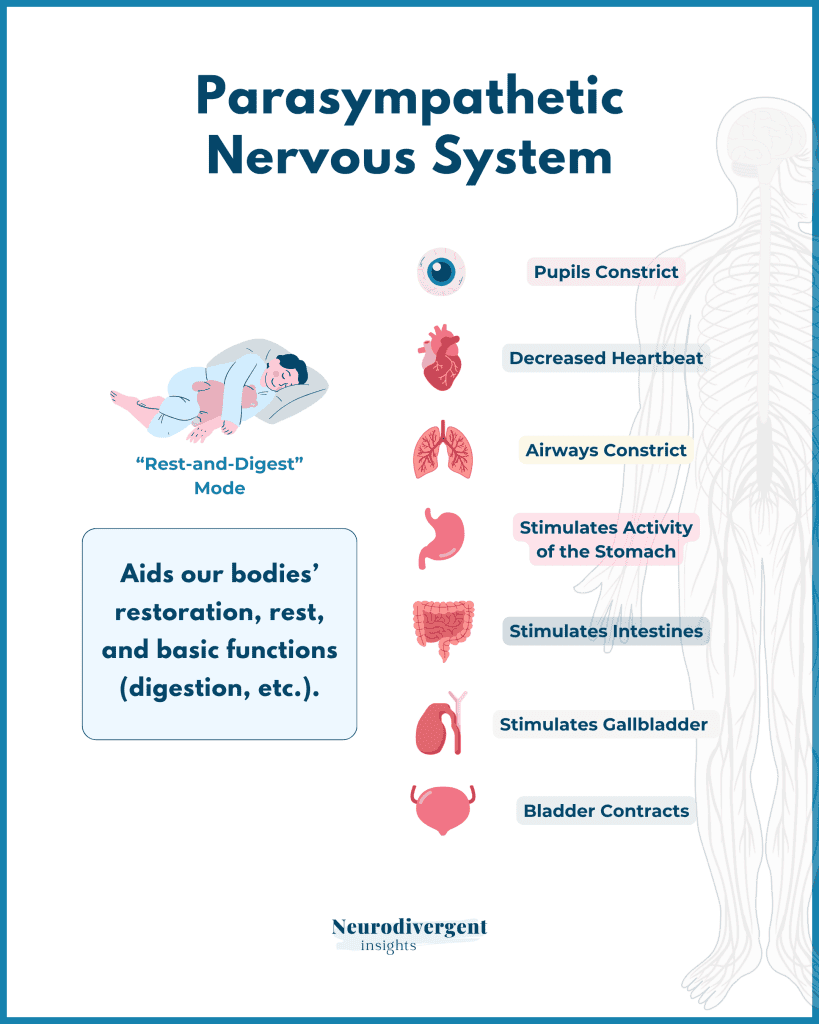
However, during overwhelming stress, the body can enter what is known as a mixed state, where both the SNS and PNS are active. In this state, the SNS may initially prepare the body for action, but when escape or confrontation is not possible, the PNS steps in to conserve energy. This mixed state can lead to a shutdown response, manifesting as fatigue, dissociation, or even blackouts in extreme cases.
The Vagus Nerve
The vagus nerve runs from the brainstem down into the chest and abdomen. It helps regulate heart rate, breathing, digestion and immune function, and it’s one of the main pathways the parasympathetic system uses to bring the body back down after stress.
Polyvagal theory describes two vagal branches: a ventral branch that supports connection and calm, and a dorsal branch that drives shutdown. It’s a tidy model, and it gave a lot of people language for their experience, but the physiology hasn’t held up. In 2023, psychophysiologist Paul Grossman argued that each of the theory’s basic premises is likely wrong. In 2026, he and a group of nearly 40 researchers who study the vagus nerve published a joint evaluation concluding the theory is untenable, including its account of the two vagal pathways in the brainstem and its story about how they evolved. (Stephen Porges, who developed the theory, responded in the same issue.)
Outside polyvagal theory, shutdown is usually explained as the body conserving energy when it senses a threat it can’t escape. Both the sympathetic and parasympathetic systems seem to be involved, rather than one branch of one nerve.
Vagal Tone
A closely related concept is vagal tone, a measure of how much the vagus nerve is shaping heart rate. It’s often used to describe how flexibly the nervous system moves between stress and rest.
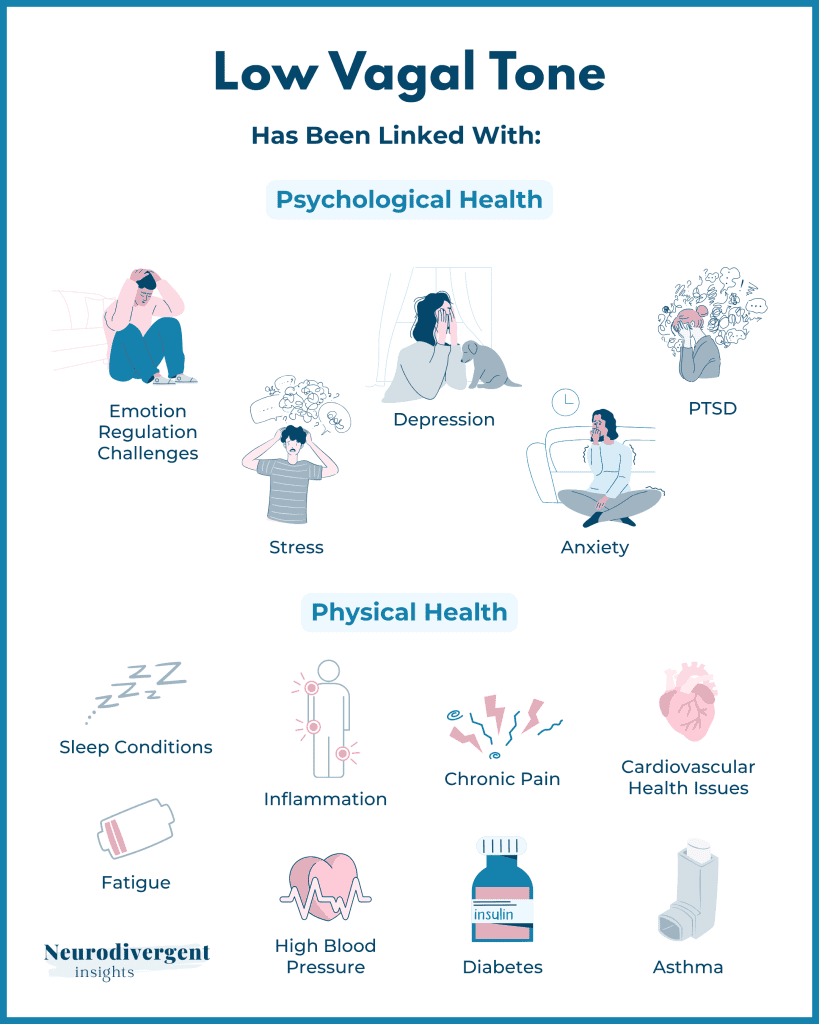
Vagal tone is most often estimated through heart rate variability (HRV), the small, natural variations in time between each heartbeat. Higher HRV tends to reflect a more flexible, responsive vagus nerve, one that can shift more easily between states of activation and rest. Lower HRV is often understood as a sign of reduced vagal tone, which can leave the nervous system more vulnerable to prolonged stress and anxiety. HRV is an indirect estimate, and researchers still debate how closely it tracks vagal activity.
Higher vagal tone has been linked with steadier emotional regulation and stronger physical health, including healthier blood pressure patterns and more robust immune functioning.
Lower vagal tone, meanwhile, is often associated with a nervous system that gets “stuck” in high alert. This can make it harder to recover from stress, whether physical, emotional, or relational, and can contribute to ongoing strain in both body and mind.
Low vagal tone is commonly associated with:
Reduced balance within the autonomic nervous system
Spending more time in a heightened stress state
Increased vulnerability to both physical and psychological health challenges
Practices like slow breathing, laughter, creative activities and movement you enjoy can support vagal tone and help with stress. Studies have found somewhat lower heart rate variability, on average, in Autistic groups, and a small difference in ADHD groups during tasks.
Interested in learning more about how vagal tone is assessed? You can explore the link between heart rate variability and vagal tone here.
Hypoarousal or Dorsal Vagal Shutdown?
Imagine our nervous system like a car’s engine that can run at different speeds. Ideally, the engine runs smoothly, balancing acceleration (the sympathetic branch) and deceleration (the parasympathetic branch) to handle whatever road we’re on.

When we face a stressful situation, it’s sometimes like pressing the gas pedal too hard, revving the engine into overdrive. This is called hyperarousal, where we might feel anxious or panicky. Other times, our system does the opposite and slams on the brakes. This is known as hypoarousal, where overall alertness and energy drop.
Hypoarousal is characterized by a general reduction in nervous system activity, which can manifest in various forms, including physical immobilization, cognitive fog, and emotional withdrawal. In broader neurobiology, hypoarousal is understood as a state where the body and mind slow down significantly, leading to feelings of numbness, detachment, or even physical collapse. Hypoarousal shows up in depression and dissociation, while hyperarousal is the state most of us know from anxiety and panic.
Why Shutdown Happens
Shutdown seems to be the body’s emergency option when fighting or fleeing isn’t possible. It saves energy and turns down how much we take in. Researchers who study defense responses describe it as one of the last steps in a sequence that starts with alert freezing and moves toward collapse when there’s no way out.
Symptoms of a Dorsal Vagal Shutdown and Hypoarousal States
Shutdown looks different from person to person. Common signs include:
Fatigue: An overwhelming exhaustion that isn’t linked to physical exertion, often leaving people feeling drained despite rest.
Dissociation: A sense of detachment from reality, making it difficult to stay present and engaged in the moment.
Numbness and Emotional Flatness: A drop in the ability to feel or express emotions, leading to a sense of disconnection from oneself and others.
Cognitive Difficulties: Trouble with focus, clear thinking, and making decisions, often described as “brain fog.”
Physical Immobilization: A feeling of being “frozen” or unable to move, even when there’s no physical reason for it.
Depression: Persistent feelings of sadness, hopelessness, or despair, which can be linked to the low-energy state of hypoarousal.
- Fainting or Memory Gaps: Rare, and usually only in severe shutdown.
Chronic Dorsal Vagal Shutdown
For some people, shutdown doesn’t lift after the stressful moment passes. It becomes the background state for weeks or months.
It looks like the signs above, just longer: ongoing fatigue, numbness, brain fog and, for some, depression.
The Neurodivergent Nervous System Workbook is a practical follow-on, a step-by-step way to map your own shutdown patterns and build a plan for coming out of them.
For Autistic people, long-running shutdown can overlap with Autistic inertia and, in more severe cases, Autistic catatonia.
Chronic shutdown is often a sign of something else going on, like ongoing stress, trauma or burnout. Support usually means working on those, alongside changes that lower the load.
It’s also worth ruling out medical conditions that could mimic or exacerbate symptoms of hypoarousal-dominant nervous system states. Conditions like thyroid disorders, neurological issues, or vitamin deficiencies can present similar symptoms and should be considered during a comprehensive evaluation.
If shutdown has lasted weeks or months, it’s worth seeing both a doctor and a therapist.
Difference Between Chronic and Acute Dorsal Vagal Shut Down
Shutdown is a natural, understandable reaction to overwhelming stress or trauma. It can vary in intensity and duration, leading to either acute or chronic states.
- Acute shutdown is a temporary reaction to a specific stressor or traumatic event. It often lasts hours to a few days and typically resolves as the person processes the event and regains emotional and physiological balance. It’s similar to the body hitting a “pause” button, allowing for a brief period of recovery before returning to normal functioning.
- Chronic shutdown is a prolonged state of hypoarousal that persists well beyond the immediate aftermath of a stressor or trauma. It can last for weeks, months, or even longer, and it affects both physical and mental health. Rather than being a standalone condition, chronic shutdown is usually a sign of ongoing issues such as sustained stress, unresolved trauma, or other mental health challenges.
Acute shutdown usually lifts once the stressful moment passes, while chronic shutdown means we haven’t been able to recover from it.
Sensory Shutdowns and Dorsal Vagal Shutdown
Sensory overload can often lead to a sensory shutdown, where the nervous system reduces sensory processing as a protective response to overwhelming input. This state can sometimes precede or even trigger a Dorsal Vagal Shutdown or a hypoarousal nervous system state. When sensory overload becomes too intense, the nervous system may initiate a shutdown to protect the person, reducing both sensory perception and overall bodily function.
Catching sensory overload early, with sensory supports or limits on input, can sometimes head off a bigger shutdown. You can read more about sensory regulation here.
How to Soothe a Dorsal Vagal Shutdown

- Engage in Grounding Techniques: Grounding brings attention back to the body and the present moment. This might mean holding an ice pack, touching different textures, or light movement that doesn’t overwhelm.
- Create a Comforting Space: Quiet and comfort matter, but gentle sensory input usually helps more than complete isolation, which can deepen dissociation.
- Upregulate with Sensory Input: Consider soft, rhythmic music, or visually calming elements like gentle videos or soft lamps. The grounding effect of a weighted blanket or the familiar scent of essential oils can also be comforting.
- Engage in Gentle Movement: Gentle movement, such as walking, swaying, stretching, or yoga, can help people reconnect with their bodies and ease the sense of immobilization that comes with shutdown. Movement can also help bring back a small sense of choice.
- Therapeutic Touch: For some people, therapeutic touch or self-massage with warm oils can be grounding and soothing. For those with a low tolerance for touch, weighted items can offer similar benefits by providing a sense of security and grounding.
- Depth Work: While these practices can help wake the nervous system back up, healing often takes more than mechanical interventions. Long-running or recurring shutdown is often rooted in older pain, such as attachment wounds and trauma. This deeper work is what I mean by avoiding nervous system bypassing, and it goes beyond surface-level tools like breathwork.
Coming back from shutdown usually takes time, so go easy on yourself while you figure out what helps.
Avoiding Nervous System Bypassing: The Importance of Depth Work
The strategies above can help with the immediate symptoms of shutdown, but on their own they may not reach the deeper causes of nervous system dysregulation. This is where nervous system bypassing comes in. It’s a term I use for relying on surface-level, mechanical interventions without doing the deeper work of healing trauma, attachment wounds, or chronic stress.
Nervous system bypassing can occur when we focus solely on quick-fix solutions, such as breathwork or sensory tools, without addressing the root causes of our dysregulation. While these immediate strategies are invaluable for coping in the moment, they do not replace the need for comprehensive therapeutic work that tackles the core issues driving these nervous system states. This approach is often popularized by pop psychology and pop nervous system coaching, which may overlook the importance of depth work. Any program designed to support your nervous system needs to incorporate this deeper level of healing.
Depth work, including therapy that focuses on trauma, understanding attachment styles, and exploring triggers, can offer longer-lasting healing. Regulation tools help in the moment, and most of us also need deeper work on why our bodies keep needing to shut down in the first place.
Summary: Dorsal Vagal Shutdown
Dorsal vagal shutdown, also called hypoarousal, is a shutdown response that happens when the nervous system is overwhelmed by stress or trauma. It lets the body conserve energy and protect itself when neither fight nor flight is possible. Signs can include persistent fatigue, dissociation, emotional numbness, brain fog, physical immobilization, depression and, in severe cases, fainting or memory gaps.
Researchers have strongly challenged the polyvagal explanation for shutdown, but hypoarousal as a state is well described. A safe, supportive environment helps, and gentle strategies like grounding, sensory support and mindful movement can help the nervous system come back up. Deeper issues, like unresolved trauma or attachment wounds, need attention too, through professional support and depth work.
Dorsal Vagal Shutdown FAQs
What is dorsal vagal shutdown in simple terms?
When stress goes beyond what your nervous system can handle, and fighting or fleeing aren’t options, the body has a third strategy, which is to slow everything down and conserve energy. Some people describe it as the body hitting the pause button; everything internally gets dimmer and quieter. The term itself comes from Polyvagal Theory; broader neuroscience describes similar territory with terms like hypoarousal or tonic immobility (and, as I get into below, I tend to prefer that language). However you name it, the state is protective, a way for the body to conserve energy when it has run out of other ways of coping.
What does dorsal vagal shutdown feel like?
For many people it’s some combination of heavy exhaustion that doesn’t match anything you did that day, brain fog, emotional numbness or flatness, and feeling frozen or disconnected from your body and surroundings. In more severe shutdowns, some people experience memory gaps. One of the confusing parts is that from the outside it can look like calm, or like nothing much at all, which is part of why the distress underneath so often gets missed by the people around you.
How long does dorsal vagal shutdown last?
It depends on whether the shutdown is acute or chronic. An acute shutdown typically resolves within hours to days, as your system processes the event and comes back online. When the state persists for weeks or months, that’s more of a chronic shutdown, and usually worth taking seriously, since chronic stress, trauma, or burnout is often what’s keeping the system stuck there. It’s also worth checking in with your doctor to rule out medical mimics, since thyroid dysfunction, vitamin deficiencies, and some neurological conditions can produce a very similar picture.
How do you get out of dorsal vagal shutdown?
Slowly, and usually more gently than people expect. A nervous system in shutdown tends to do better when it’s offered small, low-demand input and allowed to choose, rather than pushed. A good starting place is sensory input you control: gentle movement or stretching, warmth, steady pressure (like a weighted blanket), music, a familiar texture or scent. The longer-term work matters just as much though. If chronic stress, trauma, or attachment wounds are what put your system there, regulation techniques on their own can turn into nervous system bypassing; pairing them with deeper work gets at the reason your body keeps needing to shut down. We walk through more tools for coming back online in our guide to up- and down-regulation.
Is dorsal vagal shutdown the same as an Autistic shutdown?
Not exactly, though they’re describing overlapping territory through different lenses. The language of Autistic shutdown comes largely from community knowledge, and it often centers sensory overload; dorsal vagal shutdown is describing what the nervous system is doing physiologically. Sensory overload can trigger or precede a full shutdown state, and many Autistic people describe shutting down more often than fighting or fleeing. That said, no research has directly mapped the two onto each other yet, so while I’m comfortable describing the overlap, I stop short of calling them the same thing.
Is dorsal vagal shutdown the same as dissociation?
They’re closely related, but not quite the same thing. Dissociation refers more to the subjective side of the experience, the fog and distance and sense of unreality people describe, whereas shutdown language is trying to get at the underlying physiology. In practice the two often travel together, and dissociation is one of the recognized features of hypoarousal. There’s a longer discussion of this overlap, including why so many Autistic and ADHD people dissociate under sensory load, in our article on autism, ADHD, and dissociation.
Is Polyvagal Theory scientifically proven?
No, and there is a lot of controversy surrounding Polyvagal Theory for the risks of oversimplifying. The concept of dorsal vagal shutdown is one that many gravitate toward because it provides a clean metaphor for something that is incredibly complex (dissociation, hypoarousal, nervous system shutdown). Its popularity is largely due to its ability to take complex ideas and break them down into metaphor.
Complicating matters, Polyvagal Theory does draw upon established neurobiology principles. For example, Polyvagal Theory has perhaps done much to popularize conversations around the vagus nerve and the nervous system, but these concepts are more broadly established concepts within the medical community.
For this reason, I (Dr. Neff) prefer to talk about nervous system hypoarousal and shutdown rather than dorsal vagal shutdown as it captures a similar experience but draws upon more established scientific principles that are well documented in broader neuroscience. In 2026, nearly 40 researchers who study the vagus nerve concluded the theory is untenable. They also noted that its psychological ideas, like the importance of safety and connection, came from earlier work and don’t depend on it.
Is it dorsal vagal shutdown or depression?
This one is genuinely hard to untangle, and it may not be an either/or. Chronic hypoarousal can look and feel a lot like depression, with the same fatigue, emotional numbness, withdrawal, and flatness. Depression is also one of the recognized features of a shutdown state, and the two can feed each other. If the state is persistent, it deserves support either way, ideally from a professional who understands both nervous system regulation and neurodivergence (and who will rule out medical causes first). We untangle a closely related overlap in our article on autistic burnout vs. depression.
What is vagal tone, and can you improve it?
Vagal tone is essentially a measure of how flexibly your nervous system responds to and recovers from stress. It’s usually estimated through heart rate variability, where higher variability generally means more flexibility, and low vagal tone is associated with staying stuck in stress states longer. The research here is still developing, but vagal tone does appear to be something you can gradually improve. Our guide to improving vagal tone covers the approaches, from breathwork to cold exposure to tools like the Sensate and neurofeedback.
Visual Guide

Prefer to engage or share this information visually? Our free NDI Visual Guides are abbreviated, visual-forward highlights of our longer articles. This one, What Is the Nervous System?, walks through the basics.
Additional Resources

Vagus Nerve Devices: Some people, including me, find the Sensate calming. The research on how it works is limited. Use code NeuroInsights to get 10% off.

Workbook: For more of a deep dive on the nervous system you can check out the Neurodivergent Nervous System digital workbook here.

Free Blog Posts: I have several free blog posts up on nervous system regulation practices and strategies.
 Stay in the Neurodivergent Loop
For ongoing insights and updates, subscribe to the Neurodivergent Insights Newsletter. Each Sunday, I send out fresh thoughts and a roundup of the newest resources on topics related to neurodivergence, mental health, and wellness. My most personal writing is reserved for my newsletter, and subscribers also get access to the newsletter vault (12+ PDFs) when they join.
References
Cheng, Y. C., Huang, Y. C., & Huang, W. L. (2020). Heart rate variability in individuals with autism spectrum disorders: A meta-analysis. Neuroscience & Biobehavioral Reviews, 118, 463–471.
Grossman, P. (2023). Fundamental challenges and likely refutations of the five basic premises of the polyvagal theory. Biological Psychology, 180, 108589.
Grossman, P., et al. (2026). Why the polyvagal theory is untenable: An international expert evaluation of the polyvagal theory. Clinical Neuropsychiatry, 23(1).
Kozlowska, K., Walker, P., McLean, L., & Carrive, P. (2015). Fear and the defense cascade: Clinical implications and management. Harvard Review of Psychiatry, 23(4), 263–287.
Porges, S. W. (2001). The polyvagal theory: phylogenetic substrates of a social nervous system. International journal of psychophysiology, 42(2), 123-146.
Porges, S. W. (2026). When a critique becomes untenable: A scholarly response to Grossman et al.’s evaluation of polyvagal theory. Clinical Neuropsychiatry.
Robe, A., Dobrean, A., Cristea, I. A., Păsărelu, C. R., & Predescu, E. (2019). Attention-deficit/hyperactivity disorder and task-related heart rate variability: A systematic review and meta-analysis. Neuroscience & Biobehavioral Reviews, 99, 11–22.